Archive for the Now This Is Only My Opinion Category


The Growing Impact of Global Yuri Fandom

October 28th, 2026

Introduction

Not quite four years ago, I presented the results of a Global Yuri Fandom Survey here on Okazu. This survey was designed to get a sense of the shape and history of the current state of Yuri fandom around the world. I did this because Yuri fandom did not just appear out of nowhere. It was very much born on the Internet and very much the result of differing needs, something I talk about at length in my book By Your Side: The First 100 Years of Yuri Anime And Manga. Fandom, creators and publishers have each contributed to the shape of Yuri fandom, and all three are subject to fashion, economics and zeitgeist. ^_^

From the late 90s, on Usenet, and then on forums and mailing lists, online Yuri fandom nurtured itself bit by bit. We weren’t hiding, but we weren’t being “seen,” either. It took until 2010’s JManga global manga platform for Yuri to be acknowledged as a genre by any publishing or streaming platform. Since then, Yuri has slowly become more of a regular feature A few years ago, Amazon (after a letter-writing campaign by Okazu friends) added a Yuri category. While you are likely to find a Yuri shelf in a Japanese manga store now, in 2026, Yuri is not recognized as a genre by all anime and manga platforms – although many more of them do every year. To be fair, most of the cataloging on sites like Netflix and Crunchyroll is terrible overall. ^_^ 

It was 2012 when JManga added a Yuri category to their genre catalog, and 2012 when I saw my first “Yuri” section in a Japanese manga bookstore. If we use that date to mark when Yuri was “born,” as a genre,  that means in 2026, Yuri as a recognized genre is about 14 years old. And, like most 14 year-olds, we are loud, annoying and asserting our independence. ^_^ 2026 is the year we’re starting off with a pocket full of examples of the global Yuri fandom’s real-world impact and it’s only going to get louder from here on out. And, this year, Yuri has a clapback for those of us who still remember the days when no one knew the word (and forget that things have moved on.)


The fantasy of a powerful fandom

In the 00s and well into the 2010s, Yuri fandom online and the actual market for Yuri manga were wholly unconnected. Downloads of a scanlation might reach thousands, but actual purchases of a Yuri manga would be smaller by orders of 00s. In that climate, I was trying to publish the first Yuri manga in English. The tipping point for success was, at that time, selling about 4000 copies of a book. Very, very few Yuri manga sold that many. I refer to this as the difference between the Yuri audience and the Yuri market. Several attempts by publishers to start Yuri lines failed  in this environment. While ALC Publishing sought to grow the Yuri market, Infinity Studios and Seven Seas both were unable to make a sustainable Yuri imprint. We were all a little ahead of the curve.

Nonetheless, Yuri fandom insisted that it was global, massive and ought, therefore, to be influential. It was, just not in the way it thought it was. By creating demand for Yuri, but no market for it, English-language fandom fed a scanlation culture that was actually detrimental to Yuri series being licensed, as was true with other manga at the time. This, combined with a limited market for Yuri – in 2007, even popular Yuri manga sold in the range of 2000-2500 copies, well below the sales needed to turn a profit – and a global depression, meant Yuri was yet to break through.

Even as Yuri was becoming more mainstream and more available, Yuri fandom was frequently loud and demanding, but not necessarily supportive. Initial attempts at digital manga were met with a derisive demand for print books, because fandom downloaded scanlations for free, and would “only buy books.” This was then not matched by actual sales, rendering online global Yuri fandom’s voice ignorable, for the moment.

As the years passed the Yuri market kept growing, slowly, fueled by popular series. Enough of the Japanese and English publishers saw Yuri as a profitable growth market that by 2019’s 100th anniversary of Yuri, almost every major and many minor companies and most of the major bookstore chains were creating space for Yuri. Yuri titles, we know from Frank Hecker’s research, peaked in 2019. Although I imagine that will change as more Yuri is licensed.

The COVID pandemic caused a contraction in new titles being launched, as companies reserved their resources for big, popular, profitable titles. Yuri creators took to online tools in a way that they had been avoiding up to that point. Not able to rely on publishers, Yuri moved to social media platforms. Kabi Nagata, inori., Piero Karasu, and many other creators had already found success there. Web novelists, manga artists and even animators were bypassing traditional lines of distribution and just putting their work out directly…a situation that has continued, even as these creators have become able to have their work released by more conventional methods. Self-publishing by doujinshi and now on platforms like Amazon and Bookwalker, sold on Booth and by Kickstarter have allowed Yuri artists to continue to work, and their work to be seen, read, supported on and commented on, on crowdfunding platforms, even if their work was not being serialized in a magazine.

The wider availability of Yuri directly from the creators has personalized Yuri fandom. If inori.-sensei, releases a story in 4 languages, fan translated with her permission, readers of her work get exactly what they want – Yuri in their language for free –  and they also get a chance to support that creator directly with their money. Of course we all know that buying a book helps a writer, but when the writer looks you in the eyes  and asks you – as a fan – to help them, it becomes even more compelling to not only support the creator but to also exhort other people to offer their support. In the 2020s we have seen this in the global Yuri fandom become a point of fannish pride.

From “I want what I want, for free, right now,” Yuri fandom has grown and now says “Let’s get this great work licensed, buy it and support the creator!”


Supporting creators, manifesting manga

Just before the global pandemic inori.’s Watashi no Oshi ha Akuyaku Reijou. (私の推しは悪役令嬢。) was initially published as a webnovel on Shousetsu ni Narou, a webnovel website that has launched quite a number of popular light novel franchises, the most famous of which is probably That Time I Was Reincarnated As A Slime by Fuse and Mitz Vah.

I discovered the series in Japanese just at the time it was about to come out in English in the early 2020s and was absolutely blown away by the candor with which the series addressed issues of queerness, homophobia and transphobia, income inequity and social issues. After decades of Yuri that focused on first loves and school lives and, even when the characters were adults, they rarely identified themselves as LGBTQ+, it was a refreshing to see a story that said the words and had the conversations we all had. There were other series that were doing this – Tsukuritai Onna to Tabetai Onna (作りたい女と食べたい女), by Yuzaki Sakomi hit about the same time – but inori.-sensei, having risen from webnovels where readers were interacting right from the beginning with her work, put herself out there, as well. With Youtube chat sessions, a Pixiv Fanbox newsletter, responsive accounts on social media, inori.-sensei was, from the beginning talking with her readers, not just posting at them. Online popularity lifted inori.’s works, bringing in fans from other countries who offered to translate her work for other fans and, unusually, inori. agreed, allowing for her work to appear in multiple languages, which then became print licenses in those countries,  before it ever made it to print in Japanese.


Breaking the Merchandise Ceiling

One of the biggest unspoken barriers for Yuri series was mainstream marketing. Yes, a series might be picked up and released in a dozen countries and yes, there could be bonus illustrations for purchases made at specific store chains – maybe even an acrylic standee, an extra that became popular in the mi 2020s. 

But when one visits a manga store, whether in Japan or (with some few exceptions) outside, one might see a ton of merchandise for popular series, from figurines to clothing tie-ins. Even a cursory look at online anime and manga stores will provide a dizzying array of merchandise from baseball hats to shot glasses. But, as many Yuri fans had noticed…where was the Yuri? 

Just as the Yuri fandom had to grow large enough to convince publishers that there a market for Yuri series, and because popular Yuri series so often are centered around relationships, they did not appear to make an ideal selling ground.  The presumed  audience of young men is always favored, despite all research done on shopping pointing towards women as economic drivers. Japanese manga stores had the occasional Yuri pop-up, which is why I own two Ichigo Mashimaro t-shirts; one that pairs Miu and Chika with a heart over their heads. Other global publishers had been creating extras for book releases, some of them exceptionally attractive.

The Guy She Was Interested In Wasn’t A Guy At All began life as an online comic. With a distinctive color scheme, fans always knew when a new release came across their page. A mixture of gags and serious high school drama, with a huge helping of gender and sexuality, wrapped in a delightful mix of grunge and rock music designed to re-capture the joy of discovery and creation was the right series at the right time.

The mid 2020s has seen the impossible happen. And, once again, it was a global phenomenon, fueled by overseas fandom as well capitalism. In 2024, Bookstore chain Kinokuniya has partnered with publishers in Japan and outside for what became the hammer that broke through the merchandise ceiling. The chain launched a global pop-up shop, even wrapping their midtown NYC location in “Green Yuri” promotional window dressing. The ceiling shattered like sugar glass, as publishers around the globe and Kinokuniya worked on merch from standees, to keychains, exclusive covers, signed shikishi, and more. Other series have followed…but not every publisher is willing to invest in series – even ones that have been proven to be consistent sellers. On the one hand, it’s disappointing when a series that has terrific extras available in other countries, but doesn’t get any merch here. On the other hand, how much capitalism can we participate in, realistically? Buying and shipping complications have also factored into these differences, as well…but that is a whole different essay. ^_^

Suffice to say that, now that the merchandise ceiling is broken, some publishers will invest in extras and merchandise, but not all…even when it exists in Japan. Sales will, ultimately, make some change and pressure from fans might create the pressure needed to get the “stuff” we want.


Crowdfunding Means We’re All Part Of The Project

There is no doubt in my mind that, regardless of the professional/political/social landscape, creators are going to create. If anything, adverse political and social circumstances are a breeding ground for art.  So, even though globally, LGBTQ+ rights are stagnant or sliding backwards, fueled by anti-trans movements, (with a clear desire to kill same-sex marriage and other rights and, eventually, predictably, work their way to limiting women’s rights,) queer art thrives. 

Even with the growth of Yuri /GL and BL around the globe, queer creators cannot always find the professional support they need. Some creators want to create their work without the kind of editorial foot on the neck they experience when they publish through traditional companies. 

In the 2010s, crowdfunding in the US for queer works became a popular and successful method of find an audience interested in queer work and willing to contribute to the making of it. It would take almost another decade before we saw crowdfunding really opening up in Japan. Creators opened their own self-funding accounts on platforms like Pixiv Fanbox or Fantia in Japan. As platforms shifted priorities and policies, some took to platforms outside Japan to reach fans with accounts on Patreon or projects on Kickstarter.

Creators like Mutsumi Natsuo, Aneido, Yorita Miyuki, and Hanakage Alt developed Kickstarters for their work in translated editions, as well as in the Japanese. These creators were able to keep creative and editorial control of the projects. The downside of crowdfunding is, of course, that one has to handle promotion and distribution as well. But through these successful crowdfunding projects some of these creators were able to secure distribution and even licensing through Japanese and overseas publishers. Fans were able to support the creators they loved, help bring projects they were interested in to fruition and see those creators and project reach a much bigger audience.

Galette magazine began life in Japan as a crowdfunded magazine that took to Kickstarter to fund 7  English-language collections. Each collection has been more successful than the last, as word spreads of the campaign. 

Crowdfunding is not a simple answer to the complicated international publishing landscape, but there can be no doubt that it is an impactful way to reach a global audience and for a global audience to directly support – and communicate with – a Yuri creator.


Cultural Shifts

In 2012, I wrote up a Guide to Shopping For Yuri in Tokyo here on Okazu. That year, for the first time, I saw the word 「百合」being used in Japanese manga stores. This was followed by an April Fool’s Day joke in 2017 that became a reality a year later,  several large anime/manga store chains in Japan created “Yuri Clubs” 「百合部」for sections in their stores that feature Yuri media. 

For Japanese stores (and overseas affiliates) to recognize Yuri was a huge cultural shift. It had been 15 years since I and a number of Yuri creators agreed upon the term Yuri to describe this genre and here, at last, bookstores were acknowledging what fans already knew – Yuri was a genre in its own right.

I’ve been dithering over this article for literal years. Since I started to write this up, quite a number of things have changed significantly, but this week something happened that really made me want to get this out.

On October 21, 2026, Merriam-Webster added Yuri to its slang dictionary. Along with yokai, and sushi and other Japanese words that have become commonly used in English, Yuri is now part of our shared linguistic heritage. There is no doubt in my mind that this is another sign of the impact of global fandom. Yuri fandom has been “seen” at last and Yuri can show the world that it is a genre acknowledged by cultures all around the world.

I’m very pleased to see what an impact global fandom has had on Yuri and even more excited to see where Yuri goes next!


Tarot: A Graphic History Pamela Colman Smith’s Story of Arcana, Symbols & Magic

June 14th, 2026

Pamela Colman Smith, in a bright red dress and head cover, with white lace over her shoulders, stands at a precipice, holding a rose in her right hand behind her, her left up to her face as if to shout. The sun shines bright and large behind her, a little dog jumps at her side. The pose is in reference to the Tarot card 0 - The Fool. It’s been a while since I have been able to review a book that is way out in left field here on Okazu.  There’s been so much Yuri that I haven’t had the chance. ^_^ While I am waiting for my copy of the graphic novel version of Charity and Sylvia, I thought I’d take some time to talk about a completely different interest of mine.

Most people know Tarot cards as a form of fortune-telling, or perhaps, if you shook your head at that, as a tool for gaining insight and possibly spiritual understanding of one’s actions and thoughts. And the most famous version of that tool is know commonly known as the Rider-Waite-Smith deck. This was named after the publisher, William Rider & Sons, spiritualist and extremely influential magician, Arthur Waite, who commissioned the art from a fabulously interesting woman, Pamela Colman Smith. 

Tarot: A Graphic History  Pamela Colman Smith’s Story of Arcana, Symbols & Magic, written by Valentina Grande and wonderfully illustrated by Chiara Raimond , translated by Edward Forbes, tells both a (brief) history of Tarot, beginning in the Renaissance with the Visconti-Sforza Tarocchi deck, moves into the creation of the Waite-Smith (this is what my wife and I are now using to refer to it) deck. To do this, we are guided through the Tarot by Pamela Colman Smith, in a fictionalized scenario, doing a reading for friends. Smith was an extraordinary person, and worth reading about on her own. She, like so many of the people in the various spiritualist and magic movements of the late 19th and early 20th century, intersected with other extraordinary people. Her last 25 years was shared with Nora Lake as her companion.

This book was a lot of fun. It gave a very fair and balanced view of the creation of a deck that has made an eternal impact on what we think of as “tarot”. Most decks are based upon Coleman Smith’s images and the meanings associated with her work are known around the globe. (Most, although not all. My primary deck is the Silicon Dawn by Margaret Trauth, and let me tell you, that deck is prickly af with no commonalities to Smith’s work. I love it.)

We get small glimpses into Colman Smith’s life, stories from her life in Jamaica, learning myths from the people there, her life in Brooklyn as an illustrator, doing stage design and performing. She published her own magazine, collections of Jamaican folklore, did exhibits of her art, and eventually was introduced to the Arthur Waite of the Order of the Golden Dawn, whose commission is her best known work. 

Smith’s name was, for decades, elided from the deck. It is still referred to in many places as the Rider-Waite deck, but witches are an uncommonly feminist group of people and more and more we’re seeing Coleman Smith’s name on her work where it belongs. 

As you may infer, I am very fond of Colman Smith and her work. And as a woman who spent her last quarter of a century in the company of her dear friend Nora, I think she belongs here on Okazu. Should you be in the least interested in Tarot, or the life of an amazing woman, pick up this graphic novel. It was a lot of fun.

Rating: 

Overall – 9


Introducing Indonesian Yuri Web Series and Their Significance to the Queer Community

May 27th, 2026

by Lena Tama, Guest Writer

Indonesia has no shortage of yuri works created by passionate queer/ally artists, including English-language web comic series that are free and available to read on multiple online platforms. Despite the many struggles and challenges, they continue to produce their crafts in hope of providing comfort and safe space for the queer community, both locally and internationally.

Group of young women in winter coats all huddled together raising red wine in a toast. Everday by Day, art by Magnolia Team
The main cast of Everyday By Day, a yuri webtoon series by Magnolia Team. Image by Magnolia Team, 2025.

On May 16, 2026, Comic Frontier (Comifuro), Indonesia’s biggest doujin & art market for fellow artists to sell and promote their works, held its 22nd event. Among them were three particular groups of artists who also produced their own yuri web series, each with unique themes and upbringings.

Join me as I explain these three yuri web comic series as well as an interview with the people working on these titles!

Everyday By Day

Everyday By Day (EBD) is a slice-of-life yuri series created by Magnolia Team, whose core members are Zaki, Azura, and Marbelous. Started in 2018, EBD is currently one of the longest-running yuri series made by Indonesian artists that is available to read on Webtoon English or Magnolia Team’s social media accounts on Bluesky, Twitter, Facebook, and Instagram.

Two women in winter sweaters snuggled under a blanket on a yello sofa. One of the main couples of Everyday By Day, a yuri webtoon series. Characters from left to right: Claire and Ashley. Image by Magnolia Team, 2026.

One of the main couples of Everyday By Day, a yuri webtoon series. Characters from left to right: Claire and Ashley. Image by Magnolia Team, 2026.

Set in the fictional Harbour City, EBD tells the story of five main sapphic couples, each with distinct dynamics and personalities, as they live their romantic life in a city where being queer is normalized and accepted. Azura (she/they) explained the dynamics of the couples as such:

  • Naomi & Hana (low x high cortisol)
  • Nadya & Ann (flirtatious x tough-looking adults)
  • Jean & Sena (airhead x serious)
  • Ashley & Claire (warm x cold)
  • Gisel & Wendy (kink dynamic)

According to Azura, the core value of EBD is to tell a lighthearted sapphic story,regularly published on Monday to provide comfort for the readers during their first day of the week at work. In addition, despite a relatively simple story that’s easy to follow for both newcomers and regular readers, EBD also presents ample character development and drama that each couple frequently faces.

“Being set in a city that welcomes queer people, the story explores the drama and conflicts that emerge among those couples without them having to face additional layers of prejudices and hatred. By laying it bare like that, we want to convey that conflicts among couples are a universal thing regardless of their gender identities and sexual orientations,” said Azura.

“In that sense, love is also a universal thing for everyone, thus we want people to accept queer couples kindly, too.”


Doctor and Nurse (unofficial title)

Woman in hot pink, with pal pink hair and woman in black with green hair kiss in modern art image. “Doctor and Nurse” (unofficial title), a yuri series by Iwa. Characters from left to right: Nurse (Elise) and Doctor (Jessica). Image by Iwa, 2026.
“Doctor and Nurse” (unofficial title), a yuri series by Iwa. Characters from left to right: Nurse (Elise) and Doctor (Jessica). Image by Iwa, 2026.

Doctor and Nurse is a new adult yuri series created in 2026 by Iwa (she/her) that revolves around the relationship between a female Doctor and a female Nurse. Currently available on Instagram, Gumroad, and Twitter, Iwa plans to host her own website to upload the series in the future.

The artstyle of Doctor and Nurse is contemporary and raw with uncensored nudity and imagery, particularly the stitch marks all over the Doctor’s body, as parts of the overarching themes of exploring mental health and criticisms toward patriarchy in an industry dominated by cisgender heterosexual men.

Jessica, the illegal doctor working on organ harvesting for debt collectors, is a character designed to show the way mental illness can ruin oneself inside out. The stitch marks on her body are a direct result of her never fully feeling comfortable in her own body, whereas her asymmetry design screams instability.

Iwa elaborated on Jessica’s character, “I want to show the stitch marks all over her body to showcase the self-harm without the romanticization of mental health struggles. I want to show it for what it is: A struggle that people should discuss and overcome without any prejudices.” 

Meanwhile, Elise, the traveling nurse, is inspired by pin-up girls, yet her actions and works defy the stereotypical female nurses that are often sexualized by men and struggling against gender-based violence.

“Female nurses are often subjected to sexualization, sexual violence, and abuse of power relations. However, I want to tell the story of a nurse who travels from place to place to liberate herself from the system and dedicate herself to help people,” said Iwa.


To Get HerA woman with orange hair and leather jacket. embraces a woman in demin overalls, yellow blouse with short silver hair. “To Get Her”, a yuri webtoon series by ChamomileTea Studio. Character from the left to right: Ann and Libby. Image by ChamomileTea Studio, 2025.

“To Get Her”, a yuri webtoon series by ChamomileTea Studio. Character from the left to right: Ann and Libby. Image by ChamomileTea Studio, 2025.

To Get Her is a 16+ rated yuri series created by ChamomileTea Studio, whose members are the duo Skeetcha and JasmineTea. Originally created in 2021 as a 4-koma web series on Facebook and Tapas, the studio then shifted to developing the series primarily for Webtoon Canvas in the scrolling comic format in 2023. Later on in 2025, To Get Her became an official Webtoon Original series.

Available on Webtoon, To Get Her tells the story of Ann, a workaholic graphic designer who’s trapped in a lifeless corporate environment which deprives her of life beyond work. Her latest gig with a posh bar near her home leads her to Libby, a bartender whose presence begins to change Ann’s life for the better.

Amid their journey of self-acceptance and loving relationship, Ann and Libby encounter other recurring characters like Libby’s friendly bar manager, Ann’s pesky and friendly female coworker, and a male coworker who seems to be attracted to Ann.

The main characters themselves are inspired by Skeetcha and JasmineTea, with Ann based on Skeetcha’s experiences as a graphic designer and Libby based on Jasmine Tea’s past work in the food & beverage/hospitality industry.

JasmineTea (she/her) further explains the dynamic between Ann and Libby. She said, “We want to convey a story that’s very much relatable to our readers, particularly those who work a corporate job that may be boring and/or full of stress every day.”

“The life of two people whose jobs and personalities contrast one another also makes for an interesting story that’s filled with conflicts and romance. We hope that the journey that Ann and Libby take to love each other and themselves can be inspiring.”


The struggles of presenting yuri series in Indonesia

Despite presenting unique premise and backstory that differ from one another, all three titles share similar troubles, in that most of their audience are international readers, and that they are struggling to present their works in the local market due to numerous risks, such as hate speech and many cases of gender-based violence.

One such case occurs with Doctor and Nurse. Iwa observes that most of her readers are lesbians and trans women based in Europe, USA, and a handful of Southeast Asia countries like the Philippines, whereas her Indonesian readers are only a fraction of those.

Iwa explained, “Indonesian readers are still hesitant to engage with my work because of the fear that their friends on social media might discover their likes/comments/shares, and then these readers would be at risk of receiving hate speech. Of course, this also hurts my exposure to the local audiences and the revenue.”

“I’m grateful to my readers who are my intended demographic targets, but I also sometimes receive hate speech from bigots and people that are outside of the demographic targets.”

ChamomileTea Studio also faces a similar issue with their web series, in addition to their other, more personal dilemma. Their lead author, Skeetcha (she/her) said,

“We realize that To Get Her garners more attention and support from the international readers than the local ones because we currently also don’t have enough resources and time management to put more effort into advertising it to the local market.”

Another issue is censorship which further affects the algorithm on the platforms. Due to many platforms’ updated policy which may put more restrictions on R18 works, of which yuri is frequently categorized into, this puts the publication of the series at risk.

EBD in particular was rated as Mature 18+ by Webtoon Canvas due to the intimate scenes that typically conclude many of the chapters. As a result, when the platform published a new policy change that began forbidding partial nudity (bareback & cleavage) in early May 2026,  EBD’s then-latest chapter got censored and deleted on Webtoon.

It took Magnolia Team a number of days before they were able to resolve the issue with Webtoon and the chapter resurfaced on the platform. Even then, the team also feel that the Mature 18+ rating that they received also makes it more challenging to reach new audiences on the platform.

Reflecting on the experience, Azura said, “We’re afraid that something like this may occur on other platforms. Censorship hurts our viewership a lot, which will also affect the algorithm. Because of that, we’re trying to spread the publication to numerous platforms and hoping that they don’t get censored.”


Supporting Indonesian yuri artists and works

In a country where  many citizens still demonize the queer community and queer works, local yuri artists continue to produce their works as a passion project and/or one of their sources of income, in hope of providing a safe space for the community and inspiring other people to engage with the media or produce their own works, despite the many challenges.

Magnolia Team themselves hope to maintain stability in their work with EBD as it is one of the ways for them to convey their emotions and desires, as well as to love their own hard work.

Azura added, “We hope that our story inspires other people, whether it’s for them to read our works and the others or for them to create their own GL works.”

The rising number of yuri artists also brings hope that more people would be more open and accepting towards yuri works, in addition to opening new topics for them to explore.

In regard to that, Iwa hoped, “May we find more personal and diverse works that revolve around yuri/GL/lesbian. In that sense, I also hope that people can be more open and accepting of using the label ‘lesbian’ in their works, not seeing it as taboo anymore.”

Last but not least, the yuri/GL/lesbian community hope to continue to support one another in continuing their works and achieving their goals.

Skeetcha and JasmineTea said, “We hope to continue supporting the yuri/GL/lesbian community and foster an environment where everyone can support one another. We also hope to see more fanarts, more original works, and various yuri works made by local artists in the future.”

And of course, to close off the article with a popular motto from the local community…

Dirgahayuri!!*

This article is written by Lena Tama, a contributor and queer journalist from Indonesia. She loves all things yuri and will bake cookies & sweets for you!

*[Dirgahayu] means ‘long live’ in Indonesian language


Yuri Visual Novel Studio Élan: Creating Queer Arts for Years to Come

May 6th, 2026
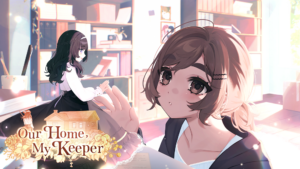
Title image of “Our Home, My Keeper”, Studio Élan’s latest yuri visual novel, released on April 30, 2026. Image by Studio Élan. Two women stand in a library or study, one close to us with brown hair pulled back in a ponytail, another diminutive figure on a shelf a white blouse and long black skirt, with long dark hair pulled back by an Alice band

Title image of “Our Home, My Keeper”, Studio Élan’s latest yuri visual novel, released on April 30, 2026. Image by Studio Élan.

by Lena Tama, Guest Reviewer

In 2019, Erica had the pleasure of interviewing Studio Élan, one of the pioneers of western yuri fantasy visual novel (VN) developers in the industry, for Okazu. Seven years have passed since then and the studio continues to publish VNs by queer people for queer people, despite the ever-increasingly hostile internet environment for both the audiences and the studio.

Before the creation of Studio Élan, a studio called Alienworks released Highway Blossoms in 2016, which was well-received among fans and players worldwide. From there, a number of people from Alienworks, including Josh Kaplan, founded Studio Élan and marked its debut with the release of Heart of the Woods, a dark fantasy yuri VN. 

Since then, many more VNs have come out under Studio Élan’s name, which cover multiple subgenres and explore a wide range of gender & sexual identities. In addition, Highway Blossoms also became an official part of their catalog in 2019 and received a major story expansion titled Next Exit in 2020.

In 2026, Studio Élan is publishing three new and distinct VNs:

  1. Our Home, My Keeper. Released on April 30 in collaboration with another VN developer ebi-hime, it tells the story of a struggling novelist who purchases a new home in the English countryside, only to find it already inhabited by a fairy, who occupies a doll for her body.
  2. My VTuber Rival is Actually Cute? Planned for release in summer, this is a shorter and more experimental VN about a VTuber protagonist whose character design is customizable by players.
  3. Summer at the Edge of the Universe, a solarpunk adventure story planned for release by the end of 2026. A playable demo is available to download for free.


The importance of women and LGBTQI+ people in VN development

The diverse subgenres and exploration of gender & sexual diversity among their VNs is supported by the involvement of women and LGBTQI+ people, both within Studio Élan as well as their partner collaborators. Josh Kaplan stated that the majority of people working on their projects fall into those categories and have some creative influences and opinions over those games.

“It is always rewarding when someone mentions how seen they felt or represented by one of our games or characters,” said Josh

As such, a number of their VNs also feature LGBTQI+ characters and plot points, whether canonically in the games or through supplementary materials, which resonate with a lot of queer people, including the community on Discord that the studio has built over the years. Some of those characters include Tara from Heart of the Woods who identifies herself as a trans woman in the game, Olive from Twofold who is canonically non-binary, and Aspen from Please Be Happy who is asexual based on supplementary materials.

Among those people involved with Studio Élan is adirosa, who initially joined the studio in late 2017 as a graphic designer. Since then, she became more involved in the majority of the studio’s works in multiple roles, with Please Be Happy being her first major project as its Director.

Reflecting on her works so far, adirosa said, “I have always felt valued and heard at Studio Élan.”


Working against the increasingly hostile internet environment

Despite the progress over the years, not everything is sugar and rainbows. In the current year of 2026, the internet has grown ever-increasingly hostile due to global politics, increasing misogyny and hatred towards LGBTQI+ people, particularly lesbians and trans/non-binary/other gender identities, and rampant usage of generative AI (genAI) technology.

As a result, Studio Élan has become exceptionally prone to receiving hate speech and review-bombing, whether on their social media or game store platforms such as Steam or GOG. In addition, genAI technology puts them at risk of getting their arts, such as the artwork and voices, stolen and abused.

Furthermore, the people working on the VNs are also facing an increasing risk of experiencing harassment both on the internet and in real life.

“I’m seeing my friends torn down in modern society and their works disrespected and undervalued. It’s incredibly difficult and heartbreaking, and there’s really no easy answer to this,” adirosa commented.

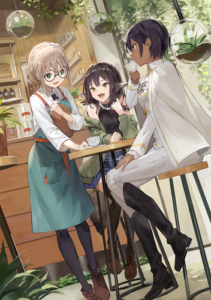
Key visual for “Please Be Happy”, from Studio Élan. Three woman at a hightop table. One woman with medium brown skin, black collar length hair in white , wearing black boots to the knee, a young-looking girl with animal ears and brown hair. Standing next to them a pale-skinned woman with blonde hair, wearing glasses and a teal apron (over her?) dress.

“Please Be Happy”, a yuri visual novel by Studio Élan. Characters from left to right: Aspen (left), Miho (middle), and Juliet (right). Image by Studio Élan.

In spite of those setbacks, Studio Élan remains optimistic. For starters, they are committed to upholding their integrity without utilizing genAI technology. Josh explained, “We are wholly against genAI for art, writing, voice-acting, or anything else. Our work process hasn’t changed, in that regard.”

“I’m confident that people will continue to seek out and value human-made art and stories, and that our games will continue to find an audience with whom they resonate,” he continued.

Even further, in the face of hatred and bigotry towards LGBTQI+ people in current times, Studio Élan also remains committed to creating more stories and games by queer people for queer people.

“Right now, it’s more important than ever for both creators and fans to support LGBTQI+ art, not just for us but also for all of the many creators who continue making and sharing things despite the pressure to stop. Even if we have to sell them off handmailed USB drives,” said Josh.


Moving forward alongside the community

Studio Élan continues to produce and publish yuri VNs and will continue to do so for many years to come, all while fostering a community which stands tall as a safe space for women and LGBTQI+ people. The people working behind the scenes are also hopeful that they’d be able to create more exciting VNs that resonate with a lot of people.

adirosa stated, “I plan to release more games in the future, and I hope that they will be able to make people a little bit happier and maybe make the world a bit of a better place.”

Meanwhile, Josh is optimistic that the studio will create new and exciting VNs in the future, all thanks to the support of the community.

He said, “We are super grateful for the community and audience that we have, whether they’re newcomers or long-term fans on Discord whose name I see every day from before we even released our first game. I hope that we’ll continue to earn our support.”

“I also consider myself incredibly fortunate to be able to keep making games alongside some of my favorite people and to still have fun doing it. Here’s to many more years of that.”

=====

This article is written by Lena Tama, a contributor and queer journalist from Indonesia. She loves all things yuri and will bake cookies & sweets for you!


Top-Tier Queer Manga from Manga Mavericks

April 6th, 2026

Disclaimer: I am the Managing Editor for Manga Mavericks and am working as Editor on two of these books. Yes, this is shameless self-promotion. On my blog.  ^_^ 

This weekend at Anime Boston, Manga Mavericks announced two new titles, and have one more title that I really want everyone to read. So I thought I would just blatantly put on the sandwich board and ring the bell for these titles. 

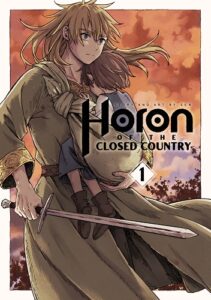
Horon of the Closed Country, Volume 1 by Sen

“It is believed that whatever the Guardian Deity takes will never return….

There is a power that hides and protects an ancient land from foreign enemies, but sacrifices must be made. In recent times, the Harbingers of that Deity have been encroaching on humankind and only people with special powers, Quietists, are able to drive them back. An unlikely trio, each of whom has lost something dear to them, find themselves journeying to unravel the secrets of the Deity and the Quietists. Little do they know that what they have lost, the frequent appearance of the Harbingers, and the need for sacrifices are all connected.”

This story of loss and gain and a god losing it’s grip, and found family is just so lovely.  One of the main characters is agender and another is nonbinary and this is part, but not the point of, the story. Horon is a beautiful and haunting manga by Sen. I hope you all love this as much as I do! Horon, Volume 1 is available now in digital format. If you buy directly from Manga Mavericks, you’ll get a download of a PDF and CBZ files. 

I’m editing this, so can recommend it with my whole heart. <3


Next up, this is the first of the license announcements from this past weekend: 

Oni & Dawn: Bakumatsu High School Girls, Volume 1, by Hana Ikuta

“Somewhere in Japan, very special students have gathered at Koharu Girls’ High School. What makes them special, you ask?

Sakamoto, Takasugi, Katsura, Katsu, Hijikata, Okita, Kondo…

All these girls possess the souls of the great samurai from the Bakumatsu period! Living as teenage girls with their memories intact, they must navigate modern society, deal with messy historical baggage, and fight for love in a school that forbids romance.”

I told you this was Ikuta-sensei’s year! This story is, as one commenter on social media said, simultaneously L, G, B and T, as the souls of fighters during the Bakumatsu Period are transmuted into high school girls in our present day. And, although romance is not allowed, old feelings linger and new ones form.

I’m not editing this one, but am fannishly delighted, as I really enjoy this series and have reviewed it here on Okazu. All three volumes of this main series are on the way.


Last up, I hope you’ll all run out and get: 

Ball & Chain Omnibus, Volume 1 (Volumes 1-2) by Minami Q-ta

“Maybe I could have chosen something different…”

Keito is a late-20s company employee who’s planning to get married as a “woman,” despite not feeling cemented into a specific gender or sexuality.

Meanwhile, Aya is a married woman in her 50s who continues playing out the role of “wife” despite being in a marriage that’s long since gone cold.

They both struggle with a gender that was decided upon birth and the “wife” role that became nothing more than a pantomime at some point.

This is a story of two queer people who harbor doubts about how they’ve been treated and shoved into a “normalized” box, and try to take back their true selves.”

I’m editing this manga and holy crow is it relatable. Sexuality and gender are complicated and Minami Q-ta-sensei does a fantastic job of expressing how hard, sometimes, it is to explain to ourselves, much less other people. In their note, Minami-sensei comments that both Aya and Keito are non-binary, which I think becomes clear as the story evolves.

I think this title will be of serious interest to Okazu readers. This is very much a “queer in the real world” story.

Not Yuri, but: 

FISHGOD, Volume 1  another title I’ve edited is wacky and fun and…did I say wacky? It’s a great urban fantasy in an alt-now. It’s not queer, but I love it. Laugh out loud silly sometimes, Chlona-sensei has fantastic pacing and character sense. 

Lastly, Sinbad, Volume 1 is an action-fantasy inspired by The 1001 Arabian Nights’ tales of Sinbad the Sailor. It’s a great rollicking tale and often quite funny…and sometimes old man funny.(-_-)

I will end this with one important pre-announcement: A very big deal is coming our way. Keep your eyes on Manga Mavericks, and grab some of these extraordinary books asap!