Archive for the Artists Category


The Rose of Versailles – Behind the Scenes

July 18th, 2019

Today I am writing about something near and dear to my heart – the upcoming publication of shoujo manga classic The Rose of Versailles, by Riyoko Ikeda! There is a single, specific reason I want to write about this, but it’s going to take a while to get to, so buckle in for a story. ^_^

For one thing, I was absolutely thrilled to be able to assist with this production, and I want to be really honest about this, because I didn’t do fuck all to get this job. That this job landed in my lap is an example of the single most important piece of advice I have ever received from my mother – It’s not what you know, it’s who you know. This is one of the ugliest truths in the world, but it is a TruthTM. I happen to be friends with key people on this project; people who know me, know my skills and strengths and who trusted me to do something for them.

Which brings me to the next thing I want to point out – this series was translated by two different translators, both of whom I adore and consider good friends, Mari Morimoto and Jocylene Allen. Mari has been responsible for some of the best known and best-selling manga on the market, including Naruto. You’ve read Jocylene’s work in a ton of Yuri manga. Both of these women are incredibly talented and I have immense respect for their work – no ‘but’s. They are geniuses. Put a pin in this, because we will swing back here towards the end. In this case, one of the translators, Mari Morimoto asked me to edit/adapt their script as a hire by her, personally. She needed someone to bounce some concepts/choices off of. Again, let me be clear – I did not make any translation choices. I made suggestions of ways to make things sound better. In the end, the translation is the translator’s work, but where there are three ways to say the same thing, as an adapter, I’m looking at the voice of the character, the tone of the story, and suggesting a way to say it that reads more consistently.

I was in discussion with the publisher one day who was bemoaning some extraordinarily tedious work he had to do as part of getting things organized and simply offered to do some of the grunty bullshit that was needed. ^_^ Editorial assist crap. Like, here’s a 5 page Excel spreadsheet, fill-it-in-for-me stuff. When people say they want to work in publishing I’m not sure what they think they’ll be doing, but let me assure you – this is what you are doing. ^_^ My editorial assistant is taking pieces I write, and incredibly tediously adding in footnotes. I do not envy her this work – which is why I hired her! I hate footnoting things. It’s boring shit that has to be done.

Sometime later, when the series was close to completed, I was once again talking to the publisher and he commented that he needed someone to go back and just read the whole thing and make sure all the names were consistent. This seems obvious, but there were two translator shifts, from one person to another, then back. Sure it seems like it might be easy, Marquis de Lafayette isn’t going to be spelled differently because he’s a real person, barring an honest typo. How about Girodelle who was wholly made up and whose name is not Girodelle nor Girodel, but ジェローデル? So I had the honor and pleasure of reading the whole thing in the most tedious and painstaking manner I could, not paying attention to the story, per se, but all the individual words. I ended up fixing some stuff and caught a few typos, which brings me to an important point:

There will always be typos.

Are you, like me, one of those people who cannot not edit as they read? I get it, I really do. As a reviewer if I catch a minor typo and I can tell the publisher, I do. But generally I, like you, am reading the retail copy (on purpose. I don’t often remember to ask for review copies, because I also want to support the work with my money. I do note when I get a review copy, but it’s not all that common.)

Yes, some typos are worse than others. Inconsistency in names can be annoying, misspellings of important words likewise. But I know from translators that sometimes something is explained in Volume 21 that they had to do their best for Volume 1-20 on. And the explanation might make their choice seem stupid but how were they to know the future? Or what if the publisher or creator wants that spelling? Yes, Zolo is meant to be Zorro. BUT, copyright is a thing, so Zolo it is. Jeanne d’Arc’s name misspelled in a popular series franchise pissed me off no end, BUT what if were intentional and not just the translator making a mistake as we, in our ignorance might assume? You get my point? And still, typos just happen. My famous story is that in the first printing of Rica ‘tte Kanji!? I had 2 editors, 2 proofreaders and I personally read it over like 5 times…and there was still a typo.

I have friends in book publishing who do editing and proofreading. They have been responsible recently for several reprinted classic works that have been re-read for hardcover, paperback, trade and deluxe editions…and they still find typos. AND, more importantly, they know they’ve missed some typos, AS WELL. If you are reading RoV and you come across a typo, you can certainly let the publisher know. But don’t get snotty about how dare there be a typo. We worked really hard and long and really hope there are no typos.

There will always be typos.

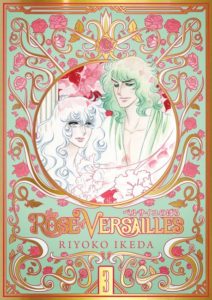
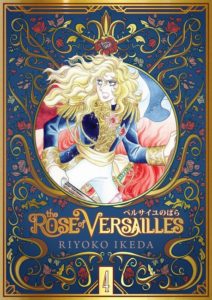
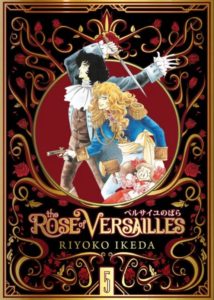
At last, I get to my specific point. I will be speaking about translation in October at Michigan State University and one of the things I’ll be talking about is The Rose of Versailles. Because the translators made really terrific choices. At least one of which will annoy the proverbial “some people.” It will annoy them because they are used to one version of the story (the anime) which makes a different choice, and they will ignore that the why for the choice is literally stated in the manga. It won’t matter, because as I have commented recently the old adage, “every asshole has an opinion” has become commutative and nowadays every opinion has an asshole. ^_^ Some of you will tell me that you don’t like the choice, and that is fine, you are allowed to not like it. But I am going to tell you right now that this is the right choice – the manga itself tells you that. Trust the artist to know her own intent. Every word, every image and every page of this book was approved by Riyoko Ikeda. Other choices may also be something you personally might not have made. That is also fine. I stand by the translator choices.

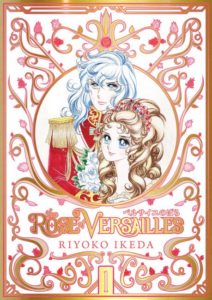
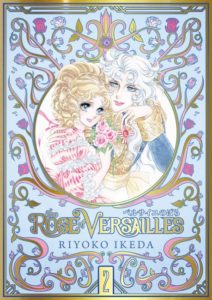
And, with that, I present the covers to Udon Entertainment’s upcoming release of The Rose of Versailles.


Yuri Manga: Fuzoroi no Renri, Volume 1(不揃いの連理)

July 16th, 2019

Tanaka Iori is a 28-year old OL in a stressful and not very satisfying job. Fuzoroi no Renri, Volume 1(不揃いの連理) begins with Iori on her way home after a hard day, stopping by a local izakaya for a meal, some drinks and a vent with Minami, the cute girl who works there.

The next day Iori wakes up very naked next to an equally naked Minami and learns that the night before she had been very drunk and had been sick over both their clothes. Mortified, Iori wants to make it up to Minami. She gets her chance when Minami hurts herself. Iori invites the younger woman to stay with her. And the mishap is forgotten as they- much less drunkenly this time – become lovers. Iori’s still got some dealing to do when she learns that’s she’s now going out with a much younger woman. Yes, Minami is an adult, but that doesn’t stop Iori from feeling kind of old.

Minami has tribal tattoos on her arms neck and back and multiple piercings (thus, perhaps for the first time in non-gang ouvre do I see someone who is my type in a manga. ^_^) but is not a juvenile delinquent or gang girl. Iori learns, though, that Minami grew up as a foster kid and her foster sister, Shizuka, and she did get int a lot of trouble. When Shizuka shows up at the door, Minami is very firm that Shizuka should leave Iori the hell alone. But Iori has her own hands full with her younger sister, Saori, who is giving Minami a hard time for having moved in with her older sister. When Shizuka and Saori encounter each other in school, it s match made in somewhere tangential to heaven. ^_^

Iori is a pretty good partner, noticing when Minami gets a new pierce and gets one of her own to understand Minami’s life. Minami is likewise a good partner, cooking for Iori and helping her get ready for work. Coworkers have noticed the change in Iori, too.

The drama in this slice-of-adult-life is relatively gentle, with a few not-gentle punches and kicks from Shizuka and Saori…but once they have each other to abuse verbally, that settles down. ^_^;

I really enjoyed this book, enough that I finished it and started again to see what I had missed anything the first time around. I generally like Mikanuji-sensei’s art, even if it is a tad moe for me. The scenario of a mis-matched pair who completely work for and with each other appealed and it was especially nice to see tattoos and piercings not evidence of criminal class existence, just as body art.

Ratings:

Art – 8
Story – 8
Characters – 9
Service – 3 Some light nudity, nothing salacious
Yuri – 10

Overall – 9

The initial drunknness aside, both Iori and Minami are hardworking, decent people that I quite like…and would very much like to continue to read about.


Yuri Manga: Liberty, Volume 1 (リバティ)

June 27th, 2019

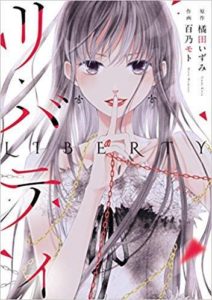
Liberty, Volume 1 (リバティ) follows Honjou Maki, a boyish young woman who works for a small game company and is happy enough with her life, although the constant talk about who is seeing whom and who she might be or not be interested in is tiresome. Maki’s boyish , but still resents the fact that the other women just presume she’s not interested in men. She’s on her way home when a woman runs out into the street in front of Maki’s car. It wasn’t a suicide attempt, though…the woman was just trying to save a kitten from being run over. The women is flirty and flighty and before Maki drops her off, the woman asks Maki if she likes women. Maki isn’t able to answer, but the woman, also recognizing her specific boyishness calls her “Walking Coming Out” and writes down a phone number on Maki’s hands before she get out of the car.

Maki calls the number and learns that it’s for a musical performance venue. After work she goes over the location where the line is very long to get in. She learns its for the band Liberty and that the woman she met is its lead singer… and, that she is expected, although her new nickname is now “Aruku Coming Out” and she is a walking advertisement for her own sexuality now, whether she likes it or not. The singer takes her aside after the show and aggressively kisses Maki, making it very plain that she is interested in the other woman.

The next day Maki meets the new band that’s been signed on to do the music for the game her company is working on– the band is Liberty and their lead singer is Liz. Maki is clearly genuinely interested in and attracted to Liz, but Liz’s reactions are not…within normal parameters. When Maki gives her a pair of earrings a present, Liz yells at Maki to get out. We and Maki eventually learn why, but by the end of Volume 1 Liz is still mostly an enigma to both us and Maki. And her reactions are still over-the-top in any situation.

This manga is a collaboration between voice actress Kitta Izumi (Cordelia from the Milky Homes franchise)and Yuri manga artist Momono Moto, whose work I have followed for years. This story really plays to Momono-sensei’s strong points, too, with strong emotions and reactions and Liz’s light-gothic fashion look, which contrasts nicelyto Maki’s downplayed business casual. I’ve liked this story since it debut in Galette in 2017 and have been eagerly awaiting a collected volume. I noticed immediately that when Kitta-san announced this on Twitter, it was not published by Galette Works, instead it is a Kadokawa book. Good for them for getting the investment. (It’s not too hard to see Kadkoawa’s angle – voice actress from a Kadokawa series, veteran Yuri artist and their current investment in Yuri as a growth market. It all adds up.)

The book includes a short interview with both creators that is surprisingly cute and energetic.

As an adult life story with both a cute mostly-closeted boyish character and a beautiful melodramatic feminine character, Liberty makes for great Yuri soap opera.

Ratings:

Art  – 9
Story – 8
Characters – 8
Service – 7 Yes, in an adult female-focused way. Maki’s seduction is not explicitly consensual but meant to be understood as mutual.
Yuri – 10 with a light flavor of LGBTQ

Overall – 9

I really like this story and am pleased that Maki and Liz are going to get a chance to develop as characters and as a couple.


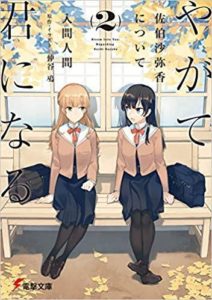
Yuri Light Novel: Yagate Kimi ni Naru Saeki Sayaka ni Tsuite, Volume 2 (やがて君になる 佐伯沙弥香について)

June 23rd, 2019

At the beginning of 2019, the first volume of the Yagate Kimi Ni Naru side novel focusing on the character of Saeki Sayaka, Touko’s close friend and Student Council Vice President, surprised the heck out of me, with its grasp of the character’s voice and insight into this young lesbian’s development as a person.

Yagate Kimi ni Naru Saeki Sayaka ni Tsuite, Volume 2 (やがて君になる 佐伯沙弥香について) was even better.

The story begins with Sayaka already in high school, already the VP of the Student Council and very, very aware of Touko’s sudden interest in this first-year student. Sayaka is hyper-vigilant of Touko’s glances, the way she introduces and stands near this girl, Sayaka knows…and understands…that she’s lost her chance with Touko.

The story then backs up to how she meets and becomes friendly, then friends, with Nanami Touko, a woman who surpasses her academically and in every other way. A woman she is content to follow, a woman she knows she cannot have, but is unwilling to give up on the idea of. Until Yuu comes along.

My favorite scene comes early as Sayaka, having seen the casual relationship between her classmates Aika and Midori, asks Touko is she can speak with her in private. Touko jokes in asking if Sayaka is going to confess to her? Sayaka cannot even begin to imagine how to do that at this point, although yes, she wants to. But no, Sayaka simply wanted to know if she and Touko could call each other by their given names. Touko jumps straight to calling her “Sayaka” with no honorific, which settles the matter. It was a sweet, earnest and heartfelt scene which provides excellent insight into Sayaka’s still-quite serious personality. She’s learning to fake casual sincerity, but when she’s actually sincere, she is very serious indeed.

The story walks us through specific interactions as Sayaka finds herself happily dragged in Touko’s wake. She joins the council because of Touko, learns about Touko’s sister, and her motivation for the play. As their third year in high school dawns, Touko and Sayaka are, for the first time in differing classes, but that is not what concerns Sayaka. As they turn away from one another at the bulletin board, Sayaka sees Touko walk towards that first-year who, through no fault of her own, has stolen Sayaka’s chance at high school love.

And then the final 9 pages begin and my eyes could not have gotten bigger. But first….

Sayaka does not identify herself as gay in this novel, but she does admit to Touko, during a conversation about being confessed to, that she has been confessed to…by another girl. And that they had dated. The next page begins with Sayaka thinking,”There. I said it.” This is the closest she comes to saying anything about her interest in women generally or Touko specifically…although we know that she will at least once before the end of high school, admit the truth to the subject of her feelings (presuming we are caught up on the manga up to Volume 7.)

But back to those last pages. The entire novel had, up to that point, been written in 3rd person. The final pages switch to 1st, as “I” am sitting in a far corner of the college campus, when a woman comes around the corner. “I” can see that she is crying. The girl apologizes and I offer some civility as comfort.

(At this point I – the reader – thought we might have been getting another glimpse at Miyako’s meeting with Riko, which followed this exact pattern. About which I have a little rant, if you will indulge me: “Random Woman A meeting Random Woman B in a random corner of the campus” is cute, but it also effectively strips any possible queer identity from the characters. It’s not like they met at a LGBTQ mixer, book club, class on gender studies, at a bar, live music show, volunteer opportunity or any one of the dozens of ways two women might actually meet. Nope. Two couples in this series just happened to meet when one person came running around a far corner of the campus to have a good cry and the other just happened to be there. I bet the odds on that are good. /rant /eyeroll/sarcasm

The two women end up sitting next to one another in a class. The formerly crying girl asks if “I” am a first-year. No, “I” am a second-year. “Oh, so you’re my sempai.” “I” am amused by this, and at this point has made it clear that the first-year reminds us of Yuu… and of our failed high school romance. “I” am absolutely aware of three previous school romances and how each of them was a failure of a sort. “Sempai, huh?” The first-year asks the narrator their name and “I” reply, “Saeki Sayaka.” As the pages come to a close, Sayaka is contemplating her future…and this woman.

And then the book ends, and I flipped the page and re-read the advert for a 3rd Saeki Sayaka novel for like the 49th time.

We are going to get a novel about Sayaka after the manga. Ahhhh!

I do not expect any more queer identity in this upcoming book than we had in the previous two, but it would be nice if, you know, Sayaka got to ask someone out who liked her the same way. I’m not asking for much, I don’t think.

Ratings:

Art – 10 Once again, art by the series creator, so….
Story – 8 A much stronger sense of Sayaka’s feelings for and about Touko, that we could not get from the manga
Character – 10
Service – 1 Not really this time
Yuri – 7 This book is chock-full of Sayaka’s thoughts about being attracted to Touko for all the reasons.

Overall – 9

Once again, I am pleasantly surprised to have fully enjoyed a novel by Iruma Hitoma, in which the tone and feel of the character as we know her is captured well. And I look forward to the sequel as it takes us into new territory.


Yuri Manga: I Married My Best Friend to Shut My Parents Up (English)

June 17th, 2019

Let’s start this week off with a manga that veered closeish to addressing LGBTQ life. That’s right, we’re talking Kodama Naoko’s I Married My Best Friend to Shut My Parents Up.

Machi’s parents are pressuring her to get married – because that is what should be done. And she’s just not interested. Her friend Hana needs a place to live while her apartment is renovated and she thinks she’s got a good idea – she and Machi will pretend to be a married couple. Surely that will get Machi’s parents off her back, one way or the other. Machi agrees, with significant reservations, while Hana gleefully starts playing house with the woman she clearly loves.

As I said in my review of the Japanese edition,(the title of which I read as I Fake Married my (Female) Friend Because of My Annoying Parents,)  “But if the idea of a fake same-sex marriage of convenience isn’t going to bother us, then the idea that the actual relationship between Hana and Machi is horribly unfair, is just fine. (-_-) ”  Hana is happy enough, but Machi, a character uncomfortable with herself her whole life, has no idea how to be a good friend to Hana, much less a good partner.

Machi’s character has a lot of developing to do, and we’re happy for her that she does it. Hana is there not just as a catalyst, although to call Machi’s development an “awakening” might be going a step too far. The end result is that Machi and Hana build a relationship that works for them and the Japanese readership learn (presuming they didn’t already know) about the Shibuya same-sex relationship certificates. As I say, this story veered cloeseish to addressing some real issues as Machi faces down derision and homophobia from her parents.

The last part of the book is a separate short about two girls on track team, their emotions around their own abilities…and each other. I think this story would have benefited from being longer and more nuanced, but “nuanced” is not Kodama-sensei’s strong point.

Ratings:

Art – 8
Story – 7
Characters – 9 for Hana
Service – 2 Some light romance/sexual discomfort
Yuri – 7
LGBTQ – 4 Mention of the real-world same-sex partnership certificates, but no discussion around it

Overall – 7

One could consider this a LGBTQ manga, but I’m still disposed to thinking of it as Yuri. I’m not sure why exactly – perhaps because it doesn’t feel like a sincere attempt to address those issues or that the issues were exposed only as a byproduct of a gag plot complication or maybe my discomfort with the artist’s take on relationships has colored my opinion. I cannot put my finger on it, and I’ve been thinking about it since I read this in Japanese the first time, last year.