Archive for the Artists Category


Yuri Manga: Kiss & White Lily For My Dearest Girl, Volume 1 (English)

April 24th, 2017

Anoko ni Kiss to Shirayuri wo broke into the Yuri marketplace in 2014. Although it recycled well-worn Yuri tropes, it found a willing audience with the (primarily male) readership of Comic Alive. Subsequent volumes ran with the “Yuritopia” idea and used it to tell increasingly complex and interesting stories centered around relationships at a fantasy all-girl school. I find that, as the stories move away from the first volumes, they have become more interesting – even the relationship of the main couple has moved past it’s initial boundaries.

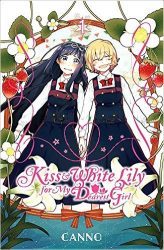
And here we are, able to enjoy those volumes in English, with Yen Press’ release of the series as Kiss & White Lily for my Dearest Girl. In Volume 1  we meet pathologically hardworking  Shiramine Ayaka and slacker genius Kurozawa Yurine. 

As I’ve said several times recently, this particular set up is somewhat teeth grinding for me. ^_^ I’m not saying it’s unrealistic or anything, au contraire, I know several of those geniuses and let me tell you how *vexing* it is to work one’s ass off only to never be as good. ^_^ So, despite her melodrama, I’m on team Ayaka, all the way. And, if it weren’t for the fact that Yurine was also on team Ayaka, I would have chucked this series away a long time ago. ^_^

But there we are, Yurine has that even more vexing quality of being sincerely lovely as a person. Ayaka is wholly unprepared for liking her rival and even less prepared to be liked in return. Nonetheless, as their like slips causally into “like” like, Ayaka becomes somewhat less unprepared for everything.

A side story starring Ayaka’s cousin Mizuki and her closest friend and track team manager Moe, adds a little typicality to the story and gives the volume another well-worn path to walk through the lilies.

On the negative side, this series inhabits that all-female fantasy world in which adults and men exist only as shadows and barriers to happiness. It’s all a little tiresome. But, ultimately, despite the fact that this series is a “pair-’em-up” it works because none of the characters are unlikable. No matter how well-trod the paths might be, when we can sympathize with the characters, we’ll want them to be happy. We want them to give hope to all the girls who might read this series and imagine that kind of happiness for themselves and hope that some of the guys reading might just get that this is a valid way to be that doesn’t actually involve them and is still okay.

Overall, this series translated well to English. again thanks to the deft touch of Jocelyne Allen (who apparently is the current queen of Yuri translation!) I wasn’t sure if the screaming and melodrama might work, but I’m well-satisfied with the results. Technicals are otherwise well done and once again, I feel that this volume offers the kind of authentic reading experience that fans crave. 

Ratings:

Art – 8 
Story – 8
Characters – 7 
Yuri – 8
Service – 1 on principle only

Overall – 8

This ran in Comic Alive, but it could have run in a girls’ magazine as art and story are firmly rooted in shoujo stereotypes. Volume 2 will be out at the end of May!

Many thanks to Yen Press and Brgid Alverson for the review copy for this volume. ^_^


Yoshiya Nobuko’s Hana Monogatari, Part 2 (花物語 下)

April 6th, 2017

Today I award myself a Yuri History Achievement Badge. I have finished Yoshiya Nobuko’s Hana Monogatari, Part 2 (花物語 下).

So many dead girls.

Girls died from starvation, illness, train accident, ship sinking, and at least one threw herself off a tower. It would be creative if it were, say MURCIÉLAGO, but as it it wasn’t, it was actually a little distressing.

The second half of the series continues the trend we saw in the first half of the collection, as stories became longer and longer as the series went on. In some cases, it worked and others not so much. I will say this about Yoshiya-sensei’s writing – as she has more time/page count to spend on story, she never fell back into lazy writing. Characters get more developed and fleshed out and while large, overarching themes repeat, none of the stories are themselves repetitious.

This second half is notable for containing the fascinating, yet ultimately depressing, Yellow Rose (which has been wonderfully translated by Dr. Sarah Frederick and is available digitally. I recommend it highly and hope you’ll all consider picking it up  For a mere $2.99, you can read one of Nobuko’s best-known, and genuinely interesting stories.

Of the two stories that stick with me, most I have completely failed to remember which flowers they were attached to. ^_^; One, exceedingly long story, spoke of two sisters, one plain and of average intelligence and accomplishment who sacrifices everything to help her musically talented and attractive younger sister to thrive after they are orphaned. It was such a massive ball of misery that just kept dragging on. It never became hopeless, it just didn’t end, and then she died. Well, then. But her sister, at least, did thrive, and I suppose that made it all worth it. Somehow. 

My second-favorite tale was about a young woman who lived alone with her mother and younger sister who quits school to begin working. The description of the office workplace, with the female secretarial and typist pools working with the male staff was fabulous. It was if suddenly we were catapulted from the turn of the century into a 20th century background that we would instantly find recognizable. Men and women smoking in the office(!) and the young typist forming a strong affinity for the woman who ran the typist pool. It was all so 1930s urban. I could picture the clothes very clearly. ^_^ This stood out because, along with Yellow Rose, it portrayed a young woman becoming a professional typist as a kind of freedom and also as a kind of bondage.

Also very interestingly, the second half includes bullying at school – of the sniping behind one’s back kind – and a few stories which were built around betrayal.

If there was one theme, though, that kept repeating, it was the way in which young women interacted with the technologies of the day. From a steam train ride through a horrible frightening storm, to war-time telegraphs, to typing, this books is set firmly in the 20th century in a way that the first half just wasn’t. City vs country was another motif. A number of the stories contrasted urban vs rural. It was pretty obvious that Yoshiya-sensei herself favored the city, but that meant that she often had her characters defend the rural areas with vehemence.

Hana Monogatari was less inside it’s own head than the dense and self-absorbed Yaneura ni Nishojo. The short-story format gave Yoshiya-sensei a chance to really delve into creating different scenarios and the characters who would inhabit them. We spend enough to time with characters, to (in many cases, ) predict the character’s reactions. There’s less frivolity and phantasm in this half, but instead it is filled with a loving look at modern Japanese life in the 1930s through the eyes of young women who lived or died during that time.

Ratings:

Overall – 9

I’m pretty sure that, despite the privation and deaths, I enjoyed the collection as a whole. ^_^ But “Moyuruhana” from the first half still wins and I hope one day to read that in translation. 


Card Captor Sakura, Clear Card Arc Manga, Volume 1 (カードキャプターさくら クリアカード編)

March 14th, 2017

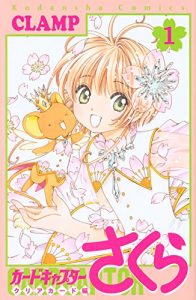
In the middle of series getting reboots and homages,and re-mastering, Card Captor Sakura is back with a honest-to-goodness sequel.

Card Captor Sakura, Clear Card Arc, Volume 1 (カードキャプターさくら クリアカード編) begins a year or so after the original series ends, as Sakura is about to begin middle school. 

The arc begins with a dream, as the other arcs have. A cloaked and masked figure appears. Sakura’s cards are all lost to a storm and a new key appears.  She wakes to find the new key in her hand and all her cards gone. Clearly, she will be tasked with gathering cards once again. 

Almost immediately, she encounters her first card. She and Kero-chan are old hands at this now, there’s no confusion about what to do and she nabs “Gale.” The card has a front and back design, but the background is transparent, and the other side is invisible. Cool. I know there’s a set for sale, I wonder if it works!

Not much has changed in this year that has passed. One major difference is that Yukito and Yue seem comfortable now sharing a body. When she needs to speak with Yue, Sakura asks Yukito if it’s all right. And it is always all right. 

Another is the lack of confusion about how to handle the Clow Cards. It’s all very business-like. Tomoyo, of course (!) is thrilled beyond belief that she can design new costumes for the Card Captor.

And finally, Li Syaoran has returned. The year has been good to him. He’s taller and calmer and clearly more mature. When he and Sakura reunite, they embrace like they really mean it. He’s still carrying the bear Sakura made for him and, although Sakura does not know this, is in touch with Eriol.

The backup cast is the same as well, although class assignments have shuffled them around. Yamazaki and Naoko are in Syaoran’s class, so the stories are even weirder and less pleasant than ever before, to Chiharu’s chagrin. Yukito and Touya are still inseparable.

As the final chapter wraps up with Sakura capturing the Siege card, we and she have no idea at all who the cloaked figure is or what the story is this time. More importantly, neither Yue no Kero-chan know either. (I’ve read the magazine chapters, so I have a little better idea what’s going on, but I’m not telling. ^_^)

If you like the original series for exactly what it was, (as I did), you’ll enjoy this new series. If you’re hoping for something more “adult” you’re not getting it. One year went by, not a decade. But if you did like it, you can also look forward to the new anime, which will premiere in 2018!

Ratings:

Art – 9
Characters – 9
Yuri – 1 Tomoyo is the same as ever
Story – 7
Service – 2 Inevitable slashing of Touya and Yukito.

Overall – 9

Oh, wait…there was one other difference. When Sakura said good-bye to her mother as she does every morning, Fujitaka did not see Nadesico, as he usually does. Hrmmm….


Yuri Manga: My First Lady (マイ・ファーストレディ)

March 9th, 2017

My First Lady (マイ・ファーストレディ) is a short story collection by Takemiya Jin of stories that ran in Comic Yuri Hime magazine. The single unifying factor is that, in each story, under unique circumstances, a girl realizes that she has feelings for another girl.

The stories themselves differ mostly by outcome. In the cover story, the girl gets the girl. In another, the girls gets the girls, but we can see that the relationship will be manipulative and creepy. In another, the girl does not get the girl. In the last, she may have been pining away for the wrong girl.

The collection is a bit like a “roll the dice” game version of Yuri story-telling, but while nothing is spectacular, it’s still enjoyable.

The one thing that remains tight throughout is Takemiya-sensei’s ability to capture enignmtaic and complex emotions in character’s expressions. Sometimes, I’ll spend more time on wondering what a character is thinking than worrying about the overt text, especially in shorts like these. 

So, while this isn’t a standout collection, it’s a good solid look at first love with a variety of outcomes.

Ratings:

Art – 8
Story – 7
Character – 7
Yuri – 7
Service – 0

Overall – 7

I’m always happy to have another collection from Takemiya-sensei. ^_^


Yuri Manga: Hana to Hina ha Houkago, Volume 3 ( ハナとヒナは放課後 )

February 27th, 2017

In Volume 1, we met Hana and Hina, schoolmates who share a (against school rules) job working at a character goods store. Hina has a second part-time job modeling. In Volume 2, Hana learns something world-changing – Hina also previously had a girlfriend. Fighting with herself about nascent feelings for the younger woman, this changes her own perspective radically.

In Volume 3 of Hana to Hina ha Houkago ( ハナとヒナは放課後 ), Hana screws up her courage to bring up Hina’s former relationship, only to have the idea shot down by Hina, who blames Maiko for making it all awkward. She assures Hana that she’s “normal.” Now Hana is thrown into a real tizzy. She still likes Hina – having found the courage to admit that, she is devastated that her feelings won’t be returned. Things become very tense between them. Will they get together? I’m not going to spoil this book, as you too will be reading it in English (Volume 1 | Volume 2 | Volume 3) soon enough! But…seriously…what are the chances that they don’t get together? Pretty much nil, since it’s a series by Morinaga Milk. ^_^

The what, though, isn’t really that important. The how is. 

If there is any criticism I have of Morinaga-sensei’s work, it is the fantasy of it all. Stress exists only as an internal struggle – the character(s) wrestling with their own feelings. There’s almost no interaction with external difficulties. No disapproving parents, no prejudiced school administrations. It’s a handwave I’m glad to accept, as it allows the story to exist as it’s own thing, in the fantasy of a lily-scented landscape. This may be changing

(In the following notes, there may be some small spoilers. I’ve done my best to minimize them, but be warned.)

In Kisses, Sighs and Cherry Blossoms Pink, Hitomi merely fantasizes about a future in which she and Nana are adults and can be together. In GIRL FRIENDS (Volume 1 and Volume 2) Morinaga-sensei took a step outside the isolation of a “couple in love” and gave Akiko and Mari friends…friends who accepted them and their relationship. In the very end, Mari even gave some thought to the issues of coming out to parents and what school and work might think…in the future. 

In Hana to Hina ha Houkago, it is through the existence of a previous relationship that Hana learns about Hina’s  sexuality. This is not unknown as a plot complication in manga, and often is denied, as Hina does. But it’s also addressed later on when Hina speaks more honestly.

Hana still has the benefit of a friendship outside Hina and it is in that friendship that she finds the strength to speak to Hina, when the tension between them is becoming oppressive.

The ending touches briefly upon two new issues for a Morinaga-sensei work, marriage and coming out. They are both presented with a creative flourish, without connection to the “real” world, but both in unique and positive ways. In a sense, it’s Morinaga-sensei herself taking tentative steps with her hyper cute romance narratives towards something with more depth. With Otouto no Otto running in the same magazine, maybe Morinaga-sensei’s feeling more confident about her narratives “coming out.” I’d like to think that she is. In her next series, we’ll hope to get the characters navigating dating or living together. ^_^

Ratings:

Art – 8
Story – 9
Characters – 8
Service – 6 Sex is a thing that happens
Yuri – 8 See above

Overall – 9 for sexuality, coming out and marriage actually being addressed. ^_^

Morinaga-sensei shows us again that she’s strongest in a character-driven plot when she’s given the time to tell the whole story. At 3 volumes, I think Hana to Hina ha Houkago is her strongest work to date.