Archive for the Shimura Takako Category


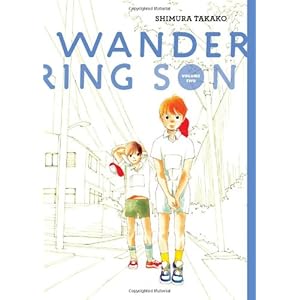
Wandering Son Manga, Volume 2 (English) Guest Review by Kayden L

January 19th, 2012

Welcome back, I hope you enjoyed yesterday’s blackout. As you may have guessed from my many years of writing about it here, freedom of expression is pretty much the one issue I consider to be the single *most* important issue there is. Obviously, as I discuss copyrighted materials here, and post covers and the like, it’s critical to me that no one decides that my blog or any of its content must be blocked. Framing SOPA and PIPA as saving American jobs is especially nasty, as it is those very same corporations that supported these bills who have systematically undervalued, underpaid and outsourced the creative efforts of the people who make the material they lay claim to. Of course I support creators’ rights and their copyright, but SOPA and PIPA have no stronger provisions for creators.

As with LGBTQ content and purges to supposedly “save the children,” I feel as if we must be extra vigilant with any designs to block Internet access. Thus, the blackout. Thank you for bearing with me.

In any case, today we come back with a bang! A brand new Guest Reviewer, Kayden L, is joining our ranks. When I reviewed Wandering Son, Volume 1, Kayden made some great points in the comments about the spectrum of transgender and genderqueer life, and so I requested Kayden review Volume 2. And here we are. ^_^ Please welcome Kayden and enjoy this guest review!

Ahoy, everyone. My name is Kayden and I identify as a trans/genderqueer individual, and here’s my review of Wandering Son

Time seems to be moving quickly in Volume 2 of Wandering Son. Already, Shuichi is heading into the 6th grade, but as the characters soon learn, age comes with increased social and gender pressures.

When Yamazaki-sensei tells the class to write an essay on what their dreams are, we find that Shuichi experiences “censor’s block” (rather than writer’s block). After struggling with the assignment for several nights, Shuichi submits a paper that says, “I don’t know yet. I’m sorry”. As readers, we know that Shuichi has a dream – “to be a beautiful woman” – but the portrayal of Shu’s self-policing is one of many examples of Shimura-sensei’s excellent storytelling skill. Through Shuichi, readers are able to get a glimpse of the closet in which many LGBTQI people hide. Seemingly irrelevant day-to-day decisions, such as the simple task of writing about one’s hopes and dreams for the future, become difficult for many closeted individuals who feel like they may be ostracized, ridiculed, or harassed for having personal wants, needs, preferences, and/or goals that deviate from social norms.

Luckily, Shuichi is able to find full acceptance with Takatsuki-kun (Yoshino) and Chiba-san (Saori), and it is within this the tiny community of friends that Shuichi develops a positive outlook on identity. That community is slightly expanded when Shuichi and Yoshino, dressed as a girl and a boy respectively, go out on one of their excursions and befriend Yuki (the woman who flirted with Yoshino in Volume 1). Initially, Yuki believes that Shuichi is a girl and that Yoshino is a boy, but she eventually learns the truth and becomes a sort of mentor, along with her boyfriend, Shii, to both kids by offering emotional support; adult approval of who they are; and a safe physical space in her apartment,  where they can be themselves. Perhaps most importantly, Yuki tells the kids to have pride in their own selves: “You must never become discouraged or afraid… you two are just too good for that”. When a classmate harasses and calls Shuichi a faggot during a school trip, it is Yuki’s words that inspire Shuichi to find the strength to stand up against the bully.

Shimura Takako’s Wandering Son is a beautifully drawn and skillfully executed story about being different and how people struggle with being alone. It is an excellent springboard for LGBTQI discussion, and I believe that its universal themes (eg. finding your identity, being bullied, growing apart from friends) can appeal to everyone, rather than just LGBTQI audience.

Naturally, the story does not reflect all trans/queer experiences, but when I read this series, I get nostalgic because I see my younger self in Yoshino and Shuichi; I remember doing, feeling, and thinking the exact same things. I take my hat off to Shimura-sensei for capturing a trans/queer experience that feels genuine and honest.

For any of you who are interesting in reading Volume 2, I tried not to reveal too many things… so if you want to know Yuki’s secret, or find out how a family member reacts when Shuichi’s secret is discovered, you should give Wandering Son a try. Also, there’s an essay, written by manga scholar Matt Thorn, at the end of the book that’s titled “Transgendered in Japan” that may be of interest to some of you.

Ratings:

Art: 8
Story: 8
Character: 9
LGBTQI: 9
Service: 1 for Yuki’s “cradle robbing”… and for what her boyfriend did in the elevator

Overall – 8

Thank you Kayden for another perspective on what I agree is a stellar series!


Yuri Manga: Aoi Hana (青い花), Volume 6

August 25th, 2011

In Volume 5 of Aoi Hana (青い花), I commented that Fumi had made it past the third stage of coming out, saying something to a complete stranger. In Volume 6, she makes it to 3.5, telling close friends.

During summer vacation, the girls all head to a hot spring, accompanied by freshman Haru and, more notably, the teacher that Haru says is her sister’s lover. Fumi overstays her time in the outside onsen because she’s embarrassed and subsequently passes out. When she wakes in her room, the teacher comes in to see if she’s okay, and Fumi ends up asking her a question about liking another woman. This is not unconnected, as Fumi’s embarrassment is, in part, at catching herself looking at Akira’s naked body in the bath.

Later that night, Fumi also inadvertently says out loud that she’s in love with A-chan, and Akira says, also out loud, that she knows. There is a tension now between Fumi and Akira; but whether it’s anticipatory or not, they aren’t quite sure and neither are we.

Once home, Akira visits Fumi and asks if maybe they should just try dating and see how that works out. Body and mind exploding with fear/joy/freaking right out, Fumi has completely lost whatever cool she usually has. But, at some point, Fumi pulls herself together and, when they are out on their first date, she kisses Akira with no second thoughts.

Fumi is speaking with her friends, Pon-chan and Mugi, when Pon-chan asks if Fumi is “that way,” (and Mugi flips out at Pon-chan because you don’t *ask* that kind of thing!) we see that Fumi has once again adapted to her new, stronger self and replies quite calmly and honestly that yes, she is “that way,” then lets her friends work it out for themselves. Which they do, very quickly, because after all Fumi is their friend and they love her. (In a nutshell, the number one reason for coming out, IMHO.)

But, wait, there’s more! Fumi’s parents leave on a romantic trip over Christmas, leaving Fumi and Akira to stay home. They buy cake, crack open the bottle of champagne Fumi’s Dad had received and Fumi proceeds to get just tipsy enough to say things she wants to say to A-chan. And so she does. About how she wants to have physical intimacy with her friend. Knowing that the excuse of the alcohol is the best lead-in she’s ever going to get, Fumi drags Akira about three steps forward in the relationship, the same ways she has since the very beginning – by being honest.

Fumi ends by saying that it’s really probable that A-chan’s “like” and her “like” are different, but she really likes A-chan…who responds by embracing her.

And I smiled. I smiled through just about every single page of this book. My god what I would have given for Fumi to have existed when I was 15.

Ratings:

Art – 8
Story – 10
Characters – 10
Yuri – 10
Service – 1

Overall – 10

If this book is ever translated into English, I will endeavor to make this story the light at the end of the tunnel for every gay teen in America. There are a lot of young women out there who need Fumi in their life.


Wandering Son Manga, Volume 1 (English)

July 17th, 2011

Wandering Son, Volume 1 is my vote for manga most likely to cause a quiet revolution without becoming a best seller.

As you know, if you pay attention to any manga news at all, Wandering Son  by Shimura Takako, is the story of two young people as they realize and deal with the fact that their gender does not match their bodies. In Volume One, we are introduced to the cast, and to the general situation in which Shuuichi and his classmate Yoshino start to deal with puberty and the disconnect they feel about their selves and the bodies in which those selves reside.

This past week I was pleased to be part of a discussion of this book at the Manga Out Loud podcast. I hope you’ll listen to it, as we discuss both the book and the anime in some detail.

The story itself is gentle…as I say in the podcast, almost tentative. This territory is difficult for many people to accept and the manga audience is not, for all that it enjoys stories of gender switching as comedy, as socially liberal as many might think. Shimura takes her time…and ours…to introduce the idea that a body may not be the right one to be in.

As a result, Volume 1 might feel a bit timid to those readers who are more used to Aoi Hana. Having just come off reading Volume 6 of Aoi Hana, I found myself a little surprised at the tentativeness of these first chapters…and then suddenly I realized that this manga is nearly ten years old. The strength Fumi shows was not born overnight and Shuuichi and Yoshino are younger than she is. After talking with the folks on the podcast, I realized what a profound revelation this series will be to people for whom this is an entirely alien discussion. And I’m utterly blown away by how deft and masterful Shimura has become in the last decade.

In conclusion, I’m going to cheat and quote Ed Sizemore from Twitter, when he said, “Wandering Son doesn’t just open up doors of perception for me, but makes me want to learn more about the real life experience of transgender people. To see world through their eyes so I can relate to them better.”

There will be no Wandering Son cosplayers, you won’t find Wandering Son figurines or headbands at conventions. But in these pages, Shimura can bring the thoughts and experiences of the transgender community to people who have never before thought about life from Shuuichi’s or Yoshino’s perspective. That is the revolution contained in the pages of Wandering Son.

Ratings:

Art – 7
Story – 8
Characters – 9
Yuri – 0

Overall – 8

I hope you will all consider buying a copy of the manga for your library (or request that it buy a copy, if it still has the budget to do so.) Let’s change the world, one manga at a time – starting with this one. I’ve already got a copy for my Libary. ^_^


Hourou Musuko/ Wandering Son Anime (English)

June 22nd, 2011

Many of you have, over the last few years, written in to tell me about Shimura Takako’s series Hourou Musuko, Wandering Son, to ask me when I would review it, to remind me to add it to the News Reports.

As many of you have noticed, I have not reviewed it as of yet. The reason for this is relatively simple – while Hourou Musuko is undoubtedly a masterpiece, it’s not really Yuri.

But, it *is* a masterpiece and a masterpiece dealing with gender transitioning, which is something that manga and anime typically play for laughs at best, rather than handling it with any seriousness or sensitivity. So, I guess it’s time to review this series, already. ^_^

My problem now is – I don’t know what to really say about it, other than it is one of the very finest, most beautiful anime series I have ever watched.

Hourou Musuko is not the first time Shimura has dealt with gender in a story. Her Boku ha Onna no Ko was the first time I ever encountered her work. I was not overwhelmed by any of the stories in that collection – certainly nothing in it impressed me the way Aoi Hana did. But Hourou Musuko is something amazing, even compared to that.

Somewhere after Boku ha Onna no Ko ( the cover of which has a cameo as a poster in the Hourou Musuko anime,) Shimura reached deep into herself and found a real story – a touching story – a painful and beautiful story – about two young people grappling with the fact that they are born into the wrong bodies. Hourou Musuko is emotionally gripping in a way that very, very few anime ever can hope to be. Shu-chan, the mtf heroine and Yoshino, the ftm hero, are people I would gladly spend more time with.

Art, music, voice acting was all sublime. I can say nothing but “wow” about it.

In this short anime, there were two scenes that really stood out to me – the scene where Yoshino gives Shu-chan her name and said that she’d take his, which was so touching I honestly couldn’t speak for an hour afterwards. And the scene during the school festival, when the kids all go into another class’s horror house, just to be able to gain catharsis by screaming.

As for Yuri. Well, the anime begins with the 33rd chapter of the story, as Shu-chan begins middle school, so I believe we skipped one potential Yuri relationship. I will, when the manga touches upon it, mention it. In the anime, however, I’d like to talk about Yoshino and Saori. They don’t really have a relationship, but by the end of the anime, there is some very tentative movement in that direction, IMHO. Of course, as Yoshino is a boy, temporarily in a girl’s body, this would not be a lesbian relationship, even if it were to exist. As Saori had some feelings for Shin-chan, who also feels he has been given the wrong body, it seems to me that any relationship that developed between Saori and Yoshino could legitimately be labeled Queer. Shu-chan has a relationship with a girl that, as Niki points out in the comments, isn’t being perceived as lesbian yet, but is clearly another Queer relationship.

Because this series is a masterpiece, it did terribly in the TV ratings for that slot. This cannot really be a surprise, precisely because everything really is on a standard curve of deviation. That means that the good will be appreciated by less people than the average – and the stunningly excellent will only ever be appreciated by a few. Nonetheless, this anime was stunningly excellent and, as I contemplate reading the manga, for the first time, I find myself frightened by it a bit. It might just be too good. I have always managed my expectations of manga and anime, and don’t want to see my ability to find balance compromised. On the other hand, I don’t want to be disappointed, either. So, I find myself in the position of convincing myself to not expect too much, but also not to let Shimura’s fully blossomed genius ruin anything else for me.

By the time I finish the manga, I fear that all that will be left for me to read and enjoy will be Aoi Hana and GUNJO.

Anyway…if you haven’t watch the anime yet, do. It’s a masterpiece.

And then buy the manga, which is being put out by Fantagraphics. Don’t forget to buy an extra copy for your library – they *need* this book.

Ratings:

Art – 9
Story – 9
Characters – 9
Yuri – 0
Service – 0

Overall – 9

This, more than any series I have ever reviewed here is a LGBTQ masterwork. In the future that I want to  inhabit, it will be considered a classic.


Canaan Radio CD and Aoi Hana Sweet Blue Radio CD

May 29th, 2010

I’m still making my way through the last of the items I bought while in Tokyo. Not surprisingly, the Light Novels take the longest. And since I’m now working from home, I no longer have a commute during which to listen to my Drama CDs. (I know, I know, poor me….) Today I happened to be driving down the office, so I had a chance to listen to the Aoi Hana: Sweet Blue Radio CD. It has very little Yuri. I had listened to the first Canaan DJCD a while back, but as it also has only the vaguest hint of Yuri, I decided to not review it.

Well, while it’s true that both of them have very little Yuri, they both have something much more important in common – the content is primarily the voice actors and actresses screwing around and cracking themselves up. I figure that’s worth mentioning.

To start with, the Canaan Drama Cd was backwards. That is, although Maria and YunYun are on the cover, the content actually features Tanaka Rie (Liang Qi) and Ohkawa Toru (Cummings.) The two of them really don’t need us during this CD, because they are perfectly capable of amusing themselves without us. There were times during the conversations where they had themselves laughing so hard I couldn’t for the life of me understand a word.

They also both slip in and out of their roles freely so, when Ohkawa-san makes a bad joke, Qiang Li suddenly threatens him with punishment. I recall (it was a few months ago that I listened to it) that there were at least a few scenarios in which Tanaka-san, as Qiang Li, moaned with desire over Alphard. That was pretty much what Yuri there was.

Likewise, in Sweet Blue Radio, Gibu Yuuko (nicknamed “Gibuling”) and Takabe Ai (“Rabuling”) really didn’t need us so much. :-) The bulk of the radio CD was the two of them doing their best impressions of other kinds of voice jobs – AM and FM radio announcers, the person in a department store that calls for lost people, the women on all those ubiquitous food shows who ooh and ah over mundane items like the sandwich she gushes over. Of these scenarios, the one in which Takabe-san does her impression of an AM radio DJ actually made Gibu-san snort out loud. That was worth hearing.

Also amusing was the next to last track in which Okudaira Akira was a special guest and when she “leaves” the studio and “forgets’ her handkerchief, Gibu-san “runs after her” and “misses” guest Manjoume Fumi when she comes to visit the studio. It was idiotic, but they were having fun with it.

In this CD, there is a ‘memory’ of Fumi telling Akira that she likes her and Akira responding that she didn’t mind, no…she was happy about it. That’s about it. But it was a sweet moment.

Both CDs are more silly than special. If you love the series and/or the voice actors and actresses, its worth it for the giggling, the puns, the utter goofiness when people who get along screw around in front of the mic.

Ratings:

Canaan DJCD – 7

Sweet Blue Radio CD – 8