Archive for the Guest Review Category


Sound Euphonium, Season 2 Anime (English) Guest Review by Michelle Denise N

February 1st, 2017

Woo hoo! It’s Guest Review Wednesday and we have a Guest Review! I love that so much. ^_^ Today, I hope you will welcome new Guest Reviewer Michelle Denise N of Lonelypond,and make her feel as welcome as possible.  The floor is yours, Michelle!

Sound Euphonium, the animated series, follows the haphazard learning process of euphonium (or baritone) player Oumae Kumiko, a somewhat reluctant first year member of the Kitauji High School Concert Band. Kitauji suffered a schism the year before, when the more serious first (now second) years quit over their lazy seniors’ lack of effort.  A new instructor, Taki Noburo, has taken over leadership, which attracted Kumiko’s fellow first year, trumpet virtuoso Kousaka Reina to the school. Kumiko had been trying to escape both band and Reina, after a ‘dud gold’ placement in middle school. SE’s first season built up a certain amount of dramatic tension between the two girls, which the second season glances at in the first episode, but then takes Kumiko and the rest of the episodes in an entirely unexpected ramble through the other relationships in the band.

If you love the trumpet, Sound Euphonium Season 2 is worth watching; the trumpet solos are sublime. If you watch anime not for music, but plotting and story pacing, SE2 would have trouble rating a dud bronze.

Kumiko is a mild, friendly, pleasant enough character. Through the first season, she spent most of her time with Reina. In the second season, they tossed Reina to the side, leaving her to pine over sensei while Kumiko wandered wide-eyed through relationships she didn’t really understand. There is also some attention paid to Kumiko’s relationship with her sister and Kumiko’s need to play music with someone she has an emotional connection to. The resolution to that plot point was shoehorned uncomfortably into the end of the season in a way that didn’t strike true for me with any of the characters involved. However, the smaller stories about other band members were short arcs that did actually catch my interest and my heart, unlike any of Kumiko’s antics. I mostly just felt like she was wildly out of her league emotionally, very naive.

Yuri: Let’s get the KumiRei question out of the way first off; it’s never really caught my interest as a combination, both girls seemed to be playacting. The first season of Sound Euphonium, Reina’s crazy boldness and how much I disliked her caused me to start yelling ‘devil trumpet player’ at the screen during her antics. The wonder and puzzlement of Sound Euphonium Season 2, is that just as I started to sympathize with her, she disappeared from the story.

If you look at Sound Euphonium Season 2, with no expectations it becomes the story of a young euphonium player’s innocent trampling through relationships more adult than she is capable of understanding, while searching for an emotional connection. Meanwhile, her weirdly intense best buddy from Season 1, the piercingly talented trumpet player with a crush on teacher, slips from story center to a near silent sideline participant, though still an epic trumpet player.

Non existent KumiRei chemistry gets eclipsed by the fragilely emo oboe player, Yoroizuka Mizore and the slightly swaggersome former flute, Kasaki Nozomi, suffering from one of those mutual misunderstandings that seem to plague fictional young girls who might have mad crushes on each other but never seem to talk about ANYTHING. This phenomenon always puzzles me when sighted in the wild. But this time, we get to an understanding, and a bonus nice moment that might lead the audience to think flautist and oboeist had kissed and made up at some point, but were refraining due to public location. And then Reina and Kumiko make fun of them, acing their callow youth best. There are also some exchanges that could be mistaken for flirting between several of the other band members, as well as the continued pining of trombone player, Tsukamoto Shuuichi, male, after Kumiko.

And we also have a pool episode, complete with bikinis.
 
RATINGS
Art 7 — some nice lighting, lots of outdoors moments, makes playing in band not visually boring
Story 5 — too unfocused
Characters 7 — many of them interesting, but leads let down by plot/pacing issues
Yuri — 3 (is that the right level for make it up and/or close your eyes and imagine)
Service 2
Overall 6 (watch it for the music and the flute player so get at least halfway through)

Erica here: Sound Euphonium, Season 1 and 2 are available streaming over at Crunchyroll. 

Thank you! I appreciate both the balanced perspective and the appreciation for music, although I’ll always be biased for woodwinds over brass. ^_^

The phenomenon you speak ofwhen characters just do not *talk to one another,  I refer to as “Jondalar syndrome” after the male protagonist of The Mammoth Hunters, who desperately wants to have sex with female protagonist Ayla, but just never tells her, for 400 pages. It was excruciating. Irritated the pants off me. ^_^


Halloween Trip to Japan – Guest Post by Bruce P.

December 14th, 2016

Hello and welcome to Guest Review Wednesday! Today we have an extra-special report  by our dear friend and co-conspirator, Bruce P, who ran off to Japan without me. :-( Settle for what always promises to be a good time, in the company of a great writer! Take it away Bruce! 


On a trip to Japan this Halloween I was able to attend a couple of events that might be of interest to Okazu readers. The highlight of which was an exhibit of artwork by Yamagishi Ryoko, the exceptionally talented shoujo mangaka who authored Shiroi Heya no Futari, one of the earliest Yuri manga.

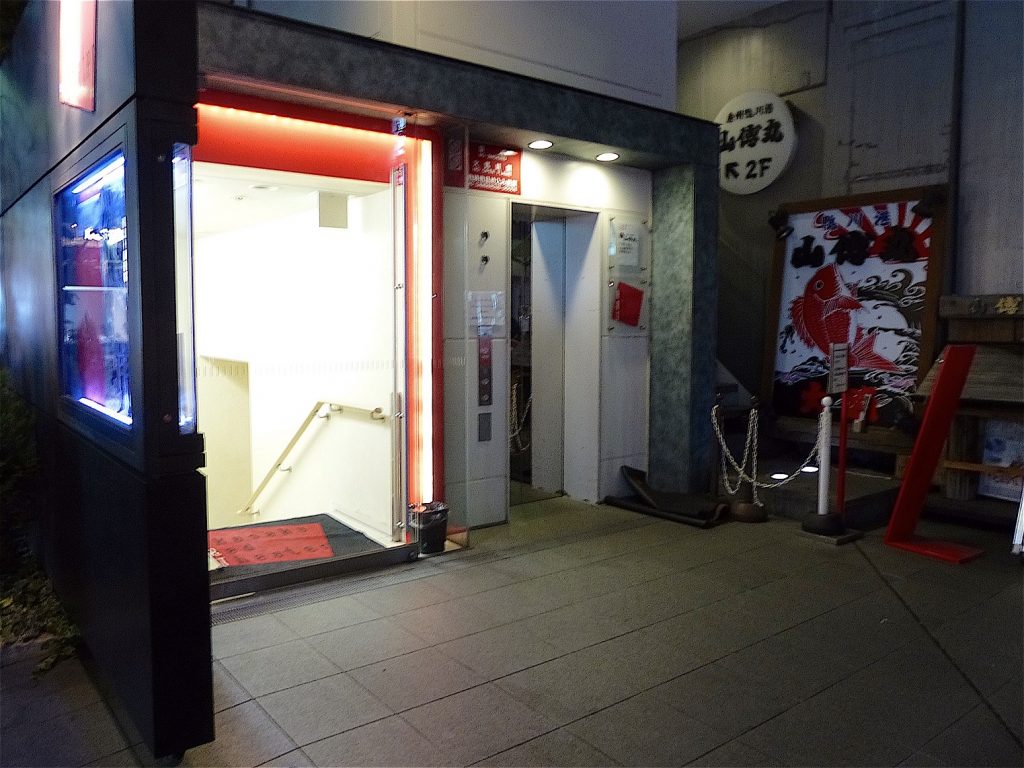
But first – a visit to the Akasaka Red Theater, venue for the live performance of Grand Stage, the Takarazuka-esque CD voice drama series that Erica has been reviewing. The final show was already in progress as I arrived in Tokyo, so it was a race from the plane to the bus to the hotel to the subway to Akasaka. Sweating, stumbling (long flight), I arrived in time, if I could just find the theater. Everything was working out so well. It really was a lovely autumn evening, and the Akasaka streets, sparkling with neon and echoing with gentle laughter, had a delicate nocturnal beauty, pole dancing places glowing softly in the night.

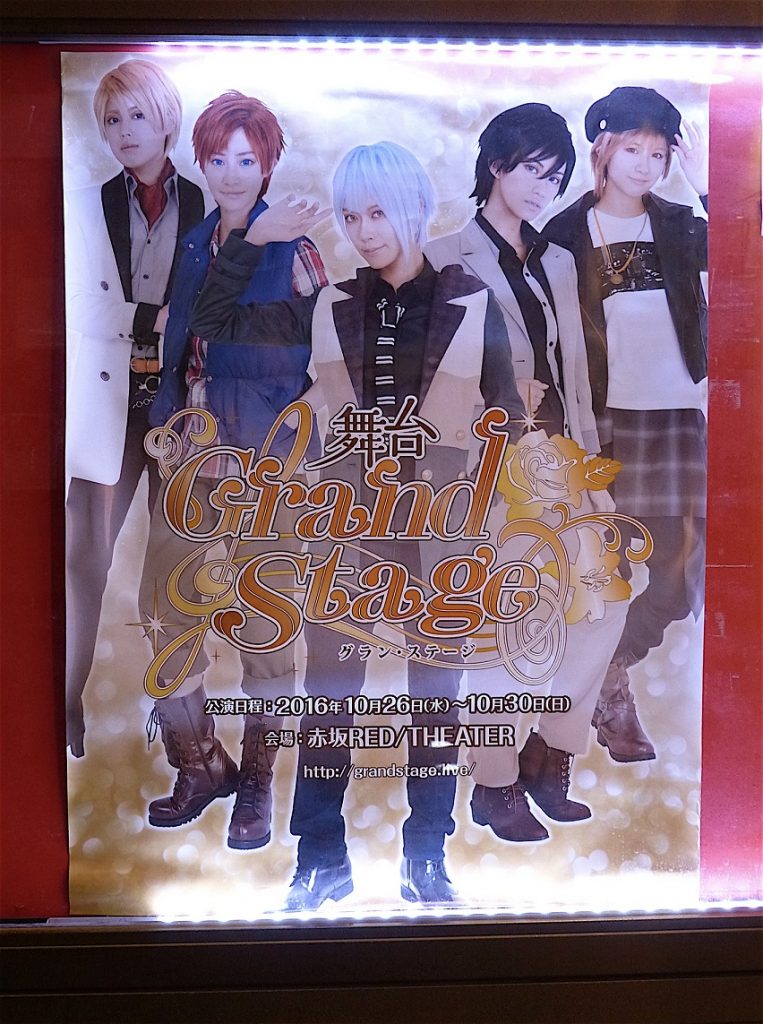
Problem was, I had real trouble locating the venue.  As it turned out I wasn’t looking low enough. Descending from the sidewalk, behind some outdoor tables with pumpkin candles, the theater entrance looked a bit like an access to a storage cellar. Grand stage indeed. But the display posters were colorful. It’s interesting that the title graphic includes both a lily and a rose, a wink at the spectrum of gender/orientation conflation possibilities.


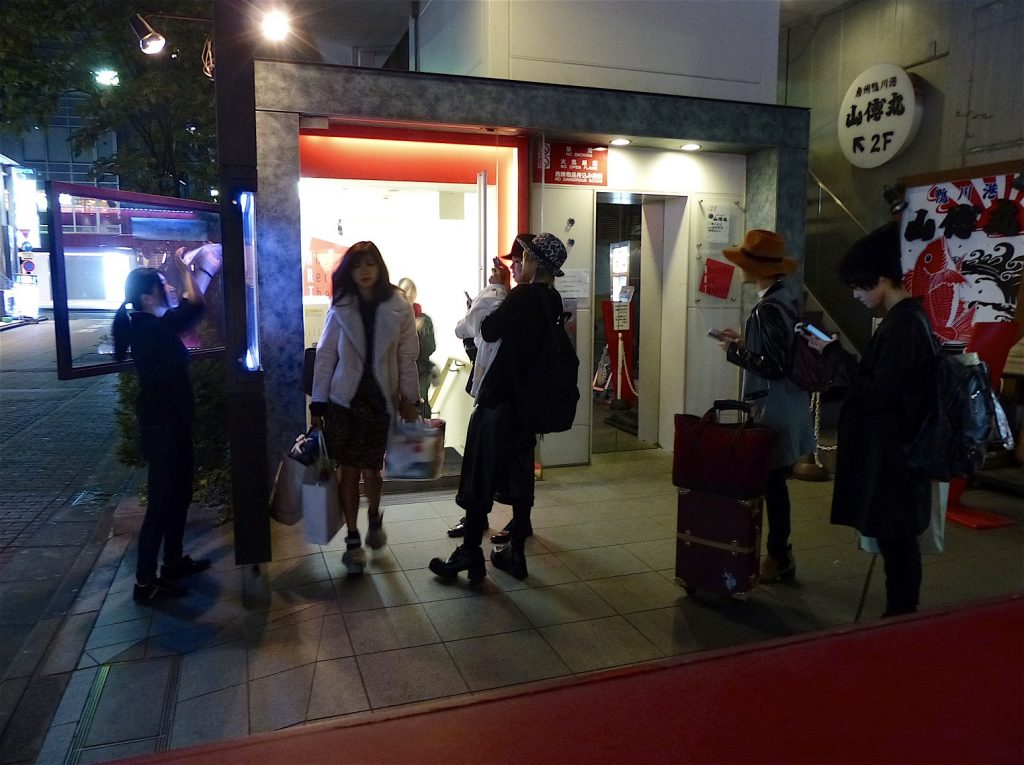
Less than a minute after I found the theater the show let out, and that’s timing. The audience numbered half a dozen or so, mostly women in floppy hats and clunky shoes.

They all seemed pleased with the show and there was much picture taking as an earnest theater employee (left), with over-caffeinated efficiency, immediately began pulling down the posters.

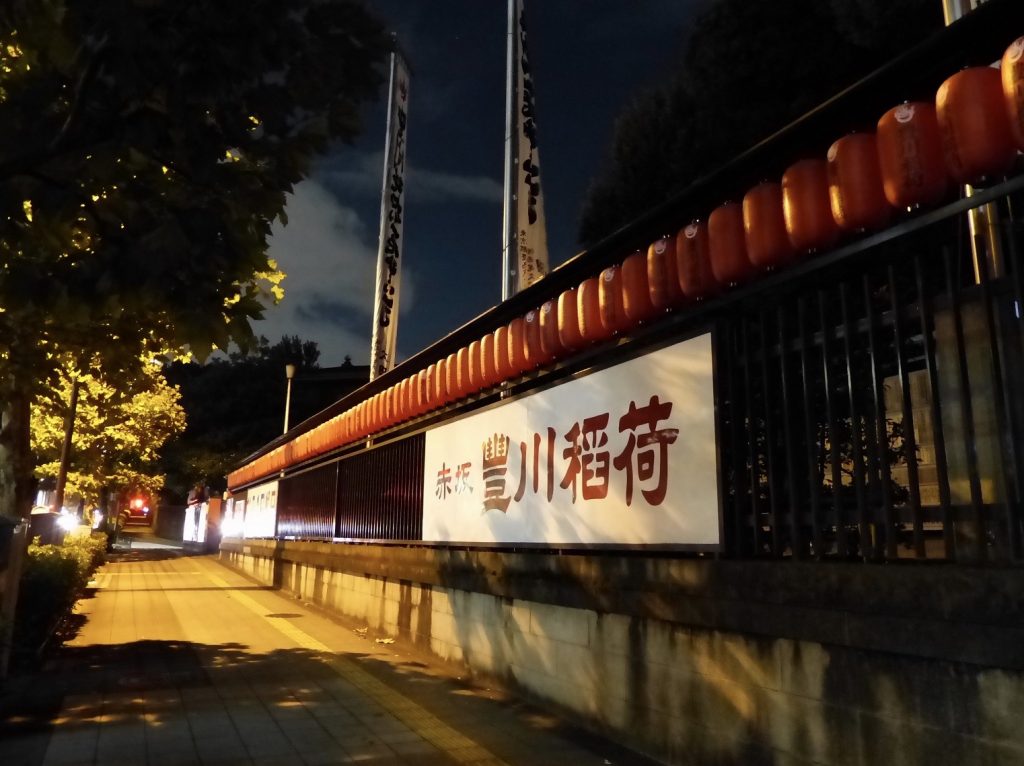
It really was a nice night-before-Halloween, and I was happy to see that the nearby Akasaka Toyokawa Inari Betsuin had put up their pumpkin lanterns (or maybe not).

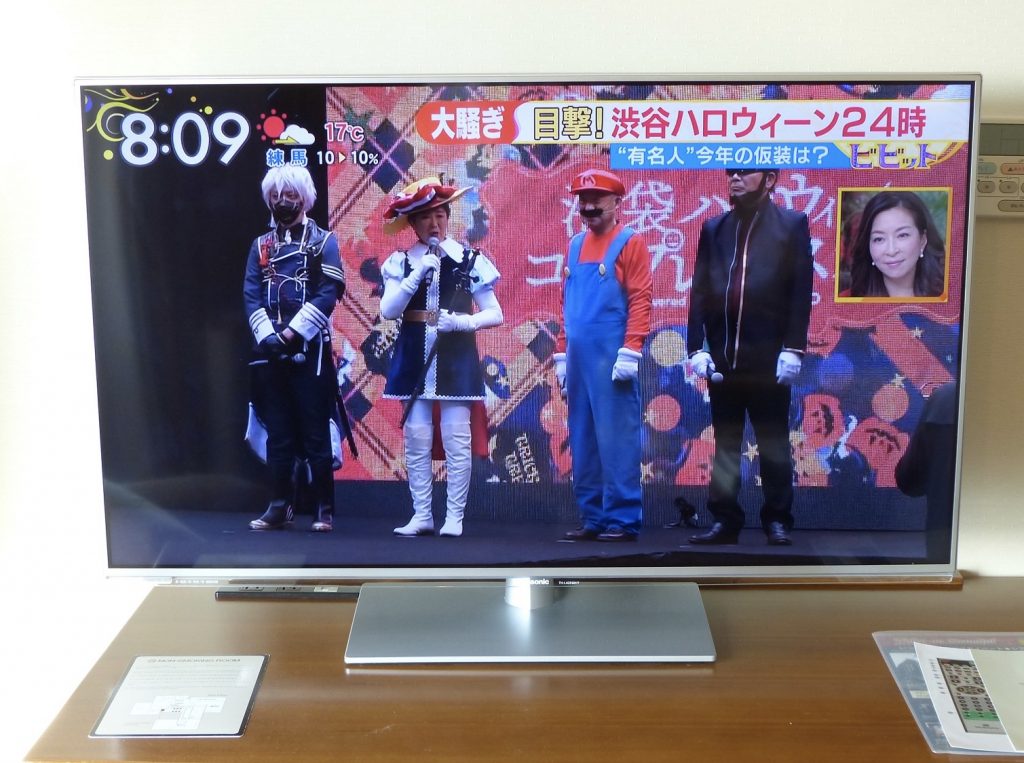
On Halloween itself the new Mayor of Tokyo had fun dressing up as Princess Knight.

In Shibuya a lot of other folks had fun dressing up too. Those having the most fun were shown repeatedly on the news being carted away in ambulances and police cars.

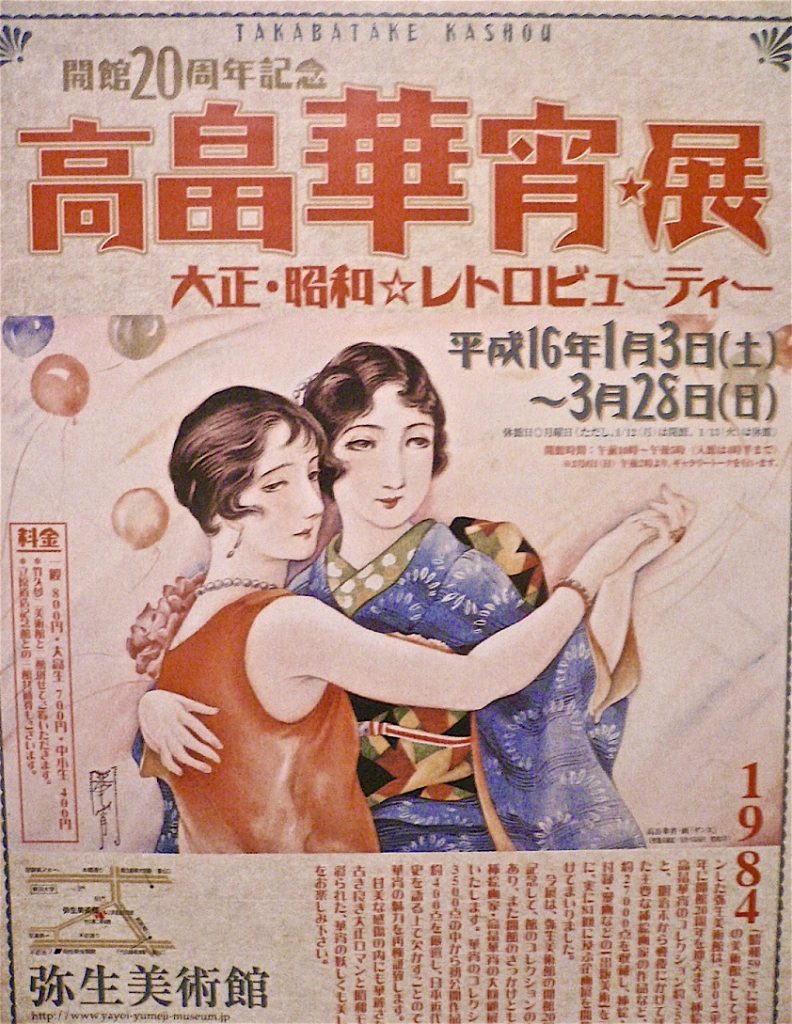
The Yamagishi Ryoko exhibit was in the Yayoi Museum near Tokyo University. The Yayoi is dedicated to exhibiting print illustrations and manga art from the Taisho and Showa eras – essentially the 20th century. I had been to this museum some years back for an exhibit of works by the illustrator Takabatake Kashou, at which I snapped up the poster below.

Happy to get reacquainted I headed out to the Museum:

Sign on chair: Closed Today. Improvising on a trip (‘blundering about Japan’) is enjoyable, and takes less work than planning, but I do see a lot of these signs.

I returned a couple of days later. The exhibit was absolutely worth the extra trip. Yamagishi-sensei was part of the talented group of female shoujo mangaka known as the Year 24 Group, which also included Ikeda Riyoko (Rose of Versailles), Hagio Moto (Heart of Thomas), and other exceptional artists. The exhibit was on display in two large rooms, with walls and center display cases in both lined with a tremendous selection of Yamagishi-sensei’s work. About a dozen people were there enjoying the art.

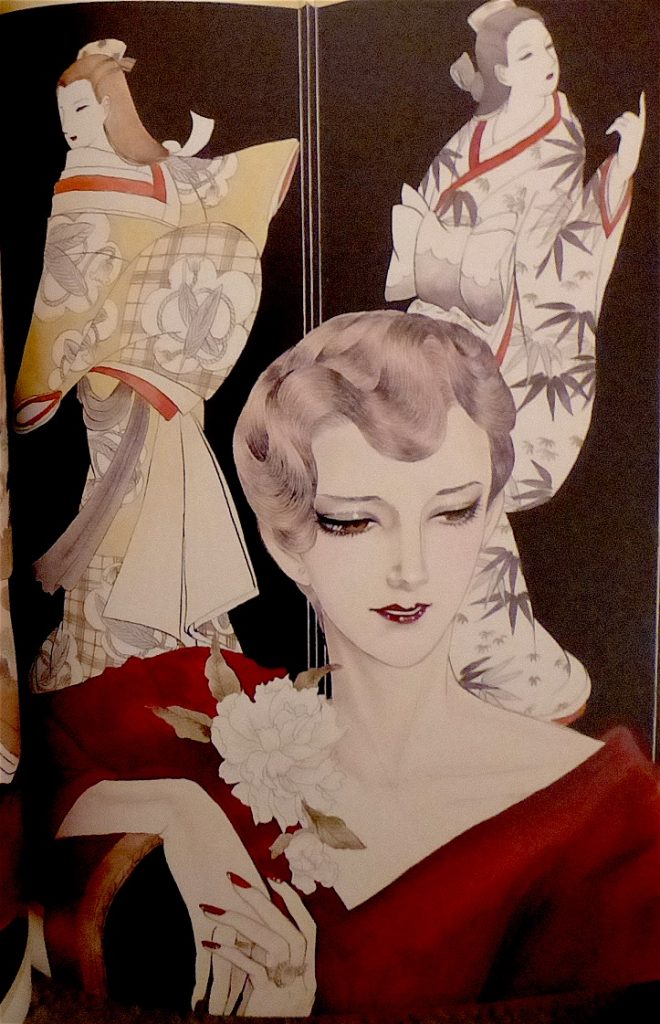
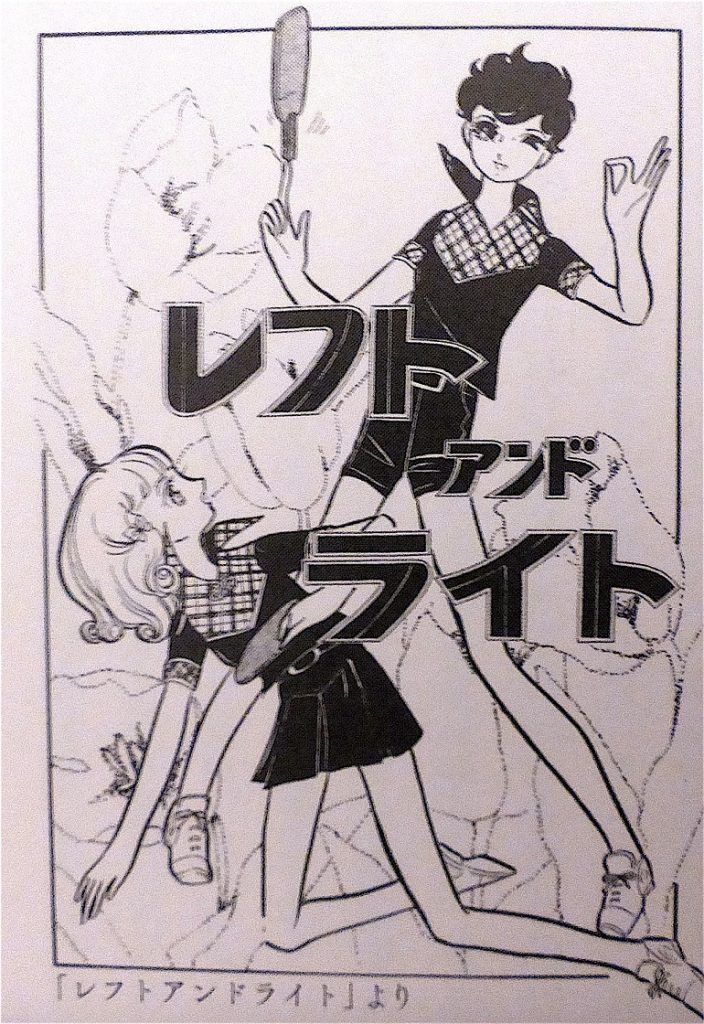
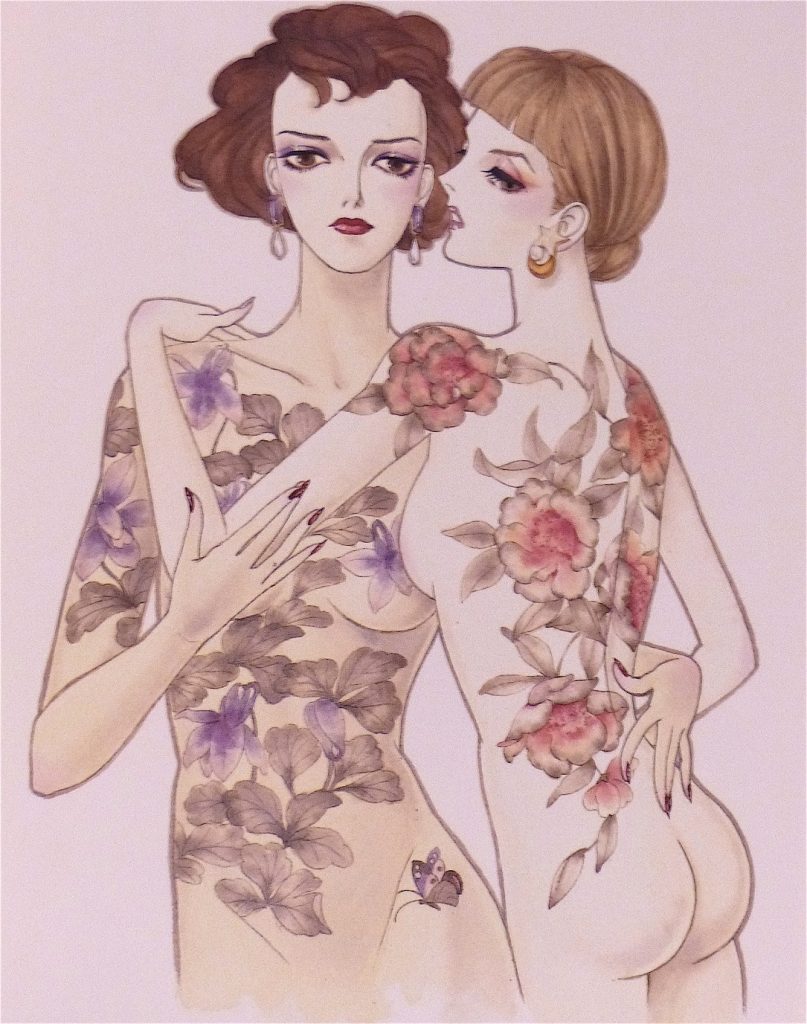
Here are just a few of many examples that caught my eye, imaged from a book that was essentially the exhibition catalogue. Photography was not permitted in the exhibit.

Dream (1978). 1930’s cool.

Left and Right (1969), debut manga.


Hi Izuru Tokoro no Tenshi (1982), artwork for a record cover.


Secret Love (1986). Columbine and Camelia.

While I was busy taking notes (who knew there was a catalogue?) an older Japanese couple approached in curiosity and introduced themselves. Long-time Yamagishi fans, they had made the trip down from Sendai just for the exhibit. They were pleased, if puzzled, to find a westerner so interested in her work that he would take notes, when there was such a nice catalogue, and we had a lovely chat. They really wanted to make sure I knew that Yamagishi-sensei wasn’t just a manga artist, she was a real artist. While I believe the line to be a lot more elastic than that, there is no doubt that she is an artist in every sense of the word. Here is a link to the exhibition poster.

My only regret was that the original cover art for Shiroi Heya no Futari was not on display. There was too much art for the space, so the display items changed, and that one wasn’t up at the time. But the exhibit was absolutely worthwhile (and is running through Dec 25, so if you hurry…). Definitely the highlight of a great trip.

Well, um, that and the Perfume concert in the Nagoya Dome. If you’re partial to music with your lasers.

E here: Thank you Bruce for the report (and the copy of the catalogue. I’ve drooled over it many times already). It’s always great to hear your travel stories!


Harmony Anime (ハーモニー) (English) Guest Review by Eric P.

November 30th, 2016
harmony
It’s Guest Review Wednesday and today we have a visit from long-time reader and occasional Guest Reviewer Eric P! Please welcome him as always! 
 
 
The ambitious Project Itoh trilogy is a trio of anime film adaptations based on the works of award-winning sci-fi author Satoshi Ito, spawned by Noitamina and animated by three different studios. It first began with The Empire of Corpses, followed closely by the middle story of the anthology, <harmony/>, (ハーモニー) animated by Studio 4*C and co-directed by Michael Arias, who did Tekkonkinkreet.
 
Set in the future, <harmony/> reveals a world where society has achieved a systematic Utopia. Everyone is connected to the collective WatchMe software program, where health and psychological well-being is constantly monitored and regulated, and “necessary” information is constantly provided so everyone knows the “right” things to do for better living, and everyone knows everybody just by looking at them and are likewise always supportive of each other. The vast majority have apparently become accustomed to and content with this way of life, but two high school friends, Tuan and Miach, recognize it as a imposing, oppressive regime robbing people of their free wills. The enigmatic Miach is the leader of the two, who learned of what the world once was through the books she read. She draws Tuan into her beliefs and actions through physical intimacy and affection (more on that later). They agree to rebel against the world through the ultimate act of selfishness, via suicide. Tuan fails in the attempt, while Miach seemingly left the world and her in it.
 
Resigned to live since then, the now-adult Tuan works for the World Health Organization, a kind of medical police force, but continues to find society a stifling birdcage as she tries getting by and retaining some personal control. But then chaos disrupts society’s superficial perfection, as minds are being hijacked, spurring mass suicides, followed by growing collective paranoia. The more Tuan looks into it, the more it mirrors the Miach she remembers, with signs pointing to her as the puppet master. The plot is a slide down a rabbit hole as Tuan uncovers Miach’s past and intentions along with additional puzzles and truths, and in the end, determines the fate of society and the world itself.
 
One of the major criticisms Harmony received was for its animation, with it’s uneven blend of 2D/3D-animation. While some of the CG moments were definitely a little crude and clunky here and there, some other moments I thought were interestingly done. There are some shots of the camera panning around the characters’ heads, which move fast enough to make it look like immersive 2D to me, but the scenes that might look most impressive to other viewers would be the virtual conference calls that Tuan attends. The one sequence that stood out the most to me was a restaurant scene, in which Tuan converses about Miach with a childhood friend from their past, and the camera circles around them within their environment, closing in. Even long before we find out the big reveal later, one already gets a gradual discomforting sense of an evil presence descending upon them before the big shock that takes place, setting the whole story in motion.
 
The story stays true to its discomforting atmosphere all the way to its end, which involves a final confrontation between Tuan and Miach. However you interpreted their past relationship from the flashbacks – whether or not Miach was just twisted and took advantage of Tuan, or what Tuan herself truly thought of their bond in retrospect after all this time –  their true connection ultimately comes to the forefront. Miach makes her final offer, and Tuan responds with making one last free decision, this time out of a personal act of selfishness. The ending is bleak, which that may leave some viewers frustrated. But after watching it twice, I realize the story itself was not a happy one to begin with. And if one were to ask if the characters were likeable, then the answer would be a general “not really.”
 
But after two Project Itoh movies, it is made apparent to me that a happy plot with likeable characters is not necessarily what one looks for when going into an Itoh story. One instead goes in for the hard sci-fi with the kind of world-building that is his distinctive personal style, and for the philosophical ideas and pondering that relate to the story being told, often generally about consciousness and the nature of the soul. With <harmony/> in particular, the characters mainly serve as vehicles for the viewer’s journey in Itoh’s world, and it can be philosophical to the point where the dialogue is almost pure info-dumping. But that is something I had grown used to after watching every iteration of Ghost in the Shell, and rather than putting me off it merely forces me to pay attention.
 
All in all, your mileage may well vary with <harmony/>.
 
Ratings: 
 
I would not call it either great or terrible, but I deem it interesting enough to check out at least once. For that, I give it my usual overall rating of 7.
 
Erica here: Thank you again Eric, for this review, next time I’m in a mood for dystopian futures (which is almost never, to be honest ^_^,) I know where to look. ^_^


Yuri Visual Novel: A Little Lily Princess (English) Guest Review by Brian T

October 19th, 2016

It is my very sincere pleasure to welcome a brand new Okazu Guest Reviewer to our ranks today! Happy Guest Review Wednesday and welcome to @NetbrianT, a long time Yuri-fan and all-around hoopy frood.  This seemed like a perfect way to celebrate the opening our our new Yuri Games& Visual Novel page on the Yuricon store. ^_^

So please give him your attention and take it away, Brian!

Note — this review has spoilers for The Little Princess:

The VN A Little Lily Princess is a Yuri adaptation of the 1905 novel The Little Princess, by Frances Hodgson Burnett, put out by Hanako Games. Before playing this game, I was not familiar with the original story (I’ve since read the book) — my first exposure was the anime Souko no Strain, a rather broader adaptation involving giant robots and time dilation.

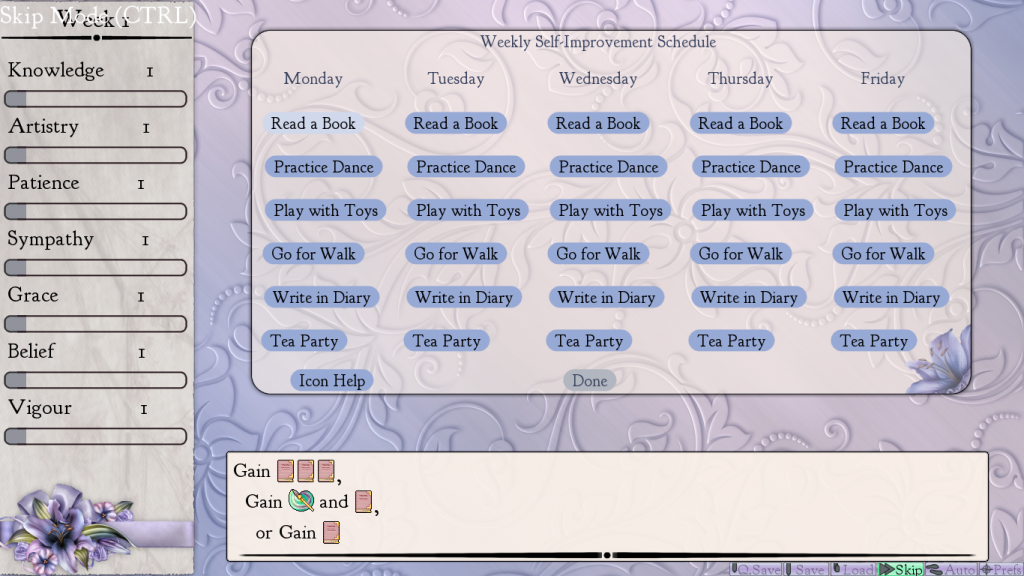
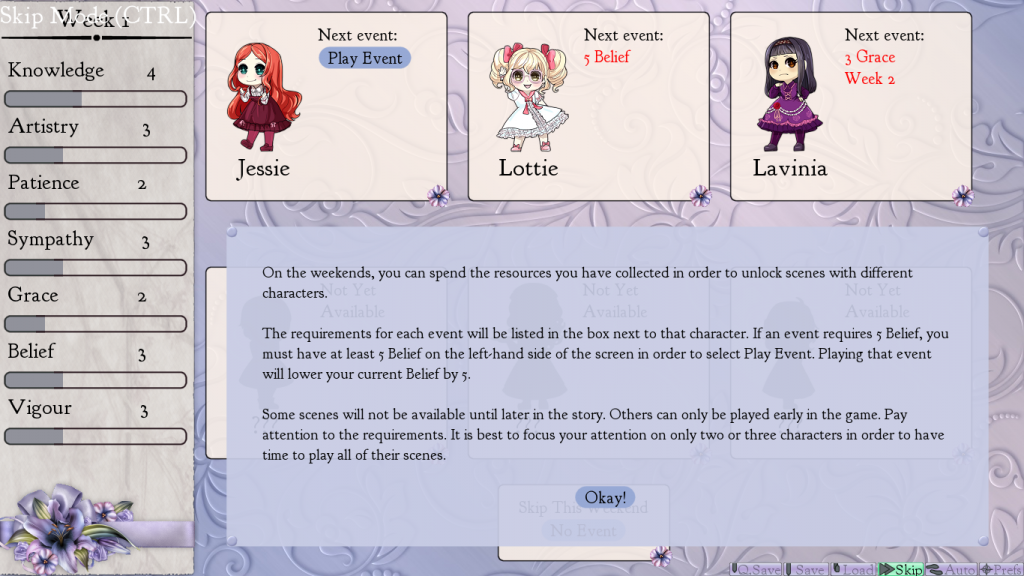
The main character of A Little Lily Princess is Sarah Crewe, a refined British girl sent to a boarding school, but is forced to work as a scullery maid for the school when her father dies and leaves her with nothing. Part of the game is a verbatim retelling of the original, and then it’s expanded on by adding in fleshed out arcs for the original characters. Each character has their own set of scenes, which are chosen via a time management mini-game (the minigame is easy enough that you effectively choose the desired result.) After you view enough of their scenes, you’re locked into that character’s route and ending.

The game works as Yuri in interesting ways. Some of the character routes develop romantically, though the majority time you spend is on the friendship side of the relationship. More uniquely, the Yuri genre as a whole was heavily influenced by fiction of this era, such as Secret Garden or Anne of the Green Gables. In fact, this was my favorite element of the game — it tickled me pink to see how much of the book was practically Yuri already! The original story, which the game brings out wonderfully, functions as a Yuri prototype — between the foundations of the genre in things in “a place meant only for us” or specific enduring tropes like secret tea parties, it fits perfectly.

becky

One of the best points of the game are the character-specific routes, and how well the VN added real depth to the foundations the book gave. Lily Princess does an excellent job reworking the story, and is especially good at matching the prose style of the original. The tone, too, is carried over — visual novels are well-suited for the introspective style that emphasizes an inner monologue. The melancholy of the second half almost works too well, as my tastes are firmly in the camp of the happier and more upbeat. The artwork was adorable, and the soundtrack fits the story perfectly.

The game’s biggest flaw is in the time management mini-game. It works fine during the first half, but once you have locked in a route, there’s no further decision-making, so it’s just busywork. After the first playthrough, it’s even more cumbersome, which hurts in a game that assumes you’ll replay to see different routes. Storytelling-wise, the area I’m most torn about is the ending — the game compresses much of the buildup from the source material, so it ends up overly abrupt.

You select activities for each week, which raise different attributes. Those attributes are spent viewing individual character routes

You select activities for each week, which raise different attributes. Those attributes are spent viewing individual character routes

time-management-desc-02

Overall, I liked the game quite a lot — if you’ve read the book, your enthusiasm for that will almost certainly carry over to the game! The game took me about three to four hours to complete for a single route, and six hours total for all six routes.

Art: 7
Story: 8
Characters: 8
Service: 1
Yuri: 4
Overall: 7

Erica here: Thank you Brian for the excellent review. I’m so pleased you enjoyed the VN. 

And thanks to Hanako Games for providing us a review copy. We’re much obliged!


Cross Ange: Rondo of Angel and Dragon Anime (English) Guest Review By Mariko S

September 28th, 2016

caradIt’s Guest Review Wednesday here on Okazu! Today we have returning Guest Guest Reviewer, Mariko S, who will be handling a request I get here rather often, a look at the Cross Ange series.  

If you know of some media that you consider Yuri or lesbian and want it reviewed, but haven’t seen it here, take a look at our Guest Review Guidelines and consider offering to write a review. 

So please welcome back Mariko and give her your undivided attention. Take it away, Mariko!

Compared to a couple of decades ago, it has never been easier to acquire and enjoy Yuri. Before, outside of a couple of pantheon-level characters and series, we Yurifans were mostly relegated to overblowing curiously timed blushes and offhand remarks. Now there’s more dedicated Yuri content released than ever before.

Of course, the dark side of this evolution has been the ossification of the Yuri genre around the “pure schoolgirl” archetype. This has resulted in seemingly endless series devoted to a plain girl entering a prestigious private all-girls school in a world where men don’t exist, and all the girls are gay. Nothing much happens over the course of a season, and at the end you get a kiss between the leads (maybe).

Where can we turn to break out of this doldrum? Where there is a real story, with a detailed plot, and things of consequence happen to a diverse cast in a richly developed world that happens to contain lesbian characters? In search of such a thing, I have delved into the world of seinen series, home of old to various evil lesbian predators or joke Yuricrushes. And to my delight, amongst the awful dreck of your Koihime Musou and Valkyrie Drives, there is some worthwhile stuff being produced! Today I come to talk to you about Cross Ange: Rondo of Angel and Dragon, available on Crunchyroll (behind an adult themes warning.)

We are introduced to an idyllic world, seemingly free of all strife, and the magi-tech power called Mana that enables it. Our heroine Angelise is a spoiled, ignorant princess who, as it turns out, is one of the outcast “norma,” people (always female) who cannot use Mana. Her unmasking and downfall is orchestrated by her scheming brother, and as a result she is rudely ripped from her perfect life of privilege and thrown into the hidden war that enables the rest of society’s bliss.

As she finds out, when norma are discovered they are sent to a distant island where they are forced to use non-magic weapons in the form of fighting jet-robots called para-mails to battle extradimensional invading dragons. Most of the girls have been there since birth and know no other life.

The series has a remarkably good pace of character development for Ange. She has lived all her life believing that norma were antisocial monsters that must be eliminated, and it is not a quick or easy process for her to accept that she is one and how to restart her life as one. Additionally, the layers of truth and fiction surrounding the reality of the show’s universe are revealed in a gradual but compelling way. Things do not stay static long on this show.

Ok, so I will outright say it – many aspects of the show can get pretty ridiculous. The service is liberally sprinkled around: the battle uniforms are glorified fetishwear, too many conversations take place in baths, and there’s no shortage of boobs and butts flying around. However, as far as the plot is concerned, as crazy as many of the developments seem as they come out, for the most part I have to give the show credit for hanging together by its own internal logic to the end. There is only one truly horrendous asspull for which you will have to pretend they came up with a better explanation.

There are situations of violence and sexual coercion meant to emphasize Ange’s vulnerability. There’s lots of violence overall; although most of it isn’t especially gruesome, some scenes could be difficult if you are sensitive. Finally, the token male lead/love interest Tusk has a running gag of ending up face-first in Ange’s crotch at every opportunity. It isn’t funny the first time, and gets less funny every time after.

But that out of the way, unlike many of its contemporaries, this show has a brain and a heart. Ange goes on quite the journey from a weak, irritating, unlikeable brat to a strong, seasoned, fair leader. The series wants to say something about the way groups of people are marginalized and demonized to maintain a false sense of security. It brings together a diverse cast of people who are not stereotypes or tokens, but who have pasts, presents, and futures to explore. It draws a distinct contrast between the way the main villain says he wants “strong women of intelligence” by his side, but really just wants obedient servants, and the truly strong women who oppose him. It’s not a masterpiece, but it has ambition, and that is commendable.

Make no mistake, this is a series with Yuri, and plenty of it. But also, make no mistake, this is a seinen series through and through, and wears its fanservice badge proudly and frequently. For the first half of the series, lesbian attraction and lesbian sex serves primarily as titillation. To the show’s credit, there is never any “but we’re both girls” or a sense that it’s a stand-in because men aren’t around. Some of the sex is about power, some is about genuine attraction. The only character who thinks it’s “wrong” is Ange herself, and that is part of her character development.

In the end, while she does not return the feelings of the girl who loves her, she accepts them and even chastises her for feeling that her attraction is “weird.” Her response was pretty amazing to me for a show like this: “Who says it’s weird? That’s the ridiculous world we’re going to destroy together, isn’t it?”

In fact, there are three canonically lesbian characters who are all fully developed and have arcs both including and apart from their sexuality. They are not by any means one-note side characters or jokes. And that, whatever other shortcomings this show has, makes it worth any Yurifan’s time and money.
Ratings:
Art – 7
Story – 8
Characters – 7
Yuri– 8
Service – 10

Overall – 7

Thank you very much, Mariko!