In Part 1, I introduced a key ‘S’ relationship novel, Otome no Minato (乙女の港) as part of the History of Yuri.
This novel serves as a bridge for concepts established in earlier girls’ literature, such as Yaneura no Nishojo through to manga that functions in a proto-Yuri space, like Sakura Namiki.
To discuss these connections, I invited fellow Yuri enthusiasts Katherine Hanson of Yuri no Boke and Erin Subramanian of Yurizuki to as Guests to discuss Otome no Minato with me.
I’d like to thank James Welker for his kind sponsorship of today’s discussion.
This discussion was held by Google chat, on February 22, 2014.
 Erica
Erica
Okey dokey. Let’s get started. First of all, thank you so much for joining me in this adventure.
 Erin
Erin
Thank you for inviting us to join you! On this strange, rather flowery trip.
 Katherine
Yes, I’m glad I got around to reading this
Erica
Haha, yes, indeed. I’m going to ask you each to introduce yourselves. Erin, why don’t we begin with you?
Erin
I’m a J->E translator with a particular fondness for Yuri works.
Katherine
I obsessively read and watch Yuri, and also blog about it online!
Erica
Excellent.
So, let’s begin.
Before we get into specifics, let’s have your general thoughts about the book. Katherine first, then Erin.
Katherine
It was like reading the Strawberry Panic novels, but with a sincerely written story and an actual frou frou historical setting instead of a wannabe frou frou historical setting. I feel like I should compare it more to Maria-sama ga Miteru (especially given Youko’s background and Tsuneko’s role relative to Michiko), but Marmite is better than both of them. I am glad I read this to complete the old Japanese lesbian/Yuri works catalogue in my head.
Erin
I thought it was sweet but rather condensed (jumping forward too quickly) in parts while dragging in others. I associated it with Marimite as well. I haven’t read any Yoshiya Nobuko works for comparison, but it seemed like what I would imagine her works to be like.
Erica
It was definitely a source for Marimite, but like Katherine, I prefer the more modern novels. This book takes its time. Novels – especially western ones – start with something happening. Here, we meet Michiko, her friend Tsuneko and Ms. Murfree and the most exciting thing happening is that it is raining.
Erin
Yes, it seemed to go into detail on random topics and then never pick them up again.
The main character’s brothers, for instance, or her teachers at school.
I did like the introduction with the older students being interested in the new students.
Erica
You know what I first noticed – the use of katakana was so very different than it is now. There’s much less of it, it’s rendered differently and many pages went by, before we saw a foreign word other than a teacher’s name.
Oh, yes the teacher…such weird amounts of detail…then nothing…then BAM!
Erin
Yes, foreigners were frequently mentioned, but foreign words were rare.
Katherine
Yup – that was an interesting contrast, and I think ties into the setting being in Yokohama
Not just a missionary school set in, say Tokyo.
Erica
I agree. Foreigners play such a huge role, in some ways.
Erin
Yes, the harbor was certainly an important aspect.
Erica
The language is not Keigo, but it is not modern Japanese. That really struck me.
Erin
Yes.
Katherine
That did take some getting used to.
Erin
I think most of the flower metaphors were lost on me.
There were so very many of them.
Katherine
It also had less furigana than I expected, given its running in Shoujo no Tomo.
Erin
Yes!
Katherine
And I agree about the flower metaphors. lol Those were definitely harder to make sense of than most of the book.
Erica
Definitely.
“Language of Flowers” fill pretty much every girls’ book in the early twentieth century in any language. It’s a useful thing to keep bookmarked.
But the endnotes. How fascinating were they?
Erin
I found them very informative.
Katherine
I did really like them.
This book was really well packaged, as far as that and other extras.
Erin
Yes, the end notes were helpful.
And those illustrations!
Erica
Agreed. And so detailed. I ended up learning about the entire history of ‘Color War’ while reading this book.
Nakahara Junichi’s illustrations really make the book, in some ways.
Katherine
Yeah, the written historical context provided and illustrations (and photos!) were great.
The illustrations are beautiful, I agree.
They help set the tone a lot.
Erin
Yes, the illustrations were a highlight of the book.
Erica
Okay, so what was your favorite scene?
Erin
Mine would probably have to be the phone call (and then physical reunion) after Michiko comes back from Karuizawa.
Katherine
That is sweet!
Erin
I am a big sap. What can I say?
Erica
The Christmas present was special too.
Erin
Yes, though Youko’s present to Michiko came off as a little preachy in parts.
I joked to Katherine that she was giving her The Spirit of Christmas, from every mediocre Christmas movie.
Erica
A “little”? It was a big ball of preachy!!
Erin
I was trying not to be insulting!
Katherine
But Erin! Erica! A proper Oneesama must impart the true meaning of Christmas.
Erica
Hahaha, exactly
Erin
The locket was great, because of COURSE she gave her a locket.
Okay, I can’t argue with that, Katherine.
So, Katherine, what was your favorite?
Katherine
Hmm.
My choice is kind of horrible. lol
Ah, my favorite was Michiko calling out Youko’s name when she was sick. That (and its aftereffects) was so melodramatic and cheesy and almost gothic.
Erin
Oh, a gothic moment, of course! I should have guessed.
Erica
I liked the first truly moe scene, about 1/3 in – Youko envisioning Michiko as May Queen – her queen, and her feelings get “warm” at the thought. I love that the utterly pagan May Queen tradition is so Catholic and was imported into the animist Japan. Multiple religion exchange ftw. That was one of my favorite scenes, but not my number one favorite.
Erin
Haha, yes, that was a great one too.
Katherine
That was pretty great, I agree
Erin
I was also amused by Michiko wanting to “be friends with” all the pretty older girls.
Katherine
Yup, Michiko’s innocence about that was kind of amusing.
Erica
Awww, you are a softie.
How annoying is Michiko at the beginning? Vain, selfish. But she changes a lot as the book goes on
Erin
I… didn’t really notice.
I think I was seeing her as a Generic Protagonist for reader projection.
Oh, my other favorite scene was them wanting to be mommies to the calves together, by the way.
So sweet.
Erica
I saw her as still dreaming of herself as princess. That was another of my fave scenes. Katsuko holds out a fantasy of horseriding, while “Youko” represents a reality of cows and sheep.
Katherine
My perspective on this is closer to Erin’s. I thought she was childish, but didn’t think she was any worse than the usual for this kind of story’s protagonist.
Erin
Yeah, she is supposed to be 13.
Or somewhere around that age.
I suppose we’re just used to Nagisa/Yumi/etc.-esque protagonists at this point.
And yes, her fairy tale daydreams were interesting.
Katherine
Yup, our standards are kind of weirdly configured. lol
Erica
I’m not comparing her to other protagonists. Just looking at her mirror-staring in the beginning, compared to her looking outward at the end.
Katherine
Ah, that is true.
I did think the fairytale bit was cute also, though.
Erin
Ah, good point.
Erica
So what do you think the most important scene in the book was?
Katherine
Maybe when Youko helps Katsuko?
Erin
Yes, I think that was a big moment.
Erica
That was pretty significant. For me, the most important scene was Katsuko taking Michiko to the pool to watch a swim meet. I suddenly realized that this was a classic love triangle. Youko represents the down-home farmgirl, Katsuko, the city slicker. Karuizawa is hardly the “big city”, but Katsuko gives Michiko bicycle lessons, introduces her to foreigners in language lessons. She is the big sparkly.
Erin
Yes, definitely.
Michiko lying to Youko for the first time also seemed like a turning point to me.
Erica
Yes, that was huge. I wonder if that wasn’t the first moment she stops looking solely at herself.
Katherine
Good point! Those are both great examples of turning points also.
Erin
Hmm, yes, that could be.
Katherine
I chose mine because the love triangle couldn’t really die until Katsuko grew up and recognized that she should leave Michiko and Youko alone.
Erica
Good point.
Erin
Katherine: That also seemed like a growing moment for Youko.
Where she admitted to herself that she had been jealous/worried, but was able to be a bigger person now.
Katherine
That is true! They both grew when they settled their rivalry.
Erica
We haven’t really talked about Katsuko yet. What were your impressions of her?
Erin
Well, as we discussed before, I see her as coded as masculine in some ways.
She’s also rather a jerk.
Katherine
She was my least favorite.
I didn’t like her method of trying to win over Michiko.
Erin
Hmm, in my notes about her, I wrote: “Katsuko is the athletic, boyish, argumentative/aggressive/cruel one; she wants to change Michiko, and Michiko can’t help but play right into her hands (though she does realize it sometimes) and keep spending time with her even when she makes her feel bad”
Katherine
Yeah, she’s kind of manipulative.
Erica
She’s definitely aggressive.
Erin
She’s definitely portrayed as less likable than Youko, though I didn’t dislike her as much by the end.
Erica
We were talking about her use of body proximity, indicating her “masculinity” in some sense. Even in the pictures, she leans too close, always has her hand possessively around Michiko’s shoulders.
Erin
She’s kind of a Rainbow Dash type personality, if you’ll pardon the MLP comparison.
Yes, absolutely.
Erica
I can see that.
Erin
More of a boundary-violator.
Katherine
That’s an amazing connection to make.
Erin
Like how she wrote on Michiko’s letter to Youko.
Erica
Right. “My needs supercede anyone else’s”
Erin
Exactly!
Katherine
And trying to make Michiko wear a flower on her lapel after she gets sick.
Yup.
Erin
She kept going after Michiko even when her attentions were unwelcome.
Erica
That was just plain jerky.
Erin
Yes, that was really a summation of her personality.
Katherine
Yeah, basically, ignoring Michiko’s boundaries until towards the end.
Erin
The flower idea would have been flashy, but would have meant two flowers would die every day as a symbol of their friendship.
I couldn’t imagine Youko proposing something like that.
Erica
Haha, Erin.
That was what I liked so much when Katsuko lost the war, as it were. Trying too hard, she gets injured during the sports festival, Youko steps up to help her, gracious and polite. Katsuko needs help, guidance, comfort. She cannot provide it. Even Michiko understands that Youko has “won.” Katsuko acknowledges defeat, at which point Michiko refers to Youko as “onee-sama”, Katsuko acknowledges that, as well, and admits she wants to reconcile with Youko (owabi shitai.)
Erin
But she gets to enjoy a year with Michiko despite her “defeat.” So it all works out in the end for her.
Erica
Well, yes, because she accepted her place as loser.
Katherine
Yup.
Erin
If she hadn’t aggressively pursued Michiko this first year, do you think they would have become close after Youko had graduated?
Erica
Probably, don’t you?
Katherine
I think so.
Erin
Well, I suppose it would depend on whether she was trying to take Youko’s place.
Katherine
Ah, well, I don’t think she could completely take Youko’s place.
Erica
If she was, it would be impossible, Youko would be gone, and so, inviolate and perfect as a memory. Youko’s too perfect. Even her flawed background is perfect.
Katherine
That’s a great point, Erica.
For one, even if Michiko were to allow it (which I don’t think she would), the other students wouldn’t allow it. lol
Erin
Yes. Though I think the sense of distance in Youko’s letters was part of what allowed Katsuko to move in on Michiko in Karuizawa.
Erica
Absolutely
Erin
Not only was Youko not physically present, Michiko didn’t feel as emotionally close to her because her letters were withdrawn.
Katherine: They sure are big on enforcing the “one esu per person” thing, aren’t they
Katherine
They sure are!
Erica
They sure were!
Erin
Mandatory monogamy.
Unless you didn’t have an esu, in which case you could play the field, sort of.
Katherine
And your point about Youko is true. But given the greater emotional intimacy she and Michiko achieve by the end…
lol “play the field”
Michiko could become Shizuma (from Strawberry Panic!).
Erica
Which sort of begets a Sei character in Marimite. So Top Stars are given leeway to not commit. That’s really interesting. It explains why Shizuma committing twice is seen as worse than never committing.
Katherine
That too!
Erin
Yes!
I definitely saw some Sachiko and Yumi in the Youko-Michiko relationship.
Speaking of Top Stars, I was amused by the obligatory Takarazuka reference.
Erica
Haha, me too!
Katherine
That was definitely a “Some things never change” moment
Erin
Yup.
Erica
I want to make another point about the language. As flowery as it was, it was *way* easier to read than Yaneura no Nishoujo. Nearly 20 years had gone by and the language had loosened up considerably.
Erin
Oh, that’s good to know.
Katherine
I actually still need to properly read YnN.
Erin
Me, too.
Erica
It was not an easy read, I’ll be honest.
Erin
Yes, I was about to note the time difference.
This one was… 1939?
Katherine
1938
Erica
1938, yeah. It was serialized in 1937.
Erica
Any last thoughts about the book, something we haven’t covered?
Erin
Hmm, let me check my notes.
Erica
I have this note that I must share: “When confronted with news of Michiko’s perfidy, Youko remains unflappable. When Michiko confesses, even she thinks Youko is being unreasonably calm.” LOL
Erin
Hahaha.
Katherine
lol
Erin
Hmm, I wrote something here about the red yashiki.
Wondering to myself if it was an inspiration for the Bara no Yakata in Marimite.
Erica
Oh yes, please do talk about the Red yashiki! (The red houses were “foreigners” house in Yokohama, that Youko had to pass on the way to school.)
Erin
My notes say “Part of the shoujo shousetsu aesthetic of the 20th century?” but I don’t remember what I was thinking.
Erica
I had a similar thought. We’re all such Marimite fangirls. I loved how they were houses of ill repute and fantasy castles all at once.
Erin
Yes!
This one was a foreign mistress’s house.
Also, the scene with Youko vowing to search for Michiko made me think of the panda scene in Marimite, of course.
Katherine
Yes!
Erin
“Michiko likes rainy days now because of that afternoon in the rain with Youko that first day” I see I wrote down the important things. lol
Erica
That’s as important as cow babies being cute, which is a note that I added, as well.
Erin
Yes!
Also, were either of you amused by the shopping race? (One of the events in the sports festival.)
I thought it was so interesting I described it to my wife, but she thought it sounded boring to watch.
Erica
That was hilarious.
Katherine
That was funny.
Erin
I know! THANK YOU!
Katherine
This is horrible of me to say, but I appreciated it as an intentionally funny bit.
Erica
That was when I went on a tear about “Color War” and when they started and if the British had brought them to Japan (probably, with the Boy Scouts and the Navy) and I was having a crazy conversation on Twitter with some Japanese folks about Sport festivals and color wars.
Erin
Wait, when Katsuko fell?
Oh, do share!
I see them pop up in manga from time to time but don’t know much about them.
Katherine
I want to hear about this, too.
Erica
In my part of the USA, we call that splitting up into colors for a sports festival “Color War” and it often includes skits (about which I still have intense trauma issues) and songs, art as well as races and silly contests, like scavenger hunts.
Erin
Yikes.
Erica
The term “color war” comes from a Jewish Boys’ camp in the Poconos, but the idea comes from Britain and was imported with the Boy Scouts.
Erin
It did sound rather Hogwarts.
Katherine
Interesting!
Erica
The British navy brought the idea to Japan, and it was incorporated into schools.
So…that’s why Japanese schools have Sports Festivals that sound exactly like the kind of thing I did in camp. Stupid races and all.
Erin
Ahh.
Erica
Random bit of late-night twittering.
Katherine
That is pretty fascinating.
Erin
It is!
Erica
We haven’t talked about…Miss Wright. The teacher who died right before the Sports Festival.
Erin
Yes, that was rather random.
Erica
I noticed that Miss Wright’s death strikes the youngest girls hardest. They barely knew her, but went full on with mourning and let’s do it for Miss Wright! during the Festival.
Erin
Oh, good point.
Katherine
I guess it’s meant to highlight how ingenuous they are. Or…I’m struggling to think of just the right way to phrase it.
Erica
It reminded me of a fellow schoolmate when John Lennon died.
She came to school and mourned publicly for him. She didn’t know him, just liked his music.
Erin
Yes, Miss Wright could be an example of grief for celebrity deaths.
(Speaking of grief, that seemed like another connecting point between Michiko and Youko.)
Erica
It seemed a bit like a rebuke to girl’s following fads, and bit of self-recognition that they do.
Erin
That makes sense.
Katherine
That is true.
Erica
It totally deepened Michiko and Youko’s bond.
Katherine
The story did emphasize how much the students go with the flow, including Michiko.
Yup
Erin
Good point.
Erin
I do wish we had gotten to see Youko visit her mother, but that was outside the scope of the story.
Erica
Agreed.
Katherine
Mm, it would have made her background feel like more than a kind of manipulative device to make her sympathetic.
Erin
Katherine: Yes, it did seem to function that way.
And then with her grandmother’s death, and the closed gate, and all that.
Erica
That’s valid too. But I kind of thought her (Youko’s) background was manipulative.
Katherine
Erica: It was kind of inherently manipulative, but I guess I thought it could have been less manipulative if the story had dealt a bit more directly with the messiness of it, if that makes sense. But I guess it couldn’t have been the kind of novel it was and done that.
Erin
Katherine: Yes, it could have been a sensitive look at her situation, but just chose to use it as backstory instead.
Oh, before we finish, one thing I meant to bring up is that Youko deliberately chooses Michiko out of the other first-years, rather than stumbling across her.
So she’s portrayed more as a desirable esu than an everygirl who happened to be in the right place at the right time (like Yumi).
Erica
Yes, great point.
Erin
I’m trying to think of other modern Yuri light novels or manga that portray their protagonists in that light.Usually it’s all about how desirable the sempai is and how everyone wants her.
Erica
And the kouhai is a moron. Drives me crazy that anyone wanted Nagisa.
Erica
Last question. Did you like the book? Why or why not?
Erin
As for liking the book, I’d say I have moderately positive feelings about it.
I’m glad I read it, but I don’t think I would read it again.
Erica
Fair enough.
I’m rather glad I read this book. It was much less difficult a read than Yaneura no Nishojo and had as much source material for Marimite (and all the many moe-clones that have come since,) Where Yaneura no Nishojo had the piano duet and the room in the tower, this was so deeply embedded in the ‘S’ relationship that would become soeur.
Erin
Yes, gotta have that piano duet.
Erica
I blame Cream Lemon for the ubiquity of the piano duet.
Katherine
I’m still scared of YnN.
Even though it’s a must-read.
Especially since this wasn’t a walk in the park to read.
Erin
Katherine: Were you going to list some series?
Katherine
Ah, yes!
I guess Komari from Gokujou Drops, and… hmm, it is harder to come up with protagonists who are more Nagisa/Michiko than Yumi. I guess Marimite helped cause that?
Oh god, Cream Lemon
I also am glad I read this book for its historical value, but would not read it again.
Erica
Any final thoughts?
Erin
Hmm, the “eternal female friendship” bit at the very end was nice.
Katherine
Ah, the promise at the end.
Erin
Made me think about all the other works I’ve read that focused on female friendship over long years. I hope Youko and Michiko continued to exchange letters into their elderly years.
Katherine
Me, too.
Erin
Was there a pair in Marimite that did that?
Katherine
Sachiko’s grandma and someone else I think?
Erin
Yes!
Erica
No, Sachiko’s grandmother and Yumiko *didn’t* keep in touch. That was the point of that story.
So they reconciled on her deathbed. (From Maria-sama ga Miteru: Parasol o Sashite)
Katherine
Ssshhh, Erica, don’t ruin our fanfic.
Erin
Katherine, I think our brains rewrote that to make it happier.
Erica
Here’s my final thought, which once again was about Marimite. In most of the moe-clone ‘S’ relationship stories, the girls are still presumed to be going off the get married…and that they *will never see or speak to each other again*. Why? Because 100 years ago that might have been true. In 1938, Youko and Michiko have every intention of staying in touch.
Erin
Oh, good point.
Katherine
True.
Erica
In the 21st century Mizuno Youko is required to go to *law school*. She’d like to go to a liberal arts school, but goes where she’s expected to. Not get married…law school. Think of the gap, the century in between. Yet, there are the moe clones, still marrying the girls off.
Katherine
I thought she chose law school?
I guess I missed that detail.
Ooohh.
Erin
Oh, yes.
Though there was an interesting part in Otome no Minato.
Where they’re talking about how many of the girls at school are planning to become working women, but don’t talk about how they want to work.
Kathrine
Yes…that struck me too.
Erin
I’m sure their class status played a part.
Katherine
True!
If you’re too high class, more pressure to marry.
Erin
And less pressure to bring in a second income, yup.
Erica
Exactly so. And yet, they can still stay in touch.
Okay, anyone has any closing thoughts?
Katherine
I guess we should mention Michiko learning to ride a bike away from Yokohama, in Karuizawa, as another turning point.
And…represents independence
Erin
Right, absolutely.
Ties into that Twitter conversation we had about how it would totally be a car or scooter today.
Erica
Oh yes, a huge turning point. I commented to my wife at the time, that a modern remake would have had Katsuko teaching Michiko to drive.
Katherine
Yes!
I also thought Michiko’s mother commenting on her crush was interesting, even though I know Mom didn’t see it as real.
Erin
Oh, that is interesting.
Erica
Moms are eternal.
Erin
Katherine: Shades of Aoi Hana there?
(Yasuko’s mom)
Katherine
They see all, yes.
Otherwise…that is it for me.
You guys?
Erica
That makes sense. It (Aoi Hana) also has strong ‘S’ ties
Erin
Yes, and Katsuko reminds me a bit of Yasuko.
Erica
That makes sense.
Katherine
They are similar!
Erica
Let’s call this a wrap. Thank you both again.
Erin
Okay! Thanks again for including us in this.
It was fun.
Katherine
Yes! Thank you for inviting us to this.

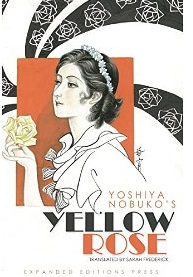
 Imagine me flailing wildly in excitement! Today we have two amazing things all at once. First of all, a Guest Review by long-time Okazu reader and commenter and all-around nice gal, Michelle W.! (yaaay!) AND, the review is of the manga edition of Yoshiya Nobuko’s classic Hana Monogatari. (Of which Yellow Rose has been recently translated by Dr. Sarah Frederick and is absolutely terrific.)