Archive for the LGBTQ Category


Olivia, Directed by Jacqueline Audry

October 18th, 2020

Seventeen years before Radley Metzger directed the French school girl lesbian romance movie Therese and Isabelle, in 1951 Jacqueline Audry directed a wholly different movie about a lesbian affair in a girls’ school. Set in France, Olivia, which has been beautifully restored and is streaming on The Criterion Channel  or is available as  a BD with English subtitles.

IMDb sums up the story as “Olivia, an English teenager, arrives at a finishing school in France. The majority of the pupils in the school are divided into two camps: those that are devoted to the headmistress, Mlle Julie and those who follow Mlle Cara, an emotionally manipulative invalid who is obsessed with Mlle Julie.”

The drama is understated and subtle, but the emotions are apparent…to almost everyone in the school. Criterion themselves synopsize it this way, “Neglected for nearly seventy years, a singular landmark of lesbian cinema by one of France’s trailblazing women directors reemerges. Plunging the viewer—and the main character—into a lion’s den, Jacqueline Audry depicts a nineteenth-century boarding school for young girls, a house divided between its rival mistresses, Miss Julie (Edwige Feuillère) and Miss Cara (Simone Simon). As the two women compete for the affections of their students, they rouse passion, hatred, and unexpected reversals of fortune. Awash in spellbinding gothic atmosphere and a hothouse air of unspoken desire, OLIVIA is a daring feminist statement decades ahead of its time.”

I can’t really do better than that to set the scene, although I don’t think it’s gothic so much as wholly Belle Époque, fully idealized romanticism and richly festooned with superficial beauty and underlying decay; a movie version of a Renoir painting.

We learn almost nothing about Olivia’s circumstances, except that English schools are dire compared to French schools, but she is immediately liked by all the girls. It is the cook, Victoire who acts as Greek chorus for us, pointing out the factions of affection at the school.

The melodramatically unwell Mlle Cara welcomes Olivia, but the new girl is absolutely captivated by the cosmopolitan and elegant Mlle Julie. Mlle Cara sees this as a betrayal, and when Mlle Julie’s former favorite, Laura returns to the school it drives Cara into a hysterical fit.

Olivia has a single joyous day with the subject of her desire in Paris.  On the night of the holiday fête, Olivia lays in her room waiting for Mlle Julie to come to her as she said she would, but the headmistress is late and leaves almost immediately. A scream resounds and Mlle Julie finds Mlle Cara dead in her room. Whether her death is suicide or murder is never truly determined. Mlle Julie has lost everything, the woman she loves, all her money, her position and the love of the students and now, she must leave the school, as well.

Okay, so it’s not a happy ending, but wow what a lovely movie! It never once feels low-budget and sparse as There and Isabelle does. The girls’ school always is warm and welcoming, full of beauty and life. No echoing stone halls here, no miserly rations. Victoire serves up delicious food and prime commentary. The acting isn’t awkward at all. Everyone is very convincing and our feelings for the manipulative Cara are probably about the same as Mlle Julie’s, swinging rapidly from pity to exhaustion.

There are no sex scenes, but the few kisses and embraces are intimate and intense. Desire is not at all unspoken. It’s easy for us to understand the girls’ feelings and equally as difficult to sympathize with the adults. Mlle Julie for being inconstant to the only women, she says, she loved, Mlle Cara for being hysterical, Mlle Dubois for being clueless. Only Victoire and Frau Riesener, rise above this and it is Frau Riesener who inherits Cara’s estate and, presumably, Julie’s position.

I had no real expectation before watchingthis movie and I’m very glad I saw it after Therese and IsabelleOlivia was made ten years before The Children’s Hour and deserves at least as much a place in our history of lesbian media, as it has the double honor of being one of the first French films to show lesbian love, directed by an acclaimed female director. The end result is a take in which desire is made rawly visible without ever being made tawdry.

Ratings:

Cinematography – 8 
Story – 8
Characters – 8
Service – 3
Lesbian – 5

Overall- 8

Olivia is movie about the consequence of desire and its effect on the community, rather than one girl’s experience. It was worth a watch.


A Lily Blooms in Another World

October 12th, 2020

The land of Pajan, we’ve learned, has a real problem. Women are forced to do more, for less, and given very little respect for it. In Sexiled: My Sexist Party Leader Kicked Me Out, So I Teamed Up With a Mythical Sorceress! powerful and skilled women in the villages are dismissed and demeaned because they are women, while mediocre men are given rank and power they do not deserve. In A Lily Blooms in Another World, we learn that life is not much better for women among the nobility.

“I’m Still Talking.”

Miyako Florence is the daughter of the noble Florence family, who has just learned that her engagement to the powerful Klaus Reinhardt has been canceled. Her reaction is the very opposite of unhappy, as she ecstatically runs off to use her new-found freedom and confess her love to the reason she’s here in Ode in the first place, the lovely, talented Fuuka Hamilton.  Miyako has a secret that Fuuka can’t possibly know…she not from the capital…she’s not even from this world. Another unappreciated and overworked corporate drone from our world, Miyako has found herself in the world of her favorite game and…she’s ready to romance the villainess, Fuuka Hamilton.

Fuuka has good reason to want to escape her circumstances, but being seduced away by a rival was not among them. Nonetheless, she gives Miyako 2 weeks, 14 days to convince her to say that she’s happy.

It is obvious to us that they are almost instantly happier in the country together than they ever were in the capital, with oppressive rules that treat them as not much more than fodder for trade negotiations. But it will take a lot more than just a country idyll to convince Fuuka that there are alternatives to a toxic system that poisons men against women, and women against each other.

“Nevertheless, she persisted”

This Light Novel is so adorable and fluffy and sweet, with a cute magical creature and bathing and cooking, that you might be tempted to not notice the gigantic hammer that crushes up the patriarchy, and all the little razorsblades that slice it into ribbons as you read. And that’s okay. A Lily Blooms in Another World isn’t a treatise, it’s a grin-making little Yuri romance. A grin-making Yuri romance that wields a powerful message nonetheless: There is power is recognizing and appreciating what women are capable of.There is power in love.

“Sisterhood is powerful”

As I noted in my review of the Japanese webnovel back in July of this year, “In the way that Sexiled creates a female revenge scenario in which the man is merely made to be seen as foolish as he actually is, and the women’s skills and power appreciated for what they actually are…in Isekai ni Saku ha Yuri no Hana the woman is finally seen and appreciated for what she can and does do. In a lot of ways, I found this story, as gobsmackingly silly as it is, to be more touching and personal.

Back in July I had one small, request. I hoped that the art for the Light Novel would be better than the cover image…which, honestly, makes the leads look 10 years old. Well, I am very pleased to report that the teenagers look like teenagers in the final art. ^_^ And, although I would have gladly traded Miyako’s fantasy image for one of Maria coming home…or would it kill anyone to illustrate the epic climax?…I’ll take what I can get.

I know I am among legions this time as I was with I’m in Love with the Villainess, but I do highly recommend A Lily Blooms in Another World, for a spoonful of sweet Yuri sugar wrapped around a bitter pill so many women are still being forced to swallow.

Top marks to translator Tom Harris, who pretty much nailed the tone of voice and all the goofinesses in the dialogue, especially that of magical creature Umi. And thanks to the entire team at J-Novel Club for bringing us another great read!

Ratings:

Art – 8
Story – 9
Characters – 9
Service – 2
Yuri – 9
LGBTQ – Yes. Wait for it.

Overall – 9

In 2020, Kaeruda’s stories are doing something extraordinary – they are fun, romantic, epic and meaningful all at the same time, without anything having to be sacrificed to make anything else work.

The Yuricon Store link leads to the Bookwalker Global version of this book, but it is also available on Amazon Kindle  and other sites where J-Novel Club sells their books.


The Carmilla Movie

October 11th, 2020

Tough call today, I’m torn between reviewing this and A Lily Blooms in Another World, but this has been on my “to-review on Sunday” list for a long time, so I’m sticking with plan. Tune in tomorrow, because l have a lot to say about Ameco Kaeruda’s newest LN.

Today I am, at long last, revisiting the entertaining finish to the entertaining webseries, Carmilla. (Season 1 and Season 2  have been reviewed here on Okazu.) At the end of the webseries, creators took their spin on Sheridan LeFanu’s vampire novel Carmilla, soaked in H.P. Lovecraftian-style dread horror and sprinkled lightly with post-Buffy, the Vampire Slayer humor and shenanigans to the big screen for one last adventure.

In The Carmilla Movie, after defeating the ancient horror that lay below protagonist Laura’s college, formerly-immortal vampire Carmilla, is now once again human.  Only…something seems to be up with that. The movie will explore Carmilla’s past, and also dredge up the fears of Laura, Perry and La Fontaine and will, predictably give Carmilla some good, gothic self-loathing time to consider her evil past, as they race to help unsettled ghosts pass through the veil, defeat an obsessed victim of Carmilla’s and decide, ultimately, whether Carmilla ought to remain a human, or return to being a vampire, forever.

Outside the video-log format of the original webseries, the story flails a bit. Once the camera is off, we get to see the running around and shouting that was previously assumed in the webseries…and I’m not sure it makes the story better. This is not a series that needs a bigger budget, or a larger screen, but the movie held together well, without losing any of the qualities that made the webseries fun to watch. We still see all the characters as we’ve grown to know and admire them, with gloating baddies, arcane rituals and items, and a fresh hell for us all to face.  I especially liked that Carmilla‘s undead reclaim their gothic roots. There are no sparkly vamps here, just the diaphanous shifts of modern Victorian cosplay.

A perfect watch for grey and gloomy Sunday in October…which it just *happens* to be today here as I write. ^_^

Cinematography – 7
Story –  8 Creative, if not brilliant
Characters – 9
LGBTQ – 10
Service – Not really?

Overall – 9

Honestly….I think LeFanu would have loved this series.

There’s a clear lineage here:  LeFanu and  Stoker have a baby called Buffy. Lovecraft has a fey child called Nightvale, then Nightvale and Buffy have a very queer child…Carmilla. ^_^


I’m in Love With the Villainess, Light Novel Volume 1

September 17th, 2020

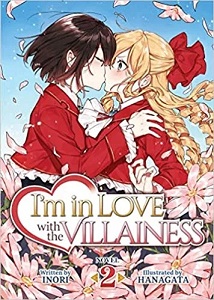
I’m in Love With the Villainess, Volume 1, written by Inori, illustrated by Hanagata, out from Seven Seas, was an extraordinary read. I mean that in the most positive way. This book was surprising in ways I would never have imagined it to be, in ways that blew me away.

Oohashi Rei, an adult who has always loved games, finds herself waking in the world of Revolution, her favorite otome game. Armed with encyclopedic knowledge of the world of Revolution, and skills given to the PC, Rei, now known as Rae Taylor, sets out to do the one thing she wants most….to romance the villainess, Claire François.

From the beginning, there were little touches that had me intrigued. For instance, the novel lacks Truck-kun. No one dies. Rei simply wakes up in the game as Rae.  Although Rae is a teenager, she has not lost her adult perspective and there are decisions or commentary we get from her which are decidedly mature. About a third of the way through the story, Rae discusses something with us, the reader, and I just sat back and said, “huh.” No child thinks that way. It was about that moment, I realized I was reading something completely different.

In my review of ROLL OVER AND DIE, I said, “The premise makes it completely possible to kill your brain cells reading [the violent scenes] and not feel much. In that, I think the author does the readership a disservice.” and I’ve called My Next Life As A Villainess, “lazy writing.” These are not capricious comments. I believe in world- and character-building being key elements in making an excellent story. I have been a voracious reader since I was a child, I’m usually reading 6-8 things at once. I was a comparative literature major in college. I care about the way writers write as a reader and as a writer. I expect that world-building be done with a thoroughness that provides the story a solid three-dimensional base, even if most of the details don’t apply to this story specifically. Overwhelmingly, light novels do not do this and isekai (or isekai-adjacent) LNs tend to rely on tropes and handwaves to skip the relevant world- and character-building. I’m in Love With the Villainess does the work.

And then you hit a moment when Misha, Rae’s best friend, roommate and foil, turns to Rae and asks, “Are you gay?”…and the characters have a frank discussion about sexuality. Rae analyzes her experiences and feelings and we watch her do so – in so many words – then watch her reach an unusual conclusion, given that this is a webnovel.

But wait, there’s more. This little web novel, this penny-candy confectionery of literary effort, doesn’t stop there. There will be discussions of abuse of authority, and unfair sentencing, of political protests and economic inequality. And, they will make sense in the context of the story. The otome game is called Revolution, after all. ^_^

While all of this world-building is happening, Rae is cheerfully teasing Clare into bullying her, and enjoying every second of it. Never for a second does Rae stop enjoying herself. The more we learn about Rae, the more we come to learn about Oohashi Rei, who seems like a decent person, one we might be able to be friends with.

The only complaint I sincerely have is that there is a scene (I refuse to spoil) that ought to have been illustrated but was not. That is the only negative for this book. Thankfully…there is a manga! Yesterday I mentioned that I’m reading the manga for this series as it runs in Comic Yuri Hime magazine. There are some small differences in functionality, with each medium providing positive and negative qualities. We have not yet reached that specific scene in the manga, but I fervently pray for a few good screencaps. This is where the manga will definitely provide a benefit. On the other side, the novel format allows Rae more internal monologue and she is, IMHO, more relatable as a result.

Absolutely shout-out to Jenn Yamazaki and Nibedita Sen for the translation and adaptation here. Some of the translation lines were in and of themselves, sublime. I’ve never thrilled so much at the use of “There it was.” George Panella’s logo also gets a tip of the hat from me. Everyone at Seven Seas really pulled out the stops here for what is definitely, positively going to be one of my Top Ten Yuri of the Year. No question, this is the series to beat right now.

Ratings:

Art – 7 Adequate, but once again fails completely to illustrate anything significant or interesting
Story – 9 Takes the banal set-up and flies
Characters – 10
Yuri – 7 one-sided in this volume, but…
LGBTQ – Yes!
Service – 2 Implied and some other stuff

Overall – 9

Author Inori thanks their partner in the author’s note. That might have something to do with that discussion of sexuality.

I’m in Love With the Villainess is available digitally on Kindle and Bookwalker Global next week, in print at the end of November.

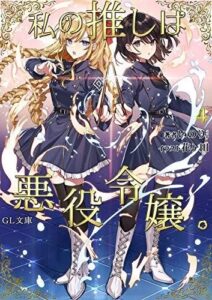
The novel series, Watashi no Oshi ha Akujyaku Reijou! (私の推しは悪役令嬢。) is available in full in Japanese on webnovel site Syoetsu ni Narou!. Volume 1, Volume 2 and Volume 3 are available in Japanese on JP Kindle. The covers for V2 and V3 are full of spoilery goodness.

Along with Yagate Kimi ni Naru Saeki Sayaka ni Tsuite, Volume 3,  which will make it over here as Bloom Into You: Regarding Saeki Sayaka, Volume 3, in December, Yuri Light Novels got a lot gayer in 2020. ^_^

Many thanks to Seven Seas for the review copy.


Rafiki, directed by Wanuri Kahiu

August 16th, 2020

Rafiki directed by Wanuri Kahiu, is a beautiful film about two Kenyan women in love in a county where homosexuality is illegal, and Church, State and Society are violently opposed to queer people living happily. Nominated at Cannes, Kahiu’s award-winning vision is timeless, with overnotes of Romeo and Juliet. “Two houses alike in dignity…” and all that, but with some deeper messaging.

Kena Mwaura is one of the guys but she, like most tomboys, is not at all one of the guys. Ziki Okemi is a very pretty girl, whose father just happens to be running against Kena’s father for the local County Assembly position. Kena and Ziki fall in love. It’s charming and sweet. You watch them wanting to cocoon them away from the derision and harm that you just know is waiting for them out in the real world. When it lands, all we can do it watch and wait…and hope.

As we watch, it becomes clear that there are several layers of storytelling unfolding. There is the clear message that the demons are in the haters, not the hated. The anger, the intolerance, the disdain, the rejection, the violence, that is where the demonic influence is. Love is…love.  Love brings joy and wholeness, but hate makes us bilious,and causes us to hurt others…which one is the one that is holy, really. It’s not subtle. Church, State and Society all look like the jerks that they are.

And there is the equally unsubtle story about two fathers, for whom wives and daughters are symbolic tools, not actual humans. Thankfully, here, the families are given room to grow, and both fathers and mothers change, at least a little. 

But there’s one more layer and this one really struck me hard – the mean smallness of society’s vision for what women should want and how men and women become enraged when younger generations just refuse to see that mean, small, barely human existence as “enough.” Blacksta, Kena’s friend, is honestly confused when Kena doesn’t seem interested in becoming his wife. “Isn’t that what everyone wants?” (At which point, I thought, in story after story after story, the villagers remain gormless. Why would Cinderella ever want something different, or Mu Lan?) The fact is, that the smallest and meanest of visions for what we “should” want is still prevalent. In the movie press kit, Kahiu says,

“While filming,we challenged deep-rooted cynicism about same-sex relations among the actors, crew and continue to do so with friends, relatives and larger society. RAFIKI brings to the forefront conversations about love, choice and freedom. Not only freedom to love but also the freedom to create stories.”

It was that theme of freedom I loved best about Rafiki. These themes were addressed at a price. In a 2019 interview with the Guardian, Kahiu speaks of the harassment she has faced, sometimes from people she loves.

The censors were not at all happy with Kahiu’s vision, either. “They felt it was too hopeful. They said if I changed the ending to show her [the main character Kena] looking remorseful, they would give me an 18 rating.” Kahiu declined and so, as the final framed play, Kena and Ziki do not end up dead, or some other more traditionally depressing ending. I will rejoice when “death or marriage” is so completely confusing an idea to young queer folks, since not having a happily-ever-after ended would be unthinkable. ^_^

Samantha Mugatsia’s Kena is fantastic. You just want to invite her over to kick back and let her relax a bit, and while it took me longer than Kena to trust Sheila Munyiva’s Ziki, I think she did a fantastic job of acting.

Overall a very solid movie. A few weeks ago, I reported that this movie had been put on Youtube officially, but I find that that link is no longer active. The movie is available to rent for a mere $1.99 on Amazon Video, which is where I watched it.  Ultimately, it’s a story of hope and for that alone, it’s absolutely worth watching. ^_^

Ratings:

Overall – 8

From a western perspective, there was nothing censorship-worthy, but Kahiu had to sue her own country’s government to get the film shown in Kenya…she was successful and it did play for a week. With luck we’ll be seeing more of her work in the near future for Amazon and a movie called The Thing About Jellyfish.