It’s been a pretty busy week here, so thankfully, we have not one, but two Guest Reviews lined up. Today we welcome back Guest Reviewer, Okazu Superhero, Friend of Yuri, one of my chief lackeys and all-around terrific guy, Bruce P for a much-anticipated review of a manga I enjoyed the hell out of. ^_^ Take it away, Bruce!
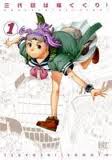
Trains and girls. Outside of the manga world there would seem to be little natural affinity between the two. But as a walk through Comiket will show, surprising and unlikely combinations like this are the stuff of stacks and stacks of doujinshi: U.S. Green Beret uniforms and girls, for example, or British Royal Navy uniforms and girls, or (moving to another aisle) electrical power generating equipment and girls, World War II tanks and girls, and so on. What a cool world it is, when you can have your favorite fetish posed enjoying your other favorite fetish, reality notwithstanding. It’s all somewhat reminiscent of a machine shop calendar. A large number of such hobby-combination series are now appearing as manga or being made into anime; manga that combine trains and girls are among them. Most are not very wonderful, but Tetsudo Shoujo Manga (鉄道少女漫画 ) by Nakamura Asumiko is an exception. It is excellent – and it includes Yuri, as any excellent manga should.
The manga consists of five independent stories and an epilogue, all marginally connected by railroad settings. Three of the stories have run in Rakuen le Paradis. One of them is Yuri. They are Josei in style, and generally involve the exploration of troubled relationships. While a relentless series of troubled relationships might sound like the makings of a long afternoon, Nakamura-sensei brilliantly balances the tone with humor, which derives mostly from her artwork. Her comic timing is spot-on.
The non-Yuri chapters are an interesting mix, taking place at different railway stations, on trains, or in one case at a secret model railway club. Just a single example: A woman is riding a train on the Odakyu Railway line to Hakone as she runs away from her husband. He’s a schlub, and she’s sick of acting as both mother and housemaid to the guy. She has the understanding and assistance of his younger brother. Unknown to them, however, the husband is not far behind, just one car back. He catches a young pickpocket with her hand on his wallet and compels her to assist in his plan for revenge: writing the character ‘meat’ on his wife’s forehead. And you wonder why she is running.
After confronting the fleeing woman and younger brother, the husband gives up and runs off the train. But the pickpocket shames him for being such a jerk, and tells him to get back in there and fight, and by the way don’t be such a jerk. The train is gone, but thanks to the pickpocket’s detailed knowledge of the timetable (a natural result of her livelihood), she gets him onto an express that allows them to catch up. They are helped by the fact that she lifted the younger brother’s wallet, and he and the wife are now stuck, unable to leave the station. They all meet up, husband promises to reform, and the couple shares a tearful reconciliation. Younger brother can now turn his attention to the cute young pickpocket – and since he is an Odakyu station agent out of uniform, they will have a lot to talk about.
The Yuri story (“Rittai Kousa no Eki”) starts with Mizuho on a station platform annoyed by a violent argument a woman is having on her phone. Mizuho descends to a lower platform only to be targeted by the woman’s falling phone and bag, knocked from her flailing hands by a passing train. Mizuho, a pitcher on her school baseball team, nonchalantly throws the bag all the way back up, instantly attracting the deep interest of the woman (who is never named). Mizuho has no chance to return the phone before catching her train, and on opening it she is intrigued by the background photo of the woman being kissed by another woman. When they meet on the platform the next day she hands back the phone and is embarrassed to admit seeing the photo. Not a problem, the woman says, they are breaking up anyway, hence the screaming. Mizuho realizes she can talk to the woman, even if only in oblique terms, about her own issue – a teammate is in love with Mizuho, but Mizuho does not love her back. The best thing would be to turn her down, the woman advises, eyes practically glittering. As the woman helps Mizuho, she in turn helps the woman, finding a ring that had dropped from the bag, the loss of which was causing a lot of yelling between the ex-lovers. At the point of the woman’s deepest funk over the breakup, Mizuho proposes in a somewhat blatant metaphor that the woman might want to take a different track toward a new destination – pointing to the line she herself rides. Cautiously jumping on the metaphor, the woman, contemplating how much younger Mizuho is, asks if it would really be OK (Can I use my Suica pass card on that line?) to which Mizuho answers firmly yes (Of course! It’s a JR line!). Love by semaphore.
A short part 2 finds the woman attending a game where Mizuho is pitching, which makes Mizuho so nervous she gets shellacked. Dreadfully embarrassed, she breaks that night’s date for extended practice, but finds the woman still waiting when she gets done. It is a relationship that is taking off nicely. The woman can be very sweet when she is not violently angry; one has to hope for the best here.
The epilogue chapter pulls all the threads together – and lets them go again. A man rides from Shinjuku to Enoshima, then Chigasaki, Atsugi, and Iriuda, all locations from previous chapters. Along the way he observes with bored half-interest the characters from the previous chapters in fleeting, unconnected vignettes, popping in and out of his sight like fireflies on a summer evening. He sees Mizuho rushing in concern to meet her lover on the station platform, where she asks the woman about some minor injury. And then he moves on. A quiet ending to an enjoyable manga.
Ratings:
Art: 8 Josei style with some cheerfully distorted proportions. Sparkling with humor. The art pulls the stories from merely interesting to exceptional.
Characters: 7 The characters are not all likeable. The men in particular tend to be either morose or cranky. A set of character types that sit around a model railroad in one chapter are precise, if unkind, portrayals of creepiness. By way of balance the pickpocket is such a great character; she deserves more stories.
Stories: 7 Ranging from almost strictly dramatic to humorous. Not overwhelming, but all showing some interesting angles.
Yuri: Rittai Kousa no Eki: 8 Other chapters: 0
Service: No. Not even for the one panty shot.
Yuri/Train Fan: I liked it.
Overall: 8
Tetsudou Shoujo Manga is a wonderful example of a ‘hobby’ manga that manages to keep the hobby part under firm control. Nakamura-sensei obviously loves trains, is happy drawing Yuri, and that combination works very nicely for me.
Erica here: Bruce – she keeps it under control, except in the model-building chapter, don’t you think? That story was a wank, but it was, ultimately, harmless. I also would give this series an 8, even if I am not a train enthusiast . Thanks, as always for the review. It’s such a pleasure to read your perspective. ^_^

 There’s just something about a hapless thief. We love them. It’s just that much better when a thief has to fight another thief to get back what is rightfully theirs or to lay the blame at the right feet. Whether it’s Indiana Jones, or John Robie, when we want a rollicking adventure, a hapless thief-type character always scratches that itch.