Archive for the Now This Is Only My Opinion Category


The Fantasy Five (5 Things I’d like to hear announced as licensed at Comic-Con, but they won’t be)

July 20th, 2010

Robot Six started it, with Six by 6. Then David Welsh continued it with his wish list of Comic-Con licensing announcements. I knew I had to steal this meme immediately. I couldn’t pass up the chance. But….

I’m very realistic. This is not a Wish List – this is a full-on fantasy, fueled by ABSOLUTELY NOTHING, and with decidedly low chances of ever happening (with some exceptions.) Nonetheless. Here’s my Fantasy Five wishlist, in ascending order of probability, and suggestions as to which company might want to look into it and why they won’t. ^_^

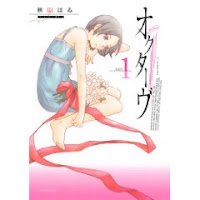
Octave – There’s pretty much no chance of this ever being licensed because none of the US companies knows it exists.

Recommended Company: In past years, I might have suggested Tokyopop, but this series has low likelihood for becoming an explosion-filled movie, so they are probably not looking at it nowadays. It’s not wacky fun romance, so Viz Shoujo is out. I’m going to throw a dart randomly and say DMP would actually be a good fit for this series AND they have a potential target audience all wrapped up already – adult women. They could totally make a go of it.

Strengths: Beautiful art, very adult and real storyline.

Problems with it ever being licensed: It stars two bisexual women in a pretty realistic relationship. That’s just not Barnes & Noble shelf material. I give this a less than 5% chance of ever being licensed

Poor Poor Lips – I have already suggested to this to Yen Press, but don’t get your hopes up. It’s got an actual lesbian in it. That’s always awkward, when trying to sell Yuri. Incestuous catgirls – no problem. Real lesbian – no way.

Recommended Company: Yen Press. It’s a 4-koma gag comic. It just happens to have a real story in it, as well.

Strengths: GREAT story. Good solid characters. Only slightly painfully goofy. One gag that actually morphs over time.

Problems with it ever being licensed: That darn lesbian. If only she were a loli, fox-eared, kimono-wearing witch! Then we’d have it already, I have no doubt. But Ren persistently remains an adult, out lesbian. How vexing of her. Chance of being licensed, Less than 20%.

Aoi Hana – They have it in France, but France actually appreciates elegant manga. The reason we don’t have this boils down to one thing – we have no companies that DO this. It’s not action, it’s not romantic comedy, it’s not gag strips, it’s not BL.

Recommended Company: If anyone were going to even look into it, I’d hope it was Vertical, but the chances of this, like Octave, ever selling enough to make it worth investing in is very iffy. Like Octave, I think DMP could make a go of it, if they ever decided to branch out for real into GL.

Strengths: Everything

Problems with it being licensed: Size of market and that’s that. If there were 20,000 people who would buy it, I’d mortgage my house and get it myself. But there isn’t. Chance of it being licensed ever: 25%

Gunjo – Where to begin with this? There is a lot here that would be problematic, but a lot that would not. The characters are adults, which makes this safer territory than Aoi Hana, oddly. Psycho lesbian murderers? Yeah, the US does that okay.

Recommended Company: Viz Signature. They already have IKKI magazine. I’d like to see them add Gunjo to their online lineup. I could sell it for them, no problems.

Strengths: Violence, action, lesbian sex (and deep, awesome emotion, but no one cares about that)

Problems with it being licensed: Some stuff happened with it that made it an awkward sell. But if we all write Viz and ask nicely, maybe they’ll do it. Or barring that – send me all your money so I can afford to print it. :-) Chance of being licensed: 30%

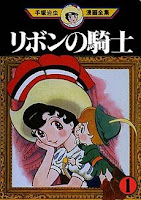
Ribon no Kishi – I have no idea what the hold up with this is. Vertical has been putting out Tezuka, this is a Tezuka title and everyone I know has asked them about it. All they keep saying is that it’s not on the release schedule yet. I wonder why? Do they think Ayako will sell better than a title that is this well-known? No clue. I won’t speculate.

Recommended Company: Vertical, obviously

Strengths: This is a well-known title, has Girl Prince glamour and I know a lot of people are waiting for it to be added to the Vertical catalog.

Problems with it being licensed: None that I can see, so no clue what the hold-up is, just priorities, I guess. Chance of it being licensed – 50%

There it is. My fantasy five. I would be delighted if any of these make it to our shores, in any format. (Heck, I’d actually cough up for a digital system/platform/reader if that’s what it took to get these over here.) I don’t actually expect any of these soon, or at all, but I’d love to be wrong!

2012 Update: Princess Knight (Vertical) and Poor Poor Lips (JManga) have been licensed. Two down, three to go.


It’s "Utter Nonsense" Time Again!

July 6th, 2010

Well, friends, it’s that time again, when I feel like beating my head against the wall of your random questions about anything.

I’m going to reiterate the rules from last time, because they worked pretty well.

1) I will not answer questions about “what is your favorite….” anymore. They distress me, because I don’t *have* favorites, usually.

2) No “ham or cheese” or “Coke or Pepsi” questions. Please. They provide no entertainment to either you or me.

3) If you want to ask me what I see as the future of Yuri or why I like Yuri, I beg you to read all the previous iterations of my answers to these questions. If you have a question about Yuri that I have not previously addressed, bring it on!

4) Please, please, no questions that can be answered by 30 seconds of actually READING one of my reviews here.

5) And no “define the term” questions. Go here: http://okazu.blogspot.com/2008/03/okazu-glossary-of-terms.html. I did that already.

As always, I’ll do my best to answer most or all of the questions. I may combine similar questions, or decline altogether if it’s just something mean-spirited or weird.

Let me remind you that the goal here is to be entertaining – by which I mean it should be your goal to entertain me. I spend a lot of time here entertaining you, I think it’s fair that you work at it a bit too. Ideally, we will all be entertained by the end result. ^_^

Okay? Good. Then,  let’s have ’em!


The Solution to the Scanlation Solution

June 11th, 2010

I have been working on this article for about two months, and have been discussing these issues on Twitter and elsewhere for about the same amount of time. I was holding on to this article for release on Hooded Utilitarian, but with Jakes Forbe’s post and today’s announcement by MangaHelpers, I believe that if I don’t post this today, it will become entirely irrelevant. As you will see, they are not alone in their vision. We’ve all discussed the problem of scanlation. Today, I’d like to talk about the solution.

***
The Solution to the Scanlation Solution
 
Scanlation – the widespread, illegal act of scanning in books/comics/manga, sometimes translating them into another language and distributing them for free through digital formats and technologies.
 
Scanlation is, everyone will agree, a big problem. The comics publishing industry is losing sales even as downloads of scans hits numbers that most comics publishers can only dream about. The comics/manga journalists agree, talking as they do to the publishers and creators – who feel particularly angry in regards to the wholesale refusal of their “fans” to respect their IP rights. And the pundits who discuss the quickly disappearing value of copyright and IP ownership agree.
 
Before he became another spokesperson for racism and misogyny, cartoonist Scott Adams blogged on this disappearing economic value of content as it becomes easier to search for.
 
So, if everyone agrees that scans are bad, why are they so rampant? How can we fix this pervasive problem?
 
In order to fix the problem, we have to step back and realize that scanlations are not the “problem” – they were the solution.
 
I’m speaking here as a fan of manga, comics from Japan. When I started to read manga there were – to be generous – very few titles licensed and translated.
 
The fans who loved manga saw the problem clearly  – there was a lot of cool stuff being drawn in Japan and very little of it was translated into English. So, they formed groups called “circles” – passionate volunteers who pooled skills and resources into scanning in manga and translating them. This way, they could share the series they loved with other people who would never otherwise get a chance to read them. It was (and largely still is) a love for a title that leads a person to scan it – not a desire to harm, but a deep desire to share and expand the audience.
 
Scanlation was the solution to the problem. It wouldn’t hurt anyone – none of those books (or anime series) were ever going to make it over here, so no harm, no foul. At least one person had to buy the book (or VHS tape) in order to render and scan it, so there was at least one additional sale to “pay” for the work. No scanlation circle ever made a cent on their efforts. They gave their love away for free, so they could call it fair use. And they were very specific – if you paid for a version of their scans or subs, you were ripped off and you were committing a copyright violation,
 
Then the digital revolution really hit and suddenly more series than ever were being scanned and subbed. It isn’t hard to get a scanlation – all one needs is a browser and a search engine. What had formerly been distributed to dozens of people was now being distributed to thousands or tens of thousands worldwide. Hits on popular scanlation aggregation websites go into the millions, bringing at least one such site onto Google’s list of top-visited sites.
 
 
And, in the middle of this, distribution companies started to license more series than ever. But now it was even easier to scan than before – often a scanned raw version is available, so no original copy is bought. Scanlators can put out a whole volume in days in just about any language a group might want. And the more popular, the more ubiquitous the content becomes, its economic value drops ever closer to zero.
 
What we need now is not a solution to the problem, but a solution to the solution.
 
Scanlation affects three entities. The fans, for whom it is uniquely an excellent – and elegant – solution. The publishing companies, for whom it is a strongly negative factor in both incentive to license and in actual sales. And the creators, who are often clueless about the scale of the issue, feel helpless and angry if they are aware of it, and whose bottom line is the most damaged by it.
 
For the sake of meaningful discussion, I am going to ignore the existence of overtly criminal scanlators and subbers. These are people who illegally distribute books and series that are legally licensed and available in their country. They know they are committing a criminal act and do not care. Their audience is either naïve and unaware that these distributors are illegal – or they are aware and, like the scanlators, do not care. These people are engaging in IP theft and copyright violation with criminal intent. They are not relevant to this discussion, in which we are going to address the “problem” created not by the desire to steal – but by the desire to share.
 
I say that scanlation is a solution. The problem it solved was “things I want to read are not licensed for my country.” This was true in 1998 and now, in 2010, it is largely *still* true. I follow a genre called Yuri (lesbian-themed stories), which has had a Renaissance in Japan, but is almost completely unlicensed – and in many cases unlicensable, as the content is difficult, if not outright impossible to market in the western world.
 
I learned Japanese to be able to read these books but, for most of the audience, this is neither sensible nor viable. Scanlation of this genre is still driven by love of the genre and desire to share with other fans – this is the motivation of an “ethical” scanlation group.
 
Let’s take a look at an “ethical” scanlation circle.
 
An “ethical” scanlation circle only scans series that are unavailable in their primary language. They strongly encourage their readers (what I refer to as “the audience”) to buy the book (to become “the market”) when it is licensed in that language. They do not charge for their efforts, do not have ads on their website, do not take monetary contributions to their efforts.  Ethical scanlators may ask for donations, but are more likely to want resources (bandwidth, seeders, expertise, etc.,) than money. It’s a labor of love. These circles are often composed of people who do buy that original copy or two – and many of their senior members may also purchase the book in the original form to support the creator. Ethical groups pull their versions off the Internet – and ask their fans to stop sharing theirs, should they have them – as soon as news of an official license is announced for a work. And because ethical groups are trying to help, not harm, it’s a high probability that if creators asked them directly to stop scanning their work, they would. (August 2010 Update: Although Toboso Yana’s plea to her “fans” to stop illegally distribute her work was met with contempt and derision, so apparently I’m wrong about that. Fan delusion is hard to break.)
 
I believed 80% of groups would stop, because as sad as it would make them feel, they really are only trying to help. That would leave 20% who voluntarily enter the realm of “criminal” scanlators, in the sense that they know they are going against the creator’s wishes and violating their IP rights, but for whatever reasons, don’t care – and now I think that percentage of people who just don’t care is higher, as high as 50%. Japanese and American manga publishers have just created an alliance to attack this group of people who simply do not care.  I think this makes sense for them and wish them well at it. It is wholly within their rights and responsibilities to protect their IP. Interestingly, many of the ethical scanlators also dislike the aggregation sites precisely because these sites distribute material they have no right to distribute, i.e., work done by scanlation circles. Ironic as it is.
 
Despite the ethical scanlators’ best intentions, not all of their audience is as ethical as they are. Not everyone in their audience wishes to support the creators or the publishers. Many plead lack of funds as a sufficient reason to only download scans. Some fans have oddly selective memory and will recall a slight from years ago by a publisher who dropped the ball, and will use that as justification for never buying from that company – even if by doing so they would be supporting a creator whose work they love. For many of the audience scans are their only option, as no companies in their countries have made an attempt to license what they would like to read. For these people, scanlation continues to be fair use of the content.
 
Lastly, there is the issue of translation. One of the pervasive arguments against scanlations is that official translations are better in all ways. Unfortunately, this is very often not the case.
 
Publishers are bound by contracts, copyright, and requirements from the licensors, creators and market forces. A name may be commonly translated by the fandom in one way only to be altered by the licensor or creator to something that looks/sounds/feels utterly absurd to a western fan. I can remember reading a book in which the main character’s family name was Naitou, but for some reason, the creator wanted it spelled Knight-o…which just looks silly on the face of it. If a character’s name rides the edge of a possible copyright infringement, it must be changed, not because the publisher hates the fans, but because there is no comics publisher around that can afford ongoing lawsuits with major western media companies who guard their copyrights with an absurd, creativity-killing zeal. Publishers are at the mercy of hired translators and editors who they hope are accurate and skilled. And, lastly, publishers are bound by the need to *sell books.* This means that a publisher may make a decision to change something to make the book appeal to more than just the core audience – sometimes at the risk of offending the core audience. Scanlation groups are not bound by any of these issues and are free to translate names in a way that is a common usage among fans, or which makes the most sense.
 
Scanlation groups often do a tremendous amount of research, to explain puns and literary references, offer historical context, descriptions of military terms, define common honorifics and generally provide the reader with as authentic a reading experience as possible. Publishers, for any number of reasons, will often not do this. In one case I can think of, a licensed series that previously had detailed translation notes has now had them cut back to nearly nothing, so that many of the references simply go undecoded.  It might be because of money or time, but many licensed series can’t provide that level of detail.  Not every scanlation group does this, of course, nor does every publisher skimp, but I can easily call to mind several series in which the scanlation groups did a better job than the legit publisher and several groups who work is professional quality (in some cases because professionals work with them.)
 
And, finally, there is the issue of out-of-print material. I will admit that, up until a few years ago, I was providing a scanlation group with material from a magazine that is long out of print, never had collected volumes and was in danger of disappearing, forgotten. I have stopped, because of my shifting feelings about scanlations, but I do not regret having done what I did.
 
Some of the American comics scan sites distribute back issues – the infamous HTML Comics touted that as their raison d’etre. The owner of this site, which has now been shut down by the FBI, insisted that the companies left him alone because he only made old material available. It’s true that a die-hard fan can find any number of avenues to find and purchase Thor #142, but for a casual reader, it makes no sense to attend a show or hunt online for a single volume that you simply want to read once. That’s why libraries exist in the real world – and there are no pamphlet comics libraries available to the average person in Whatevertown, USA.
 
The sole problem, really, with scanlations is that they are illegal (and, perhaps, immoral.) The scanlation group is distributing something they do not have the right to distribute. In effect, if they could gain permission from the creator, scans would *still* be a very elegant and simple solution to the problem. Permission is very much the crux of the matter here. Musician David Byrne wrote about a creator’s right to grant permission on his blog,  in which he says plainly, “It’s not just illegal because one is supposed to pay for such use and not paying is, well, theft — it’s also illegal because one has to ask permission, and that permission can be turned down.”
2012 Note: And in an unfortunate, inevitable devolution, some scanlators are now trying to sell their digital scanlations (see the Other News section of the report.)
 
So, in the past, the problem was “things I want to read are not available” and the solution was “scanlations.”
 
Now, what is the current problem? Not scanlations, which are the solution to a previous problem.
 
I propose that the problem we are really dealing with is this:
 
1) Readers want what they want to read, in their language, for a reasonable price (or free), in a reasonable time frame, in a format that is not reliant on a single standard, format or hardware.
 
2) Creators want the right to make decisions about their work, grant access and distribution rights, give *permission* and make a fair wage from their work.
3) Publishers want to be able to sell materials that they have paid to license (or to create) and make enough money in doing so that they can pay their employees, themselves and have money to invest in new properties.
 
For readers, the problem hasn’t changed all that much. Readers’ expectations have changed, because at this point it seems absolutely absurd that I really can’t just get what I want to read in my language. Regional licensing? Why? Clearly it doesn’t help Czech readers to learn that a Korean version has been licensed, or English readers that France will get a release of a book they’d like to read too. The fact that DVDs are still region encoded when most DVD players are no longer limited by that seems more of a sad memory of some ancient gerrymandering of the planet than anything useful or intelligent. Where is our global economy?
 
For the creators, the problem hasn’t changed at all. Where once upon a time, the companies raped you for your content then wrung it dry, now the fans do it too. Nice way to say “thanks” for all that hard work. (2012 Note: I have been excoriated for my use of “rape” in that sentence, but recent legal decisions that has stripped creator right from many successful comic characters bears up my – and many fans’ – belief that corporations are as close to that act as a legal entity that is not an actual person can be.)
 
And for the publishers, the problem is seemingly endless and constantly shifting. How to determine what titles are most likely to actually sell, to license work people want, get it to them quickly and with high quality, and for free, then provide a way to sell books as well, without involving a distribution model that relies on some third-party company whose decision-making is schizophrenic at best and seems pretty heavy-handed all the time, or whose hardware requires a proprietary format.
 
The solution we need must address at least the first two of the above three issues. It’s already clear that publishing is changing, and if the role of publisher disappears into a world in which readers and creators interact directly and meaningfully then I, as a publisher, don’t mind all that much. But, I do think there is a place for publishers in the new solution, even though the concept of “publisher'” will change.
 
Now, all that has gone before is a discussion of “The Problem,” which was really just the solution to an earlier problem. It’s time to consider the “The Solution” to our new set of problems.
 
I had this discussion on Twitter and received an enormous amount of excellent feedback. Here are some (not by any means all) of the specs of the new Solution. None of these are my ideas, this is a synopsis of the collective mind.
 
But, before we move into the specifics, I want to be up front and address the obvious argument against what I am about to lay down – it all seems utterly unreasonable. Of course it is. It’s crazy thinking. Off the rails. This is not a solution that fixes a problem – what we need now is a solution that creates an entirely new vision. I believe that the heart of this new solution is in the core of the old one – the passion and love the fans have for comics and manga. I’ve seen both technology and process shifted by scan groups as a way to better serve their audiences. If we can harness that to begin with, we’ll have a strong start.
 
The solution needs to be platform- and technology-independent. Not hardware dependent, not company/distributor dependent. Manga Expert Jason Thompson posted recently about how badly the iPad serves manga . Many articles exist about how Kindle and Nook at this point, are not good for graphic novels. There is more commentary about the increasing difficulty of distribution of printed comics and manga than any one person can really keep up with. We need something better, something that allows creators to make their own decisions about how their work is viewed and readers to make our own decisions about what content we choose to read.
 
There must be self-regulated community standards so that children can find comics that suit and so can adults, without having to be “protected” from porn by over-zealous hardware gods.
 
Creators should get payment for every download/view and also reasonable payment for every approved modification, parody or use of their material. For instance, if a creator approves a translation of their comic to Uigur, a small fee (one in proportion to the number of people on the system with that as their primary language) can be paid by a group, so they can then translate that work into their language. The download/view fees will then pay the creator royalties for their content. Comic artists will have control over what happens to their work, and will be paid for the use of it. Questioncopyright.org has created a Creator-Endorsed Mark, to be used in exactly this way.
 
“Publishers” will be anyone who is not a creator, but modifies a work by translating, editing, retouching, relettering, etc, for an approved project. This will give passionate fans the ability to share their favorite works in a legitimate manner. Perhaps these “publishers” can get a percentage of the approved projects that are downloaded/viewed. For instance, if that Uigur scan group is composed of 5 people, every time the Uigur translation is read, the translator, editor, proofreader, letterer and retouch person might get a small percentage of the download/view fee. 95% of the fee would get to the creator who approved the work and each of the scanlators might get 1%.
 
There needs to be a creator community and a reader community as part of this solution. Every scanlation group has a community and it’s this that keeps the group – and the love – alive. Fan work can/will be encouraged, but also managed. Some creators are already going this route on their own – taking their work online and developing their own methods to monetize it. This solution would provide a home for all creators, worldwide, to do the same, in a way that allows them to focus on their work, not on the technology of distribution.
 
Reader and system suggestions – and free previews of series that are not in the readers’ normal genres – will help stimulate reading. 2012 Note: JManga.com has made tremendous inroads in this area and, while not quite perfect, is far more satisfying than the proprietary apps listed by other American and Japanese publishers. It’s laying down a new, relatively high benchmark.
 
And, for those of us who still love the feel, smell and look of books – print on demand capability, with reasonable price points. Like pamphlet comics? As long as the creator gives their approval, each chapter can be printed that way, or as a whole GN volume. The creators will have the opportunity to merchandise directly in the form of whatever products they want – T-shirts, postcards, or limited printed lithographs of a cover piece. It will be up to each creator to decide what they want to do and what form it would take.
 
Take the passion already put into scanlations, give it the power of community, suggestions and ratings, add the freedom of webcomics, a creator community in multiple languages and above all of this allow *permission* to be granted by the creator and fees to be paid for the use of the content.
 
I am not smart enough to do this, but I am convinced it can be done. It’s not in a company’s best interest to come up with the solution – companies have to pay bills, they have to protect the IP they have and the status quo of how they work. I challenge all of you out there to create this new solution. And I challenge you to all work on this, not wait for someone else to build it. Scans were developed by fans to solve a problem. Don’t focus on the problem – or why this can’t work – focus on the solution and how it can – then let’s make it happen. For the creators who want control of our work and readers, who want freedom to enjoy that work in our own way this is an unparalleled opportunity. We can all create a new paradigm that will make readers, creators and publishers equal stakeholders in an industry and in the content we all love.


My Point of View on Scanlation

May 19th, 2010

I’m getting a lot of angry comments from folks from Kotonoha these days, as a response to my post on my entry for Gunjo. The main accusation appears to be “how dare you, you’re friends with Lilicious and so you are playing favorites.”

I want to address this issue, mostly to provide a permanent link for the next 3,000,000 times it comes up.

I do not support scanlation of material that is currently in print or available for sale – in any language.

In general, I believe that you have no right to entertainment and if a book is licensable or licensed, scanning it does not “help build an audience.” Things might have been different a decade ago, but now, the justification for scanlation is primarily ego on the groups’ side and desire to get something for nothing on the leechers’ side.

The folks at Lililicous know my opinion on this. I have no influence or control over what they do. I am friends with them,  but we do not see eye to eye on the matter. I have made the point many times on their IRC channel in hopes of educating people who are not aware that they are violating copyright or hurting individual artists by doing this.

The reason for my post about Kotonoha was because they linked to my review of Gunjo and I suddenly got many new visitors to the site from there. It seemed sensible to let visitors from there know that I do not support scanlations of licensable material – which might be implied from the link. It’s not out of hate or retribution or favoritism and I’m sorry it seemed personal. I have no belief that any scanlation group is better than any other.

The fact that I have a notice up on this title and have never done that before is being misinterpreted by many of you. The issue is not what group is violating the copyright here – the issue is the work that is being scanlated. I am a little more vehement about this title, because I know how much blood, sweat and tears it took the artist to create and how important it is to her. And the thought that anyone is planning on scanlating it makes me ill when I know what she went through with it. The fact that Lili had it on their site is really quite irrelevant – for one thing, I don’t go to their site and have no idea what they have on it. I don’t follow their scanlations, to be honest. (In fact, I gave up reading scanlations some time ago when I realized that it was something with which I strongly disagreed. I also stopped providing out-of-print material for scanlations at that point.) If Lilicious had started to scanlate it, and I had received a lot of visitors from them for it, I very likely would have had the same or similar message. It was merely an issue of timing, not which group. I have removed Kotonoha’s name from the message, since so many thought I was harping on the group. That was not the intention and for that, I sincerely apologize.

If it were up to me, all scanlations groups would grok that they are not helping anyone worth helping. No mangaka is excited to be scanlated. You are not providing a service – you are complicit in copyright violation. You are not “building an audience,” you are devaluing something that many people have worked hard to create. And for every one person who *might* buy a work *if* it comes out and *if* it’s available at a local book store when they want it, you’re giving someone else’s work – something you have no right to in the first place – away to hundreds, maybe thousands of people who will take it and ask for more. The only audience you are building is one made up of people who have no intention of paying for the privilege – or worse, paying you to “support the group,” while the mangaka who did the actual work gets nothing from it.

To answer a specific, rather ingenuous argument in the comments – the chapters that were online for free at Ikki were published by the official publisher, with the artist’s approval. Legal online versions of a comic are clearly not the same as scans that do not have the artist’s permission.

This is exactly what licensing is. You want to publish this manga? Then license it. Then everyone gets what they need and want. You will get to translate, publish and distribute a title you love to people who want it and the mangaka gets paid for her work.

I’ll be glad to keep approving comments that disagree with me. I won’t be replying to them other than to point them to this post where it’s relevant. (My opinion on personal or offensive comments is very much “sticks and stones.” It’s tiresome, but you can’t do much damage, because I don’t know you, you don’t know me and you are not one of the dozen people or so on the planet whose anger can hurt me.)

This is my honest, heartfelt opinion as of today. It has changed in the past and will be subject to change in the future. Chances are if you rely on scanlations, I won’t change your mind. But to be honest,  I really can’t approve of people distributing work they have no permission to distribute. The more I get to know the mangaka, the less I find the justifications for scanlations make sense.

May 20, 2010 Update: In response to a totally reasonable question in the comments, I have pulled the full translations of the Maria-sama ga Miteru Novels from this blog and will not be posting any more. I am keeping synopses and reviews here, because,  when you talk about a cool pair of jeans you saw in a store to a friend, you are not implicitly encouraging them to steal those jeans.  I know that my reviews here stimulate sales – perhaps in only a small way, and perhaps more people rush out to find scans than are motivated to purchase the books, but I know that the large percentage of Okazu readers *do* buy what they want to read and watch and I thank them and tip my hat to them.


I also want to point out that it is not a sign of weakness or hypocrisy to have an opinion that changes over time, no matter what opposition politicos say. :-) As we change, the market changes, circumstances change, technology changes, it’s sensible to have one’s opinion change. Ten years ago, I was fully in support of scans. It was extremely unlikely that most of what fans read would ever get over here. Today, manga publishers are bringing over unheard of amounts of manga, which is good, and struggling with the market, which is bad. Go Comi!, CMX, Aurora, CPM, cutbacks at Viz…all of these are signs not that the publishers are losers, but that the growing audience for manga does not mean a growing market for manga.  As a result of this change, I’ve come to the opinion that while I still understand the desire for scanlations and subs…I can no longer support them. Does that make me a hypocrite because I translated stuff and provided raws for scanlations of out of print or obscure titles in the past? I’m sure many of you think it does. I can say only this – that was my position then and this is my position now. Things have changed. I have changed.


Perhaps one day publishers will find a way to create an online library that allows readers to read, and buyers to buy and all will be happy. I look forward to that day.


Now This Only My Opinion, the Eighth

February 7th, 2010

Well here we are, at the 8th iteration of Utter Nonsense and this was probably the most difficult one of all of them. You folks are asking me for opinions on hard stuff, now. :-)

I did my best. I hope you find it entertaining, educating, enraging and other “e” words.

***

Q: What is one of the best examples of a character you’re supposed to like but completely and utterly hate with every fiber of your being?

A: Primarily the girl who transfers into a school, seemingly from a box locked in a closet for the past 15 years. She knows nothing of the school, its traditions, patterns, schedule or the fact that duels are fought every day at noon for who gets that last brownie.

I can’t stand willful, aggressive ignorance. Pick up the damn school handbook – look them up on the Internet, for pity’s sake!

Not cute. Not cute at all. Only beaten in uncuteness by real humans who blunder stupidly around in real life being a burden and pain because they are too lazy to look a thing up or get a clue.

Q: It seems that many Yuri mangas are based around ‘cutesy’ girls, young girls, or hyper- sexualized girls. Do you feel that these thematic/artistic choices portray the love between women as an immature or not serious thing?

A: Yuri manga are based around what the editor feels will best sell books. Complexity rarely sells. Simple jokes, one-dimensional characters are easier to sell, because they are easier for the reader to mask themselves into a role. That’s one thing.

Secondly, yes, of course. Many straight men are mostly convinced that lesbians are only waiting for the right guy anyway, and Japanese men know for an absolute certainty that regardless of what happened in school, most women go on to marry and have kids, because that’s what they do. So, love stories that take place in fantasy and school settings show Yuri as something immature, a fake love, a phase, something that they’ll grow out of.

Q: Which Yuri would you say is the closet-est portraying, the most realistic lesbian life-style, relationships, and struggles.

A: The short story “Fufu” from Yuri Hime S, Volume 10 was surprisingly excellent, Poor Poor Lips is an entirely unrealistic setup, but the charactrer of Ren as a lesbian is portrayed exceptionally well and Octave is very realistic all around, for adult relationships.

Kimochi no Katachi has fantastic exploration into young women’s feelings and, while again being absolutely ridiculous in setup, Hanjuku Joshi has some good moments about what it means to love another woman. Also, Aoi Hana is exceptional in regards to young love.

Q: If you could have any Yuri manga adapted into a live drama, which one would it be? And who would you cast as the leads?

A: Gunjo, no question. Secondly, Octave. I don’t know the names of too many live-action actresses, so I’ll leave that up to your imagination.

Q: What was your first job?

A: Serving food at a beach concession stand when I was 14.

Q: What was the craziest thing you ever did in college?

A: Moving 40 minutes away to live with my wife, and work full-time almost all four years.

Q: What is the most annoying thing a fan has ever done to you at a convention?

A: Shared extremely personal details that I had to smile and nod through, because I was trapped behind the table alone and couldn’t escape. Because I am a lesbian, people feel free to share their gender and sexuality issues with me and assume I give a shit which, frankly, I don’t. This happens to me all the time, I can’t tell you how many people have given me details they probably haven’t told their therapists…and should. I’m neither sympathetic nor empathetic, so it’s really pretty tortuous for me.

Q: Episode 10 of Sasameki Koto had this immense, Comiket-sized, all-female Yuri convention; intended joke or not, I unfortunately had to chuckle and facepalm at it. I know you’ve reported of the Japanese female Yuri-scene in Comiket, but what about the exclusive events?

A: I haven’t had the opportunity to attend either Maiden’s Garden or Girls Love Festival yet. One of my friends did attend – he wrote up a short report that he allowed me to share on the Yuricon Mailing List. Both events are still very small – only 100 tables or so, in a large space with other specialized events. Not hardly on the scale of Comiket (which is 30 years old, so give them a chance.) If I do attend one, I’ll be sure to share.

Q: A corollary to a previous question: What is one of the best examples of a character you’re supposed to hate but completely and utterly like with every fiber of your being?

Every Evil Psychotic Lesbian ever.

Q:
1. Good.
2. Yuri.
3. Anime.

Why can we only pick two of those words and not all three?

A: Because:

1) Comics
2) Cartoons
3) Fandom

There’s only a few really good comics or cartoons out of the whole body of comics and cartoons at one time, and everyone’s idea of “good” is different. I thought Aoi Hana was better than good, Yuri and anime…and licensed.

Perhaps your expectations are unrealistic and you should choose a more consistently high-quality genre. Good luck with that.

Q: Any pleasant surprises in the manga publishing world this year? Series you didn’t expect to be licensed, companies that took an unexpected turn in direction, and such. Any unpleasant surprises in the manga publishing world this year? Is there anything manga related that has you excited for next year? Anything you’re dreading to see?

A: Licensed…not so much. Hardly anyone gives Yuri the time of day, yet. I only pay about half attention to manga licensing announcements, because no one is licensing any of the best Yuri out there. All of the good Yuri licensing last year was in anime.

The problem is with me – I don’t read much English manga. So I really don’t much care what gets licensed, except to report on it to the Yuri Network, or for review.

Nonetheless, I’ll half answer this. I’m *still* amazed and pleased that Hayate x Blade was licensed and I’m still appalled that Yen will license crap like Suzunari but not something wonderful like Poor Poor Lips.

Q: Would you say that Yuri suffers from too much editorial direction/censorship, or is the opposite true with some mangaka having zero direction ala Manga no Tsukurikata?

A: I think that has got to be specific to each magazine and each writer/editor combo. In general, in Japan, editors have a lot of power over the story. It’s nothing to do with Yuri per se, it’s the same as the fact that in Japanese movies, directors have all the power.

I’m sure there are mangaka who just draw whatever and send it in, get together with their editors every once in a while and collect a paycheck, too. :-)

Q: With the surge of Yuri popularity in Japan there is (thankfully) more ecchi and hentai Yuri manga to be found that fall outside of the stereotypical male fantasy of how lesbians have sex and into the reality of how lesbians REALLY have sex. (Not that we don’t trib, I just can’t even remember the last time I did!) Could you list a few titles that you feel portray a realistic sexual relationship between women?

A: Uh…..

I have so much trouble answering that question I don’t know where to begin. First of all, clearly your idea and mine of what “realistic” sex is is going to be different. And I don’t share your opinion about more hentai being a good thing.

Secondly, porn is porn and not a sex manual. It’s not meant to be realistic, it’s meant to make you horny.

Thirdly, it should be pretty clear from my reviews that I dislike most of what other people find to be appealing.

All that having been said, I’m afraid you’re on you’re own for finding realistic lesbian porn. You might want to check into Bian literature (created by lesbians for lesbians,) or take a look at English-language lesbian lit, rather than Yuri.

Q: Do you believe male mangaka should write or make YURI? (or even if the editor should be male itself) I mean equal rights it is but the question is if they convey the whole concept of YURI to begin with. (there is a different view on the other side of the fence)

A: Yes, absolutely. It’s infantile to think that a writer’s gender and sexuality has anything at all to do with their ability to write. By your standards I should only ever write lesbian characters because I can’t *possibly* understand what a straight woman or man could be like.

A good story is a good story, no matter who writes or edits it.

Q: If you could have any animation studio adapt any Yuri manga, which studio and which manga would you choose? Also, why would you choose those specifically?

A: I don’t pay the slightest attention to what studio does what, so I’ll make something up – Gunjo by JC Staff. I picked them because they were the only ones I could think of at the moment. Sorry…I’m a seiyuu otaku, not a studio otaku. :-)

Q: When did you start learning Japanese. How long have you been learning until you could understand Japanese media?

A: I’ve been learning for about 8 years or so. I started to be able to understand after a little while, because it was pure memorization of words and language is a hobby of mine, so I see the patterns without too much difficulty. Now it’s purely memorization of more and more vocabulary. I am terrible at speaking though, because I don’t practice at all.

Q: Is there any series, manga, book or whatever you absolutely loathe, but you also like it? I mean in the sense that you know it’s horrible and insulting to you, yet you can’t help yourself. In short, what is the guiltiest of your guilty pleasures?

A: Air Master. It was repulsive, offensive, stupid and annoying and I love, love, love it with all my love. :-)

Q: What’s the most annoying ques… oh, wait, that’s already basically answered in the post itself.

Oh, yeah, now I remember.

What do you reckon is the most effective way for a fan to promote Yuri anime in social media?

And, yes, that’s probably three questions snuck in there (on Twitter I’d be out of space long since) … in general, for a particular series with a legit stream, and for a particular series (*cough drill-chan FTW cough*) that is coming out only on DVD.

A: Talk to people about it. That’s what Social Media is. It’s spaces that allow you to talk about things with people. Since you can’t do a promotion, and you’re not the owner of the series so giving things away is unlikely, get out there and talk to people about it. Find people who want to talk about the kinds of things that series is, and talk to them. This wouldn’t be different whether you’re promoting a streaming or DVD version.

Q: Most Western lesbian works, if not center around, then contain many, many themes references to, the social discrimination and identification issues/angst faced by the characters. They often detail the experience of fitting into the GLBT community as well. Most lesbian works of manga, anime, etc., however, if not rarely, then not always, contain anything of the sort, instead focusing on romance; the complications in the relationships of the characters seldom seem to revolve around their sexuality or societal perception of same-sex couples, and rarely do the characters seem to seek out other GLBT people or become involved in activism. The downside of this is obvious – a perceived lack of realism and opportunity for reader identification – but, on the other hand, I’ve always thought most American GLBT works tend to go too far the opposite direction, in that all characters often face complete and utter societal rejection and, in the end, appear flat-out doomed, and that ALL relationship conflicts revolve entirely around the characters in them questioning their sexuality, being rejected due to it, attempting to maintain secrecy, trying to come out at the age of fifteen, etc (Desire Lines, anyone?). Even lesbian books advertised as being a “romance” – and not, primarily as a “lesbian novel” – seem to do this. My questions are, why is there so little Yuri containing themes of lesbian identification, why is there so little Western lesbian fiction not focused entirely on sexuality angst, and which direction do you prefer the works you read/watch to take?

A: You’re comparing apples and buffalo.

The West is not Japan and where we tend to use literature to work things out, they tend to use literature to act out things that cannot be and are not discussed in public. Where we highly politicize LGBT life, in Japan they tend to keep it private – in part because of the doctrine of public vs private life.

And most important, the west is still highly individualistic where the east is largely still focused on the needs of the many over the needs of the one. Parading your sexuality around is 1) No one’s business; 2) Going to make your family suffer embarrassment and 3) No one’s business.

Basically, you can’t compare two radically different things.

I’ve read Japanese works that are about “being” lesbian and coming out (Real Bian is a manga currently being serialized on the internet on that topic,) and tons of lesbian lit in English that’s not about coming out, so perhaps you could read the “Books to Watch Out For” newsletter or read the book reviews in a few LGBT publications and pick some other fiction books to read.

I don’t prefer anything, I take things as they are. What I *like* is stories about women who are gay and know it and past the whole awkward coming out thing and stuff that happens to them that’s good fiction. Like Shoujoai ni Bouken.

Q: Oh, and if it’s okay to ask another question (and if “Have you heard of–” questions are allowed), have you read the manga Horou Musuko? It’s not Yuri, but it’s about two transgendered children, and I’ve always wondered what your opinion of it would be.

A: Haven’t read it. While gender issues and gender switching do occasionally come up here
on Okazu, it’s not really something that’s a hook for me at all. I’m told it’s quite good by people who have read it.

Q: What are your thoughts in general on all this anti-lesbian/anti-Yuri stuff coming out through the woodwork a lot recently, especially by males? Do you expect this crappy trend to continue? As a side: Have you encountered any anti-yaoi/anti-gay stuff by women or is this just another wonderful example of society’s double standards?

A: My thoughts are, I don’t have any idea what you’re talking about. If you are referring to Maria-holic and the like, my answer is, you gotta expect that when *anything* gets popular, there’s a backlash. I haven’t seen enough to call it a “trend” so I guess my other opinion is that you should ignore what annoys you and focus on good stuff instead.

Since I read very little Yaoi/BL, I can’t possibly pretend to know much about any backlash there, but I can say I know human nature and my guess is sure, someone probably wrote something anti-BL and someone probably printed it somewhere. Shoujo and josei manga are full of poking fun at BL, so probably they aren’t taking it so seriously.

Q: Don’t you think there is a lack of originality in Yuri? It’s filled with school settings and lesbian students. It was good in the beginning, but it gets boring. The last Yuri anime I’ve watched that blew me away was Mnemosyne. I wish that there were more titles out of the all-girl school thing.

Could you name some?

A: No, I don’t think there’s a lack of originilaity in Yuri. I believe that way more than 90% of writing is crap and there’s basically a lack of originality in everything, which frees me up to enjoy things for what they are. Check back through my archives for the words “about adult women” for series that fit the bill for you. Have fun!

Q: And now for something completely different…
Yuri manga provides a window into portrayals of lesbian relationships in the popular culture of Japan. Although similarities between stories in Japan and the US allow for cross-over appeal, cultural differences can affect what stories are told and how they are told. For example, LGBT adolescent stories in the US often spend a great deal of time on “coming out” to oneself while in the Yuri manga more emphasis is on the relationship “coming out”. This difference fits within the social-psychological theories of cultural differences in individualism (self as seen as autonomous) vs. collectivism (self as seen as inherently tied to close others). An emphasis in coming out to oneself makes sense in a culture that views individuals as autonomous while a focus on outing one’s relationships makes more sense in a culture where the emphasis is on the self in relation to others.

Do you feel that much (or very little) of the Yuri story is lost once translated into English? Have you or your colleagues noted common misunderstandings among Americans about Yuri manga stories?

A: Nope.

Look, I get that academics think academically about things, but this is *entertainment.* Normal humans read comics and watch anime to be entertained, not to parse portrayals of a subculture vs the large cultural perspective, except – maybe – on an instinctive level. I.e., a lesbian may be looking for a good rollicking lesbian yarn and might potentially think “I like books with strong lesbian leads,” but is unlikely to think, “I’m looking for a positive media representation that mirrors my own beliefs and experience so that I can feel represented in popular media.” The latter may be true – and is exactly the reason why sites like Afterellen.com exist – but it’s not how people think. ;-)

Translations are, as I have said about a gazillion times, really personal. One translator “gets” things differently than another. Some companies have, in the past, translated the word Yuri as “girl-on-girl” but that has nothing at all to do with the portrayal of lesbians or misunderstandings about Yuri, it has to do with the fact that most American anime and manga companies are staffed by fans (often Fanboys) and not every fan is sophisticated, worldly, well-read or socially ept, even if they are the editor-in-chief of a publishing company.

To be honest, my colleagues and I don’t have conversations like this. My colleagues in publishing tend to talk about relationships with mangaka, or the trials and tribulations of distribution. Sometimes we talk about food.

My “colleagues” in Yuri equal pretty much Erin S., and while we might potentially have this discussion, we haven’t, yet. :-) Not generally, anyway, although we have mentioned egregious mistranslations to one another over the years.

And, above all else, there hasn’t been a whole lot of Yuri translated officially. To be honest, I don’t think much is lost overall in our work at ALC – we work *really* hard to make sure it’s not. I know the translations for Hayate x Blade have had a lot of thought put into them. I can’t think of too many other Yuri manga that are so complex as to have anything to misunderstand, except for the word “Yuri” itself.

Q: If Shoujoai ni Bouken could be adapted into an anime, what would the list of voice
actresses look like?

A: Yuriko would be played by Ogata Megumi, and Mariko woould be played by Hisakawa Aya and I don’t care about the rest. :-)

Q: What are some of the worst translations you’ve ever had to suffer through, be it from a book or movie? Did they contain sentences that were unintentionally hilarious, and if so, do you have any funny quotes of those to share?

A: The Lucky Star manga, Volumes 1 and 2 from Bandai. I think I shared some quotes in my review of Volume 1. And one of the best bad translations ever is the one done for the movie Naked Killer. One of the final lines of that movie is etched into my brain eternally. “I still have time to take the gastric lavage.” She didn’t.

Q: From a market standpoint, wouldn’t one of the best way to jump start the Yuri manga market is for companies to license racier Yuri manga titles. That way while the readers will get their smut, they’ll also get some semblance of a Yuri story.

A: Actually, from a market standpoint that would be the absolutely WORST way to promote it.

1) Porn is incredibly hard to distribute – bookstores won’t touch it. Graphic novels are harder to market at all, and less likely to slip past the kinds of people who like to be outraged about things than something in print, because a picture of two people having sex is obviously what it is.

2) The people who most want that, i.e. young men, are statistically the group least likely to buy it.

3) It’s mostly crap and it’s already hard to find good Yuri. Why waste money publishing crap?

Q: If they made a sequel for Burst Angel, how likely would it be that Sei-who-is-not-named-Beth would contract scarlet fever taking care of a poor German family? Or would it be more likely that she contracts TB?

As a follow up, have you read Geraldine Brooks’ book, March?

A: Sei-who-is-not-named-Beth, would come down with a cancer of the brain developed when
she took care of a family on a tanker her Triad owned that had corrupted Venusian minerals on it. But Emi would have downloaded a copy of her brain into a backup cybernetic brain and after the painful parting scene where Meg cries and Jo walks away and punches a wall in her frustration at not being able to save her, Sei-who-is-not-named-Beth would be okay again.

And no, not only have I never read the sequel, I have not read the original Little Women because, as a child, I found it rather boring and gave up. I was very much a tomboy and preferred stories of cowboys and military battles to slice-of-life about girls who played with dolls and died of scarlet fever.

Q: I know that you’ve been there a few times, so is there any item from Japan that you cannot buy online that you miss?

A: Doujinshi. Buying that online requires I use a buyer. I prefer to buy directly at events. It’s not the same experience. It’s also much more expensive to buy online.

Q: In an all out battle of Xena versus Sailor Uranus, how do you think it would go?

As a follow up, would anything change if both of their partners (Gabrielle vs. Sailor Neptune) joined as well? And of course I mean end of the series kickass Gabrielle and not silly farm girl Gabrielle.

A: Wow, flashback to my rec.martial-arts days, when So-and-so vs. Whosits conversations ruled the Intertubes. ^_^

Gabrielle is an ass fighter, and she sucked with her sai, so Michiru would wipe the floor with her – also distance weapon vs close up. Gabrielle wouldn’t have a chance. Xena would win, assuming she could avoid the first “World Shaking,” because she didn’t mind inflicting pain on people, while Haruka never really did more than punch Makoto in close-up fighting.

Q: Do you think that there will ever be a time in the future that books made of paper will cease to be printed?

A: Yes. And sooner rather than later.

Q: Do you have any new predictions for Yuri with the popularity of series like Sasameki Koto and Aoi Hana?

A: Yes, it will fade in popularity for a year, then return again, then fade out, the come back again. ^_^

Q: Do you think a better communication line between Yuri mangaka and their foreign audience would create a better Yuri community? (i.e. maybe inspire more fans to cash in and support their authors?)

A: I think that the authors are already out there and totally accessible *right now.* The size of the overseas market is vastly overestimated by overseas fans, so if they want to talk to their favorite mangaka, if they make even a teeny effort to learn basic Japanese, they will find the mangaka to be appreciative, friendly and accepting.

It’s a Japanese media, by Japanese artists…it’s not fair or sensible to expect them to learn your language so you can say “hi” on Twitter.

***

And there you have it. My opinion on…stuff. Thanks again for all the questions!