Archive for the Now This Is Only My Opinion Category


Supporting Your Comics Ecosystem in 2018

April 1st, 2018

Three years ago, I wrote up a little treatise on the importance of financial (as well as emotional) engagement in our comics and manga ecosystem in Supporting Your Comics Ecosystem in 2015. And I’ve been thinking a lot recently about how things have, not so much changed, but we are able to see the situation with more nuance. So today, I wanted revisit this topic (although I am also behind on reviews and have some other writing to share with you, as well….!) because we’re at an extraordinary point in the evolution of comics – a term I will use here to include manga, doujinshi, webcomics, zines and mini-comics for the purposes of saving a few key strokes. If you haven’t read the original essay, go do that first. I’ll assume that you have, and then move forward.

The Macro-Level

In 2015, I focused on the importance on purchasing comics through legitimate licensed dealers with the understanding that our money supports the companies and that they are in turn supposed to support their employees and the industry. It is a reality that we live with that this is only partially true now. Yes, while supporting the companies does provide jobs to people at all levels, from the artists through to the kid shelving the books, it is also true that many of these jobs are not paid living wages nor do they have reasonable working conditions. Nonetheless, I still believe that purchases made on what I am now calling a macro-level of consumption does put some money back into the larger economy through wages, and taxes for all levels of employment, even though we must know also recognize that corporations are not paying their fair share.

That said, this macro-level, which we can also look at as the more traditional model, also includes small businesses like local comics shops (LCS) and online retailers. When you think about how many layers your dollars get sliced into, it can be very hard to believe that not paying for a comic will affect anyone negatively, but the drain from the ecosystem can be death to smaller pieces of that larger system. We’ve seen how the erosion has affected LCSs, for instance.  There’s a certain amount of inevitability in this erosion. When a store opens up near you that has everything you might want, the one store that only carries some of what you want will suffer. The LCSs I see surviving have taken one of two tacks – they’ve evolved to be community centers for the comics audience, running gaming nights and events, opening shelf space up to a more diverse audience or they’ve hunkered down, watching a shrinking audience stick to formats and characters with whom they are comfortable.

In the meantime, large retailers have seen sales go up and down in waves, but when we look at the larger ecosystem of comics, and include graphic novels outside the traditional LCS market we can see that it is young and diversifying.

I  buy a lot of my comics through major retailers. I buy Sweet Blue Flowers from Viz on Amazon, and pick up my Comic Yuri Hime by Ichijinsha at Kinokuniya (and while I am there, maybe I buy Slumbering Beauty by Seven Seas  or Nakayoshi from Kodansha as well.) Of these, only Viz and Seven Seas are “small” companies and they legitimately have larger companies invested in them. These purchases are the lifeblood of the traditional comics ecosystem.


Comics in the Middle

By 2015, we saw the creative success of a meso-level of consumption. When we pay money to projects on crowdfunding platforms we are injecting much-needed funds into what might otherwise be a closed system.

What do I mean by a “closed system”? When I was younger, I would attend events like pagan festivals and various “culture” festivals. At all these events, you could see the same vendors and performers on a circuit. And, at all these events, someone might have a personal life change- a marriage, a baby, etc. The vendors and performers who all knew each other, would often chip in to pay for expenses or buy gifts. This is where the system was closed – people might give this person a gift or money, and then next time a gift or that money was returned for something else. That same amount would cycle through the community. I’d buy a necklace from someone that bought a piece of art my wife was selling. We both “made” money, but nothing was gained or lost. Outsiders and spectators were the lifeblood of these events.  They brought in new money to the community. If I bought a piece of jewelry and was not there to accept something back because I was not part of the community, then that money remains with the community. This does not really apply to vendors at anime cons, except, maybe among the smaller sellers and artists, because vendors are not making or consuming their or other people’s goods. A dealer buys 200 DVDs to sell, they sells them, but doesn’t take that money to the artist’s alley or buy a figurine from someone else. They then pocket that money. It may go to con expenses, but doesn’t get recycled back into the community by purchase of good or services from the community.  

Crowdfunding has changed the way we perceive this meso-level comics market. Smaller publishing companies have a chance to put out nicher material – material that may well be appealing to a diverse audience, but will not or cannot be published by larger corporate publishing companies who rely on traditional models of printing, logistics, wholesale and retail. These meso-level publishers often have condensed staffing with only a few people for multiple tasks, and they often prioritize creator’s income over their own. They use social media and crowdfunding to recruit talent, staff, buyers and utilize customized distribution models that the macro-level publishers do not need. Again, some of this money goes to outside expenses, but a large portion of it gets recycled into the community directly in the form of paying artists and staff because that is what encourages backers to commit. Few backers are enthused by the idea of giving more money to support company costs, and in one notable case, the direct request for corporate expenses to be covered by backers tanked an already tenuous campaign.

I put my money behind crowdfunded publications as often as I can.  Right now I’m hoping that Lemonade Summer, a kid-friendly LGBTQ novel makes its goal! I’m much more likely to back original, niche work than I am reboots or remasterings of old work. Backing new work not only brings new money into circulation, it brings new artists in from outside, as well. I don’t have anything against anime auters of the 1990s getting HD reboots, but it doesn’t encourage creativity from them, or give jobs to folks breaking into the business. 


One to One, Person to Person

Now, in 2018, we are watching the success of payment processes that allow readers, consumers and fans to fund the work directly. These micro-level publishers are the creators themselves, for whom that income is, well, income, and is used however it is needed or wanted. Patronage is a a pretty old concept, but we have a pretty new technology for it. We can individually fund multiple creators through smaller payments or back a few or one creator with larger payments. This is revolutionary, because we can regularly inject the cash needed to fund people to have the lives they need to have in order to be able to create the work we want to see. 

(There are, of course, many external influences to the ecosystem, as well. The ACA was a massively positive change that allowed USA-based creators to have the kind of healthcare that other industrialized countries take for granted and freed people up to just create for a living…and the ongoing sabotage of that has had a detrimental affect to creative industries in the country.)

We are also now in a place where we can directly see the influence of our dollars in a way that we could not have, even a decade ago. Amazon proves for us that sales of a story about a lesbian manga artist with depression can sell well.  We can see directly that a small comic company can raise the kind of money that most comic companies would die for and that we are not alone in demanding more diverse and more representative comics for everyone.

As I stated this week, I’ve launched new microgoals for Okazu. For every $50 more we make at this point on Patreon, I will be supporting another creator. I’ll specifically be supporting micro-level efforts like individuals, small collaborations like Okazu (which at this point is 94% me, and 6% other folks creating content, and all me doing the editing, promotion and the like. ) To begin with I’m supporting a talented artist, Nakawē Writer Mari and writer and a feminist collaborative newspaper the Ladybroad Ledger.

What does all mean for us? It means that we can be less naive about how our money is used. Yen Press might seem like a massive company with corporate backing, but it’s still a pretty small company with only a few employees. Sure, you might not want a huge book chain to make more profits off of you, but your money does impact Seven Seas or local comic shop…and the lack of it, even more so. Buy your books at the level of convenience and ethical responsibility that’s comfortable to you. But when you parse your purchases, remember you can directly affect the industry at macro-, meso- or micro-level as you choose, and at at each level, you’ll be helping to support a sustainable industry for the future.


Top Ten Yuri Manga of 2017

December 27th, 2017

2017 brought us a veritable excess of Yuri riches. So much so, that with 2 exceptions, every item in this list is available in English and Japanese – and even one of those is available on USA Kindle. It’s been an amazing year and has set up an amazing 2018 for us. What a perfect time to look back and celebrate some of the best the year had to offer. Check out the Yuricon Store for links to all these Yuri manga series and more.


10. Hana & Hina Afterschool /Hana to Hina no Houkago (ハナとヒナは放課後)

A new story by Morinaga Milk is always good news. This story contains all her favorite themes, which means we can sit back, relax and enjoy the ride.  ^_^

Hana and Hina are both likable, their struggles with “what is this feeling?” are adorable rather than awkward and we spend all our time with them hoping for a happy ending.

A solid example of “Story A” – exactly what Morinaga-sensei does best. Cute, sweet, slightly sexy, without deep emotional commitment.


9. Bloom Into You / Yagate Kimi ni Naru (やがて君になる)

Nakatani Nio seems to have hit a zeitgeist with this story of an aromantic and the girl who is in love with her. Provocative, with sleek shoujo manga-style art in a seinen series, and a lot of unanswered questions, makes this a fascinating (if occasionally maddening) series to read.

The addition of an adult lesbian couple as role models and guides for the young lesbian character puts this series up on LGBTQ points, part of a positive new trend in Yuri. 


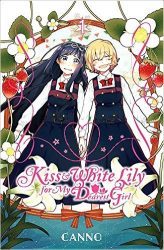
8. Kiss and White Lily for My Dearest Girl / Anoko ni Kiss to Shirayuri wo (あの娘にキスと白百合を)

I admit to being a sucker for stories that do all the Yuri tropes, all at once but don’t let that sentence fool you. Characters here are more than a single trope, and the main relationship is given plenty of time to develop past it’s own set-up, so when this series ends, we’ll have gotten a well-developed relationship rather than just a Yuri coupling.

Yes, this series by Canno lacks the emotional gravitas of her previous series, but trading one emotional triangle tangle for multiple ways to explore relationships – including poly relationships – makes this an interesting take on the all-Yuri couple school.


7. After Hours (アフターアワーズ)

Adults doing adult things. Check. Adults struggling to find meaning in life. Check. Actual relationship dynamics that make sense, by making no sense. Check.  The complexity of the character’s emotions, the conversations they have – even the way their spend their time signals that this is not a child’s story. 

Nishio Yuhta does a good job of building two unique and interesting characters without pandering, even if the art is the only not-adult thing about the series.

It’s so refreshing. I can’t wait to find out what will happen in Volume 3!


6. Sweet Blue Flowers / Aoi Hana (青い花)

Classic S tropes wrapped gently around a modern tale of a young lesbian coming to terms with herself and her place in the world. Shimura Takako never loses the touch with early 20th century, but gives her characters a 21st century sensibility.

More importantly, the main characters have family, they have friends, they have agency. Decisions have consequences and we watch them mature as a result of making them.

The art is simple and stylish, the roots deep and literary. And Viz had given us the definitive English-language edition of this new Yuri classic.


5. My Lesbian Experience With Loneliness / Sabishi-sugi Rezu Fuzoku ni Ikimashita Report(さびしすぎてレズ風俗に行きましたレポ)

A heartfelt and  honest look at a life with chronic depression and an eating disorder, Kabi Nagata’s autobiographical online comic made it’s mark on both the Japanese and English manga scenes by speaking directly about real life issues for many.

With a rough style that echoes the storyline, this manga has been on the top of the charts since it’s release. This story, of the less functional aspects of adult life, clearly resonated with many readers. 


If you enjoy these end-of-year lists, and all the reviews, news and interviews we write on Okazu, please consider subscribing! Even a dollar a month helps us pay Guest Reviewers, cover events and buy the content we review. 

***

Enjoy today’s post? Subscribe to Okazu with Patreon!$5 a month- only 17 cents a day!

***


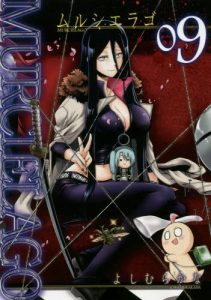
4. MURCIÉLAGO (ムルシエラゴ)

Yoshimurakana’s “Violence Yuri” manga is unique in being an action manga, starring a lesbian serial killer, a lesbian sociopath and a lesbian Yakuza, with a bunch of other random lesbians, all in the middle of gonzo violence and ridiculous enemies.

The art is ugly, which suits the characters and situations well. 

Blood, guts and lesbians all around. I love it.


3. Kase-san Series/ 加瀬さん シリーズ

This schoolgirl romance is awkward and wonderfully realistic in turn. A “story A” that reminds of all those moments when we first had those feelings. 

The art is loose, a little service-y and occasionally excruciatingly sweet.

Asagao to Kase-san, the first book, already has been made into an adorable animation clip and will soon be a OVA getting theatrical release in Japan in 2018.

Sometimes all we really want is a story where two lovely people get to be together. This is that story.


2. 2DK, GPen Mezamashitokei (2DK、Gペン、目覚まし時計。)

I love this Josei Yuri series by Ohsawa Yayoi for what it isn’t, as much as for what it is. A story of adult life that includes things that adult women often care about, like having more than one outfit and nice smelling face soap and, I don’t even know, normal life things like having a drink with a friend, and being competent at work. 

Kaede is a human golden retriever and Nanami is a girl magnet and I want them to get together…just not yet.

This series is a “josei” series, for adult women by an adult woman. It would make a terrible anime, which is exactly why I like it. No hijinks, just humans.


The Top Yuri Manga for 2017 is….


1. Galette (ガレット)

This is the Yuri magazine I have been waiting for for years. Talented Yuri creators banding together, supported by fans, creating the Yuri they want to create, rather than the Yuri editors want them to create.

Already the magazine has taken a few chances with narrative, but in ways that expand the genre. There’s still plenty of schoolgirl Yuri for readers, but the stories about adults are some of the best I’ve read this year. 

For this…for being the Yuri magazine I’ve wanted to be able to support for so long, Galette is my top Yuri Manga of the Year. 


2017 Yuri Gift Guide, Part 2: Anime

December 10th, 2017

Part 1 of this year’s Gift Guide was all manga and comics, so it seems sensible that we take a few minutes to take a look at some anime that has come out this year in sets so you can populate your gimme lists with items that you can’t afford for yourself. ^_^

Title:  Sailor Moon S, Part 1 and Sailor Moon S, Part 2

What It’s About: Sailor-suited warriors for love and justice, the Pretty Guardians, take on invaders from Tau Ceti in order to save the world, but find themselves embroiled in a battle with another team of Senshi from the Outer Solar System as well. Junior racer Tenoh Haruka and and concert violinist Kaioh Michiru battle their fate.

Who Will Like It: Haruka x Michiru fans, fans of the original voice actresses, since they are all stellar here. Fans of Sailor Moon, because, let’s face it….

Beware: …it’s a 20-year old anime with  mediocre animation, repeated footage, Monsters of the Day and other cost-saving shortcuts.


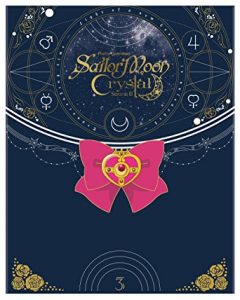
Title:  Sailor Moon Crystal ,Season 3

What It’s About: Sailor-suited warriors for love and justice, the Pretty Guardians, take on invaders from Tau Ceti in order to save the world, but find themselves embroiled in a battle with another team of Senshi from the Outer Solar System as well.

Who Will Like It:  Fans of the Sailor Moon manga, new fans of the series.

Beware: Faster paced than the original anime, it loses important character development. But the animation has settled down and the new voice actresses do a great job. Haruka and Michiru get their manga moments as a couple which are different than the original anime, but satisfying.


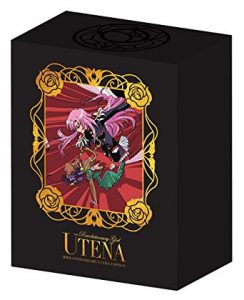
Title:  Revolutionary Girl Utena: Complete Series

What It’s About: Having been saved as a child by a prince, Tenjou Utena wants to become a prince herself. Caught up in the Student Council duels, she finds that she is “engaged” to the Rose Bride and must, after all, become a prince. Where it all leads and how she gets there makes for a surreal and magnificent series.

Who Will Like It:  Fans of the surreal, fantasy fans, magical girl genre fans who don’t mind some darkness in their magic.

Beware: Sexual abuse, incest, violence and whole lotta unexplained symbolism.


Sets to look for in 2018:

Title:  Aria The Animation Collection

After a massively successful Kickstarter, all of the Aria series will be dubbed and released on Blu-ray.  Look for pre-orders announcements in 2018.

What It’s About: Akari trains to be a gondolier in New Venice. Lots of travelogue and scenery porn while she befriends people around town and learns their stories.

Who Will Like It: People who want to just calm the fuck down and look at pretty scenery, people who like pretty girls.

Beware: Nothing happens. Paddling around is the point. (And the end of the series is infuriating, IMHO.)


Title: Konohana Kitan

Not licensed yet, but I bet it will be.

What It’s About:  Fox girls working at an otherworld Inn help clients reach their destination, while boecming closer to one another.

Who Will Like It: Moe fans, animal-eared girls fans, fans of cute, sweet, schmaltzy stories. 

Beware: It’s got a pile of fanservice, including constant bathing, with occasional creepy sexual stuff.


Title: Kobayashi’s Dragon Maid


Not licensed yet, either, but I expect it to be.

What It’s About: Boring career woman Kobayashi is befriended by a dragon who bring much-needed chaos into her life.

Who Will Like It: Fans of 4-koma comic strip-type humor and “wackiness ensues.”

Beware: Kobayashi is exceptionally dull.


2017 Yuri Gift Guide, Part 1: Manga

December 5th, 2017

Holy cow, it’s already December and gift giving and getting time! It has never been easier to get good Yuri, so for once you can hand your relatives this list, smile, sit back and get yourself a pile of great Yuri.  Or pore over it looking for just the right gift for yourself, your Yuri-loving friends or relative. Some of these items are still to be released, but most will have links, so you can at least order them right now. There’s just *so* much (and this isn’t everything out in English, just some popular items) that I’m splitting the list into two. Today we’re just doing manga and comics. For all the manga available in English, check out English Yuri Manga on the Yuricon Store!


Title:  Bloom Into You by Nio Nakatani

Volume 1 | Volume 2 | Volume 3| Volume 4| Volume 5 | ongoing

What It’s About: This school life drama follows Yuu, a girl who does not have romantic feelings for anyone and Touko, the President of the Student Council, who says she feels the same. But, then Touko develops an romantic interest in Yuu. Yuu admires Touko but, beyond that, is not sure of her feelings. 

Who Will Like It: People a little tired of simple girl-meets-girl romance, or who want a little (or more than a little) nuance or difficulty in their schoolgirl Yuri. 

Beware: Yuu is presented as aromantic, but the premise is a romance. Expect Yuu to cave.


Title: Hana and Hina Afterschool by Milk Morinaga 

Volume 1 | Volume 2 | Volume 3

What It’s About:  Hana meets Hina while working at a part time job after school. They become friends and start working together. They start to think of each other as more than just friends. ^_^

Who Will Like It: Milk Morinaga Fans, folks who like their Yuri cute, sweet, without serious crisis and/or with a tenuous connection to reality.

Beware: Don’t expect anything deep here. Morinaga’s specialty is the space between recognizing feelings and confessing them and this is firmly in that space.
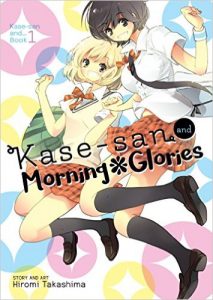


Title: Kase-san Series by Hiromi Takashima

Kase-san and Morning Glories | Kase-san and Bento |Kase-san and Shortcake

What It’s About:  A breathtakingly sweet romance series between Yamada, an average girl who loves flowers and the star of the school track club, Kase.

Who Will Like It: People looking for something a little more realistic than Morinaga’s work. Yuri fans not completely jaded from years of schoolgirl romance.

Beware: Still schoolgirls in love. Does not shy away from fanservice, may not be visually appropriate for the young readers who could use it the most.
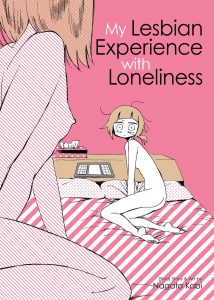


Title: My Lesbian Experience with Loneliness by Kabi Nagata
1 volume

What It’s About: This manga was serialized on Pixiv, as Nagata details her struggles with depression, an eating disorder and finding friends and companionship as a lesbian.

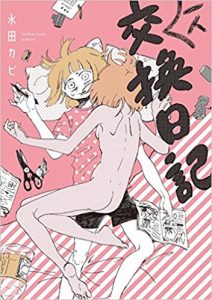
 My Solo Exchange Diary by Kabi Nagata

1 volume

What It’s About: Kabi Nagata is back with a sequel to her blockbuster, continuing the story of her trials and travails, as she pieces her life together.

Who Will Like It: People craving representation of life with depression and/or adult life issues.

Beware: Despite flashes of self-deprecating humor, this is not a light-hearted series. It is, however, a honest look at chronic, debilitating depression.

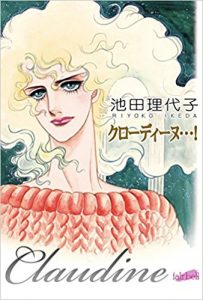


Title: Claudine! by Riyoko Ikeda

1 volume

What It’s About: Claudine is assigned female, but desires male privilege and to be able to love women freely. Claudine struggles with sexuality and gender in this emotional classic Yuri by the creator or Rose of Versailles.

Who Will Like It:  Fans of Rose of Versailles, Dear Brother and other Ikeda masterworks. This story can read as trans or butch lesbian (the lack of specificity can be attributed to the creator having written it 40 years ago.) Classic Yuri fans will definitely want to get it.

Beware: This is not going to end well.
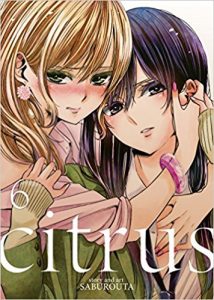


Title: Citrus by Saburouta

Volume 1Volume 2Volume 3Volume 4 | Volume 5 | Volume 6 | Volume 7 | ongoing

What It’s About: Mei and Yuzu are sisters by marriage and despite the fact that both have deep, unresolved emotional issues, they are passionately attracted to one another. 

Who Will Like It: People who enjoy melodrama and soap operas, and watching train wreck stories full of damaged people.

Beware: It’s full of manipulative behavior, some violence and no one ever looks happy about anything.  Ever.


Title:  After Hours by Yuhta Nishio

Volume 1 | Volume 2 

What It’s About:  Emi and Kei meet at a nightclub, and spend the night together. Kei is a DJ and draws Emi into her production team, as she sets up as rave. An adult relationship story (although the art is a bit infantilizing.)

Who Will Like It: Adults looking for adult characters whose emotional lives are not stuck in high school…and audiophiles. People looking for a story where the physical relationship isn’t service-y or immature.

Beware: If you don’t like moe art, the character designs could be off-putting. It’s not really a romance, but you will learn a lot about sound equipment.


Revolutionary Girl Utena Manga Box SetTitle:  Revolutionary Girl Utena Manga Box Set by Chiho Saito and Be-papas

2 volume set

What It’s About:  Every year Utena receives a mysterious postcard. This year, the postcard leads her to Ohtori Academy to look for the prince who saved her as a child. Instead she’s put in the position becoming a prince to the Rose Bride. This is the high-quality treatment that this fantasy series deserves.

Who Will Like It: Fans of the surreal, fantasy fans and people who like mind fuckery.

Beware: There is serious sexual manipulation, incest, and sexual abuse.
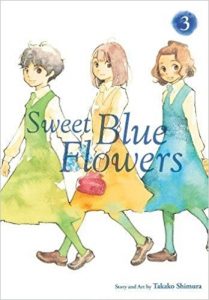


Title: Sweet Blue Flowers by Takako Shimura

Volume 1 | Volume 2 | Volume 3 | Volume 4

What It’s About:  Fumi hasn’t seen Akiko in years, but her friend is back in town and once again they are thick as thieves. When Fumi starts dating an upperclassman at her all-girl’s school, she tells her best friend and gains strength. Shimura  drew on classic Yuri tropes for this “S”-style school romance, but with a deft touch and compelling characters, drags the whole genre into the 21st century. 

Beware: The ending and beginning are trope-y, with loads of tiresome creepiness at the beginning. The middle is amazing and worth it.
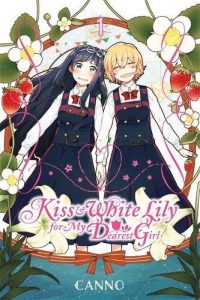


Title: Kiss and White Lily for My Dearest Girl by Canno

Volume 1 | Volume 2| Volume 3| Volume 4 | Volume 5 | ongoing

What It’s About:  This ongoing school serial begins with two girls, Yurine Kurozawa and Ayaka Shiramine, who could not be more opposite if they tried, and the relationship that one of them wants desperately to deny.  Later volumes follow other couples at the same school as well as circling back to Ayaka and Yurine.

Who Will Like It: People who’ve been reading Yuri for a while and will enjoy new takes on the old tropes. People who are new to Yuri and aren’t burned out on the old tropes.

Beware: Every girl in this school is paired, seemingly. Makes you want to see the story of the one straight girl in school.



Title:  Murciélago by Yoshimura Kana

Volume 1 | Volume 2 | Volume 3| Volume 4| Volume 5| ongoing

What It’s About:  This extremely adult, extremely gruesome, madcap “violence Yuri” story follows psychopathic killer Koumori Kuroko and her partner Hinako, as they track down and kill other killers for the police. There are no good guys here. Everyone is broken, the stories are gross, sometimes with side of extra creepy and the lesbian sex is weird. ^_^ 

Who Will Like It: People looking for something not cute or sweet. This series is violent, amoral and has ugly, unrealistic lesbian sex.

Beware: This series is violent, amoral and has ugly unrealistic lesbian sex.



Éclair: Ananta ni Hibiku Yuri Anthology

1 volume

What It’s About: An anthology of school-life Yuri, headlined by Bloom Into You creator Nio Nakatani and Kiss and White Lily For My Dearest Girl creator Canno.

Who Will Like It:  People who like the aforementioned series or those who really like stories about love experienced in school.

Beware: It’s a whole lotta schoolgirl stories and “Story A.”


Legend of Korra: Turf Wars

Volume 1 | Volume 2 | Volume 3 by  Michael Dante DiMartino (Author),‎ Irene Koh (Illustrator),‎ Vivian Ng (Illustrator)

What It’s About: The Avatar, Korra, and her new love Asami enter the spirit world together. Upon their return to Republic City, they find their world in turmoil – a conflict that will involve the Spirit World, as well.

Who Will Like It: Kids, adults, fans of Avatar: The Last Airbender and Legend of Korra, action anime fans. Fans of color looking for representation that isn’t focused on suffering or overcoming obstacles.

Beware: Fast-paced and fragmented, this is definitely a western comic.


Title: Bingo Love by Tee Franklin (Author),‎ Jenn St. Onge (Artist),‎ Joy San (Artist),‎ Genevieve FT (Artist)

1 volume

What It’s About: When Hazel Johnson and Mari McCray met at church bingo in 1963, it was love at first sight. Forced apart by their families and society, Hazel and Mari both marry young men and have families. Decades later, now in their mid-’60s, Hazel and Mari reunite again at a church bingo hall. Realizing their love for each other is still alive, what these grandmothers do next takes absolute strength and courage.

Beware: LGBTQ comics about black women are rare – you may find yourselves weeping with joy at finding such a good one. 


 This manga is not Yuri, but is gay and you definitely want to add it to your orders!
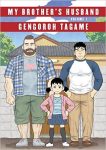
Title:  My Brother’s Husband by Gengoroh Tagame

Volume 1| Volume 2 

What It’s About:  This adult life drama follows Mike Flanagan, a gay man from Canada who visits his late brother’s home in Japan, in order to learn about his childhood. He meets he husband’s estranged brother, Yaichi, who now has to deal with things he never thought he’d have to deal with, like his brother Ryoji’s sexuality. 

Who Will Like It:  People looking for wholesome, non-sexual gay representation, or a good comic to recommend to a family member with passive homophobia or ignorance about being gay.

Beware: Like Bingo Love, you may be prone to weeping with relief.

***

There’s a lot on the list and more on the Store, but we’re going to wrap it up here. Next time I’ll drop some anime titles and some of other fun stuff!



A Survey of Lesbianism and Mental Instability in Yuri

August 28th, 2017

We’ve looked at Yuri’s roots in lesbian social movements and Japanese girls’ literature, but there’s an aspect of our history we haven’t addressed.  Today we’re going to take a look at some series in which lesbianism is linked, either directly or indirectly, with an unstable mental state. There will be spoilers ahead, but mostly for 40 year-old series, so I don’t feel bad. Thanks to my wife and Erin Subramanian for their contributions to this essay!

I. Introduction

When Japan was opened to the west, the Japanese people adopted and adapted western fashion and technology quickly. The Japanese government, having found themselves thrust on the world stage, sent young people around the world to learn the science, technology and culture of countries with which they would now be dealing. (Not always with appropriate preparation, but some of those students returned to make significant contributions to Japanese education and culture, notably Yamakawa Sutematsu and Nagai Shige, the subjects of Janice P. Nimura’s book Daughters of the Samurai. 2016, New York: W.W. Norton.)

By the 1920s, Sigmund Freud was writing obsessively about human sexual development. His writings on the pathology of homosexuality strongly affected Japanese theories of psychiatry, as they did psychiatry in other countries. For Freud, female homosexuality was a pathological manifestation of masculinity, which he discussed in detail in a paper “The Psychogenesis of a Case of Homosexuality in a Woman,” (Freud, S. (1920). “A Case of Homosexuality in a Woman”. The Complete Psychological Works of Sigmund Freud. 1974, New York: Hogarth Press.and was always the fault of the father, although his own daughter, Anna Freud, was herself, quite probably a lesbian. This idea was adopted by psychiatrists around the world and has been remarkably resistant to change. It was the basis upon which homosexuality was made a criminal behavior and entered into Diagnostic and Statistic Manual of Mental Disorders in the USA, and the International Statistical Classification of Disease and Related Health Problems used in Japan.

The shift from folklore to science in Japan was fast and furious. Japanese schools adopted western curricula, dress and customs, while scientists and medical professionals caught up with current western knowledge. Psychology and psychiatry bloomed and quickly pushed folk beliefs to the perimeter of life. A good example of the flattening of folk belief from worldview into concepts such as sublimation and projection can be found in Kyogoku Natsukhiko’s Kyogokudo novels, which are set in the mid-20th century and follow “atheist onmyouji,” Akihiko “Kyogokudo” Chūzenji. In The Summer of the Ubume, (姑獲鳥の夏1994, Tokyo: Kodansha. Translated into English in 2009, New York: Vertical. ), the erudite protagonist has cause to launch into dense, extended monologues on the emotional and psychological void caused by overturning of folk knowledge – which is accessible to everyone – and replacing it with scientific knowledge – which is accessible only to the few who are able to study it. In these murder mysteries, modern psychology is intertwined with and used to explain youkai lore. The second of Kyogoku’s books, Moryou no Hako (魍魎の匣, 1995, Tokyo: Kodansha.) a lesbian relationship between two high school girls become mixed up with the plot of a serial killer who is the “goblin” of the title. (This novel was made into an anime series in 2008 with animation by Madhouse, in which the Kyogukodo character is free to expound his theories of religion, philosophy and psychology.)

In Western literature of the 20th century, lesbians were portrayed as emotionally unstable, predatory, unhealthily obsessed by sex, and violent. An entire genre of literature that we now call Lesbian Pulp Fiction was based around this idea that attraction to another woman was a descent into madness and violence, ending in death or prison. The back cover of Intimate Story of a Lesbian, (1965, New York: Imperial.) “as told to Doris Hanson” says,

“Lesbianism,” she told Miss Hanson, “at first repulsed me. But, like a disease, it grew to possess me, completely”… “Brought out” by a jealous, domineering woman executive, Maria was sponsored in a career….[which led her into] a world of sexual excess…. Maria’s intimate story of life in the hidden society of women without men may horrify and shock….It could only have been written by one who lived and became….

THE VICTIM OF ITS HORRORS

This kind of hyperbolic language shifted as the century wore on.  The “Third Sex,” used as a term for homosexuality from movies and books in the mid-20th century, stuck around through the 1970s, when lesbians stood up politically and refused to be shoved back into the closet. (In fact, the phrase “come out of the closet” as a gay rights slogan was coined by Lesbian Pulp author Artemis Smith.)  

Homosexuality was famously removed from the 7th editon of the DSM-II by the American Psychiatric Association in 1973 (1974, American Psychiatric Association.) In Japan , the classification of homosexuality as a disease lasted a few decades longer. “… “homosexuality” was removed by the World Health Organization from the list of “mental disorders” in the International Statistical Classification of Diseases and Related Health Problems 10th revision published in 1993 (which was adopted by the Japanese Ministry of Health, Labour and Welfare the following year).” (Japan: Human Rights in Law and Discrimination against LGBT People in Japan, 2017 Amnesty International.) By 1995, homosexuality was no longer considered a disease in Japan, but it’s taken a few more decades for manga artists to notice.

The idea that lesbianism is a pathology, as posited by Freud, lingers in popular media where lesbianism also functions as a fetish for readers. Manga and anime are pop culture media, but frequently published and produced to fit within socially conservative framework (whether to sell to the widest possible market or to cater to a specific demographic or just to protect one’s own industry from government intrusion,) which means that these 20th century associations linger on well into the 21st century. “Everyone knows” that lesbians are predatory, or emotionally unstable, although it’s been shown that with the simple addition of laws that put gay relationships on a more stable footing, suicide and depression decrease

***

Enjoy today’s post? Subscribe to Okazu with Patreon!
Subcribe with Patreon

***


2. Survey of Emotionally Unstable Lesbians in Yuri, 1938-2017

Over-intense emotional desire is portrayed as negative in girl’s literature as early as the 1930’s. In Kawabara Yasunari and Nakazato Tsuneko’s Otome no Minato, (乙女の港, 1938, Tokyo: Jitsugyo no Nihonsha.) Kastuko desires to be Michiko’s onee-sama to the point of breaking her up with Youko. It takes a crisis in which Youko is Katsuko’s savior to get her to back off.  This behavior is reflected fully in the relationships in 1957 manga Sakura no Namiki, (さくら並木) by Takahashi Makoto. (2006, Tokyo: Shogakukan Creative.)

Possessive jealousy is as far as these relationships go until Yamagishi Ryhoko’s 1973 manga, Shiroi Heya no Futari (白い部屋のふたり, 1971, Tokyo: Shueisha.) In this story, which I consider to be the first Yuri manga, Simone is presented to us as high strung, violent, and tempestuous. Having been abandoned by uncaring family, her mental instability is associated with her passionate nature and presented as part of a whole. Simone falls in love with Resine because she is unstable and emotional and is, we are meant to understand, looking for affection anywhere she can find it.

This theme is repeated again in Maya no Sourestu (摩耶の葬列, 1972, Tokyo: Shueisha.) by Ichijou Yukari in 1972. In this story, Reina is spoiled, but neglected by her father, and Maya is part of a family whose history is filled with lies and desire for revenge on Resine’s family. Even should they find a way out of this labyrinth, it turns out that they are half sisters. One must die so the other may marry a man she cannot love. Put a pin in this , this use of “neglect” as cipher for abuse will come back as a plot complication. 

In Riyoko Ikeda’s 1975 work, Oniisama e  (おにいさまへ, 1975, Tokyo: Shueisha.)  Rei, known as Saint-Juste, is emotionally abused by her beautiful and influential half-sister, Fukiko. Fukiko’s emotional abuse occasionally turns physical, and Rei takes to drugs for solace or anesthesia. Her conflicted feelings about Fukiko  are surfaced when the protagonist Nanako becomes involved. Fukiko attempts to manipulate Nanako, but is unsuccessful, which gives Rei the emotional wherewithal to reject Fukiko. Ultimately, Rei turns her attention to Nanako and, we might expect, recovery and health, but is killed in a tragic and pointless accident. This is a key work, not only because the anime is a masterwork in and of itself, but because Rei turns away from a wholly unhealthy relationship with her exceptional half-sister towards the wholesome influence of the protagonist and is seeking a healthier friendship (or, maybe, even, romance) with her before her death.

In 1978 manga Claudine…! (クローディーヌ…!, 1978, Tokyo: Shueisha.) by Riyoko Ikeda, we are presented with the “case” of Claudine. This manga tells the story of a transgender man.  Because Ikeda’s portrayal is not as fully formed as we in the 21st century might desire, Claudine’s expressed wish to be a man can be accepted at face value or also mean that they wish the privilege of a man, that is, to love women and wear men’s clothes. The ambiguity of Japanese makes this reading more possible, where English pronouns require a clear choice. Claudine’s story is told to us as a “case” from the perspective of their psychiatrist who is treating Claudine for depression and suicidal thoughts.  When Claudine has, yet again, been abandoned by a lover who wants a more “normal” life, Claudine commits suicide. This story is forward-thinking in the sense that the psychiatrist suggests that Claudine was not the sick one here, but that society is at fault.

Applause (アプローズ) (1981-2, Tokyo: Shueisha) by Ariyoshi Kyouko is an epic story which traces the relationship of two young women, Shara and Junaque, from a private girl’s school in Belgium to Broadway in New York City. In the beginning arc it is Junaque who admits her feelings of love and desire to Shara, but is rejected. Junaque, consumed by rejection and fear of her “inverted” nature, marries a man she cannot love, and dives into an increasingly troubled life as an alcoholic and emotionally unstable adult. Shara meets Junaque (now called Shelle) once again as an adult and their affair starts right back up. Unlike Shelle, however, Shara is unwilling to hide her love, causing the two of them to have a tempestuous on-again-off-again affair that ultimately ends ambiguously, with either their death or escape, depending on the reader’s need.

By 1993, Fujimura Mari presents another example of the emotional instability that accompanies a lesbian relationship  in Futtemo Haretemo (降っても晴れっても) (1993, Tokyo: Shueisha). Nagi and Hiro are two classmates who develop a deep, almost obsessive, definitely possessive, attraction between them. Nagi and Hiro’s relationship is dysfunctional and they often act in ways that are harmful to themselves and the other. Suicide and violence are a palpable presence in this story, linked directly with the relationship. At the end they are presented as happy and whole when they meet after years, having married men and moved on with their lives. This was a low point in presentation of lesbian love in shoujo manga, inextricably linking mental unwellness and lesbian desire, which could be “fixed” by heterosexuality.

In Haruno Nanae’s Pieta  (ピエタ) (2000, Tokyo: Shueisha.) Rio is presented to us as a troubled teen, threatening to commit suicide. Her father and step-mother claim to have no idea why she’s like this, but readers can see that she’s the victim of vicious emotional abuse by her step-mother and disinterest by a neglectful father. Her psychiatrist worries that her family’s influence will impede her mental health. Sahoko, a classmate who was herself troubled, and Rio develop a relationship that ultimately brings healing to both of them. With the help of their psychiatrists, who function as surrogate parents, they move in together. The romantic relationship between Rio and Sahoko is not presented as the cause of their mental instability nor because of it, but as the thing that helps them find wholeness and stability. This was not the first Yuri romance to have a happy ending, but it was a sea change in the presentation of mental unwellness linked with lesbianism. Here, being lesbian is what heals, rather than what hurts.

When Sun Publishing first put out Yuri Shimai (百合姉妹 2003, Tokyo: Sun Publishing) magazine, the first Yuri-focused manga magazine in 2003, they included works from classic and well-known Yuri manga artists, including Kita Konno, creator of Himitsu no Kaidan (秘密の階段. 1995, Tokyo: Kaiseisha.)  Her stories for Yuri Shimai and it’s successor Yuri Hime, (百合姫 2005-present, Tokyo: Ichisjinsha.) , now published monthly as Comic Yuri Hime  (コミック百合姫), tended to focus on incestuous and abusive relationships. “Under the Rose”, later reprinted in Yuri Hime Selection, (百合姫Selection, 2007, Tokyo: Ichijinsha.) was a good (bad) example of the kind of automatic integration of lesbianism with incest, violence, and mental instability.

In 2004, the surprisingly influential Kannazuki no Miko (神無月の巫女, 2004, Tokyo: Kadokawa Shoten.) debuted. In every version of Kaishaku’s series, accomplished, classical Japanese beauty, Chikane is conflicted from the beginning between her fate as a lunar priestess and her affection and desire for her partner, solar priestess Himeko. In the anime, her emotional instability is directly linked to her physical desire for Himeko, while in the manga, Chikane rapes Himeko to, ostensibly, make Himeko not trust her. In both cases, it’s her desire for Himeko that is stated to be the cause of the emotional conflict. 

At the same time, (not an accidental happenstance, as the modern “S” and genre-defining Light Novel series Maria-sama ga Miteru (マリア様がみてる) had increased interest once more in stories of girls in private schools, and the new Yuri manga magazines and anthologies were using that setting compulsively) the anime  Mai HiME (舞-HiME, 2004-5, Tokyo Sunrise.) was hitting the airwaves. In this series, Fujino Shizuru is shown to be obsessed with Kuga Natsuki. She’s not hiding her desire, but is also unable to come out and express herself. When she can no longer control herself and comes to Natsuki late at night, kissing, possibly assaulting, her, Shizuru is interrupted by fellow HiME. Shizuru completely loses her grip on sanity and is, clearly, shown to be an example of the pathology of lesbian desire. This is the image chosen to illustrate this article.

Honorable mention needs to go here to Magical Girl Lyrical Nanoha (魔法少女リリカルなのは 2004, Tokyo, Geneon.),  the anime (and later, manga,) franchise that also began in 2004. In this ongoing narrative, the emotionally and physically abused Fate Testarossa is rescued by Takamachi Nanoha. Fate and Nanoha remain friends during Fate’s incarceration and, when she is released, they move in together. The two create an alternate family that grows in every subsequent series. Both Fate and Nanoha adopt children who have been rejected by their families. They are seen to share a bed, and once again we are given to believe that their relationship is the thing that is the most stable part of their lives.

Yet, at the same time, we’re presented with Yaya from Strawberry Panic! (ストロベリー・パニック!, 2003-2007, Tokyo: Mediaworks.) who is the first 21st century example we have of a character said to have been “neglected by her father” as both a stand-in for abuse, as her behavior maps to a sexually abused child, and also directly stated to be the cause of her lesbianism.  Yaya’s behavior is highly sexualized, possessive, obsessive and she borders on the edge of mental breakdown until her “love” for Hikari is subsumed in her desire to see Hikari’s relationship with Amane realized. The series supplies Yaya with a potential partner in a younger student but, notably, a student that has shown us a strong will and personality so we may be confident that, if something develops, it will be consensual, thus indicating that Yaya has herself been made whole and functional.

In 2007, Nakamura Kiyo (writing as Nakamura Ching,) took a completely different tack with GUNJO (羣青, 2007-2012, Tokyo: Shogakukan), a true-crime-like story of a woman who had been overtly sexually abused by her father and husband, and the lesbian who killed the husband for her. In contrast to the traditional narrative elements in which the abuse (or “neglect”) are related to the lesbianism, the lesbian in this series walks away from a functional, happy life to help the abused and neglected school acquaintance. “Lesbian-san” (the characters are not named through most of the series) is not the abused person, but neither is she emotionally stable, as she and the overtly emotionally unstable “Megane-san” are on the run after a murder “Lesbian-san” has committed. Their relationship is violent and dysfunctional throughout the series.

By 2010, Lesbianism was less commonly linked directly with mental instability. In Ebon Fumi’s Blue Friend (ブルーフレンド 2010-12, Tokyo: Shueisha.)  the premise begins with a well-worn trope of an emotionally troubled girl befriended by a popular girl, and the possessive, unhealthy relationship between them, exacerbated by bullying at school. This relationship is something the two girls manage to shift from unhealthy and manipulative to a healthy friendship that is positive for both of them. Once again, we see a way through the instability to healing. After 7 years of a Yuri-focused manga magazine, readers were starting to see a more general shift in the narrative of the mentally unstable lesbian.

In 2011, we see a slightly different version again of the link between obsessive affection/desire and emotional instability in Puella Magi Madoka Magica (魔法少女まどか☆マギカ, 2011, Tokyo. Shaft.) In the serialized TV anime, we meet Homura after many repeated cycles of existence, in which her one desire is to save Madoka. This obsession with the other girl has warped her (as has her repeated failure to save Madoka.) Nonetheless, Madoka is able to break past Homura’s emotional armor and remind her why she’s doing this. Their mutual affection allows Madoka to break out of the cycle. This is rewritten in a subsequent movie, in which Homura’s obsession continues to affect her negatively until she becomes the thing Madoka must fight. Her sacrifice is the only way to end the continuing cycle…suicide is still the only way out for the obsessed lesbian.

As the Yuri market has developed, and series more generally showed functional, happy lesbian relationships both in shoujo-manga fantasy spaces, such as Shirosawa Marimo’s  Nobara no Mori no Otome-tachi(野ばらの森の乙女たち 2010-11, Tokyo: Kodansha.) or GIRL FRIENDS by Morinaga Milk (ガールフレンズ 2006-2010, Tokyo: Futabsaha) and in more real world-settings, such as Sweet Blue Flowers by Shimura Takako (青い花 2004-13, Tokyo: Ohta Publishing) or Nishi Uko’s very adult, very realistic, Collectors (コレクターズ 103-16, Tokyo: Hakusensha.)

In 2012, Saburouta began serializing Citrus (シトラス  2012, Tokyo: Ichijinsha.) a story about two sisters by marriage who find themselves physically attracted to one another.  Mei, who reflects the classic Japanese beauty, and Yuzu, who represents the outgoing popular girl, gavotte around one another (and in and out of other complicated and often emotionally manipulative) relationships. Mei’s behavior, like Yaya’s, is much more consistent with a survivor of sexual abuse, but once again, we are told it’s because her father “neglected” her. We can be forgiven in this case for remembering the Freudian pathologizing of lesbianism as being the fault of the father. We equally remember Maya of Maya no Souretsu, whose desire for the “neglected” daughter of a man she loathed drove her to suicide.

We must end here with a mention of Kodama Naoko’s NTR: Netsuzou Trap (捏造トラップ 2014-present, Tokyo: Ichijinsha.) While the characters aren’t explicitly described as suffering abuse or “neglect,” it becomes apparent even to a casual reader or viewer, that Hotaru’s behavior can be traced back to abuse.  Kat Callahan of Anime Now says, “the series seems to deal with a very important issue: the cycle of abuse, and specifically, sexual abuse.”

Everything old is new again…and we’re still stuck with this ugly idea that women are lesbians because they were “neglected” by their father and that this neglect causes not only lesbianism, but manipulative, unhealthily obsessive pathological lesbianism.

Freud would be so pleased.