Archive for the Series Category


The Concept of Family in the Magical Girl Lyrical Nanoha-verse

March 11th, 2012

At the beginning of Volume 4 of Mahou Shoujo Lyrical Nanoha Vivid and the end of Mahou Senki Lyrical Nanoha Force, it’s hard to avoid the obvious – group shots of all the characters smiling happily, not in portrait fashion, but as if we, the readers, are allowed to see them in a candid, relaxed moment. And it’s hard to miss the subtext here – these people, people who were our enemy for reasons that were beyond their control – are now our friends, our family.

It’s not uncommon to see this absorption of enemy to friend, especially in shounen series where it has long been known as the Dragonball Phenomenon. Enemies that have been beaten by the hero become allies – it’s easy enough to recognize this pattern in One Piece, Yu Yu Hakusho and other Shounen Jump titles – it’s not too hard to see it in Sailor Moon and Card Captor Sakura, as well.  Because the hero/ine’s motives are pure, when the enemy is released from their bondage, of course they will become an ally.

But, as I read these two manga serially, I couldn’t help but notice that the Nanoha-verse takes this another step. These former enemies don’t just become friends – they become family. In fact, the concept of an alternative family structure is embedded deeply in Nanoha, far more deeply than just about any manga/anime mythos than I can think of.

It seems a bit ironic to start from the beginning and remember that in Magical Girl Lyrical Nanoha, Nanoha and her best friends on Earth all have traditional families, with two parents, siblings, pets. In the first series, Nanoha frees Fate from her ties to her manipulative and insane mother. This act of beating the hell out of the bad guys is affectionately known to fans of the series as “Befriending.” ^_^ At the end of that series, it’s pretty obvious that Fate and Nanoha consider themselves closely bound by friendship  – and many of us see their relationship as more. This is borne out in the second series, Nanoha As, where they now live together. Fate, freed now to create her life on her own, is adopted by a powerful and high-ranking member of the Time-Space Administration Bureau (TSAB). This gives her both status and protection when she is released from jail. More importantly, it gives her a family to turn to, something she has never had before. With Nanoha as her partner, Fate is now ready to live a fulfilling life with purpose, family and community.

In a parallel alternative family, Hayate is surrounded by loving, yet wholly unreal, avatars. Signum, Shahal and Vita make a great family for Hayate, but the four are also enthralled to an evil entity. Together Fate and Nanoha “Befriend” Hayate and her alternative family, freeing them from evil influence – allowing Hayate’s Knights to manifest fully as real humans and bringing them all into Fate and Nanoha’s “family.”

In StrikerS, we skip forward a few years. Fate and Nanoha are clearly partners both in life and work. Additionally, Fate has adopted two wards of her own – Caro and Erio, both of whom have experienced ostracization much like her own past. The kindness shown to her by Admiral Harlaown is now passed on and doubled. Added to this extended family are trainees Subaru and Teana, each of whom is taken under the wing on of one of the main characters. Proteges are naturally, “family” – the Japanese characters for “deshi” (pupil, protege) are 弟子, “younger brother” and “child.” Proteges are all but adopted children (and even today in Japan, some are actually adopted into the family.)

Complicating matters in StrikerS, it turns out that there are a host of enemies enslaved to an evil mind. When it becomes known that these enemies – the Numbers, as they are referred to by fans – are related to Subaru by genetic material, there is no question that they will be, as far as possible, “Befriended.” And so they are, as several of the Numbers are integrated into the Takamachi/Testarossa-Harlaown family. More critically, Nanoha adopts Vivio, and so now has a child of her own. She and Fate raise Vivio as their daughter, presenting the image of a happy nuclear family to the world.

This brings us to Magical Girl Lyrical Nanoha Vivid, and its expanded cast. The Numbers now live with Subaru and her sister Ginga or have become part of the Church, as the now suddenly huge Nakajima family. Nove, particularly, functions as Vivio’s big sister/mentor, training her in martial skills and the use of her Device. When Nanoha and Fate decide to send out invitations to a offsite training session, it becomes instantly apparent exactly how *large* this family has become. Hayate and her Knights, Caro, Erio, Letitia and her “mother” all join Fate, Nanoha, the remaining Numbers, Subaru, Teana, Alf and Zafira, Vivio, her friends Rio and Corona and…and here’s where it all sort of settles into place and you get that “ahah” moment – a character that *Vivio* “Befriended”, yet another reborn ancient king, like Vivio herself – Einhart Stratos. Along with family/friends from the TSAB.

But wait, we’re not done, because while Vivio strives to increase her combat and magical skills in Vivid, Fate and Nanoha are facing down a new enemy in Force. While the crew of the Huckbein are the “bad guys,” the tools they are using are a young man named Toma, the girl he rescues, Lily, and a traveling companion they meet, Isis. The three of them are drawn into a battle that they did not desire, for power they do not want. Once again, as the story draws to a close, we see Fate and Nanoha, Subaru and Teana, the TSAB members closest to them (including Hayate’s Knights) gathered around Toma, Lily and Isis. Clearly, they too have been drawn into this family circle.

In conclusion, more than any other story I have ever encountered, the Nanoha-verse is the story of creating one’s family for one’s self. This is a theme that strongly resonates with LGBTQ folks, as so many feel alienated from the communties they are born into. Like Caro and Erio, those communities simply may have no place for them, or are frightened of them. Like Subaru, the Numbers, Vivio and Einhart, they may feel as if they simply never belong, not because of what they have done, but simply because of who they are. The idea of gathering one’s family as one moves through life is something that is far less uncommon now than it was in the past, and to many of us who have existence on the fringes of society, it’s a dream that holds a lot of power.

In Vivid, Fate and Nanoha are presented, not as powerful mages, but as Vivio’s mothers. As children, we tend to not see our parents as individuals with their own lives, but as extensions of our lives. In Vivid, we see Fate and Nanoha less in their uniforms and barrier jackets and more in aprons, as they cook and clean for the family. In this way, Fate and Nanoha are not portrayed as lovers, but as loving, supportive parents to their daughter. It’s a take that adds a level of complexity and stability to their relationship. Again – it’s the idea of family that is pre-eminent.

The girl with a typical family and the girl with none. They gather around them friends, family, enemies and allies to make what is arguably the largest family unit in all of manga and anime.

Note: If anyone has a link to a picture of the entire family unit, please let me know. I’d love to add one here.



Light Novel: R.O.D., Volume 8

March 6th, 2012

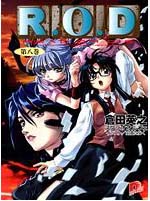
When we left Yomiko at the end of Volume 6 (before the unrelated romp that was Volume 7), she was imprisoned by Dokusensha and we had no idea what had happened to Nancy at all.

At the beginning of R.O.D., Volume 8, all is made clear.

Yomiko is indeed imprisoned by Dokusensha, but is released from her cage to have dinner with Ou-En and the woman who heads Dokusensha, who goes by the name “China.” China looks like a little girl, but is as old as Gentleman himself…indeed, she tells Yomiko that she was Gentleman’s wife, back in the ancient past when humans were first roaming the savannah of Africa. She tells Yomiko a history of humanity that, while compelling, is completely at odds with all written and fossil records. China agrees and explains that those have been faked in order to disguise the truth.

Meanwhile, Nancy has been imprisoned in a submarine deep in the ocean, to keep her from escaping  – if she should phase out of her bonds, there is quite literally nowhere to go – the water pressure would crush her before she could make it to land. She is not fed, has nothing to drink, is hung uncomfortably from her arms and is in her underwear, so she is cold. She is not allowed to sleep, either.

China takes Yomiko on a tour of the Dokusensha Library, which fills the cavity of a mountain. China speaks plainly to Yomiko, and asks her to join Dokusensha. Yomiko thanks her for the offer, but refuses. And repeatedly, politely, she asks after Nancy.

Yomiko is sent back to a nice room, rather than a cage, where Ou-En brings her books to read (and remains there, while she does, since he can neutralize her paper-user skills.) She is then visited by Faust who gives her a copy of the book Donny was reading when she first met him. He asks her again to marry him and when she refuses, declares that she is his enemy. The next time they meet, he says, he will kill her.

In the meantime, back in London, Wendy returns back to her apartment to find Nenene in near hysteria. Nenene tells her a horrific story about how she killed a man that day. Crying, shaking, Nenene recounts how a thief broke in to the apartment, and she killed him, then dragged his body to the dumpster in the back. Calmly, Wendy insists they go to the police. Nenene gets even more hysterical crying, and confesses that it was a lie…she needed to know how honest Wendy was. The two women hold each other for a bit until Nenene pulls herself together and admits that, while they were in Yomiko’s, Donny’s, apartment in Tokyo, she found Donny’s diary. She hasn’t read it, but she feels that she needed advice about what to do with it. Wendy, obviously, can be trusted, and so the two put their heads together.

Drake meets up with and puts together a squad to carry out a secret mission….

In the British Library, Joker, who has not heard from Yomiko or Nancy in days, is told that he needs to look at the satellite feed. Somewhere in China, a mountain is erupting with paper flowers.

Nancy is at her limit. Cold, hungry, thirsty, exhausted, she knows she doesn’t have much more left. When an enemy submarine approaches, the captain orders a torpedo to be shot at the other sub, and she sees her chance. Nancy phases out of her bonds and into the torpedo, where she comes within about 100 meters of the other sub. She moves through the water as quickly as possible and falls from the ceiling onto the captain of the British submarine Victorious, in front of Drake.

Wendy and Nenene board a plane for China, determined to find Yomiko and give her the diary.

Yomiko takes the book Faust gave her, sends up the paper flower signal for Joker to see where Dokusensha HQ is and escapes on a paper airplane…but not alone. She steals China, as well. With the help of a mysterious dragon that appears, Yomiko fights off China’s bodyguards  (five odious sisters, who I really could have done without.) China and Yomiko spend the night in a dark forest, while Yomiko tries to convince China to return to England with her. China rejects the offer, but asks Yomiko to take her somewhere before returning her to Dokusensha.

In front of a statue, Ou-En and Faust meet and Ou-En confirms that Faust has given a piece of the Guttenberg paper to Yomiko. Ou-En lifts the book he holds to destroy Faust where he stands….

And in China’s Forbidden City, Gentleman stands and inhales, remembering that nostalgic scent of dust.

The Epilogue is a short entry from Donny Nakajima’s Diary, describing the day he met Yomiko Readman.

Well hot damn, that was a book full of book. ^_^

While at MangaNEXT, Sean Gaffney asked me if the novel Joker and Wendy were evil or good Joker and Wendy and I had to say that, at the moment, they were neither. What we’ve seen of Wendy up until now is entirely admirable and Joker is ambiguous to the point of being a non-entity.

Unfortunately for us, Yomiko’s aerial battle was somewhat ruined by the annoying sisters who were her enemy. A good fight needs a good enemy and these were not. They were tedious in the extreme. To make up for it, however, Nancy’s escape was extra wonderful. And of course Yomiko’s stylish signal to Joker was special, as well.

But…I find myself waiting impatiently for Nenene and Yomiko to reunite. ^_^

Ratings:

Art – 4
Story – 7 If the Bodyguard sisters hadn’t been so tedious, it might have made an 8
Characters – 7 Where the sisters were awful, China’s about a zillion times more interesting than Gentleman to date. C.p., “need a good bad guy…”
Yuri – 0
Service – 6 Of course Nancy’s in her underwear. And we have to mention that every single time and make sure we have a picture of it. Snooze.

Overall – 8

I’m really looking forward to Volume 9. ^_^


The End of GUNJO (羣青)

March 4th, 2012

I finally had a chance to read the final chapter of GUNJO, in the March issue of IKKI magazine.

I do not know what to say about it, really. It left me quite literally gasping for air. I sat there and panted for about two minutes, as I stared at the last page.

The ending was not what I feared it might be, it was not what I hoped it might be. It was infinitely better than I imagined, both happier and sadder that I expected. It contained something I wished desperately for and never truly believed could happen.

If you too have read it, please feel free to tell me your impressions in the comments. No spoilers, please. I do not wish to ruin anyone’s experience of the ending.

The third and final volume of Gunjo will be slightly delayed. According to her Twitter feed, Nakamura-sensei entered the hospital recently and, while she is back home recovering, her work will be slowed or suspended for some time until she is feeling better. I know I am not alone in wishing her a speedy recovery.

「羣青」ありがとうございます。Thank you, Sensei, for GUNJO.

It’s been a hell of a ride.


Princess Knight Manga, Volume 2 (English)

February 21st, 2012

Handsome.

Manly.

Feminine.

Pretty.

Think about those words applied to a man, then a woman. For a woman to be “handsome” is perhaps not an insult, but when a woman is called “Manly” it almost assuredly is.

A man who is called feminine is probably not particularly thankful for that, and while pretty boys often get the girls, you don’t want your son being called “pretty” by the bully in school.

Sapphire is both pretty and handsome, and manly and feminine – but not at the same time and only at the exclusion of one or the other.

Sapphire’s boy heart makes her strong and confident, gives her hope and heart, but her girl heart makes her weak, hopeless and incapable.

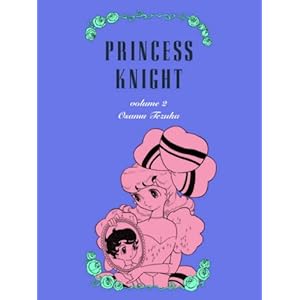
Volume 2 of Princess Knight is less about imposed gender roles and assumptions than Volume 1 was, and yet is more problematic for those of us who want to see Sapphire the girl be the Prince we know she can be.

Aside from this nagging problem with this story – which is to say, the story – the rest of Volume 2, seems like a Boy’s Own Reader, with witches and demons and even Satan, Princes and Kings and Queens and pirates and a tournament.

The story ends (somewhat abruptly) with the reunion of Franz and Sapphire. I’m going to pretend that they will return to Silverland and find that Plastic has indeed declared Sapphire the true ruler, and that Franz is supportive and he and Sapphire co-rule over Goldland and Silverland and usher in a new age of equality…which is the exact opposite of the ending Tezuka implies here, but I don’t care, he’s dead and I’m not. ^_^

Art – 8
Story – 8
Characters – 7
Yuri – 1, if you pretend that Friebe might have come around after time
Service – 1, on principle only

Overall – 7

Oh Friebe. You are both a knight and a woman and there is no nonsense about girl hearts and boy hearts with you. Why do people do not love you more?


Cardcaptor Sakura Manga Omnibus, Volume 3 (English)

February 17th, 2012

Having integrated Syoran into her set of allies, in Volume 2, Sakura is now faced with another, far more powerful enemy. And this time, she’s one ally down, as Mizuho has gone abroad again. This leaves Sakura, Kero-chan, backed up by Syoran and of, course, Tomoyo, to fight off this new foe in Volume 3 of Card Captor Sakura.

First of all, the foe is much more powerful than the rogue cards ever were – and worse, the cards themselves aren’t powerful enough to defeat whatever it is. In order to defeat the enemy’s attacks, Sakura must recreate the cards for herself, evolving them from their form of Clow Cards to a new existence, entirely created by her.

When we learn the true identity of her new enemy, it’s still kind of weird/surprising and way creepy, no matter how you look at it.

And, lastly, something is terribly wrong with Yukito, who can’t seem to stay awake.

All of these combine for a very eventful, very interesting volume of manga.

Sakura continues to be the somewhat oblivious heroine, Li the somewhat ineffectual love interest and only Tomoyo can see anything. Well, Tomoyo and Toya. Toya is forced to make a life-changing decision in order to save his beloved Yurikto…and Sakura, of course.

For those of us racking up points on the bent-o-meter, Tomoyo basically flat out tells Sakura she likes her (again) knowing Sakura will miss the point, Rica and her teacher fiance’ are trotted out again, Sonomi’s feelings for Nadesico are mentioned, of course Mom’s age is mentioned, Yuki and Toya have some pretty intimate moments and, not at last or least, Ruby Moon points out that gender doesn’t matter and s/he could be male or female, as s/he desires. She just happens to be female this time.

Technically, some of the printing was a little fuzzy – the letters seemed off, but I’m getting used to my copies being not so good. It’s still heavy enough to be the murder weapon.

Ratings:

Art – 9
Characters – 9
Story – 9
Yuri – 2
Service – 4

Overall – 9

This will always be one of my favorite series ever.