Archive for the Series Category


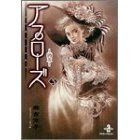
Yuri Manga: Applause, Volume 3 (Japanese)

October 10th, 2007

For previously published summaries and reviews of Volume 1 and Volume 2, click the respective links. Now here we are, at Applause, Volume 3.

Applause began its life as a very shoujo manga, but once it hit New York grew up into something thoroughly josei. Both Shara and Shelle, aka Junaque, have left their childhood behind them and so has the artist. Art, story and sensibility have all moved on from the world of the ridiculously privileged atmosphere of a European girl’s school into a still somewhat enchanted, but more realistic look at show business in New York City. (Back to that “practicing ’til you puke” thing. I don’t mind watching people becoming the best of the best – as long as they work for it. No idiot savants with magically appearing mad skillz need apply.)

Shara, having decided to never again wait for Shelle, moves in with a gay couple, Jon and Chris, and their dog Oscar. She returns to the dance studio at which she previously studied and her life, which had been a storm of emotional upheaval, calms down again into something she can live with and in. To add to her happiness, she meets a man, Shalat, who is perfectly compatible with her as a dancer, as a friend and eventually, as a lover. Shalat is part Asian Indian, and he loves his heritage. His apartment is decorated to reflect this, and Shara loves how he is an amalgam of places, times and dreams. The two of them are extremely happy together.

When an open audition announcement goes out for brand new Broadway show, Shalat and Shara vow to train and audition together, which they do. And together they make the final round. As the final auditions begin, it is announced that, yes, the auditions are partly to fill background dancers, but one role will be a lead role. To judge who is most suitable for the role, the show’s other lead actress is brought in. As Shalat watches, Shara goes pale, and seems to become completely paralyzed. The lead actress, of course, is to be Shelle Bejart.

When Shara’s name is called, Shalat calls her name too, trying to keep her by his side. Shara completely breaks down, as Shalat tries to coax her into telling him what is wrong. With tears streaming down her face she apologizes and leaves him, to follow Shelle after all, hating her own weakness the whole time.

Shortly thereafter, it is announced that Shelle and Shara will be starring in the most anticipated new Broadway show, “Modern Dancer.”

The story of “Modern Dancer” is about a former dancer Maria, played by Shelle, who has become crippled (emotionally and physically). Another dancer, Tracy, tries to convince Maria that she can still dance. In the climactic scene, Tracy takes Maria into her arms and they dance, even though Maria cannot stand. It’s pretty great melodrama and the art for this scene is awesome and over-the-top every time we see it (and we’ll see this scene *a lot.*)

At first, it’s a terrible fit. Shara and Shelle aren’t speaking and they don’t gel well at all. The media starts to report how they think Shara is a bad choice for the role of Tracy. Whether to provoke Shelle or Shara or just to cover his ass, Georges brings in a young male dancer, Fred – who is instantly irritating – to potentially take over the part of Tracy, if Shara can’t get it together.

Shara takes some time to visit Alphie and Gerald and the gang and get her head on straight.

The media uncovers the fact that Shelle and Shara went to school together. Shelle says that Shara was just another underclassman, that they had no special relationship. Shara, on the other hand, when questioned about Shelle, comments on camera that she never knew anyone with the name “Shelle Bejart” at school.

The two of them continue to breakdown in pieces and the show starts to fall apart too. One day, just as in the last volume, Georges takes Shara out on his yacht. This time, she’s also accompanied by Oscar the dog and when he jumps into the water, so does she. Georges also dives in and again, kisses her, but this time, she doesn’t seem to be affected by it at all. When they arrive back at the marina, soaked to the skin, Shelle is there. She gives them both the cold shoulder.

Georges continues the losing battle of wooing an increasingly frigid Shelle. He holds a big birthday party for her, which Shara attends, but can’t stand to watch the circus that Shelle’s life has become. She leaves, but Shelle follows her in her car.

Shelle confronts Shara and they lose it completely at one another. Shara runs off in anger. Shelle, trying to catch up to her, gets into an accident, which Shara witnesses. Forgetting her anger at Shelle, she goes running over, screaming Junaque’s name, and drags a semi-conscious Junaque from the car. Junaque/Shelle and she cry together. That night they end up back in Shelle’s shore house and once again, they have a few days of bliss together.

Back at rehearsal, no one can figure out why, but suddenly, they work perfectly together. The climax of the play is climactic and breathtaking. Fred is defeated – Shara owns the role of Tracy – sadly, he sticks around anyway.

Meanwhile, back at home, Chris has collapsed. No one knows why, but he is in the hospital.

Then the media attacks again – this time with a call to Shelle. Is it true, she’s asked, that you are Shara were lovers in school? Poor, fragile, confused and weak Shelle, lies. Then tells Shara to stay away – she doesn’t want the media to know about them. Rejected for the third time, Shara falls apart. Again. (It’s true – she was the first to reject Junaque, but I think she’s paid the price, really…)

But the show must go on – and it does. In the last chapter we see the whole of “Modern Dancer,” but it’s almost a reflection of Junaque and Shara’s lives so far. And together they dance their feelings out in a beautiful final scene. “Modern Dancer” will obviously be a success.

End of Volume

So, yes, heaps of melodrama. I feel bad for Shalat, personally, because he was a nice guy and didn’t deserve the drama. Shelle and Shara clearly do deserve one another. Oh, and don’t feel *too* bad for Georges – there’s a sense I get that he and Fred were very close. ^_^

Technically, the artist clearly hit her peak here. There’s none of the crowded panels and confusion of the first volume here. The only thing – and this is me being picky – is that the dance moves look dorky a lot of the time. OTOH, modern dance looks dorky a lot of the time. So there you go.

Ratings:

Art – 8
Story – 7
Characters – 7
Yuri – 8
Service – 3
Overall – 7

Volume 4 – anyone want to place bets on the ending? I bet you’ll never guess what happens. Seriously – go ahead and guess in the comments. (No cheating if you know. Only if you’re guessing!)


Best Student Council, Volume 4 (English)

October 4th, 2007

Best Student Council, Volume 4 is silly. I know that that will come as a shock to you. But it is. The volume is subtitled “The Secret Lives of Students,” which is pretty accurate for the first three episodes.

The first two episodes are a two-part look at two students with secrets – covert squad member Kutsugi Kotoha and Covert Squad VP Ginga Kuon. Because Kuon’s secret (which isn’t a secret to either Kanade or Nanaho) is shocking, Kotoha feels that Kuon is a huge threat – and that she will no longer take orders from Kuon. Of course, it all works out, because Kanade’s secret is also really obvious. (Sorry if that seems a bit obscure. I’m trying to not spoil too much.)

Episode three is both the funniest episode and the most painful of the entire series. Cyndi’s mother is due to arrive and we all learn that Cyndi has been telling her a pack of (not very intelligent) lies, which the entire Council spends a lot of time and money trying to make come true. The best scene of the episode has to be when several of the council members are forced to hula dance as Cyndi has dinner. The episode ends with a stunning confession by Cyndi about her true love, which happens to be the only male member of the cast. The only non-human, as well. I particularly liked Cyndi’s mother’s vile and crude Japanese language skills which frequently had her saying the exact opposite of what she meant – and usually very rudely, as well.

The final episode is an exploration of the fragility of women’s friendships. I’ve been a bit mean the last couple of weeks about Japanese men, so just assume the rant and let me explain a thing. In most cultures, when a woman got married, she was taken to her husband’s house and basically, never saw the light of day again. This relic still exists in anime/manga in the seemingly bizarre idea that after a women marries she will never again see friends or be able to work or anything. It seems bizarre to us that women would simply have to stop working, but lots of them do, still.

All of this is to explain why the fourth episode is supposed to be “funny.” In this episode, the two teachers deal with marriage meetings and their friendship. The moral of the story is the assumed “women’s friendships are weak, because as soon as a man comes into their lives, they stop being friends.” That this was mandated by culture and law never seems to sink into the superior male’s mind. (It’s not like they’d make a saying “Women’s friendships are weak, because after we’ve screwed ’em, we put them in a box and never let them out.”)

The bottom line – I hated this episode, and I hate all similar things, like Doki Doki School Hours‘s “Mika-sensei’s getting married we’ll never see her again,” episode. Welcome to the 12th century.

For the technicals, as usual, there’s no extras worth calling extras on the DVD and the case…well it has a case. ^_^

But aside from the irritating premise of the last episode this is another funny, silly disk of Best Student Council. With some serious Kuon time.

Ratings:

Art – 6
Story – 6
Characters – 7
Yuri – 2
Service – 4

Overall – 6

Not a lot of Yuri, but some good Kuon service, which has to be worth *something*. ^_^


Kyoshiro to Towa no Sora Manga, Volume 1 (Japanese)

October 3rd, 2007

Kyoshiro to Towa no Sora is Kaishaku’s version of CLAMP’s Tsubasa Chronicles. In this story, many popular elements from past Kaishaku stories are gathered togther under the umbrella of a new alternate universe plotline, so we can enjoy them all over again for the first time. (That Kaishaku and CLAMP are in no way similar is a given – they just happened to use a similar story construction technique.)

I’m not an expert on Kaishaku continuity but, as I see it, this story is most likely a continuation of the Koutetsu Tenshi Kurumi (aka Steel Angel Kurumi) story, in which the “Angel” technology that was awakened in the Meiji period has been refined over time into the “Zettai Tenshi” or “Absolute Angels” of some possible, post-apocalyptic future.

In KtTnS, we are first introduced to Shiratori Kuu, an insipid blonde with a dream of a Prince who saves her from the obscurity she so richly deserves. When mysterious, princely, Ayanokouji Kyoushirou approaches her, it’s like a dream come true. Or a nightmare, as Kyou immediate rips her shirt to (assumably) look for some kind of mark. But since he doesn’t explain himself, it’s just plain old tedious sexual molestation. And, when Kyou reaches out a hand to take Kuu with him, it makes perfect sense that she’d go because his being cool and princely makes up for his being a molester. (This is meant to be read as irony. It annoys and bothers me quite a bit that the standard male fantasy in Japan is non-consensual. I worry that the women haven’t killed all the men, too. But then, the marriage and child-bearing rate is dropping at an alarming pace, so maybe they are. But I digress)

As in the anime, Kuu is immediately thrust into a world of service and violence, as the poor, insipid girl is kidnapped and rescued repeatedly for reasons that no one quite explains – although they obviously all know what’s going on. You’d think that Kyou could take five minutes and give it a shot. But, no. It’s more important to see Kuu bathe.

Volume 1 of the manga is a little light on the Yuri. We do get a short hiatus with EPL Ayanokouji Mika, who does loves her some girl toys. And we get the briefest glimpse at Kaon and Himiko, this story’s reincarnation of Chikane and Himeko from Kannazuki no Miko. But the Yuri is painted with a light brush, because there’s a bunch of fetishes they have to cram into this series and Yuri’s just one on the list.

I quite liked the Kyoshiro to Towa no Sora anime. It made some sense, Kyoushirou’s brother was so far over the top that he came back around the bottom again, Kaon and Himiko were an obvious couple and had a nice ending to their story. I expect the manga will turn out to be much of a muchness. It’s not like I have high expectations for this, or anything. ^_^

If you like Kaishaku enough to enjoy the recycling of characters, then you should get your 600 yen’s worth. If you’re an OCD Yuri fan, you might want to wait ’til Volume 2, which ought to have more Kaon and Himiko.

Ratings:

Art – 7
Story – 3
Characters – 5
Yuri – 2
Service – 8

Overall – 6

ADV has licensed the anime for this series, so you’ll get to see the Kaon and Himiko-themed specials on the DVDs. Honestly, I think they managed more Yuri in the anime than in the manga, where Kuu’s roommate also managed to be tainted with the same brush as Mika, her love slaves, Kaon and Himiko. But we’ll see if the manga can achieve parity.


Yuri Anime: Kashimashi Girl Meets Girl, Volume 2 (English)

September 24th, 2007

The subtitle of Kashimashi Girl Meets Girl, Volume 2 is “Triangles Hurt” but what it really ought to be is “Tomari lies to herself, then stops.”

Because that’s what this volume is about, mostly. Tomari, having seen Hazumu and Yasuna kissing, jumps to the obvious conclusion that that kiss was sealing a deal between them. Hazumu liked Yasuna and now, for whatever reason, Yasuna returns the emotion. Except….

Tomari berates herself for dragging up old memories of lil’ Hazumu and she talking about getting married, and berates herself more for being jealous of Yasuna. She pretends to be happy for Hazumu, but is obviously being eaten up inside.

After a day at the beach, in which Yasuna does everything she can to include Tomari as a friend, Tomari has to finally be honest. As much for herself, she tells Yasuna that she likes Hazumu, too. And in a moment of gracious acceptance, Yasuna acknowledges her as a rival. I liked that quite a bit – so different from the usual snarky girl “you’re not worth me being worried” kind of thing. Also, completely unrealistic, but hey – aliens, spaceship in humanoid form, duh. If we’re going to look for realism in our Yuri, *this* is not the place to start. ^_^

Having admitted her feelings to herself, it’s a short step across a wide chasm for Tomari to admit her feelings to Hazumu. Surprisingly, it’s Hazumu herself who creates the opening, by bringing up the same memory that Tomari had been mulling over in the beginning.

We step aside from the main story a little to learn that Ayuki has no intention of ever telling the person she likes about how she feels. This will be the third time I have watched this episode and I’ve read it twice (once in each language) and I still think it looks like she likes Hazumu. I wonder if the mangaka started off with the harem idea, then changed courses for some reason.

This digression leads into our final episode of the volume in which we learn that Hazumu has a terminal case of the SPCD decideritis. She can not and has never been able to make up her mind. And there is still some small part of my soul that thinks that the fact that this is a plot complication is sad. (Aliens, Erica. Spaceship. Right, right….)

So at the end of the volume we’ve all moved forward into square one. Or should that be “triangle” one? Now, at least, all are clear on the landscape – Yasuna and Tomari both like Hazumu and Hazumu likes both of them and cannot decide between them. An admittedly difficult choice. Almost epic – the musician versus the athlete, the arts versus sport. Culture vs Activity. The result of this decision could change the world!

Or not.

The point is, the stage is set.

Technically this DVD was a mixed bag. It starts off really strong, with everyone referring to Hazumu as “she” then suddenly, for no reason, they all revert back to “he”. I watched the bits a few times when it first happened, because when they are referring back to Hazumu the child, it seems natural to use “he” but everyone somehow forgets to switch back when speaking of the current Hazumu. I wasn’t sure if that was an editing oversight, a translation decision, or no one noticed. But I did.

Aside from that the translation was pretty smooth, with the exception of the usual honorific thing that makes me unhappy. And the DVD comes with nifty interviews with the Japanese voice actors, which I always enjoy. They have nothing to say, but that’s okay – I like hearing them say it. ^_^

Ratings:
Art – 7
Story – 7
Music – 6
Characters – 8
Yuri – 8
Service – 6

Overall – 8

Thanks once again to the generosity and kindness of Media Blasters for giving me this DVD to review – and for allowing us to show Kashimashi and Strawberry Panic!, and most of all to premiere Simoun at Yuricon’s Yurisai event!


Burst Angel Anime, Volume 3 (English)

September 20th, 2007

Many, many thanks to Daniel P., who is one of my favorite “people who I have never met.” Once again, it is through his kindness and generosity that I am able to bring you a review of something shiny. In this case, the shinyness comes in the form of Burst Angel, Volume 3.

There’s some good in Volume 3, some bad and a lot of “now, where are we going with this?” and finally, towards the end, it appears as if the story might *actually* go somewhere. Where it goes is reasonably bizarre, but at least it’s off and running. :-)

If you recall, last volume, we had a story in which Kyouhei (which the American VA for the part pronounces “Kee-yo-hey” which obviously drives the *other* VAs a little crazy, because they keep saying “Kyou-hei” very pointedly at him) and Jo bash around the city, ostensibly to something something, but really so they can bond a bit.

This volume starts off with another “get to know” episode. In this case, we’re treated to a visual feast that is meant to introduce us to the complicated life of Sei-who-is-not-named-Beth. The obligations of her family/organization ties, and the trials of being a leader (and, in fact, what it means to be a leader.)

Sei-who-is-not-named-Beth is a good leader. The other guy, the bad guy for the episode, is not. It’s a simple moral – real leaders feel the weight of their followers’ trust as a responsibility, not as an invitation to do whatever they want. Duh.

So, because Sei-who-is-not-named-Beth is a good leader, Meg and Jo are inspired to help her escape an untenable situation. Meg is given some help through manipulation of qi, how convenient, and becomes, for a short time, a gungfu master. But it’s Jo who saves the day with lots of bullets.

The next episode is just wrong. This time it’s Amy and Kyouhei who bond in a very Alice in Wonderland type episode. Hacker Amy is dragged into a digital reality where a bunch of creepy FanBoys “invite” her to stay with them. The best part of this episode was Kyouhei’s low-res face in a box and the fact that the otaku created artificial bodies for themselves that are just as unappealing as their meat bodies probably were, with extra dorkiness for having monitors for faces. Because, obviously, all of us geeks want to be dorkish robot bodies w/freak faces. Obviously.
(Hello, writers? That’s your audience you’re dissin’ there….)

Finally, finally, finally, the plot gets revving in the last two episodes. It doesn’t make more sense, mind you, but at least there’s an inkling of a plot. We move to Osaka, where their professional wrestling industry is being threatened by real monster. Jo saves the day, but is arrested by the sincere and zealous Osaka Police which is made up of a series of familiar stereotypes. The fact that one of these is Takane, the sword-wielding, ex-motorcycle gang member has absolutely *nothing* to do with the fact that I like this bit a lot. (Don’t believe me? Me neither. ^_^)

So, slowly, some of the random bits from previous episodes are gathered together (several by flashback, in case we forogt them,) and a even sillier than usual evil shadow organization begins to appear in the background mist. Or something. In any case, Jo shoots things alot.

In terms of Yuri, it’s way minimal. On Sei-who-is-not-named-Beth’s grandfather’s ship, Meg fantasizes about having cool martial arts skills and how she would save Jo and Jo would be all over her. That was basically all that we got. But it was kind of cute and harkened back to Meg’s similar, if slightly more explicit, fantasies in the manga.

The extras continue to be rewarding. Three radio dramas where Watanabe Akeno (Jo) and Toyoguchi Megumi (Meg) have tongue-twister showdowns, act out fan-created dramas and generally babble alot, and two extras where they talk in incredibly high-pitched voices about *nothing*. English cast commentary on the Amy in Wonderland adventure, where they saw the mildly suggestive scenes as being way filthier than I saw them as. And the usual color pamphlet with Japanese cast and crew commentary and purty pictures of things.

Ratings:

Art – 6
Characters – 5
Story – 5
Yuri – 1
Service – 6 (Breasts simply don’t do that. They just *don’t*)

Overall – 5

I’m surprised at how much of Bakuretsu Tenshi I remember since I watched all those many long years ago. I would have sworn that I had forgotten most of it, but nope.