Archive for the Staff Writer Category


LGBTQ Visual Novel: Heaven Will be Mine, Guest Review by Louise P

January 16th, 2019

It’s our first Guest Review Wednesday of 2019! Please welcome back Guest Reviewer Louise P for a look at a new Yuri Visual Novel for us. Take it away, Louise!

Heaven Will be Mine is a visual novel that starts right at what would be the climax for any other super robot story. The three factions have all their players, two super prototypes are finally operational and everyone is headed to the moon for the big final confrontation. There the future of humanity in space will be decided; or rather the future of humans who already live in space will be decided. Do they ‘return’ to Earth, live in space or cease to be human at all? These conflicts will be solved both with giant robots (called Ship Selves) and sexting in equal measure.

Heaven Will be Mine ditches a great deal of unnecessary visual novel tropes. There are no ‘heroine’ characters instead we have three protagonists, all equally important. There’s Pluto: the idealistic leader of Cradles Graces who finally has a ship self that matches her own overwhelming power. Luna-Terra: the jaded veteran of Memorial Foundation who has now broken so many hearts in space that it is finally catching up with her and finally Saturn, a pilot who totally gets this is a game about relationships and space robot battles and jumps into merging fighting and flirting so naturally it’s a surprise to hear that it is her first time in the pilot seat.

The story follows all three in their journey from the outer solar system to the showdown at the moon from the perspectives of Pluto, Luna-Terra or Saturn. While we begin right in the thick of things and there’s a lot of back story hanging over the characters and we are given enough credit to piece it together ourselves, as we see events from the perspectives of each leading character and their supporting cast. Emails often fill us in on the back-story, while the pilots live-chatting with their comrades provide some of the biggest laughs in the story.

But center stage is taken up by the confrontations between Luna-Terra, Saturn and Pluto. I do mean confrontations, because each character is an ace pilot for one of the three factions warring for the future of space; they’re supposed to be enemies. Like many other giant robot stories, this is fantastic ground for romantic tension and unlike many other giant robot stories, Heaven Will be Mine is doing this deliberately and it all pays off in the end.

What Heaven Will be Mine manages to create is a genuine sense of chemistry with the three main characters. Luna-Terra and Saturn slowly open up and learn to be vulnerable with each other. Pluto and Saturn learn about each other beyond their status as psychic celebrities and see each other as people. Luna-Terra and Pluto start with a tonne of baggage from the beginning but gradually work and fight through it. It’s a real delight to read as each scene is a blend of two of these unique voices that give a face to some very real queer experiences.

But while we may see these characters move from fighting with each other to falling for each other, that is not what we as the reader get to influence. Instead we decide what faction gains an advantage from the protagonist’s confrontations. What this really means is that we don’t decide who falls in love with whom but who makes the best case for what society that love has to live within.

Because, what everyone is fighting for in Heaven Will be Mine is whether or not they return to an Earth that sees them as something alien. Every character already knows what is at stake, but eventually it becomes clear that aside from the cool robots and space colonies, space is a place where it is easier to be a queer person. It is a place unencumbered by the history and preconceptions on what it is to be human, which allowed the people in space to have the bodies they have, the relationships they have and, most importantly, the power to shape their own destiny and make political decisions.

In space a queer trans woman can be accepted not just as a the woman she is, but as a leader of an entire movement. This looks alien to the majority on Earth, and so terrifying that Pluto and everyone like her are thought to be worth purging, either through exile or extermination. No one will care if the alien dies.

We look for lesbian characters with society and agency here and Heaven Will be Mine not only has those but makes the formation of a LGBTQ friendly society and what shape that will take, the climax of the story. Even though there doesn’t exist a route where everyone gets everything they want, everyone does agree to work to make it the best it can be.

 As Pluto says: “We don’t need a true ending. Whatever it is, we’ll make it the true ending.”


Ratings:

Art – 10
Story – 9
Characters – 10
Yuri – 10
Service – 3 (but also kinda 10)

Overall – 10


I am not saying that Heaven Will be Mine is perfect, it is exactly what I needed to read at exactly the point I needed to read it. Thinking about this story and its characters makes me a happier person and that’s why the score is so high. It is available on itch.io, Steam and iTunes.

Erica here: Wow, this sounds appealing, if this kind of thing ever appealed to me. ^_^ Thanks for the review! 


Yuri Manga: Kiss & White Lily for My Dearest Girl, Volume 7 (English), Guest Review by Christian LeBlanc

November 28th, 2018

Hello and welcome to Guest Review Wednesday on Okazu! Yay! Today we welcome Christian LeBlanc of 3Dcomics.weebly.com to our loving embrace. Or, was that deadly clutches…I can never remember. ^_^ In any case please give Christian your full attention…as we head out together on today’s review.

By Volume 7 of Kiss & White Lily for My Dearest Girl by Canno, (translation by Leighann Harvey, letters by Alexis Eckerman) we’ve firmly settled into the template for a K&WL book: several chapters will showcase the new characters shown on the cover, and the remainder will focus on a ‘legacy couple’ (more than likely Ayaka Shiramine and Yurine Kurosawa, as is the case in this volume).

Our newest cast members are piano-playing junior-high student Haine Aoi (who has recently joined the gardening club so she can get closer to Yurine), and her supportive aunt Aika Yukimura, a senior at Seiran. (scratchy noise of a record skipping) Yes, I did say aunt, so let’s address this elephant in the room right away before it knocks over something valuable.

Canno portrays many different types of relationships in her work. Countless micro-stories fill the “Kiss Theater” bonus pages at the end of each chapter. Her story in Éclair: A Girls’ Love Anthology That Resonates in Your Heart follows a 28-year-old rogue and the 16-year-old girl who pursues her, and she’s even explored monster girls in a MONSTAR doujinshi (along with circle mates Nega and Kawauchi).

Non-romantic friendships are also valid story fodder, as we’ve seen in Volume 4 with Kaoru, Kohagi and Momiji. Here, then, Canno continues exploring different relationships between women by focusing on an aunt and niece, close in age, who were brought up as siblings. Canno even makes it explicit in one scene that they will never be paired romantically, when one character momentarily considers the possibility and is put off by it. I think Canno felt this was necessary given the expectations of romance set up by the cover (and genre) (and by contemporary stories such as Citrus, coughcough), but it still feels a little strange that they consider it at all. The alternative, I guess, is to not show this scene, and leave the reader with a seed of doubt: “but . . . are we supposed to think of them as a couple?” Better to just nip that question in the bud.

This all being said, Haine and her aunt Aika end up being a delightful pair to read about.  Their affection for each other is sincere and touching, rendered even more so by Leighann Harvey’s thoughtful and expressive translation. They both suffer anxiety over the idea that siblings are supposed to drift apart to some degree in adulthood, but Aika receives advice from a returning character on this. There’s also some tension between the two early on concerning piano skills (something they once bonded over nearly drives them apart!) and Haine needing her space and independence (I know she’s just at that age, but oh boy does she act like a brat!), so in all, we still get our ‘romantic conflict’ for our cover stars to work through.

As for our returning players, we see some major growth in effortless-genius Yurine and her relationship with hard-working honors-student Ayaka. We’ve already seen hints throughout the series that Yurine’s advantages over her classmates have caused her some alienation. This comes to a head when Haine triggers a depressive episode in Yurine by telling her she has an empty life for failing to find a passion for anything. Ayaka gamely tries to help her recover, still grateful for Yurine’s help back in Volume 5 when Ayaka was at her lowest.

Contrasted with this, however, is Ayaka’s negative reaction when Yurine later suggests throwing the exams to let Ayaka take back first place. Ayaka has always been comically tsundere before, but there’s nothing funny about her reaction this time – her words are cold and mean, with no underlying hint of “but I really like you!” at all. It feels especially shocking given how much Ayaka was earnestly trying to help Yurine in this book, and speaks volumes about her unresolved hang-ups concerning perfection.

This is also the first volume to end on a cliff-hanger, incidentally: as their relationship evolves, Yurine feels something different after one of her many kisses she’s forced on Ayaka, and it freaks her out – the next volume is about her sorting through what these new feelings mean, so stay tuned! Volume 8 is currently scheduled to be published by Yen Press on March 19, 2019.

Art – 7 Significant improvements: hair is given a lot more definition and shading, and there are more efforts to visually distinguish Yurine from Ayaka (their height difference feels more pronounced, for example). However, I have to knock two points off the English edition for being printed with significantly thicker blacks than the Japanese version, which destroys a great deal of subtlety in the tones and shading; scenes set in the dark particularly suffer from this. Additionally, Yen Press routinely trims off a fair bit of bleed art, and it was frustrating to see Ayaka’s and Yurine’s test results get cut off as well.
Story – 9 Again, Leighann Harvey has done a wonderful job translating this.
Characters – 9
Yuri – 5
Service – 3 My wife may or may not have uttered “Holy Bazongas!” when she happened to glance over my shoulder at the bath scene, and if you have a thing for Santa dresses, Canno’s got you covered with the introduction to the closing chapter.

Overall – 9

I really enjoyed this volume. There are many returning characters, giving the book a welcome ensemble feel for the first time, reinforced by four bonus chapters at the end. The two main stories connect quite seamlessly, and the Christmas backdrop leads to some very pretty scenery (the cover, with its snow-flecked poinsettia, pinecone and holly border sitting above a starry-looking field of snowflakes, is my favorite of the series for this reason). It’s also refreshing to see Yurine struggling for once – she’s come a long way from her one-dimensionally super-human portrayal in Volume 1.

Erica here: Thank you so much for your insight, Christian. If I wasn’t already reading this series, your enthusiasm and affection for it would surely convince me to pick it up! Thank you again for a wonderful review. ^_^


Yuri Manga: Kiss & White Lily for My Dearest Girl, Volume 6 (English) Guest Review by Christian Le Blanc

July 4th, 2018

Hello and Welcome to Guest Review Wednesday, where we welcome back returning Guest Reviewer Christian LeBlanc! It took me a little too long to ask him to do this, especially as he is undoubtedly this series greatest advocate in North America. So, please welcome him, thank him and let us know your thoughts on this manga in the comments. In the meantime, the floor is yours, Christian!

Before going too far into this review, let me first declare my subjectivity, so you can keep this in mind while reading: I am a huge fan of Kiss & White Lily for My Dearest Girl. I get commissions of Chiharu and Izumi when I attend conventions. I proudly wore the 2018 Yuriten K&WL t-shirt while tabling at a con, as well as when I went to my local comic shop the morning this volume was released. I often listen to the drama CDs, even though I only understand about 5 to 10% of what is said. I have a playlist in my head of songs that I think “work” for certain characters. I celebrated when I saw my favourite couple ‘aged up’ for the Yuriten 2018 main illustration, because this confirmed they were still together years later. I loved a single chapter of Volume 5 *so hard* that Erica asked me to write this guest review for Volume 6. So when I say “Everyone should run out and buy three copies of this book!”, you should probably temper that advice and just buy the one copy instead.

So! Kiss and White Lily for My Dearest Girl, Volume 6, introduces us to Amane Asakura and Nina Yuunagi, who are in an open relationship – except Nina doesn’t really want it to be, but is scared she’ll lose Amane if she says anything about it. This is complicated by the arrival of Ryou Hiruma, who develops a crush on Amane (Amane has been helping her out with notes and chores while Ryou’s hand heals…and the crush is mutual). This is complicated even *more* when Nina and Ryou develop feelings for each other – poor Nina gets so twisted up with guilt and insecurity that she has a bit of a breakdown at Ryou’s place, where the gang all ends up meeting and hashing things out.

To put it in even simpler terms: since Nina wants to be in a monogamous relationship with Amane, she feels jealous when Amane and Ryou start getting close, and ashamed when she, also, starts to develop feelings for Ryou.

I was hoping this review would help me ‘get’ their relationship and enjoy them more, but the opposite happened. As interested as I was in reading a story about polyamory, the more I re-read this section, the more I’m convinced that this is a very unhealthy depiction of one. Nina would be a sympathetic character, except she shoves Ryou into some wet garbage, has murderous thoughts towards her right after, and forces a kiss on her later when she starts to develop a (one-sided, at this point) crush on her. Amane would be sympathetic, except when Ryou tells her about the pain Nina is in, Amane takes it personally and gets mad at Nina for not being honest with her. And for her part, Ryou doesn’t tell Amane she wants to get closer until after Nina tells her to back off, allowing ‘spite’ to be a motivator in her relationship with Amane.

Our trio achieves perfect equilibrium by story’s end, and maybe they’ll all be happy together from here on out after they’ve had their touching heart-to-heart, but I can’t help thinking that as soon as Amane falls for someone outside their circle, their happiness will vanish into thin air faster than a fart in a hurricane.

In contrast, returning heavyweights Chiharu Kusakabe’s and Izumi Akizuki’s relationship is much stronger and healthier, and much more fun to read. Izumi wrestles with the concept of polyamory after receiving a flower from Amane (this happens early in the book, before Ryou even appears), but ends up charming the hell out of Chiharu when she gets caught returning the flower (in any other series, seeing your girlfriend handing a flower to someone else would result in chapters and chapters of drawn-out misunderstandings; Canno’s abundance of new characters forces her to abandon these clichés in order to keep things moving, which I find really fresh and appealing). For her part, Chiharu gets a surprise visit from her former crush Hoshino-senpai, forcing her to deal with the last of her lingering feelings towards her, which culminates in a beautiful scene between her and Izumi. We also get a mini-chapter with these two at the end, as well as a very quick check-in with the other couples from the series. There’s even a 4 koma that shows how Ryou hurt her hand, revealing herself to have been the reason Chiharu had to attend an emergency disciplinary committee meeting and be late for her date with Izumi (Canno puts a *lot* of thought into her linking elements).

If you didn’t like Chiharu and Izumi from Volume 2, I don’t know that this volume will turn you around on them. If, however, you’re on the right side of history and swoon over the cute interplay between Izumi’s boundless affection and Chiharu’s cool, sarcastic exterior that hides a painfully shy but deeply loving interior, then you’ll love this book. I think it’s fantastic whenever we get to see a couple being a couple – so many romance stories are about characters falling in love; we don’t get nearly enough stories like this about people just *being* in love.

There’s a really sweet moment where Chiharu tells Izumi the reasons why she’s late for their date – Izumi is stung, but she falls forward into Chiharu’s shoulder for comfort, instead of turning away in anger. That one small detail is incredibly touching to me, as is Izumi’s trust in Chiharu when she realizes, hey, she didn’t do anything wrong (it just took her by surprise).

There’s one even smaller detail which I think is even more important, and possibly more affecting. At one point, Izumi thinks to herself: “Like in a tv show, you have just this one special person…and they tell you you’re special too…maybe this thing with me and Senpai is the same old story. Someone somewhere decided on the ‘mold.'” To Izumi, her relationship with Chiharu is the most natural, normal thing in the world, because of course it is, and I love seeing anybody feel that way. I don’t know if Canno intended it to be such a powerful beat (Izumi’s only thinking it because she’s mulling over Amane’s proposal of polyamory, which Izumi had never thought of before), but it’s right up there as one of my favourite moments in comics, and I think it’s perfect that this was published in time for Pride Month.

Ratings:

Art – 10 (Very fittingly, the only rough spot is when Amane, Nina and Ryou have a group hug)
Story – 10 (I averaged 6/10 for Amane’s, Nina’s and Ryou’s section, and 14/10 for Chiharu’s and Izumi’s section. You know, to be fair and impartial.)
Characters – 10 (see above)
Service – 3 (There’s a topless scene, played with zero salaciousness, which I think is neat; no, I rate this a 3 just for the expressions on the faces of Chiharu and Izumi when they kiss)
Yuri – 10. “How on earth did they let you in high school?” Chiharu asks Izumi; because she tested so highly in Yuri, obviously, which is the most important pre-requisite for attendance at Seiran. Now that I think of it, even the cats outside the school are probably in a Yuri relationship: “You’re so cuddly. Cuuuuute! Maybe you’re sisters?” Oh, Nina. You’re so naive.
Overall – 11, and you should buy three copies.

Erica here: As it happens, I love this volume. In a series that for me is cut, rather than meaningful, this volume stands out as a really excellent and important volume. I liked it in Japanese and generally consider it to be my favorite volume to date.


Miss Koizumi Loves Ramen Noodles Anime (English) Guest Review by Christian LeBlanc

April 25th, 2018

Welcome to another Guest Review Wednesday on Okazu! Today we have the pleasure of you another new Guest Reviewer, frequent Okazu commenter, and talented 3D comics conversionist, Christian LeBlanc I expect you will all give Christian a warm Okazu welcome! 

“I want ramen…ramen…ramen…I want ramen.”

These are the first words that open slice-of-life gourmet comedy Ms. Koizumi Loves Ramen Noodles  and quickly sum up the main character’s raison d’être. Koizumi-san (we never learn her full name) is a new transfer student at Yuu Ohsawa’s high school, and is henceforth the object of Yuu’s affections, despite never returning those feelings. In fact, Koizumi never expresses any emotion outside of eating ramen, where she is shown displaying extremes of determination and pleasure.

“My only family is ramen.”

Based on the manga Ramen Daisuki Koizumi-san (ラーメン大好き小泉さん) by Naru Narumi, each episode is made of several shorts, and the show focuses on two obsessions: Koizumi’s obsession with ramen, and Yuu’s obsession with Koizumi. Koizumi’s obsession with ramen results in her talking matter-of-factly at great lengths about different aspects of ramen, flavors, methods of preparation, restaurants etc. with whoever she’s with at the time. Even though Koizumi prefers to enjoy ramen alone, she often ends up eating with Yuu, or with one of Yuu’s best friends: Jun Takahashi (the anxious brainy one) or Misa Nakamura (the fashionable one). These interactions allow the viewer to hear the Wikipedia-like info-dumps of ramen knowledge that Koizumi shares.

“Koizumi’s only lover is ramen.”

Yuu’s obsession with Koizumi, however, is another matter, and one that will divide viewers. The tone of the show is light and comedic, so Yuu’s constant badgering and stalking of Koizumi is played for laughs. Based on a lot of reviews I’ve read and comment sections I’ve lurked in, many people are annoyed by Yuu, and not amused. As someone privileged to have not been on the receiving end of unwanted attention very often, I found the series amusing watching it one episode a week: drawing pictures of Koizumi in her notebook, laughing goofily at the thoughts of their spending time together, blushing while gazing at her, making up cute little songs about her while she’s getting groceries, all this endeared me towards Yuu.

Watching it again all at once for this review, Yuu’s behaviour is harder for me to laugh off. Yuu calls Koizumi cold for rejecting her, “stingy” for not wanting to go on a beach outing and let Yuu see her in a bathing suit, and is constantly shown lurking behind bushes and signs as she follows Koizumi around after being told she wants to be alone. She’s jealous that her friends have gotten Koizumi’s contact info before she has, and her eyes will sometimes go blank as the background warps and her voice distorts as she chants obsessively to herself about Koizumi. (It’s worth noting that my wife sympathized with Koizumi right from the start.)

“Why did you want to climb that mountain?” “Because there’s ramen there.”

Overlooking problematic behavior to enjoy media is rarely a choice for me – I either buy in and gloss over the negative, or, something is ruined because of what I’m not able to look past. For viewers able to stomach Yuu’s behaviour, there’s a fair bit of comedy on offer (Yuu’s voice actor, Ayane Sakura, impressively delivers plaintive shrieks, shattered ranting, and aggressive bellows of relief). There’s also lots of knowledge about ramen, beautiful background scenery, and a travelogue-like presentation of restaurants (most, if not all, of the restaurants visited in the show are based on real-life ramen restaurants). The background music is unobtrusive, but unmemorable (in contrast, the opening and closing theme songs are very catchy and upbeat). You will learn about ramen with extra fat added (with a bizarre visual metaphor of sakura leaves falling onto the water), pineapple ramen, international variations of ramen, euglena (a bug-like type of algae) in ramen, cold ramen, a ramen with a blue broth that turns pink with the addition of vinegar, cocoa ramen, and more.

I recommend a couple of episodes to give this series a try, starting with episode 3 “Third Bowl: Saimin / Flavor Concentration Booth / Instant Noodles” (Yuu is actually appreciated this episode by Koizumi, who she finds passed out on the street after she forgets that the restaurant she wanted to go to was closed that day). Episode 6 “Sixth Bowl: Morning Ramen / Hiyashi / The Museum” allows Koizumi some time alone in a nice quiet episode, that also has the funniest line in the series. The browns and yellows in the background scenery of an evening festival are also beautiful to look at. After these two, you’ll know if you’re up to watching episode 10 “Tenth Bowl: An Unfamiliar Dish / Spinning Ramen / Rise to the Challenge!!” which is undoubtedly the funniest episode (but also features Yuu at her most unhinged…there are observation journals, a disturbing bulletin board full of photos torn and pasted together, etc).

“What do I have to do to become ramen?”

As for Yuri, it’s undeniable, but still never stated in as many words. Every bit of Yuri in the show comes from Yuu’s one-sided crush on Koizumi: she’s portrayed with hearts in her eyes during the opening theme song, her friends tell her “You’ve always loved cute girls, Yuu” after noticing her crush, and she fantasizes about the two of them in wedding dresses cutting a cake together. This last fantasy comes from asking Koizumi to help her cut apart a giant gyoza, which she sees as their “first cooperative activity.” The visuals, as well as Yuu’s behavior in general, make it obvious that she’s interested in having a romantic relationship with Koizumi, but the language itself is in denial, just as when Yuu basically confesses her feelings to Koizumi in the 12th and final episode: “I’m just obsessed with Koizumi-san, the girl who’s obsessed with ramen! I-I’ve never felt anything like that before. Which is why I was hoping we could maybe become better friends.” It’s obvious that what’s unspoken is “And maybe something more,” but it IS still unspoken, and I wouldn’t blame anyone who feels disappointed by this.

The ending theme “Love Men Holic,” sung by Shiena Nishizawa, reflects this discrepancy. At first glance, the title suggests someone addicted to loving men; on closer inspection, the ‘men’ is actually the same ‘men’ as in ‘ramen,’ while the word ‘love’ resembles the ‘ra’ in ‘ramen’ in an awkward portmanteau.

Ratings:

Art – 8 The background scenery is gorgeous, and the restaurants make you feel like you’re there. The characters themselves are drawn quite well (although Koizumi’s red eyes make me worry about all the sodium she’s consuming in her ramen-only diet).
Story – 4 The story is just a frame on which to hang lots of knowledge about ramen, and one girl crushing on another.
Characters – 3 (see Story, with a point taken away for bad behavior)
Yuri – 3 (It’s one-sided, and it’s not healthy, and it takes a back seat to the ramen. I believe it’s meant to be the ‘heart’ of the show, but I don’t feel that it succeeds well in that role)
Ramen – 11
Service – 3 or 10. There’s an occasional male-gazey pan over one of the girls in their bathing suit, and Jun does tongue an egg for a split second. I have to offer a 10 even though I don’t understand it or feel it: as Koizumi and friends chow down on noodles, male observers are sometimes shown with shocked expressions, gulping nervously, and even blushing sometimes, which indicates they’re getting something out of this that I’m not. Comments I’ve read online take for granted that the dining scenes are obviously service-y, but again, I’m stymied. Euphoric sighs at the end of a bowl are the closest I get to understanding it.

Overall – 7

BONUS RECIPE!

Episode 2 features a visit to a restaurant based on Pa-Pa-Pa-Pa-Pine in Tokyo, where every item on the menu contains pineapple. After watching the episode I was insanely curious to try it, so I watched a few YouTube videos with the owner and parsed together my own home-made, easy-to-follow attempt at it. Please enjoy a bowl of this while you give the show a try. (My wife insists I make this for us once a week, and a few people I’ve shared this with online told me they really liked it)

Serves: 1 (just double the ingredients and use two packs of instant ramen noodles when cooking for two)

Note: this recipe is vegan, however, one person I shared it with reported success using kippers instead of tofu. You may also want to boil an egg to have with yours, as my wife does.

Boil 1 ½ cups of water.

While the water’s heating up, add:
¼ tsp pepper (but use 3/8 tsp if cooking for two)
1/8 tsp Sriracha sauce (use less or more depending on your preferences for heat)
1 Tbsp soy sauce
½ packet of beef flavouring from instant ramen
11 or 12 cubes of tofu

Shred about half a carrot while you’re waiting, too.

Once boiling, add a ½ cup of the pineapple juice from a can of crushed pineapple, as well as the ramen noodles. Let boil for about 2 minutes (or according to package directions), remove from heat, and throw in some spinach. (If you prefer bok choy over spinach, add that to the broth 1st thing, as it takes longer to cook)

Pour into a bowl with some nori (dried seaweed) strips, 2/3 cup crushed pineapple, sliced green onion, top with shredded carrot, and enjoy!

(Note: the real recipe uses Korean chili threads, but I haven’t been able to find this in my area)


Erica here: Seriously, euglena?!? Holy crap. Bruce loved ramen and and travelogue stories and Yuri and euglena, which was his “favorite single-cel organism” . Stupid Bruce going and dying, he would have loved this series.  Grr…..

Anyway, fabulous review and I take what I said on Twitter back back, this recipe actually sounds pretty good. Thanks so much for sharing!


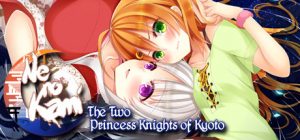
Yuri Visual Novel: Ne no Kami – The Two Princess Knights of Kyoto, Guest Review by Louis P

January 24th, 2018

Welcome to another Guest Review Wednesday here on Okazu! I am pleased as punch to welcome back our good friend, Okazu Superhero and Guest Reviewer Louis P. Take it away, Louis!

Ne no Kami – The Two Princess Knights of Kyoto, a visual novel by Kuro Irodoru Yomiji, starts of promisingly enough. Len Ese is a compelling and interesting protagonist, with the ability to sense the presence of living things. Before you can say ‘ordinary high school student’ she is dropped into a new life and a new home just outside of Kyoto. Reuniting with her childhood friend Shinonome Sarume she is whisked away to a secret village, the headquarters of Kunai a secret organization of sacred sword wielders who have promised to fight Ayakashi that threaten the human world. Len learns that Kunai wants her to help them fight these dangerous Youkai, she even gets a cool magic sword that only she can wield like her friend Shinonome who also works for Kunai. In fact everyone in the small village she used to visit growing up works for this secret monster fighting organisation.

Now if that last paragraph makes you think that Ne no Kami like some kind of fun supernatural version of Thunderbirds, it isn’t. In fact it is quite the trip to watch Ne no Kami systematically make its setting as pleasant to read as dry white toast. The writers were clearly fans of the urban fantasy visual novels that have long periods of exposition mixed with everyday life (Aoi Shiro) but they seem to have missed that what you then need to do is populate that everyday life with interesting characters and make that exposition meaningful to events we have already experienced early on in the story. No, instead Ne no Kami decides to front load its entire mythology right from the get go and when it is not doing that the characters’ daily lives feel truly banal. Quite an achievement when Len is moving into a new home, re-uniting with two childhood friends and learning about a secret youkai war but all these scenes are populated with characters that have such low energy it is hard to stay awake never mind care.

And that is a pity because…

Spoiler warning here but seriously you are not missing much and knowing this is probably the only reason to buy this visual novel. If you really do not want to know, skip to the second set of asterisks.

****


It turns out that the war the Ayakashi have been waging against humanity is not as simple as Kunai have been making out. Indeed it seems that Kunai is pretty much the illuminati and the war is not so much to save humanity but to expand their control over it. In the end Len, Shinonome and their remaining allies must find their own way to survive after being betrayed by the very people who taught them and us about the entire setting. This throws all that we learned in the first third of the story back into uncertainly for both the characters and the reader.

****

It is a nice twist even if the people that will betray Len are pretty obvious from the moment you meet them as well as those Ayakashi that will prove to be not blood thirsty monsters. However this twists power relies on how invested we are in the lie we are fed at the beginning which, as I said, was dull and boring and I did not care about. So while this sudden twist feels inspired it did not put the work in at the start to make us feel invested in the status quo. So I was far more relived to find out about all the deception and that one of the most annoying characters was evil enough to deserve what was coming to them.

‘But what about the Yuri?’ I hear you ask, now that is actually a bit more interesting although you have to pick it out of the gizzards of the poorly told story and the character designs that are ridiculously infantile. What is nice is that both Len and Shinonome have their own love interests. Uzume Sarume and Ruka Himemishi: both of whom are given serious significance in the story but are also lacking in nearly any kind of agency. It doesn’t help as well that Uzume is deliberately made up to be a shut in with a really creepy crush on Len that somehow blooms into romance while Ruka’s story is making you think that she is one kind of fetishised ill girl when she is in fact a fetishised traumatised girl and then one-upping how exploitatively traumatic they can make her back-story every two chapters.

Despite everything it does wrong I could imagine recommending Ne no Kami, five or seven years in the past. It is clearly trying and its heart is in the right place. I mean love between women is what saves people at the end and our heroes are two pairs of girlfriends but in this modern world with Kindred Spirits on the Roof, Butterfly Soup, Highway Blossoms and Ladykiller around there is just better stuff to spend your time and money on. If only this had been released ten years ago it could be something like Sapphism no Gensou. Yeah we read it despite all its glaring flaws but it was because there was so little else to read. Today however I have no such excuse.

Ratings:

Art – 3
Story – 5
Characters – 2 (I had to look up everyone’s name while writing this. That should tell you what you need to know)
Yuri – 8
Service – 8

Overall – 5

Erica here: I would like to thank Denpasoft for the review copy of Ne No Kami. It was much appreciated! And many thanks to Louis for another cogent review.