Archive for the Yuri Manga Category


Okazu Top Yuri of 2019

December 31st, 2019

As we wrap up this year, the 100th anniversary of the Yuri genre, I like to imagine what Yoshiya Nobuko might think, if she were to spring to life and see Yuri anime, manga, novels, games…stories of women in love with women, in both fantasy and “real world” settings and bookstores around the world with Yuri titles and manga stores with dedicated Yuribu.  I’d like to think that once she got past the confusion of it all, she’d be pretty pleased about it. ^_^

For the 15th year in a row, I’m wrapping all the best Yuri people, companies, trends and titles up in one big old package and presenting it to you as the Okazu Top Yuri of 2019. ^_^ Please note there are no numbers, as this is not a countdown. Everything here is equally notable.

We’ll start with some well-deserved kudos to the pieces of the industry that set the places at which we sit and lay the feasts we enjoy.


Yuri Publishers & Yuribu
In this 100th anniversary of the genre, something almost miraculous occurred. Manga, anime and light novel publishers in the US and many of the major Japanese publishers are now investing in Yuri as Yuri.

My sincere thanks to everyone at Yen Press, VIZ Media, Seven Seas Entertainment, TOKYOPOP, J-Novel Club, UDON Entertainment, Kodansha Comics, Denpa, Lilyka Manga and in Japan, Ichijinsha, Futabasha, Shueisha, East Press, Seidosha, Hayakawa Shobo, Kadokawa Shoten, Akita Shoten and, at long last, Shogakukan.

Additionally, Japanese manga and bookstores have finally recognized that Yuri is a genre that does bring in business and have developed Yuri Clubs to help funnel money their way. ^_^ So thanks to Animate, Shosen, Gamers and Futabasha (again.) Toranoana has no Yuribu, but their Yuri Corner in the flagship store in Akihabara is worth noting, as well.

All these companies have recognized the potential of the growing LGBTQ and Yuri markets and responded to it with money and promotion (and in the case of US companies, care and attention,) which gives us hope for even more and even better Yuri in the year to come!

 

Yuri Webcomics
Webcomics have been an important arm of indie comics since the early 2000s and the last few years has really seen the growth in online platforms for comic artists.

Pixiv has quite literally changed the game for indie artists in Japan like Nagata Kabi, and Webtoons and Lezhin have been among newer platforms that opened up a whole new audience to the joy of Yuri manga and comics.

Artists like Ratiana Satis (Pulse) and Kuru of Color_LES (Mage and Demon Queen) have changed the landscape for how – and where and by whom – people are able to find Yuri.

I think this kind of work is very exciting and very entertaining and always look forward to more new independent artists breaking out!

 

Yuri Visual Novels/Games
I’m not going to lie, the visual novel landscape has a lot of problems, Steam’s inconsistent and obscure rule changes looming large among them.  But the industry is full of energy and creativity that is worth talking about.

In 2019, Studio Élan created a whole new game engine for putting out innovative, unique, and original work. What I have seen has impressed me so very deeply. Indie creators gather annually for the Yuri Game Jam which gives space for smaller creative teams and individual devs to work on their idea and for you to try them out. Itch.io has quietly become a significant independent resource for game and VN developers and players.

Even if I will never be the audience for them, there are some really excellent VNs and games being made and I think they absolutely deserve a place on this list this year.
 

Yuri Creators
There are so many creators of Yuri these days that it almost seems insulting to highlight a few names, but this year there has been some outstanding work by a few individuals, that I really believe it’s worth highlighting and celebrating them.

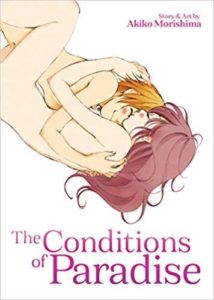
These are creators whose work has created change in the Yuri landscape: Yoshiya Nobuko (Yaneura no Nishojo) for setting in motion the creation of an entire genre by living her life and writing the stories she wrote;  Riyoko Ikeda (Rose of Versailles), for having conversation about gender presentation and sexuality 40 years before anyone else had words for them;  Takeuchi Naoko (Sailor Moon) who twenty-five years ago created characters so timeless, that we’re only now realizing just how important they are; Kabi Nagata (My Solo Exchange Diary), for her heart-breaking honesty – I know many of us want her to be healthy and happy; Takashima Hiromi (Kase-san and Yamada) for breaking Yuri romance out of high school where it had been locked for so long; Go Nagai (Devil Lady), for being a pioneer of queer women in his Devilman sagas;  Takemiya Jin (Itoshi Koishi) for walking us along the path with a young woman who wants to be out and open with her friends; Ameco Kaeruda (Sexiled), for writing a feminist power fantasy that is empowering, delightful and funny; Morishima Akiko (Conditions of Paradise) who at long last in 2020 will get the English-language recognition as a Yuri manga artist that she deserves.

Breakthroughs often pass unnoticed until long afterwards. I will note that 2020 will mark the end of one the most important decades in history for our genre, as well as the end of the first century for the genre. Some of these names created a solid foundation for us to build upon and some are among the leading lights as we head into a new decade. They most assuredly deserve our thanks and a place on this list.
 

Okazu Readers and Patrons
You, my Okazu readers, are critically important to our mission here. It is a testament to your engagement that so many of you have become writers for Okazu and a testament to your personalities that so many of you have become my friends. ^_^ My very sincere thanks to every one of you who reads and comments on and shares our content.

My very special thanks to Okazu Patrons for making it possible for me to celebrate this year with reviews and lectures and panels and events. Your financial and social support helps us pay for guest writers and reviewers. Every year you make this list, and once again this year I can say with all honesty, I could not have done it without you.

 

Light Novels & Novels
This year saw a veritable explosion of Light Novels and Novels in both digital and print. While as a genre LNs can be inconsistent, Yuri fans have been horribly spoiled by the high quality Light Novels we’ve seen.

J-Novel Club opened up their Yuri line with a salvo of truly excellent Yuri titles, including Last and First Idol,and Side-by-Side Dreamers. Seven Seas picked up what are extraordinarily good series-extension Bloom Into You, Regarding Saeki Sayaka. But the Light Novel that really blew my hair back was the totally-on-point brilliantly topical and deeply satisfying Sexiled series by Kaeruda Ameco. Those books scratched itches I didn’t know I had. If you haven’t read these, you should. Just go read them.

Will Yuri fans continue to be spoiled with top quality fantasy and science fiction Light Novels while everyone else has to deal with “the protagonist has no pants, hurh hurh” as a main plot point? I sure hope so.  ^_^


Now as we enter the final few of of our end-of-year roundup, I want to take a moment to note a few series that just deserve a moment of reverence and thanks for all they’ve done and all they will continue to do.


Our Dreams at Dusk Shimanami Tasogare
As I have repeatedly noted, this series is not Yuri. Instead, there is very real-world queer identity here; real problems faced by real people in the real world, which makes this series, if not unique, then at least extraordinary.

This story about self and community and creating a space in a world that isn’t welcoming…and then taking up that space and owning it, is a lot to ask of a work of fiction. Heck, it’s a lot to ask of life! Not only does Our Dreams at Dusk: Shimanami Tasogare succeed at that, it does it beautifully.

This is the kind of LGBTQ work I hope we’ll see more and more of from increasingly open queer manga artists.


Sailor Moon Stars
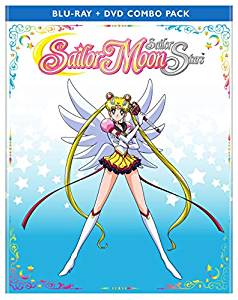
Every year I joke that if there is a Sailor Moon out that year, it will find a way on to this list.  ^_^ Well this year a Sailor Moon that has never had an official English-language release is out and it so very, deeply, queer that it seems almost fantastic. Sailor Moon Stars is the final piece of the original series, and we’re looking forward to the Sailor Moon Crystal 4th season movies in the years to come.

Let me offer a toast to Sailor Moon Stars and to the permanent – and official –  partnership of Tenoh Haruka and Kaioh Michiru – and welcome to the the next iteration of Sailor Moon fandom. Here’s to cafes and night drive parfaits and anniversary albums. May we all be together once again for the 50th anniversary.


Rose of Versailles
The wait has not been in vain. It *just* squeaked onto this year’s list by having a limited release in December. Don’t be surprised to see it back again in 2020. It’s almost 50 years old but we have an official English language release of The Rose of Versailles at last and it is a truly magnificent thing. UDON has really gone above and beyond for this release.

Oscar’s struggle with gender and class expectations, with the pressures of a society in which she may not be the person she wants to be, takes us through love and loss and the overturning of an ancien regime in a story that is terrifyingly timely.

This story of the French Revolution seen through the eyes of Oscar François de Jarjayes is so very, very extra.

A classic manga just in time for our 100th anniversary. What a year we’ve had. Our Yuri shelves are already full to bursting, with even more amazing stuff to come in 2020!


Kase-san and Bloom Into You
Both the Kase-san series and Yagate Kimi ni Naru/Bloom Into You were relatively typical high school Yuri series. Both series managed to take the typical tropes of their origins and turn them into something interesting, unusual and ultimately,  original. Both had animation that went above and beyond the manga and both had a global impact.

Once upon a time, all we wanted was a genuinely happy ending for a Yuri love story, an ending that showed our characters moving into the future together. This year, we got two. Moreover, neither series is riding its fame into the sunset, yet. Takashima-sensei’s Kase-san is ongoing and we’re getting some post-series work from Nakatani-sensei in anthologies and artbooks and I desperately hope to see signs of a third Sayaka novel soon.

These series have made it onto both of the other lists and it seems only reasonable to just say this plainly – both these series were tops for 2019.


I’ve mentioned this repeatedly during these lists (and have to tell you, we’re not done yet…) but this year was an amazing one, for me, for the Yuri genre, for all of us. Which brings me to the very best Yuri thing this year.


100 Years of Yuri

Yuri Events were through the roof this year. It began with the an amazing time at TCAF and took me along, one fun Yuri-filled event to another. We did Yuri-focused Yurithon. We held the 100th Anniversary of Yuri Tour with a few like-minded friends, during which we spent time with the Sailor Senshi, and ate lunch with Fumi, flipped 500 yen coins at a shrine with Kuraku Asuka, bought Yuri goods and Yuri doujinshi and Yuri manga and glutted ourselves on food and threw money at Yuri artists at Girls Love Fest.

This celebration of Yuri’s 100th anniversary has been exhausting and amazing. I’ve met so many folks, got to meet new Yuri manga artists and see old friends and done so many presentations and had so very much fun.

The number one top Yuri thing of the year was…the year.

It’s been 100 Years since Yaneura no Nishojo (屋根裏の二) codified how we think and talk about Yuri. Thanks to Yoshiya Nobuko and thanks to all the people and companies on these lists. Thanks to all of you, my readers and commenters and my patrons.

Here’s looking forward to 2CYE (Common Yuri Era) in which the the fun is not over, as we extend the celebration into 2020 for the final 100th anniversary project here on Okazu. ^_^ Tune in tomorrow! And here’s to the next 100 Years!


Okazu Top Yuri Manga of 2019

December 29th, 2019

Annually, I say to you that this is the easiest of the lists to write. In previous years this was completely true. This year however, we hit a tipping point with Yuri manga: No sooner do I discover a series’ existence, than it’s scooped up for license, sometimes before I have a chance to read it in Japanese. Last year I called it an embarrassment of riches. This year, I’m calling it too much to reasonably list! ^_^

As a result of the absolutely massive amounts of Yuri manga being put out in Japanese and English, this list begins with groups of works, rather than individual titles. When I mention a title that is currently available in Japanese and English, I’m using the English language title. ^_^ As always, please feel free to chime in with your favorites in the comments!


Yuri Anthologies
White Lilies, Whenever Our Eyes Meet (from Yen Pess,) Yuritora Jump (ユリトラジャンプ), Syrup (to be released in 2020 by Seven Seas,) Éclair (out from Yen Press,) Yuri + Kanojo (百合+カノジョ), there have been – and are – so very many of these anthologies this year! I’ve written about their importance in the history of Yuri manga, and I’m genuinely thrilled that they are experiencing a resurgence in this new age of Yuri.

Anthologies provide a home for established creators to publish their original work, and a place for new, up-and-coming creators to experience publishing with a company. Fans get to see glimpses of new concepts, new art, new ideas and find new artists to care about. Almost all of my favorite artists were (and often still are) avid anthology contributors. I unabashedly love anthologies, with my endless hope for really good short stories.

As a result of this new wave, Yuri anthologies make this year’s list!


Shakaijin Yuri
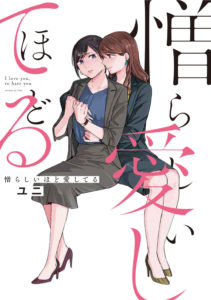
Stories about life after high school, where love between adult women can(!) exist. Nikurashii Hodo Aishiteru (to-be-released by Yen Press as I Hate You So Much, I Love You), Still Sick (out from Tokyopop,) BariKyari to Shinsou (バリキャリと新卒), Yuri Life (out from Yen,) Fuzoroi no Renri (不揃いの連理), Tsukiatte Agetemo Iikana (to-be-released by Viz Media as How Do We Relationship?) and so many more that I have read and reviewed in the past year, tell stories that until recently could not have been told. Lesbians are still few and far between but we sometimes even get a rare glimpse of one in these adult life tales. ^_^

A decade ago, Yuri was firmly embedded in school life stories, and we were still being informed that girls wear bloomers (they didn’t) and were definitely being married off after graduation (they weren’t) and were never going to be able to see each other again (they could…and there are phones). A person becoming a Yuri fan today would have a chance to see relationships between adult women functioning in the real world in a way we could never have imagined. Western companies are on board with this, bringing out more and more of the adult life Yuri manga. That’s pretty damned awesome.


Comic Yuri Hime/ Galette

Manga magazines have such an important position in manga culture. For most creators, seeing their work serialized is pretty much the epitome of where a title can go. And for Yuri manga, it provides the closest thing to normalization that the industry has. Where anime tends to favor the lowest common denominators (or lower, depending on how uncommon a fetish might actually be,) the constant, slow, repeated application of seeing women together as couples in manga can change the world.

For that reason, I want to once again call out the two Yuri manga magazines that exist right now. I don’t like everything in them, but for their efforts in normalizing Yuri (and, I will project a bit,) relationships between women, monthly Comic Yuri Hime (コミック百合姫) and quarterly Galette (ガレット) hold a special place in my heart.


Now we’re going to take a step away from the general towards specific series that, in my honest opinion, really stood out this year and did something important.


Goodbye Dystopia
It was easy to overlook Hisona’s 3-volume manga series from Comic Yuri Hime, Goodbye Dystopia (グッバイ・ディストピア). It’s not flashy, there was no sex, no histrionics, no drama. Instead, it opened up a whole new field for Yuri creators…one that we hadn’t seen before; two women traveling not to get somewhere, but to leave something behind. We took the time to see old and decrepit things, and most of that time was spent in silence. I would have read a dozen more volumes of that, a Yuri story in which nothing at all was important. I was able to enjoy the feeling of wandering in an almost-empty post-apocalyptic landscape set in the middle of the modern world.

As we head into what is very likely to be the twilight of the human species, we can remember that everything comes to an end and still look forward to tomorrow.


Bloom Into You
I had a lot of reservations about Bloom Into You from the beginning. I’m still not quite sure why it became as popular as it did. Perhaps a mix of zeitgeist and TV animation, but more probably because of the marketing powerhouse Kadokawa/ASCII Mediaworks. No joke – if you want your series to be popular, get Kadokawa to market it. It can be purest distilled crap and they’ll polish it up and sell it for luxe prices. ^_^

The main love story was nice enough, but where this series shone, where it gleams like a beacon of frickin’ hope is in its treatment of Saeki Sayaka, a serious-minded young lesbian who meets two adult women in a relationship and finds herself. I delighted in every moment we spent with Sayaka, with her time talking to Miyako about her true self and getting to know her even better in the light novels.

I’m not exaggerating when I tell you that this series made this year’s list because of Sayaka. ^_^


My Solo Exchange Diary
I very much hope one day soon to write an article about how creator Nagata Kabi absolutely threw the doors wide open for graphic medicine in Japan. It’s not that comic essays were unheard of, but before Nagata-sensei’s brutal self-evaluation and honest autobiographical essays about the mental and physical constraints of her existence, Josei manga artists frequently entertained readers with comic essays about life as a mother or living with cats. Nagata-sensei’s work was vastly different. Casting herself as a one-woman show on a stage of her own making, she touched the hearts of millions of people worldwide, a Raina Telgemeier of Japanese mental health, covering depression, eating disorder (and alcohol-induced pancreatitis in her newest book.) In years to come, it is my belief that we will see Nagata-sensei listed as a genuine pioneer whose work changed lives and the manga industry, much as we see the Magnificent 49ers now.

It’s not an easy read, but if I taught a course on manga, My Solo Exchange Diary would be a fixture on the curriculum.


Kase-san and Yamada
I’ve said it a thousand times, lesbian don’t just disappear after high school. I say this because until recently, they kind of did. ^_^; From the beginning, the Kase-san series was never groundbreaking. It trod over well-worn paths, but it stopped a little more often to notice the flowers that lined those paths. In Volume 6 released this year, Kase-san and Yamada took their first step off that path onto new territory.

When Kase-san and Yamada left high school, readers might have assumed that the series would wrap up. Instead they moved to the big city to go to college and we went along with them to see how they handled a new environment and new challenges. It’s a pleasure to spend time with these women and a pleasure to see where their experiences will take them as they enter the adult world.

Yamada and Kase-san are no strangers to this list, having made it on several times since their debut in 2011. We welcome them back once again for this year.

You’ll have noticed that my primary motivation for inclusion this year, as it has been for many years is stories with a sense of reality; stories of couples who exist in a semblance of the world as you and I might hope to experience it. With that in mind, I give you the Okazu Top 3 Yuri manga of 2019.


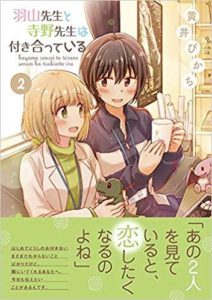
Hayama-sensei to Terano-sensei ha Tsukiatteiru
Hayama Asuka and Terano Saki are teachers at a school who have, to their surprise, fallen in love. Everyone knows they are going out and everyone, from students to administration think they could not be more adorable if they tried. This is the major handwave of this series and I, for one, think it wholly acceptable. Instead of dealing with bullying by colleagues or angry parents, we get to enjoy Saki and Asuka loving their time with one another.

Hayama-sensei to Terano-sensei ha Tsukiatteiru (羽山先生と寺野先生は付き合っている) is an adult story that includes sex, but is not porn. It focuses on the the sheer joy these two women find in one another. Yes, it’s a fantasy, but it’s a fantasy I wholeheartedly endorse. This manga makes me smile. Every time. Next year you’ll be able to enjoy it as Our Teachers Are Dating! from Seven Seas.


I’ve never hidden my desire to see more overtly lesbian themes in my Yuri. This year, we were able to enjoy manga series that were explicitly about queer people, by queer creators, that told various stories of different gender and sexual minorities. My top two series this year are effectively tied for the position because they both are by us, and tell our stories.


Our Dreams at Dusk Shimanami Tasogare
2019 was the year we were able to read a LGBTQ manga that pulled no punches. Yuhki Kamatani’s breathtakingly beautiful and moving Our Dreams at Dusk Shimanami Tasogare is a love letter to Shimanami and a supportive hand being held out to LGBTQ youth at the same time. Each character’s story is unique and individual, there is no pretense to telling all queer stories ever. Every character is shown as three-dimensional, working on understanding themselves and their place in a world that won’t make a place for them.

It ends with a wedding ceremony for the lesbian characters; a symbol of change and acceptance.  The first time my wife and I had a ceremony, we never expected to be able to marry legally. And here we are with that right. Saki and Haruko’s wedding might not be legal, but their families being there for them is an important step forward. This is not “Yuri” but it is one of the most overtly queer manga I have ever seen. Like a symbolic wedding, I honestly think that is worth celebrating. It’s a step forward. I’ll hope that this holds the door open to more overtly queer stories, more stories of lesbian couples who don’t face “death or marriage” as the only possible outcomes. And maybe, just maybe, assist in changing the way people think, an important bit of groundwork for a new legal landscape for queer couples in Japan.


In the middle of the many Yuri tropes that exist, there is one trope that is so very common in western literature and yet is almost completely missing in Yuri – the coming out narrative. There is a series that I have believed since the very beginning would be the series to address this. I was not wrong. This series is my top Yuri manga pick of the year.


Itoshi Koishi

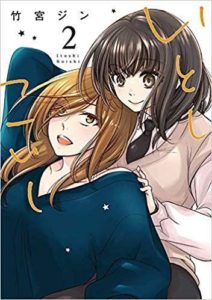
Hina, a senior in high school is going out with Yayoi, an older woman. Yayoi is very aware of the age difference and is waiting for Hina to move beyond school into adult life. They are good for each other, and take care of each other and their friends are supportive. Yayoi is a lesbian and has friends who are, as well.  Hina has friends who adore her and whom she adores, and she has slowly and surely been moving towards telling them the one thing she’s been keeping from them. My Christmas present arrived with the January edition of Comic Yuri Hime in the form of Itoshi Koishi‘s protagonist Hina, coming out to her friends and her friends responding with love and acceptance. Hina takes on a few old lingering stereotypes of gay couples (left over from Japanese TV shows purporting to show “real” gay people whose lives were miserable) and clears them away with a smile.

Takemiya-sensei has been leading up to this slowly, carefully and ever so gently. Itoshi Koishi (いとしこいし) is not a series of high melodrama, it is a series about two people who love and are loved in return. It shows that “coming out” may never be easy, but it does not have to be traumatic. I love this story with all my love.

This series, by this author, who combines Yuri and lesbian themes sweetly, without fantasy handwaves, is my number one Yuri manga of the year.


The next list will be an accounting of all the companies, the people, the places and things that have made 2019 an amazing anniversary year for Yuri!


Yuri Manga: Yuri is My Job, Volume 5 (English)

December 17th, 2019

In Volume 4, our focus has been pulled inexorably from Hime, whose desire to have a perfect image in public so she can marry rich and check out of the rat race , towards the most conflicted character at Liebe Gakuen Cafe, Ayanokouji, the perfect one-sama, played by Yano Mitsuki, the wholly imperfect person.

Now, in Volume 5 of Yuri is My Job!, as Hime is gallivanting about with Kanako, we’re being reminded that Yano has never had the ability to understand the hidden meaning behind people’s words. An honest and forthright person herself, she has always said what she thinks and that has frequently put her at odds with those around her. I feel her pain. ^_^

Now, as she’s confronted with proximity to the one person who ever made her feel at ease, and whose betrayal hurt her more than she’s willing to admit even to herself, she’s…overreacting. And she knows it. As I said in my review of Volume 5 in Japanese, “She doesn’t want to make the same mistakes, even as she can see that she is [doing so]…but what those mistakes are, are still beyond her grasp.”

In the meantime, we can see that Hime is doing the right things. Maybe for the wrong reason…but is that really a problem? Does it, at the end of the day, really matter why she is kind and thoughtful to Kanako, and trying harder for her onee-sama?

And just who the heck is Tachibana-san?!? She’s there again in this volume. Did you see her? I did. She’s a regular, we’re told. I’m kind of wondering now, if she wasn’t more than that.

Ratings (same as the Japanese volume):

Art – 8
Story – 8
Characters – 8
Service – 3 Nothing salacious, but the premise is service
Yuri – ????? I can’t even. There’s a lot and very little at the same time.

I still really love the author’s notes, by Miman-sensei which contain really interesting insight towards the process of creating this series.

My kudos to translator Diana Taylor, who is doing a bang-up job making sense out of a surprisingly complicated narrative, embedded in Yuri tropes and tea and cake. And nods in the direction of letterer Jennifer Skarupa and editor Haruko Hashimoto, as well, for creating a seamless manga reading experience!

Volume 6 is headed our way in Japanese in late January and English in May 2020. And it’s going to be a doozy. ^_^


Yuri Manga: Yagate Kimi ni Naru, Volume 8 (やがて君になる)

December 12th, 2019

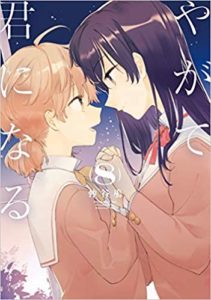
Since I cracked open the fantastic Bloom Into You Premium Box Set earlier this week, and plan on finishing it up tomorrow (except for the cheesecake, which will have to wait a few weeks) I figured I had better just bite the bullet and wrap it all up in one go. So here we are with Yagate Kimi ni Naru, Volume 8 (やがて君になる) in our hands, ready to say farewell to this series in Japanese.

Volume 7 (which will be available in English in April 2020) left us on the cusp of a major change for Yuu and Touko. A major change that had been telegraphed for many volumes, so surely no one will be surprised. After this massive change in their relationship, the narrative shifts entirely from a story about young people struggling with who they might be to one about learning to be comfortable with who they are. To do this, some of you will have to let go of who you thought they were. This bring us to the creation of a relationship in which both Yuu and Touko had to figure out what they wanted for themselves.

Time marches on and the story skips two years into the future to end in what is an extended final chapter. Yuu visits her school once again, this time to watch her successors in the Student Council perform their play. And to catch up with everyone for a brief moment. Sayaka, Yuu and Touko have one last moment together in which the punchline of the yet-to-be-released third Sayaka novel is spoiled…and I’m perfectly okay with it. ^_^ It’s not like that was any less obvious than the end of this series. In a Yuri story, it doesn’t matter how many obstacles exist, we kind of have to realize that we’re headed to an inevitable conclusion.

The conclusion to this story may have been inevitable and, if we’re honest, a bit predictable, but it is nonetheless a nice ending and one that gives fans of the series plenty of room into which they can write their own desires. What conversations did Yuu and Touko have about identity and gender and sexuality and sex in those two years? We’ll never know, so feel free to tell the story you need to tell to make it work for you.

Ratings:

Art – 9
Story – 9
Characters  – 10
Service – There is a sex scene. Whether you consider that service or not is entirely up to you.
Yuri – 10

Overall – 9

In the end, I am once again staring at the title, wondering if we’ve all been played for fools. Maybe  every single character had someone they thought they had to become in order for things to work. Or, maybe Yuu was never the protagonist and we’ve been watching her in a supporting role all along to Touko’s journey to become, then surpass, then let go of her, sister. Or maybe the title had no specific connection at all and we were left, like the characters themselves, to struggle to find meaning.

We already know there will be a few “curtain call” projects for this series. Artbook, stage play reprise, the third Sayaka novel, and a series of LINE stamps have been planned. The first novel, Bloom Into You: Regarding Saeki Sayaka is available for pre-order from Seven Seas, so we’ll be  talking about this series still for some time to come. But, in the meantime, we’ll tip our hat in thanks to Nakatani-sensei and wait to see if there’s something next.


Yuri Manga: Yuri Bear Storm, Volume 2 (English)

December 9th, 2019

We met Kureha, a human surrounded by bears, and Gingko, the bear princess with whom she falls in love in Volume 1.

In Volume 2 of Yuri Bear Storm, what is already a confusing story, takes on extra layers of obfuscation as Lulu, another bear in love with Gingko, shows up. The three of them end up living together, and we begin to learn that Gingko and Kureha are linked by a long list of connections, not the least of which is that their mothers, and Yurika, the school principal, were apparently lovers in the past.

While every piece of the plot is presented as a “Once upon a time” fairytale, none of those pieces seem to fit together, quite, although they clearly belong to the same puzzle. By the end of volume 2, we can see that Gingko and Kureha are bound by fate, but how, exactly and what that fate is, are seen from two sides of a one-way mirror. Each girl knows the other is there, but they can’t quite see….

And added to the equation is the appearance of Bear Witch Sumika, (Kureha’s lover from the anime.) She appears to know something about Kureha that the girl doesn’t know about herself. What that is, we might learn, but equally, we might not, in this Ikuhara Kunihiko story, stamped all over with the seal of a lily, but frequently without plot threads that connect.

I really love this manga for Morishima Akiko’s art, and the cognitive dissonance between her cherubic characters and the significant psychological (and, occasionally, physical) violence of the story. These are the cutest bears disemboweling humans you’ll ever see.

Translator Katie McLendon does heroic work making this story make as sense as it possibly can, while the entire Tokyopop team does a fine job of giving this book the feel and finish it deserves.

Ratings:

Art – 8
Story – 7
Characters – 8 We get more Yurika!
Yuri – 8
Service – 5

Overall – 8

For an adorable fairytale about multiple three-person relationships, death, destruction loss and love, Yuri Bear Storm is a pretty amazing (if not “good”) story.