
Archive for the Yuri Manga Category


Yuri Manga: Comic Yuri Hime, May 2018 (ミック百合姫2018年5月号)

May 6th, 2018

The May 2018 issue of Comic Yuri Hime (ミック百合姫2018年5月号) begins with a new story by Hisona that I quite like. “Goodbye Dystopia” follows a girl leaving her life behind – although why, we don’t yet know. She meets another woman traveling through the ruined, wild landscape and they begin to travel together. How the world came to be this way, who they are and what they are looking for is all as yet unilluminated. Nonetheless, I like the idea. ^_^

Miman’s “Watashi no Yuri ha Oshigoto desu!” delves into the backstory of Kanako’s obsession with Hime. Broken people are broken.

I’m not sure where “Koushin Koinu ni Koibumi wo” by Tamasaki Tama is going (or, indeed, if it is going anywhere,) but I’m still reading. A feral girl is accepted into a military-ish academy-ish where she’s being alternately encouraged and scolded by an older girl who obviously sees something in her. This month Indou makes a new friend, but find her grades subpar, so she isn’t getting town leave. This whole series feels inspired by the Vocaloid Senbonzakura visualsand not-real, slightly nostalgic militaristic image.

Hisakawa haru presents the opening sortie in the “Girls Wedding Omnibus, Yuri-kkon,” in which two women marry. The bouquet is passed along to, presumably, the next girl to find wedded bliss.

On the even of her wedding, Aoi completes her confession of her complicated feelings about Kaede to Nanami in Ohsawa Yayoi’s “2DK, GPen, Mezamashitokei.” And Nanami wonders what Kaede is in her own life.

I’m still really liking Shiroshi’s “ROID,” but I am apparently a sucker for Yuri androids. Android designer Yui uses a wheelchair, and is in the process of making an android that looks more than a little like herself. She’s helped out in her experiments by AI designer Reina, who is amazed and concerned at the humanity of the new android. But she can’t help wondering what the android is to Yui. She names the android Anna to give it a separate existence from her creator. Anna assure Reina that she is separate from Yui. So far I quit like this series.

Nagashiro Rouge’s “Eve to Eve” is another sci-fi story, but so completely at odds with the previous one, it’s worth mentioning. Two women who are wholly, massively in love have volunteered to have the brains become the center of a global network of protection. Their brains are removed from their bodies, but in their private space they remain in love with each other and with the whole earth. This may be the most purely science fiction-y story we’ve had in Yuri Hime, I think. 

Another new series has begin that’s immensely appealing, “Prison Town e Youkoso” by Neji, in which demi-beings, yokai, and half-humans of all kinds mingle. We meet human Akari and her roommate, a frankensteinish (or Black Jack, if you prefer) composite person named Mary. Both Akari and Mary receive job notices every morning. Akari is busy but when she gets together with friend for drinks after work, they tease her that she treats Mary like a little sister. Her feelings are probably more complicated than that. I’m looking forward to reading more of this.

Kiriyama Haruka gives us “Shiawase Wakenasai” which follows two adult women being happy together.

I want to digress here. Clearly I am not the only Yuri fan or creator who is looking for more adult Yuri. The vast amounts that have – apparently suddenly – appeared tells me that this was a long time in coming. Stay tuned, there’ll be more.

Usui Shio’s “Select Closet” is a cute little story about a cool, boyish girl being given room to be feminine and cute by a classmate.

I hadn’t realized how *good* this issue was until I had to type it all out! There’s a change in the tides here, one that I am really liking. Less schoolgirls, more speculative fiction. Maybe we can even get a mystery or a sports story one day. ^_^

Ratings:

Overall- 9

The June issue is already out and it’s just as excellent, with something new and far less exploitative from Kodama Naoko!



Yuri Manga: Nettaigyo ha Yuki ni Kogareru, Volume 1 (熱帯魚は雪に焦がれる )

May 4th, 2018

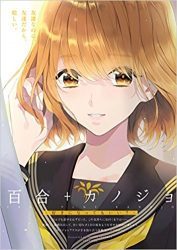
Konatsu has moved to a small beachside town. Her father has stay where he is for work, so she’s basically on her own. She’s hoping to be able to make friends, but isn’t great at it.  She meets Koyuki, who is working at the local aquarium and is unusually interested in the older girl. Although they go to the same school, circumstances are just not giving them the chance to to get to know one another.

As the school festival approaches, Konatsu takes a leap and joins the aquarium club to be nearer to Koyuki.

Koyuki, for her part, is equally interested in Konatsu and, like the other girl, feels reticent about reaching out. But more and more she finds herself thinking about Konatsu. On the day of the school festival, when Konatsu reacts with joy at seeing Koyuki, she finds herself embracing the other girl with all her heart.

Nettaigyo ha Yuki ni Kogareru, Volume 1 (熱帯魚は雪に焦がれる ) by Hagino Makoto, is a charming little love story about two girls and a cute salamander.

There is a lot of Yuri out right now. Of course the Asagao to Kase-san theatrical release is getting a fair amount of promotion, so it was no surprise to see the trailer screening at the Yurimate event at Animate, and it was equally expected to see the Love To Lie Angle anime featured at Gamers store in Akihabara. But what a surprise to me to see a door-sized poster, and mini-museum for Nettaigyo ha Yuki ni Kogareru at Gamers, as well! 


This was unexpected for several reasons. One, the series is really quite charming and sweet and has no service of the kind in which Gamers specializes. It’s just…nice…without any fetishtry. Not T&A, no lolicon. So I was pretty darned shocked to see it featured at Gamers, of all places. As you can see from the pictures, there were some goods items on display. Had I wanted, I could have bought the mug with my purchase of the second volume of the manga, but did not. Reproductions of pages were on display and a message board for visitors. I jotted a short note in English for that and reminded myself to finish Volume 1 when I got home so I could tell you about it! 

Ratings:

Art – 8
Story – 7
Characters – 8
Service – 1 on principle only, there really isn’t any
Yuri – 7

Overall – 8

It’s really just a lovely little story and you’ll learn a little bit of marine biology as you read it. And the word for “salamander.”


Yuri Manga: Kago no Shoujo ha Koi wo Suru (籠の少女は恋をする )

May 3rd, 2018

In a time and place that isn’t our time or place, and in a reality of infinite girls’ schools in Japan in which infinite combinations of experiences occur, Kago no Shoujo ha Koi wo Suru (籠の少女は恋をする) takes place.

Chizuru comes to a school where nothing is meant to be seen as it appears. She’s assigned to triple room with twin sisters who are clearly in an incestuous relationship, which sets the tone for the rest of the story nicely. The younger twin, who is unwell (although we don’t know if it is a physical or mental ailment) is aware that her sister has another lover, although she doesn’t know whom. All of the girls at the school, she confides to Chizuru have been discarded and “graduation” means they are sold to some man to be “married.” The reason why I say this is meant to appear to be other than what it looks like, on account of everyone in the entire school acting as creepy as possible, it looks just like what it is.

The sister shares her own sad tale of being neglected by parents until they end up in school. Chiziru reflects on her own life, parentless, unwanted by an aunt who could see her son’s and husband’s desire for Chizuru turning criminal, so sending her off to the school.

With so much creepiness, one is unsurprised that the first volume ends with Chizuru, who has barely had time to unpack, receiving a notice that ominously declaares her “practical training” will begin. (Thanks j1m1 for the correction!) What is slightly surprising is that she meets a beautiful naked girl in the garden and is immediately captivated. When the girl warns Chizuru away, it only increases her interest, of course. I am less convinced that she had the same effect on me.

What will happen? I’m sorry to say, I probably won’t find out. I really liked the look of this book physically – nice art, pleasant cover design, but there’s a nastiness about the story that set my teeth on edge. 

Ratings:

Art – 8
Story – 6
Characters – 6
Yuri – 9
Service – 5 Not that much visually, but there a definite salaciousness in the storytelling

Overall – 6

Theoretically, I hope Chizuru saves/runs away with the mysterious naked girl, but I’m not sure I’m going to stick around to see it. ^_^


Yuri Manga: Éclair Bleue: Anata ni Hibiku Yuri Anthology (エクレア bleue あなたに響く百合アンソロジー)

April 23rd, 2018

Éclair Bleue: Ananta ni Hibiku Yuri Anthology (エクレア bleue あなたに響く百合アンソロジー) is the third of the Éclair anthology series.  The first two, Éclair  and Éclair blanche were firmly set in the world of schoolgirl romance. In this volume, the stories wander away towards hints of there being life beyond high school. 

To be sure, the protagonists are often themselves still in school with a variety of crushes on older women in their lives, but one or twice it slips and forgets that lesbian eventually graduate and yet, remain interested in romantic relationships with other women. Shocking, I know. 

The volume starts off with a color illustration by Hibiki Reine, which felt rather nostalgic, since we haven’t seen much of hers in Yuri anthologies for some time. You’ll recognize many of the names in this collection. Between Galette and Comic Yuri Hime, you’ll likely recognize many of them on sight. My favorite short this volume was “Sato to Namida to Onna to Onna” by Kita Taki which follows an office worker who can see that her coworker is struggling and helps, maybe, her find something to hang on to. I’ve always like Kitao-sensei’s grasp of adult concerns in her stories. Sato’s stability is refreshing, as Fujiwara says. 

The thing I actually like best about the Éclair series, is that it reminds me of the Yuri anthologies I used to obsessively consume before we had an established genre, with magazines and publishers putting out high-quality Yuri. These anthologies have always been important for Yuri creators, giving them a place to get their work to a larger audience (and, in many cases, use that to springboard to a professional level) and also provide the freedom of putting out the stories they wanted to see told. This series is nice for that, because it gives artists who are neck deep in their own series for one publisher a chance to play a bit in a looser-format anthology.

Ratings:

Overall – 8

I may not always like every story, but I will always love these kinds of Yuri anthologies. They are important piece of Yuri history for me. And, for the very first time, you too will be able to enjoy one of these Yuri anthologies in English when Yen Press publishes Éclair: A Girls’ Love Anthology That Resonates in Your Heart this summer!


Yuri Manga: Sweet Blue Flowers, Volume 3 (English)

April 11th, 2018

Today’s review is a special sneak peak at a piece of writing for the “Big Book o’Yuri”! Thank you to all my Okazu patrons for making this possible. If you want to support my work – and to get another patron-only sneak peek from the book this spring, be part of the Okazu family! 

Deborah Shamoon, in her introduction to Passionate Friendships writes, “Prewar girls culture created a private space of girlhood, a community of friends insulated from the pressures of a restrictive patriarchy.”

By the late 20th century, the readership of shoujo manga and literature had been well trained to admire – and desire – this “private space of girlhood,” as epitomized by sex-segregated schools festooned with the accouterments of western religious orders. In the year of Maria-sama ga Miteru‘s apotheosis from popular novel to anime series, another equally influential series was being serialized in Ohta Publishing’s Manga Erotics F magazine, Shimura Takako’s Aoi Hana/Sweet Blue Flowers.

Okudaira Akira has herself admired and desired admission to an all-girls’ school, where students walk slowly so as to not ruffle skirt pleats and greet each other with old-fashioned greetings. On her way to school, the modern world intrudes on her idyll and she rescues another girl from a groper on the train. The other girl turns out to be a childhood friend of Akira’s, Manjoume Fumi. They pick up their friendship as if they’d never been apart.

Fumi is going to another girls’ school, more modern than Akira’s old-fashioned one, but no less fraught with the passions that infuse the kind of Yuri story that I have labeled a “descendant of S.”

Even though it was written for the adult readership of Manga Erotics F (an eclectic manga magazine) Aoi Hana embraces the interior lives of its adolescent female characters. The focus is not on sex, but on sexuality and the maturation of the characters’ personalities as they go through the paces of high school life. Joining clubs, making friends, school festivals remain the focus, as is common with much of manga but, after some perfunctory crudeness in the first volume, there’s a surprising lack of voyeurism; an almost an enforced naiveté, in the way the girls view – and are viewed by – the world.

Fumi is very much the embodiment of Shamoon’s “the shoujo,” with her shy personality and verbal reticence, she “does not appear as a threat,” and is meant to be seen as a Yamato Nadesiko, “pure and virginal.”

Fumi comes out several times in the course of the series, in a much more realistic example of “coming out” than usual for manga of any kind. She “comes out” to Akira early on, when she explains that she’s going out with an older student, Sugimoto. She follows this in a later volume by clarifying that she likes girls generally, has had a physical relationship with another woman prior to Sugimoto and reinforcing that she likes Akira in a romantic and physical sense. As Fumi matures, her confidence grows, as we can see in an even later volume, when she comes out again to friends and yet again to a grandmother. This kind of repeated “coming out” to different groups with differing levels of intimacy would be familiar to most sexual and gender minorities. (We can amuse ourselves imagining her later coming out to her parents, as well, although that is not addressed in the manga directly.) For this series of repeated coming out scenarios, Aoi Hana deserves a place of honor. As we’ve mentioned in the trope chapter (reference needed), although coming out is possibly the defining trope of western LGBTQ literature featuring teens (especially in YA literature) it’s largely absent from Yuri manga as a standard trope.

In the end, Sweet Blue Flowers, which gained its own apotheosis into an anime in 2009. It was dressed in the trappings of an ‘S’ tale, but was ultimately a same-sex romance told with a modern sensibility and for an audience which preferred happy endings over the “death or marriage” of early Yuri.

***


In Volume 3 of  Sweet Blue Flowers from Viz,  we are treated to the spectacle of Fumi’s repeated coming out and the affect it has on her circle of friends, most especially on Akira, who must find a place within herself to understand what Fumi’s feeling mean to her. 

The second-years are maturing, rather quickly. Mogi is dating Akira’s brother, and Kyoko seems to have all of a sudden sprung fully into adulthood. With the even more condensed omnibus format, time seems to have contracted here and we’re almost left breathless at the changes from the beginning of the volume to the end. 

This adaptation is exceptional. Reproduction and translation are all seamless, and we’re able to have a very authentic manga reading experience. The only downside of this is that it highlights the creator’s inherent weaknesses in story telling. Shimura creates character-driven narrative, but sometimes the narrative needs slightly more than just interior monologue to drive it. ^_^;

What this volume is, without question, is very lesbian. Fumi isn’t the only gay character any more now that we know that Tamashina-sensei is Ono’s older sister’s lover. And, while the impact of that is hardly touched upon in the narrative, the addition of a role model is important for Fumi. To have someone to talk to…the value of that in a young lesbian’s life cannot be overstated.

This volume is, in my opinion the strongest of what Viz will release as four volumes. We can see the progress the young women make as people, before the story turns back into itself to fulfill the requirements of a romance series.

Ratings:

Art – 8
Characters – 8
Story – 7
Lesbian – 6
Service – 1

Overall – 8

The fourth and final volume of Sweet Blue Flowers in English has a June release date. And then, we’ll be able to talk about the ending. ^_^ There’s a lot to discuss.