Archive for the Yuri Manga Category


Seven Seas licenses Yuri Manga "Hatsukoi Shimai" and "Voiceful"

June 30th, 2007

Anime Expo opened this weekend and Seven Seas was right out of the gate with a bunch of new announcements, including Yuri manga titles Voiceful and First Love Sisters (known here as Hatuskoi Shimai) from Ichijinsha.

I’m very pleased that 7S picked up these titles, I feel confident that they will do the very best job that can be done on the translation and adaptation.

For those who are interested in these titles, here are my reviews of the collected series:

Hatsukoi Shimai 1 and Hatsukoi Shimai 2


Voiceful

Now that they’ve picked up Ichijinsha titles, hopefully we can look forward to Strawberry Shake Sweet, Simoun and “Kotonoha no Miko to Kotodama no Majyo to in the future, along with the rest of the Yuri Shimai/Yuri Hime line up. :-)

Congrats Seven Seas – Yuri fandom is looking forward to the translations. :-)


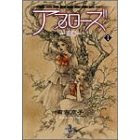
Yuri Manga: Applause, Volume 1

June 25th, 2007

This is a title that has been on my “meaning to read” list for *ever*. Last month, completely by coincidence, as I was leaving that haven for used, obscure and hard-to-find manga, Book-Off, the title caught my eye from a shelf I never look at. Lo and behold! They had the complete set in reprint. So today’s review is dedicated to Wendy, who kept ragging on me to read it.

And here we are, at the first volume of classic Yuri manga Applause by Ariyoshi Kyouko. which is still in print and available over at Amazon JP. If you’re really into shoujo manga, you may recognize the mangaka’s name as the author of Swan, which is now out in an English-language edition.

Applause begins at St. Maria’s, a private Catholic school in Belgium. The two stars of the school are Junaque, a relative of the Belgian royal family and Shara, a Japanese transfer student. Shara is tall, athletic, boyish; while Junaque, two years her elder, is sensual and attractive. Both are tops in their classes in studies and both are a little bit mischievous. They are roommates despite the differences in their ages and it is widely known that they share a bed much of the time. They are also about to star in the school play which is supposed to be the typical annual Christmas pageant, but in secret (along with all the rest of the girls) they have been preparing another, scandalously racy play. It is the tragic love story of Manon Lescaut. It’s a pretty shocking play and all of the school, sans the teachers who are out of the loop, is excited and titillated about the kiss scenes between the two school stars.

Early on, their relationship comes under fire; from jealous schoolmates, teachers and administration. When challenged to kiss in front of everyone, Junaque launches into her lines as Manon and she and Shara, as the Chevalier Grieux, kiss. But where for Junaque it appears to be all in a day’s work, for Shara, it is clearly more.

The story, which is VERY detailed and long and which I am cruelly synopsising here, follows the two as the play approaches. We can see that Shara is very in love with Junaque, and it appears that her feelings are returned but, even though they do have a very close relationship and do share a bed, they never approach the matter that lays so heavily between them. We also learn that Junaque is affianced to her cousin Georges, who we instantly dislike because of his condescending body language, snarky comments and smoking habit.

On the day of the pageant, in front of teachers, administrators, relatives, alumna, they perform the play. Of course there is an immediate outcry, but somehow they are allowed to continue. During the performance, they rewrite the lines to more closely reflect their own true feelings of love, something that thrills and shocks the audience no end. When the play is over, Junaque approaches Shara, confesses her love and kisses her, for the first time as herself. Shara, horrified by her own feelings, rejects Junaque, shutting her friend out completely. It isn’t until Junaque withdraws into herself and stops talking to Shara that she realizes what a horrible mistake she’s made. But it is too late – Junaque won’t talk to her and Shara knows that she’s done something terrible to both of them. Junaque leaves school, and Shara, without a word. Shara sees her beloved play a concert, but can’t approach her. She collapses into hysterics.

To escape from herself and from Junaque’s absence, Shara leaves upon graduation and goes to New York City where she will become a famous dancer. (I have to admit, that seemed really weird to me – she played tennis and acted…you’d think…anyway….)

In New York she ends up with a troupe full of “colorful” people, as they say, complete with gay men Gerald and Alfie, who run a theater. Shara is attending college and dance lessons, but steadfastly refuses to join the actors, even when the leading lady goes missing and they BEG her to. She refuses flatly and the show has to refund the ticket costs and close. At one point, as they beg, she shouts that she’ll never go on stage again! – which comes a total shock to all her friends, who had no idea that she ever acted in the first place. In between many passages where Shara is mistaken for a gay boy, it turns out that someone in the audience claimed that they they didn’t refund the ticket price and the police show up. Gerald resists, and Shara punches a cop which lands them both in jail. She admits that she was on stage previously, but doesn’t tell Gerald why she won’t act anymore.

Because of bail, and the show closing, the theater loses their space and has all their equipment repossessed. They need 5000 dollars to pay it all back. 5000 dollars!?! End of volume

Okay, so bottom line – there’s two completely different stories here. One, the school arc, which ends tragically. The arc that begins in New York is like a completely different manga, with a different art style and a totally different tone. But don’t worry, the two arcs intersect again later. I admit that, when I finished the volume I was bit “huh?” and went back to see if I had missed something. Also, at this point, I was a bit apprehensive that I’d find myself wrapped up in a Claudine-like story, in which Shara goes through tragic affair after tragic affair with women. But no worries on that account – which isn’t to say that there aren’t any worries coming up. ^_^

In terms of art, I think the story suffers a bit from being shoved into A4 format. It’s really too small to make out some of the details and all the dialogue gets squished together on the page. It just tires one’s eyes out. The art is *very* classic shoujo manga, with all that entails, like “shock!!” eyes. Shara is drawn adult, masculine, girly, young, as the scene requires and Junaque is mostly drawn with Miya-sama-esque bearing and expressions. My favorite pieces of art are when they are both drawn like the young women that they are supposed to be. When we reach the end of the school arc, Shara is consistently shown as more grown up, and also more masculine, although she never once tries to “pass.” Nonetheless, as they are clearly in the Village, she ends up being mistaken for a boy all the time. Which pretty much freaks her out every time it happens. You’d think she’d get used to it.

Did I like it? Yeah, I think so. I was concerned that the story would be unremitting tragedy, without the over-the-topness that made Maya’s Funeral Procession work for me, but the story really matures as it goes along. It starts off with that oh-so-stereotypical hothouse of the Catholic school, but moves off after we hit New York into something much hipper, much more adult and more whimsical without losing the sense of drama. This series has enough angst for the emo-est of teens, but also has some moments of genuine fun – and shows some glimpses of good writing from time to time. Unlike Wendy, I don’t consider classic shoujo to be the only worthy genre, but Applause makes a much-appreciated break from the shounen fare I’ve been watching and reading recently.

Ratings:

Art – *so* shoujo – 7
Story – 7
Characters – 6
Yuri – 9
Service – 3
Overall – 7

This story is full of the usual tropes of shoujo and josei storylines and characters. It’s not original (not even for it’s time) but it is a very decent example of the breed.


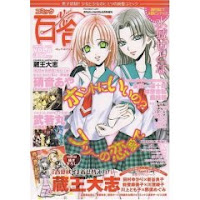


Yuri Manga: Battle Binder Plus

June 21st, 2007

I was cleaning out my shelves and picking through my files for stuff to get rid of, when I came across a few olddddddd series I never reviewed. Before I make these series go away and clear off the space, I thought I’d take a look at these deservedly obscure titles. :-)

To my utter shock, as I surfed around the intertubes trying to find a picture (I never did and had to scan the cover in,) I learned that today’s objet d’review was actually translated by Antarctic Press. It looks like they published it way back in comic book (pamphlet-style) format and it’s probably flipped, as well. I have never read it – never even *seen* any of the issues until today, so can’t comment on how good. bad or indifferent it is. I found my untranslated copy at the home of all deservedly obscure manga, Book-Off.

Battle Binder Plus is a, uh, well, piece of crap. Unless you’re the person who writes descriptions for Radio Comix. Then it’s “Classic translated adult manga from Japanese artist Rulia 046! Space Cop Kalone (aka Charon) always gets her man- or woman as the case may be! Cover colors by ARNie, English adaptation by Elin Winkler. A real piece of manga history!”

I won’t tell you which one of us to believe. I’m not sure I *know* which one of us to believe. :-) But I sure as heck didn’t see the heroine boinking any guys, I’ll just say that.

The story, such as it is, begins with lesbian sex, moves on to gruesome violence, then flashes back and forth between lesbian sex and violence indiscriminately, with some hardsuit-style armor and light mutation for fun. There’s a plot. Of course there’s a plot. Does it matter? Would you really be combing used manga store shelves to get it for the PLOT? Please. We’re more honest than that here.

Is it worth reading? Sure. What the heck. Why not. It’s better than a User’s Manual or a filling out office paperwork. And Charon’s sort of fun as she leaps around destroying naked women, robots and naked women robots.

You know, I think I won’t get rid of this manga. It’s too stupid to lose. One day I’ll be staring at my shelves thinking, “what I’d really like to read is a story about a lesbian cop that has sex with, then crushes the head of, a predatory android.” This book will totally come in handy then.

Ratings:

Art – sort of old school big hair – 7
Story – beats me – 5
Characters – cool lesbian cop, duh – 8
Yuri – 9
Service – 8

On the one side, it really is trash. On the other, at least it’s not coy, or loli, or anything other than good, solid, honest adult female cop x android trash. Oh, and the author appears to be kind of famous-ish, too.


Yuri Manga: Rakka Ryuusui, Volume 2

June 14th, 2007

Rakka Ryuusui, Volume 2 is much like its predecessor, Rakka Ryuusui, Volume 1. The school year progresses in a series of 4-panel gag comics – and the very occasional semi-serious comic. The four protagonists go to a pool for summer vacation, they go to karaoke and the like. Once in a blue moon they actually practice archery, which is kind of crucial as they *are* the archery club. Almost never do we see them in class.

The beginning of the book starts off with one of the most realistic, and yet odd, perspectives on the school year I’ve ever seen. Where other series discuss school starting and flower viewing, this book has the characters largely obsessed with their pollen allergies. I mean, for pages and pages. It was pretty funny. As a person whose school life was, in fact, characterized by what allergies I was suffering that season, it felt strangely nostalgic in a way that most schoolgirl stories don’t for me. ^_^ (Although thinking about it, my school life was about as typical as absolutely possible. Clubs, sports teams, band, culture festivals, sports day, falling in love with my sempai. what a cliche…. ^_^)

I had a little concern that Akiho’s crush for Minatsu had been set aside, but just after the allergy thing, we get a few glimpses into the fact that the crush has now developed into a raging lust. So, no worries there.

And there’s also a little character development, as well. Akiho worries that she is not improving at Kyuudo, but Minatsu-sempai explains that she’s been doing it since she was a small child – and that she really doesn’t like it at all. In fact, she resents having been made to practice. She no longer competes, and was all ready to quit and dissolve the club, when Akiho and Haruka joined. Now, she’s having so much fun again because of them and she wants to keep on doing the sport. Yay!

The biggest problem of this – and other 4-koma series – is that the humor is wacky and often language based, like puns, or just silly misunderstandings and the like. Lots of sweatdrop humor. Like Dilbert or Ziggy or any number of American comic strips, it’s not necessarily laugh out loud humor – or even obvious what’s going on at all – just lots of talking heads talking. So even if you can read Japanese, it’s not always “funny” so much as “amusing.”

But never underestimate the power of an amusing comic about cute girls in the archery club after a hard day of work. ^_^

Ratings:

Art – 6
Story – 7
Characters – 6
Yuri – 6
Service – 4 (some nudity and breast gags and the obligatory bathing suit stuff)

Overall – 6

Again, like Tori Koro, Rakka Ryuusui is also a fun and a painless way to push your Japanese kanji skills up a notch or two.


Yuri Manga: Yuri Hime, Volume 8 Part 2

June 12th, 2007

Jumping right in for the second half of today’s review of Yuri Hime, Volume 8.

After “Creo the Crimson Crises” comes the latest from Takahashi Mako. Apparently I wasn’t the only one who didn’t like the creepy kids in her stories, because her characters have now morphed into creepy teenagers instead. :-) The story begins with two girls meeting, seemingly by chance under a picturesque sakura tree. But there was less chance than originally appears. In fact, one of the girls is now going out with the boy that likes the other girl – and who she likes. This girl (we’ll call her “the blonde” and the other “the brunette”) starts to obsess about the girl her boyfriend liked, asking him questions about her. It seems that they two share some superficial similarities, which begins to bother the blonde. Using her boyfriend’s phone, she sets up another meeting with the brunette, who has no clue who the blonde is. The blonde reaches out and grabs the brunette’s breast and receives a hearty slap to the face. She only comments that, yeah, the other girl is bigger than she is. The final page is the blonde asking if she can sit by the brunette under the tree. The story reads a bit jerky and unconnected, but it’s decidedly less dysfunctional than most of Takahashi’s work, so no complaints from me.

Chi-Ran’s story “I won’t let myself love you” begins as Kako walks in on two girls engaged in a little play in the classroom. One of them introduces herself as Ageha and, shortly thereafter, announces to the whole school that she will take Kako as her next lover. Kako’s shocked and confused – this is a girl’s school! She’s informed by a helpfully expository classmate that Ageha is a notorious playgirl and has not yet failed to get a girl she set her sights upon. Kako’s determined to not fall. But Ageha’s cool, attractive, sexy, and more than that, kind and charming. As she woos Kako, Kako finds herself starting to slip, admitting that if Ageha were a guy, she would have indeed fallen already. The chapter ends with a conflicted Kako reminding herself of her vow to not fall for Ageha – but the next issue will tell us if she succeeds or not. Bets? :-)

Morishima Akiko’s Yuri Life column covers her adventures playing Yuri-themed games like Akaito and Katahane, complete with character descriptions and drooling. lol

“Ameiro Kouchakan Kandan,” by Fujieda Miyabi contains what passes for a gigantic conflict in this series – Sarasa is going away for three whole days on her school trip! She worries about how Seriho will manage without her. Seriho laughs at her, but will she, in fact, be okay for a full 72 hours without Sarasa? We’re not so sure. Meanwhile on the trip Sarasa’s moodiness is recognized right away by her classmates as the lovesickness that it is. This is followed by good-natured, but stressful “who is it?” third degree. The chapter ends with Seriho staring at the calendar in a lonely kind of way. Forget Sarasa, *I’m* worried about Seriho….

The next story in this volume has a long title about a house in a forest and is, by far and away, my least favorite. Two young girls one, an ojou-sama, one her servant are in a shady situation in which the rich girl appears to be being groomed for something grim, like high class prostitution or marriage, which is really the same thing depending on how you look at it. But this looks shadier than just marrying off the girl. It’s an unpleasant situation. The two girls are in love with one another, of course, and in a climactic moment, the rich girl pushes the other girl out the window to free her. Epilogue page shows us the servant, now an adult with a daughter of her own that she has named after her love.

This is followed by an interview with the voice actresses from Haru Natsu Aki Fuyu Drama CD. It contains all the usual questions like, “how was it to play girls in love?” but at this point all the VAs have voiced gay *so* often they’re answering “It’s a paycheck.” lol No, not really.

“Maple Love” by Hiyori Otsu, is probably my favorite story of the collection. Girl overhears boy confess to girl and be rejected. She wills them to go away, but is given away by her cel going off. Boy bails. Girl meets girl, says she likes girls and kisses girl – and gets slapped. Girl negotiates being friends with girl. Friendship ensues. It’s a nice, normal friendship, and girl gently pursues girl with no particular time frame or agenda. One night at an “ai-kon” (a group date sort of thing,) girl becomes feverish and girl, realizing something’s wrong takes her home and tucks her in to bed. Girl says she’s ready to consider a relationship with girl. The story ends with the lamest gag in the world about gee, what do women do in bed together? My response: “…” Please. It was so good until then. It’s still good, just not *as* good.

I’ve been pretty vociferous about my dislike of Hakamada Mera’s work and this story seals the deal. I loathed it. A cool, popular girl decides to rehabilitate a dirty, unpopular girl. With a mere change of clothes, a thorough bath and contacts, Eliza Doolitle is transformed and instantly eclipses her savior in popularity. Cue miserable sulking as Eliza goes off and leaves the girl who loved her when behind. I’m sorry but…bleah.

This issue’s column about key yuri series covers Yamaji Ebine’s Love My Life which I have written about here: Manga review; Movie Review.

Nanami and Misuzu continues to be about whatever it’s about. This time we get a new character who looks an awful lot like a kiddy Kouya from Loveless.

Wait, did I say “Maple Love” was my favorite? I take that back. I meant “The Paradise Incident” by Morishima Akiko, in which a freelance Sumi shows up at her friend with benefits’ house. Sari is thrilled to pieces to have Sumi there, and they pick up on their interrupted life together as if they had never been apart. Sari finds her feelings for Sumi becoming deeper and finally gives in and asks Sumi to live with her. Sumi respectfully declines – she’s off in the morning to foreign parts. But before Sari can be too sad, Sumi invites her along for the adventure – and she goes. I liked this story a lot. Adult women, with lives apart from just their couple-dom and a pleasant smile-inducing ending. Yay Akiko-san, my hero!

In any case…

Ratings:

Everything is variable according to taste, but overall – 8

In general, a good volume, with much less meh, except that one nasty Hakamada story. And while it’s still heavy on the schoolgirls, there’s a definite attempt at variety. However, I also feel like the magazine is shifting the focus away from stories for women to stories for guys. I really, really hope I’m wrong. Probably I just want more Hayashiya Shizuru and Morishima Akiko type stuff and less loli.

And look – reviewed the whole magazine in only two parts! yay!