Koyama Press is celebrating it’s 10th anniversary this year and, at TCAF, they had a special event as part of their celebration. In conjunction with the Japan Foundation in Toronto, they held a book premier event for So Pretty/ Very Rotten: Comics and Essays on Lolita Fashion and Cute Culture by An Nguyen and Jane Mai.
The event was fascinating. Items of Lolita dress and culture were displayed as if they were exhibits in a museum or art gallery.
This was a really unique perspective, that allowed us to see the craftsmanship of the items, as opposed to seeing them as part of an ensemble,in which they are one piece of a larger statement.
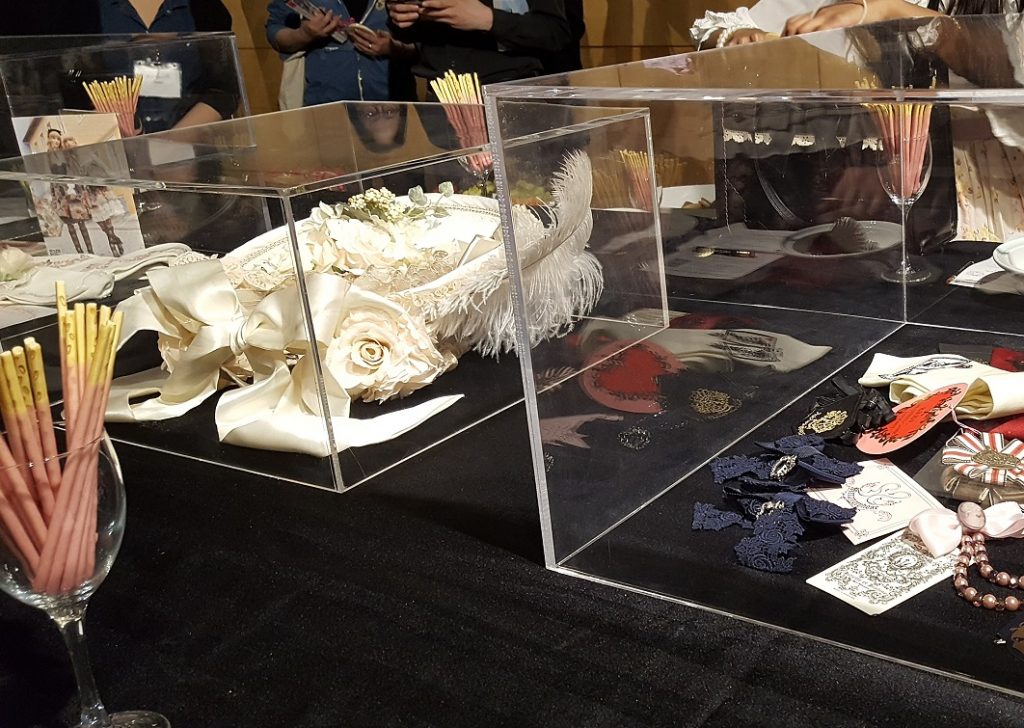
The food itself focused on cute. Pocky, cupcakes and cookies adorned with cute girls from the comics in the book accompanied by fruit and cheese platters gave the whole thing a festival air.
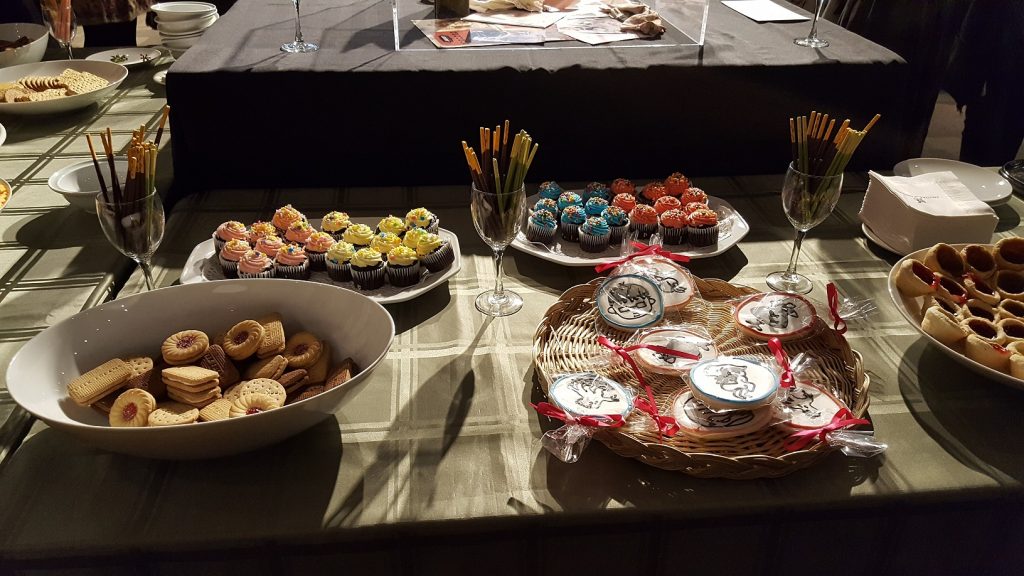
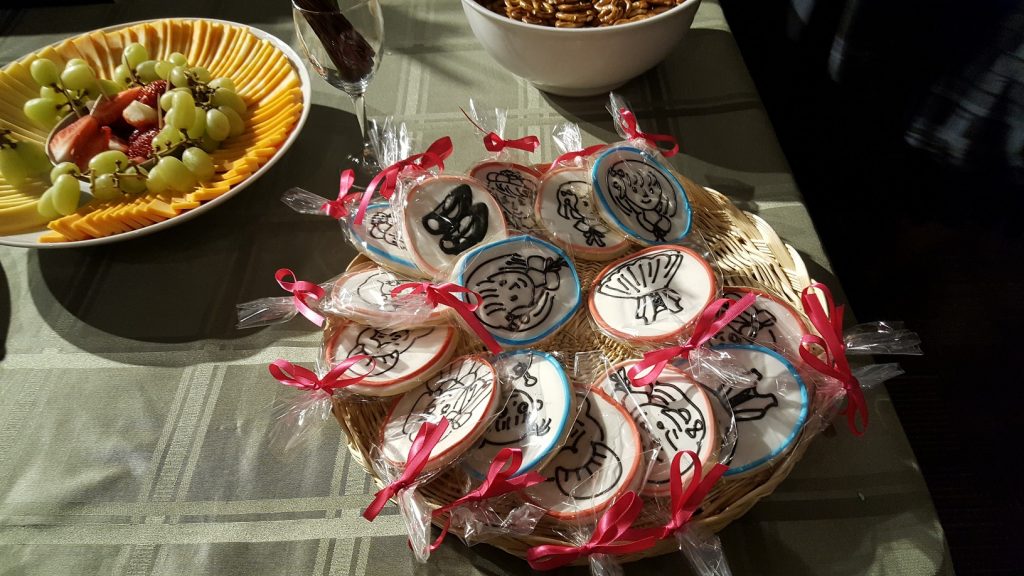
The cookies were fantastic, decorated with characters and items that were illustrated in the book. You were literally able to eat a piece of the book!
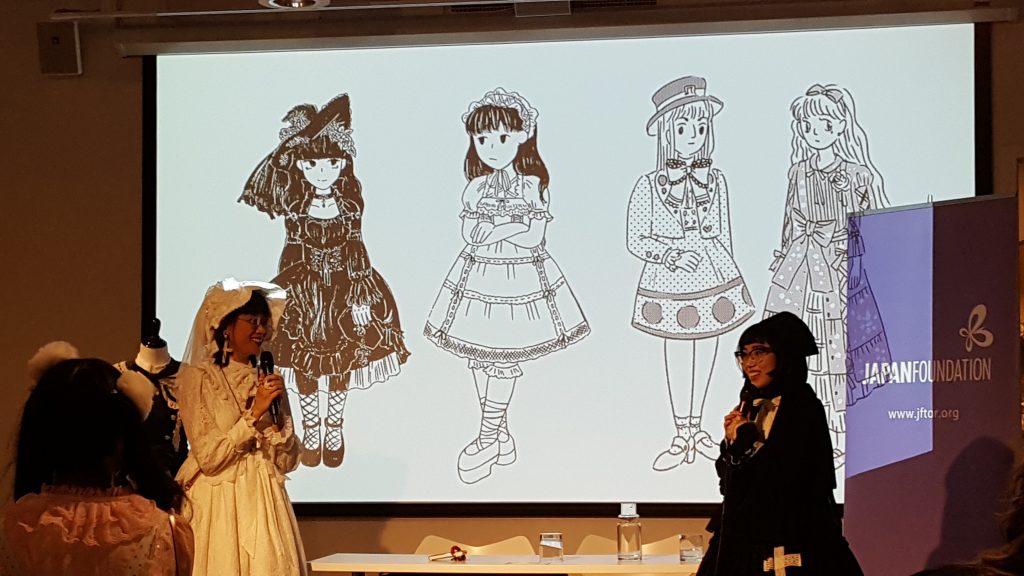
After thanks and intros and the usual preliminaries, An and Jane took the stage to explain their experience and fascination with Lolita dress and culture. Here they explain the different sub-types of Lolita dress.
I have now had a chance to read the book and I recommend it to anyone who wants to see Lolita culture not from an anthropological, outsider (haha, “objective”) perspective, but from people deeply embedded in a culture, the history of which is surprisingly hard to trace.
The book includes personal essays by An and Jane, as well as comics by both of them, and an essay and interview with Takemoto Novala, creator of Shimotsuma Monogatari, which was released here in the west as a book and movie titled Kamikaze Girls – both of which are well worth your time. The manga by the same name is less fabulous, but still a pleasant read. None of these essays really get deeply into historical roots of Lolita, but they do discuss why that is more complicated than it may initially seem. The essays touch on things like the assumption that Lolita is related to “Lolita complex” and why it is not, but mostly they are personal looks at the elements of Lolita culture that fascinate, consume and obsess those people inside the culture.
An’s comics are often about camaraderie and community of Lolita culture, where Jane’s often touch on the endless cycle of consumerism and self-abnegation – even self-erasure – that feeds the Gothic Lolita life.
In the end, the title is a brilliant summation of the sense of self we see in Lolita, that the outside is more and more beautiful, but the inside may be rotten, or even empty.
That said, the book, which starts on an extremely macabre note, ends with a poignant and touching story of friendship that expands past the initial boundaries of the community. Whether you find this book positive or negative will most likely depend on your relationship with your own obsessions. ^_^
Ratings:
Overall – 8
I found this book to be an extremely intimate portrait of Lolita, deep without being substantive; a fascinating reflection of the authors’ relationship with Lolita culture. It’s a good read and a valuable piece of research in English into a enduring Japanese subculture. From one subculture enthusiast to another, I raise a stick of Pocky to An and Jane and wish them success!
 Yuri Manga