Archive for the Artists Category


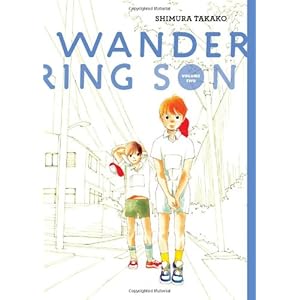
Wandering Son Manga, Volume 2 (English) Guest Review by Kayden L

January 19th, 2012

Welcome back, I hope you enjoyed yesterday’s blackout. As you may have guessed from my many years of writing about it here, freedom of expression is pretty much the one issue I consider to be the single *most* important issue there is. Obviously, as I discuss copyrighted materials here, and post covers and the like, it’s critical to me that no one decides that my blog or any of its content must be blocked. Framing SOPA and PIPA as saving American jobs is especially nasty, as it is those very same corporations that supported these bills who have systematically undervalued, underpaid and outsourced the creative efforts of the people who make the material they lay claim to. Of course I support creators’ rights and their copyright, but SOPA and PIPA have no stronger provisions for creators.

As with LGBTQ content and purges to supposedly “save the children,” I feel as if we must be extra vigilant with any designs to block Internet access. Thus, the blackout. Thank you for bearing with me.

In any case, today we come back with a bang! A brand new Guest Reviewer, Kayden L, is joining our ranks. When I reviewed Wandering Son, Volume 1, Kayden made some great points in the comments about the spectrum of transgender and genderqueer life, and so I requested Kayden review Volume 2. And here we are. ^_^ Please welcome Kayden and enjoy this guest review!

Ahoy, everyone. My name is Kayden and I identify as a trans/genderqueer individual, and here’s my review of Wandering Son

Time seems to be moving quickly in Volume 2 of Wandering Son. Already, Shuichi is heading into the 6th grade, but as the characters soon learn, age comes with increased social and gender pressures.

When Yamazaki-sensei tells the class to write an essay on what their dreams are, we find that Shuichi experiences “censor’s block” (rather than writer’s block). After struggling with the assignment for several nights, Shuichi submits a paper that says, “I don’t know yet. I’m sorry”. As readers, we know that Shuichi has a dream – “to be a beautiful woman” – but the portrayal of Shu’s self-policing is one of many examples of Shimura-sensei’s excellent storytelling skill. Through Shuichi, readers are able to get a glimpse of the closet in which many LGBTQI people hide. Seemingly irrelevant day-to-day decisions, such as the simple task of writing about one’s hopes and dreams for the future, become difficult for many closeted individuals who feel like they may be ostracized, ridiculed, or harassed for having personal wants, needs, preferences, and/or goals that deviate from social norms.

Luckily, Shuichi is able to find full acceptance with Takatsuki-kun (Yoshino) and Chiba-san (Saori), and it is within this the tiny community of friends that Shuichi develops a positive outlook on identity. That community is slightly expanded when Shuichi and Yoshino, dressed as a girl and a boy respectively, go out on one of their excursions and befriend Yuki (the woman who flirted with Yoshino in Volume 1). Initially, Yuki believes that Shuichi is a girl and that Yoshino is a boy, but she eventually learns the truth and becomes a sort of mentor, along with her boyfriend, Shii, to both kids by offering emotional support; adult approval of who they are; and a safe physical space in her apartment,  where they can be themselves. Perhaps most importantly, Yuki tells the kids to have pride in their own selves: “You must never become discouraged or afraid… you two are just too good for that”. When a classmate harasses and calls Shuichi a faggot during a school trip, it is Yuki’s words that inspire Shuichi to find the strength to stand up against the bully.

Shimura Takako’s Wandering Son is a beautifully drawn and skillfully executed story about being different and how people struggle with being alone. It is an excellent springboard for LGBTQI discussion, and I believe that its universal themes (eg. finding your identity, being bullied, growing apart from friends) can appeal to everyone, rather than just LGBTQI audience.

Naturally, the story does not reflect all trans/queer experiences, but when I read this series, I get nostalgic because I see my younger self in Yoshino and Shuichi; I remember doing, feeling, and thinking the exact same things. I take my hat off to Shimura-sensei for capturing a trans/queer experience that feels genuine and honest.

For any of you who are interesting in reading Volume 2, I tried not to reveal too many things… so if you want to know Yuki’s secret, or find out how a family member reacts when Shuichi’s secret is discovered, you should give Wandering Son a try. Also, there’s an essay, written by manga scholar Matt Thorn, at the end of the book that’s titled “Transgendered in Japan” that may be of interest to some of you.

Ratings:

Art: 8
Story: 8
Character: 9
LGBTQI: 9
Service: 1 for Yuki’s “cradle robbing”… and for what her boyfriend did in the elevator

Overall – 8

Thank you Kayden for another perspective on what I agree is a stellar series!


Revolutionary Girl Utena Anime Box Set – Volume 2, Disk 3 (English)

January 12th, 2012

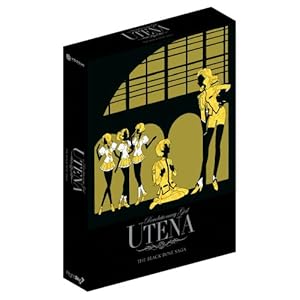
Revolutionary Girl Utena, Volume 2, Disk 3 provides a whole lot of food for thought, doesn’t it?

So, first of all, let look at the final of the puppet duelists for the Black Rose, Nanami’s henchchick, Keiko. Like Wakaba, Keiko’s story hurts. It hurts, because she’s not one of the beautiful people and not one of the chosen. She’s a real person, with big gaping flaws, but we can’t quite hate her, or dismiss her, as we might Tsuwabuki, precisely because, like Wakaba, her dreams are so mundane. Anyone might wish for a moment alone with their idol. It’s a dream that is dull as dirt. As a result, when Nanami is horrible to Keiko, we feel it. When Yuuko and Aiko are horrible to her, it’s especially unforgivable.

And, at last, we reach the core of the Black Rose story, and the illusions with which Mikage has wrapped himself. The story, however one looks at it, is at best, creepy and self-serving. At worst, it’s possible the single most depressing illusion in the entirety of the series. There was a young, sickly boy, Mamiya and his sister Tokiko and Mikage became obsessed with their memory…but it’s not Mikage at the center of the manipulation, we learn incontrovertibly. It’s not just Akio, as we might have suspected. For whatever reason  – and at this point I’m inclined to think that Anthy’s line about lying to one’s self for love is the first honest thing she’s said in this series – Anthy is involved. In the first arc, we thought to ourselves, “She is merely being used.” But when Akio tells us that Anthy does not exists at the school, we have to wonder how much of everything is her doing. Akio has social engineering skills and he apparently wields the power, but then, we have to ask ourselves now…what is Anthy?

At the end of the arc, we get a completely different kind of clip episode, highlighting Nanami’s duplicity and ego. It’s very hard to like her at the end of this arc. It’s important to remember, yet again, that Nanami is about 13. She may pretend to be grownup, but…it’s clear now and will become even clearer later, that she’s basically clueless about people. This will also become very, very important towards the end.

Here at the end of the Black Rose Arc, we’re no closer to understanding any of what’s going on, or are we? We know several things; Akio is manipulating the situation, even as far as Utena and Anthy’s relationship. We know that he has all but abandoned the Student Council, except as tools, and we know that whatever is going on, Anthy is the center of it, in one way or another.

And we know, although she truly does not yet understand this, that Utena is the only sword that can cut through this Gordian knot.

The third and final arc is on our plate and I find myself tense about watching it. In fact, I’ve been kind of avoiding it for the last few years.

In the extras Ikuhara gives us some answers as to why there is an apparent strain of lesbianism in the series. His answer is cogent – for him, making Utena and Anthy “lesbians” is a visual symbol of otherness. But that only explains some of what’s going on, really, the stories of incest and male homosexuality that are either hinted at, or explicitly stated. I’ve said for years that Utena is a series that is exactly like any other high school, on steroids, and in this case the sexuality is stand-in for all the many things that make us different. For once I think Ikuhara did a good job of answering really crappy fanboy question. Dudes, there were *way* more than just lesbians in the series.

Ratings:

Art – 9
Story – 10
Character – 9
Yuri – 3
Service – 3

Overall – 9


Yuri Drama CD: Ame-iro Kouchkan Kandan (あめ色紅茶館歓談) Blue Christmas

December 23rd, 2011

Christmas is coming and the Ame-iro Kouchakan is filled to the brim with cheerful, energetic young women. Not that anyone is complaining, but…where did they all come from? Sarasa really wants to know what the deal is, but in the meantime, she and Seriho are doing everything they can to keep up with demand.

More important than the mystery of why their tea house is so popular all of a sudden, is the much greater problem of Christmas. They did a special for Tanabata, and another for Halloween, and Sarasa is torturing herself trying to come up with a super-special special for Christmas.

But first, before all of this, we have yet another thing that must be dealt with! Sarasa’s college roommate, Saiyuki, is visited by an old friend, Shuuri. There’s some tension between them and it seems awfully likely to blossom into something more, if they can just get a push. EVERYONE in the series gives them the push they need.

Which allows us all to deal with the issue of where the hell are all these girls coming from, anyway. Well…it turns out that word’s gotten around that Manaka-sensei (creator of the St. Lotecia series, surely you must be aware that Fujieda-sensei never ever throws away a character) hangs out here, and these girls – including Saiyuki and Shuuri – are fans. Mana-chan-sensei’s editor Shiko is “helping” by leaking the story that Mana-chan-sensei might, just, you know, be doing a signing here too.

And while all of this life-or-death stuff is going on, Sarasa’s exhausting herself trying to come up with the perfect Christmas special dessert. Which, she does. Did we ever, for even a second, doubt she would? For Christmas, the Ame-iro Kouchakan will be presenting a Cherries Jubilee, with flambe’, with their own special touch. The sakura scent fills the teahouse and the blue flower of flame delights everyone. Great, everything’s set, but…now they are really in a bind. With such a fantastic table-side show, they’ll need every hand on deck. Unfortunately, Hinoka is spending Christmas Eve with her girlfriend and Haru is getting together with some friends, leaving Sarasa and Seriho needing some backup staff. How about Letty and Tsumugi? They are going to visit Letty’s home in…wherever that was. Saiyuki and Shuuri offer to fill the gap and so, a fabulous Christmas event is had by all.

You remember what I said about a paragraph ago? About how Fujieda-sensei never throws away a character? He doesn’t. During two quiet, lovey-dovey scenes between Sarasa and Seriho, just when it’s getting really good…the phone rings. I felt this gag coming for a mile and even guessed who was on the other end of the phone both times. Can you guess?

Think about it for a bit.

The first time on the phone is one “Hachibe-sama” who is ordering cakes for the Queen and the second call is from “Aihara-sama” ordering cakes for the shop. Yep, there were your Iono-sama and Alice Quartet cameos. ^_^

Kotobuki Minako (Tsumugi in K-ON!) plays Saiyuki, so we’re bumping up that six degrees of Yuri even further than usual.

The bonus track was done in pairs and among the embarrassed giggling, they have a serious discussion of the next holiday they’ll have to do a Drama CD for. New Years? Nope, they all realize with a sense of fate, it’s gonna have to be Valentine’s Day. Dear Yuri gods, I so hope they are right.

Ratings:

Overall – 9

Squee. This companion Drama CD to the second volume of the Ame-iro Kouchakan Kandan manga was a perfect companion to a train ride into NYC. I kept laughing out loud, which kept the seats around me clear. ^_^

I only wish we could have heard from Letty and Tsumugi.


Revolutionary Girl Utena Anime Box Set – Volume 2, Disk 2 (English)

December 13th, 2011

Revolutionary Girl Utena, Volume 2, Disk 2.

This is where it gets really good.

Up to this point, the Black Rose arc has seemed superficially similar to the first arc. Kanae’s rage against Anthy seems overreacting, but we really don’t know much about Kanae or Anthy, and hey, we’re all creeped out by the portrayal of psychoanalysis in the form of Mikage’s Freudian elevator. And Kozue…we’ve written her off multiple times already. She’s not jealous of Anthy, just of her brother. Bro-con, ho hum.

But. Now. Shiori is here. Shiori, who sought to hurt Juri, to tarnish her shine, because she was too perfect, too shining. Oh yeah, fandom loves to hate Shiori.

But look at it from her side for a moment. Haven’t we all had a friend who is popular, talented, attractive and haven’t we all wanted, just once, to be better than them in something? Remember this particular moment of jealousy and pain. It will be back. In the meantime, we suffer as Juri tortures herself over feelings that one day won’t be so torturous. We all want desperately to be the one to tell her it’s okay.

Tsuwabuki’s episode is probably sadder than the others. Nanami is so very immature and yet, to Tsuwabuki, she is a mature, alluring adult. He’s right on that awkward cusp of maturity when at least some of the girls around him already “get” it, and there he is, flailing to figure out what “it” is. I was talking to a high school teacher just recently – we were discussing how at 14 or 15, you meet a teen and you just know, instantly, if they will ever fully mature. Some people don’t. Tsuwabuki will be 20, then 30, then 40, etc and he’ll always wonder what he’s not getting, until he convinces himself that everyone else around is just a snob, or a jerk or something. He’ll grow up attractive, have girlfriends and talk about he “doesn’t get women.” I always feel bad for Tsuwabuki.

And then we come to Wakaba. Remember Shiori’s jealousy? We don’t care about it. We don’t like her. We think she’s a petty jerk and can go to hell. Wakaba suffers from the exact same thing. But we like Wakaba. She was Utena’s first rescued princess. When we learn that her joy comes from something other than herself it’s hard, to learn that it comes from…him…is intolerable. When she stands before Utena on the dueling ground, undoubtedly we have the same stricken look on our faces as Utena does on hers. This isn’t an enemy, or some tangential person…this is Wakaba, a friend. It’s worth noting that this is the first time Anthy begs Utena to take the sword from her and this is the first time that Utena does not. She defeats Wakaba with the sword she wields…with his sword. And it is notable that Wakaba is the first of the Black Rose arc duelists to actually attack Anthy, despite their statements that they would kill the Rose Bride.

I love this duel more than any other duel in the series. Wakaba says everything we always wanted to say to that shining, perfect friend. How nice for you, we so desperately want to say, the way the world always gives a crap about you. But I’m not like that. I have to remain average and no matter what I do I will never be special. We may hate Shiori, but we can’t hate Wakaba.

And we hate that self-absorbed, moron Saionji. In the first episode he was presented as cool, popular and powerful. Now, he’s a fool, as Mikage says and we loathe him for it.

The hierarchy has changed, irreparably. Touga, supplanted by Akio, Nanami, Miki and Juri, half-heartedly holding the center, Saionji at the bottom of the pile. Where do Utena and Anthy fit on the grid? Keep watching to find out.

Ratings:

Art – 9
Story – 10
Character – 9
Yuri – 6
Service – 3

Overall – 9

I will insert a note here referencing Alan Harnum’s Flesh Eaters for Shiori page, because if I don’t, both Alan and Sean Gaffney will try to explain it in the comments and you’ll be confused and probably distressed. This has got to be the oldest still-living Utena injoke on the Internet.


Yuri Manga: Renai Joshika (レンアイ女子課), Volume 2

December 11th, 2011

joshika2In Volume 1 of Renai Joshika (レンアイ 女子課) we were introduced to Arisu and Saki, two women who work at a bridal services company. Arisu and Saki fall in love, as one of the two major plots in the first volume.

In Volume 2, they are still going out, and things are looking very rosy for them both. Until Saki’s former girlfriend comes back into her life. Kimiko is a manga artist and, so overwhelmed was she by deadlines, she simply stopped communicating. Now that her project is done, she’s ready to pick up where she and Saki left off. Only Saki, after hearing nothing from Kimiko for so long, has moved on.

In the middle of the book, we turn to a side story about two other staff members – Ai and Sae. I really liked Ai, because she was the most genuinely grumpy, ill-tempered character I’d ever read in a manga. But then she falls in love with Hato-chan and got less grumpy and less interesting.

We then turn back to Saki and Arisu. Arisu offers Saki the option of seeing both of them, but Saki decides that the girl who is kind to her is better than the girl who forgets to call her for months at a time and decides that she wants Arisu after all.

The love stories were sweet, but the most interesting thing about the volume in my opinion, is the discussion about same-sex marriages, from the perspective of “How cool, we’d be able to design and sell two wedding dresses!” I thought that a pleasantly commercial perspective, rather than focusing on non-existent rights, let’s just talk money!

As with all of Morishima Akiko-sensei’s work, everyone is utterly adorable, even in their darkest moments. She captures the rosy-cheeked innocence beloved by so many of the Yuri audience right now, but, her characters are definitely adult. As a result, I’m kinda hoping that her work is on the table for an anime next. Yes, not schoolgirls, but look, so cute!

Anyway.

I love the discussion of same-sex marriage, sans political or social ramifications. I like the characters. I’m not personally moved to flights of fancy about weddings or wedding dresses, but I love that the story is out there for people who are.

Ratings:

Art – Cute! 8
Stories- Fun and Cute! 9
Characters – Adult and Cute! 9
Yuri – Sexy and Cute! 10
Service – Cute fanservice only! 2

This is how Yuri advances the cause of same-sex relationships, one hideously adorable chapter after another. Good job, Morishima-sensei!