Archive for the Classic Yuri Category


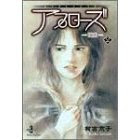
Yuri Light Novel: Escalation (From Cream Lemon)

November 4th, 2007

For today’s review, I would like to thank 828-san, who let me know that there was a novelization for the “Escalation” arc from the classic hentai series, Cream Lemon. (Here is a synopsis of “Escalation” and the other Yuri(ish) episodes of CL.)

(BTW, when I use quotes around the title, i.e., “Escalation,” I am referring to the anime or the story in general; when I put the title in italics, Escalation, I am referring to the novel. Just to be clear.)

In and of itself Escalation is not a particularly unique or worthy story, but when you consider that it is, in all likelihood, the direct ancestor of both Maria-sama ga Miteru and Strawberry Panic, it’s worthy of note. Plus, it wasn’t too bad, as porn goes. :-) The novel pretty much follows the story of the three “Escalation” anime episodes, with a bit more depth for each character (except for Midori. She gets one line of character development.)

Okay, so the story follows Komatsuzaka Rie, as she leaves her home where her tutor has broken her heart by sleeping with her mother, and transfers to St. Azaria Jogakuen, the typical private Catholic (aka Mission) school for rich girls. Instantly, she is captivated by the Student Council president and classic Japanese beauty, Hayakawa Naomi.

In the anime, the bit with Rie’s tutor is recounted in two still frames. In the novel, we get a bit more detail about Rie’s feelings for the college student who is her tutor, along with a gratuitous masturbation scene, just so you know it’s desire, and not just a crush. When she discovers her mother and tutor, of course we get more detail, but ultimately, it’s not her mother’s or tutor’s betrayal that bugs Rie…although it does…it’s her mother’s relationship with her father that just fills her with gall. She realizes that her father knows, and yet both parents act like there is nothing wrong. She can’t stand it, and feels that she MUST leave the house. And yes, the tutor’s behavior makes her swear off men.

When she arrives at St. Azaria, we learn a few things of significance, all of which were in the anime. Rie is an excellent student and a brilliant pianist. But the one thing I liked that was different – and pretty much the *only* difference between the novel and the anime, was that Rie is no shrinking violet. She sees Naomi up there addressing the class and her thought is something to the effect of “I want one of those for a lover.” And from that point on, she actively pursues Naomi. It’s a small change, but a cool one. In the anime, she’s passive, but amenable. In the novel, she knows what she wants and gets it. She wants Naomi. And she gets her.

As in the anime, we are introduced to weirdo Midori in class, where she “saves” Rie by answering a problem that Rie is too distracted by lustful thoughts of Naomi to solve. And, as in the anime, Rie’s first full night with Naomi includes Midori, some light bondage and a dildo. So romantic. ^_^; I have to mention this – in the scene where Rie is “assigned” to Naomi’s room and Mari, her temporary roommate, is sad that Rie is leaving now that they have become friends, Rie is out the door while Mari is still talking. It was absolutely hysterical.

The second episode of the anime covers a special invitation after a piano competition from Naomi, who has graduated. Rie is taken by Midori to the Hayakawa family summer home and immediately involved in a BDSM scenario that includes her ex-roommate Mari and Naomi’s boring little brother Akira, while Naomi’s father watches and uses Midori as a sex doll.

We also learn that Rie is now not only a successful pianist, but also the top student in the school and the incoming President of the Student Council.

I need to set that all up for you, because it’s the outcome of what I actually thought was the best scene in the book. Naomi goes to her father to ask for use of the summer home. Her father is a bit put out because, since Naomi’s mother died no one has used it. And here’s why – Naomi’s mother was a S&M ojou-sama who had orgies there, with young men to service her. Dad knew about these, but he loved Mom, so he didn’t try and stop her. Mom was deeply unhappy and drank herself to death. Dad did love her, but he loathed her too, and didn’t try and save her, so he avoided the summer house and had women of his own in their main house. Okay. So. Naomi says to him, I’m just like both you and Mother. Like Mother, I enjoy BDSM and multiple partner sex. Like you, I prefer young women. You two made me what I am. And so, I want the summer house for *my* kind of party. Not surprisingly, Dad nearly has a heart attack at all this frankness.

Naomi continues: Midori, who has a serious father complex, has the hots for you and wants you to be there. (There it was – all of Midori’s character development, right there) and I want you to bring Akira, because he’s a spineless nothing and we both can’t stand him. Maybe – although probably not – I can make a man out of him.

It’s probably not a good thing that I thought this was the best scene in the book. LOL No, seriously, I loved Naomi just laying it out on the line like that.

So the “party” proceeds as in the anime, with crashing thunder and lightning as a backdrop.

The end result of all of it is that Naomi leaves Japan and goes to Paris to find herself and leaves Rie to have her school life without complications. Mari, Midori and Rie become close friends. Mari keeps trying to throw herself at Rie but she, still obsessed by Naomi, doesn’t bite. Midori (who seems to favor sloppy seconds) is glad to pick up the slack. Although we don’t see them on screen, as it were, Mari and Midori become an item.

In the third section, Rie is now a third-year and is the object of desire of first-year Kurimoto Arisa. As Rie had with Naomi, Arisa now pursues Rie with vigor. Rie finds herself taking the lead, but they are interrupted by Mari who drives Arisa out of their room in a fit of jealousy. She admits that she’s been sleeping with Midori, but she really wants Rie. After they sleep together, Mari confesses that she’s leaving the next day for LA, because of her family situation. She leaves and Rie hopes to see her once again, but probably not.

Rie moves on to graduate, and is excited beyond belief to find an invitation from Naomi, who has returned to Japan, waiting for her. Rie goes to her home to find that her graduation present from Naomi is Arisa. Rie enjoys her present, then retires upstairs with Naomi, while Midori and Arisa continue. All of this is in the anime, as well. The only difference is that the evening ends with the four of the sleeping (well, snuggling and sleeping) in one bed, until dawn.

Before they make love, Naomi and Rie talk. Naomi confesses that she won’t be returning to Japan anymore. Being here – being around her father and brother – brings out bad things in her and she doesn’t want to be that person. She’ll be returning to Paris, where she is very happy. But that she looks forward to following Rie’s career as a pianist and one day, when they meet up again, she can introduce Rie to the people she knows as her lover.

As in the anime, Rie goes on to be a splendid Student Council President, with many fans, Arisa chief among them. When she graduates, she leaves behind a legacy for Arisa to continue. The anime ends there, but the novel goes on just a bit, so that we can see Arisa, now President, admired and desired by all the underclassmen, but also with a special pet, to whom she passes the legacy. It’s kind of dumb, but I liked that we got to see that this whole cycle continues as a tradition. I have no idea why I liked it – I just did. :)

The language of the novel is flowery. Literally. They play with each other’s “buds” and they blossom and bloom all over the place. The author is a woman (or at least uses a woman’s name) so the prose used for the sex is both sensitive and slightly purple…or should that be florid? Anyway, it tends towards girly melodrama instead of stark porninshness. I think it fit the story rather well.

The novel has both color and black and white pictures. These are very in the style of Cream Lemon and so, pretty awful art. ^_^

Now, in the beginning, I made the comment that this series is the direct ancestor of both Marimite and Strawberry Panic. That might seem an outrageous claim to make, although anyone who knew of “Escalation”s existence assumed it was an antecedent of Strawberry Panic, so I thought I’d mention a few similarities. Aside from the obvious lesbian relationships at a private school for rich girls. Because that didn’t originate with “Escalation,” it originated with Yoshiya Nobuko’s Yaneura no Nishojo. (As far as I know. There may be an earlier example and if you know of it, do tell me!)

Let me just pull out a few points to consider. None of these are definitive. Here are *some* of the reasons why.

In Escalation, we see a strong tradition of the upperclassman/lowerclassman relationship at Azaria that is passed down, which is very similar to both the soeur tradition of Lillian and the Etoile tradition of Astoria. But that is merely a pastiche of the larger, more common sempai/kouhai tradition in Japan. Hardly significant.

In Escalation, the first significant scene where Naomi shows interest in Rie is in the music room where Naomi comes in to watch Rie play, sits down next to her and makes her explode with desire. In Marimite, as Yumi avoids the other students because she is torn by her desire to become Sachiko’s soeur and her desire to not be forced to become her soeur, Yumi is sitting at the piano when Sachiko comes in and they play a duet, while Yumi’s heart pounds as Sachiko touches her. Likewise, in Strawberry Panic Shizuma and Nagisa share a tense attraction as they play a duet in the middle of the night at the piano.

The music room scene leads Naomi to take Rie on a tour of the school. In the chapel, she fiercely embraces a very willing Rie – and gets pretty far pretty quickly, until they are interrupted. Naomi decides at that point that she must make Rie hers. In Strawberry Panic the outcomes of the tour are different for anime/manga and novel, but in all cases Shizuma attempts to kiss Nagisa. In the library, not the church. But they do tour the church, while Shizuma seduces Nagisa. In the SP novel, it is during this end of the school tour where Shizuma determines that she will make Nagisa her partner for Etoile. In Marimite, it is *in* the church that Sei attempts to kiss Shiori and fails, receiving a slap for her efforts. But they do kiss, eventually, outside the church – and don’t think that Konno Oyuki did that accidentally.

Now it’s true that these are broad examples of what appear to be similar tropes and easily refuted. But I am confident enough in Oyuki’s writing to believe that she knows Escalation and I am 100% convinced that “Escalation” was being directly parodied by Strawberry Panic as much as any other of the dozens of Yuri series it clearly parodied.

Ratings:

Art – 4
Story – 6
Characters – 6
Yuri – 10
Service – 10

Overall – 7

So…when I read Escalation I had to take my hat off in respect for an elder of the genre.

Plus, as I said, it was pretty good for porn. ^_^
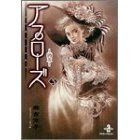


Yuri Manga: Applause, Volume 3 (Japanese)

October 10th, 2007

For previously published summaries and reviews of Volume 1 and Volume 2, click the respective links. Now here we are, at Applause, Volume 3.

Applause began its life as a very shoujo manga, but once it hit New York grew up into something thoroughly josei. Both Shara and Shelle, aka Junaque, have left their childhood behind them and so has the artist. Art, story and sensibility have all moved on from the world of the ridiculously privileged atmosphere of a European girl’s school into a still somewhat enchanted, but more realistic look at show business in New York City. (Back to that “practicing ’til you puke” thing. I don’t mind watching people becoming the best of the best – as long as they work for it. No idiot savants with magically appearing mad skillz need apply.)

Shara, having decided to never again wait for Shelle, moves in with a gay couple, Jon and Chris, and their dog Oscar. She returns to the dance studio at which she previously studied and her life, which had been a storm of emotional upheaval, calms down again into something she can live with and in. To add to her happiness, she meets a man, Shalat, who is perfectly compatible with her as a dancer, as a friend and eventually, as a lover. Shalat is part Asian Indian, and he loves his heritage. His apartment is decorated to reflect this, and Shara loves how he is an amalgam of places, times and dreams. The two of them are extremely happy together.

When an open audition announcement goes out for brand new Broadway show, Shalat and Shara vow to train and audition together, which they do. And together they make the final round. As the final auditions begin, it is announced that, yes, the auditions are partly to fill background dancers, but one role will be a lead role. To judge who is most suitable for the role, the show’s other lead actress is brought in. As Shalat watches, Shara goes pale, and seems to become completely paralyzed. The lead actress, of course, is to be Shelle Bejart.

When Shara’s name is called, Shalat calls her name too, trying to keep her by his side. Shara completely breaks down, as Shalat tries to coax her into telling him what is wrong. With tears streaming down her face she apologizes and leaves him, to follow Shelle after all, hating her own weakness the whole time.

Shortly thereafter, it is announced that Shelle and Shara will be starring in the most anticipated new Broadway show, “Modern Dancer.”

The story of “Modern Dancer” is about a former dancer Maria, played by Shelle, who has become crippled (emotionally and physically). Another dancer, Tracy, tries to convince Maria that she can still dance. In the climactic scene, Tracy takes Maria into her arms and they dance, even though Maria cannot stand. It’s pretty great melodrama and the art for this scene is awesome and over-the-top every time we see it (and we’ll see this scene *a lot.*)

At first, it’s a terrible fit. Shara and Shelle aren’t speaking and they don’t gel well at all. The media starts to report how they think Shara is a bad choice for the role of Tracy. Whether to provoke Shelle or Shara or just to cover his ass, Georges brings in a young male dancer, Fred – who is instantly irritating – to potentially take over the part of Tracy, if Shara can’t get it together.

Shara takes some time to visit Alphie and Gerald and the gang and get her head on straight.

The media uncovers the fact that Shelle and Shara went to school together. Shelle says that Shara was just another underclassman, that they had no special relationship. Shara, on the other hand, when questioned about Shelle, comments on camera that she never knew anyone with the name “Shelle Bejart” at school.

The two of them continue to breakdown in pieces and the show starts to fall apart too. One day, just as in the last volume, Georges takes Shara out on his yacht. This time, she’s also accompanied by Oscar the dog and when he jumps into the water, so does she. Georges also dives in and again, kisses her, but this time, she doesn’t seem to be affected by it at all. When they arrive back at the marina, soaked to the skin, Shelle is there. She gives them both the cold shoulder.

Georges continues the losing battle of wooing an increasingly frigid Shelle. He holds a big birthday party for her, which Shara attends, but can’t stand to watch the circus that Shelle’s life has become. She leaves, but Shelle follows her in her car.

Shelle confronts Shara and they lose it completely at one another. Shara runs off in anger. Shelle, trying to catch up to her, gets into an accident, which Shara witnesses. Forgetting her anger at Shelle, she goes running over, screaming Junaque’s name, and drags a semi-conscious Junaque from the car. Junaque/Shelle and she cry together. That night they end up back in Shelle’s shore house and once again, they have a few days of bliss together.

Back at rehearsal, no one can figure out why, but suddenly, they work perfectly together. The climax of the play is climactic and breathtaking. Fred is defeated – Shara owns the role of Tracy – sadly, he sticks around anyway.

Meanwhile, back at home, Chris has collapsed. No one knows why, but he is in the hospital.

Then the media attacks again – this time with a call to Shelle. Is it true, she’s asked, that you are Shara were lovers in school? Poor, fragile, confused and weak Shelle, lies. Then tells Shara to stay away – she doesn’t want the media to know about them. Rejected for the third time, Shara falls apart. Again. (It’s true – she was the first to reject Junaque, but I think she’s paid the price, really…)

But the show must go on – and it does. In the last chapter we see the whole of “Modern Dancer,” but it’s almost a reflection of Junaque and Shara’s lives so far. And together they dance their feelings out in a beautiful final scene. “Modern Dancer” will obviously be a success.

End of Volume

So, yes, heaps of melodrama. I feel bad for Shalat, personally, because he was a nice guy and didn’t deserve the drama. Shelle and Shara clearly do deserve one another. Oh, and don’t feel *too* bad for Georges – there’s a sense I get that he and Fred were very close. ^_^

Technically, the artist clearly hit her peak here. There’s none of the crowded panels and confusion of the first volume here. The only thing – and this is me being picky – is that the dance moves look dorky a lot of the time. OTOH, modern dance looks dorky a lot of the time. So there you go.

Ratings:

Art – 8
Story – 7
Characters – 7
Yuri – 8
Service – 3
Overall – 7

Volume 4 – anyone want to place bets on the ending? I bet you’ll never guess what happens. Seriously – go ahead and guess in the comments. (No cheating if you know. Only if you’re guessing!)


Yuri Manga: Mist Magazine

September 20th, 2007

I really don’t have time to review anything today, since there’s only ten days to go to our “Yurisai” event. Days right now are long, with tasks for Yurisai, then updates on the Yuricon website (Yuri Hime S, Iono-sama Fanatics and Hayate x Blade Drama CD – all 2nd volumes – up on the Shop now!), then getting copies of Yuri Monogatari 5 out in the mail. So I busted my hump today to get everything done early, so I could sit down and relax with a “new” issue of Mist magazine. Then I thought, hey, why not tell you all about it?

Mist was a “Ladies Comics” manga magazine that ran in the mid-to-late 90s. “Ladies Comics” are often adult in nature, with a target audience of adult women. Mist was, basically, lesbian porn drawn by women, for an audience of (presumably straight) women.

The covers, as you can see above, almost inevitably featured Caucasian women who, to me at least, often look Russian. I’m guessing that these are just stock photos that were bought because they look exotic. And the “best friends” poses and early 80s clothing cracks me up.

The stories almost always star an apparently straight woman who is (even if she doesn’t realize it yet) not satisfied with her life. If she’s in a relationship or married to a man, she’s usually just unhappy. Not always, but often. A lesbian love affair usually makes her realize what she’s missing. Sometimes it ends in a happy threesome, but more often, she goes off to live a happy lesbian life.

The lesbian character is more ultrafemme than butch, but sometimes there’s a genuine butch lesbian. The lesbians are *usually* pretty normal and not pulp fiction melodramatic, but there’s a few classic exceptions. (But only one knife fight that I’ve ever read.)

Sometimes the lesbian couple marries a gay couple to shut the families up.

Sometimes, they fly off “to America.”

But sometimes, every once in a while, there’s a story that just about two women who love one another. And who have sex. (They all have sex. It’s a porn mag. Duh.) Not surprisingly, I like those stories best. Second best are the women who aren’t in relationships, but just are swept away by their new-found love.

In almost all cases, the story begins with a sex scene. Then we get the set-up for the story, or the flashback of how the couple met. Then the DRAMA, plus crisis dujour, then more sex. Then they make up and sex. It’s formulaic, but it works for me. ^_^

In an effort to let people enjoy this fine crap, my entire Mist collection, including the one I just got in the mail today, will be part of the Yuri Manga and Doujinshi Library at, you guessed it, our Yurisai event. This is pretty much the only time I plan on ever letting these books out of the house, so don’t miss your chance! (You’re only other option is to get a lunch invitation, and you know how picky I am about those.)

Some of the art in Mist is awesome, some of it is not. Most of the stories are silly, but you know, I like them anyway. They are silly in a sincere and appealing way. And let’s face it, bed talk is absurd, no matter what the language.

Now, I’m going to go read the story of the unhappy housewife and her completely unethical affair with her gynecologist (and her sudden discovery that she’s had a post-miscarriage memory loss, zOMG!)

Ratings:

Art – as bad as 4 and as good as 9, averaging at about 7 or 8, depending on the issue
Story – Silly, formulaic porn – 8
Characters – Naive straight women, worldly hypercompetent lesbians – 8
Yuri – 10, because most stories end with love.
Service – porn, duh – 10

Overall – 8

Other than the few really manipulative or unhappy stories, this is happy lesbian porn. I really like it.


Yuri Manga: Claudine

July 30th, 2007

In the late 1960’s, women began entering the manga industry in Japan with a vengeance. Until then manga – even manga for girls – was drawn by men. The women best known for making a splash in the manga market are known collectively as the Magnificent 49ers, because they were all born in the year 1949. The 49ers made a huge impact, and they are frequently credited with the creation of shoujo manga, that is, comics by women for girls.

In the early 1970’s many women experimented within this new genre – it is at this time that the first manga that would later be seen as the origins of today’s Boy’s Love (Tomas no Shinzou) and Yuri (Shiroi Heya no Futari) were drawn. Following these were many manga in which gender roles, crossdressing and same-sex love were dealt with. We now look at many of these stories as early examples of the Yuri genre.

Ikeda Riyoko, the author of two of those manga, Oniisama E and Rose of Versailles, was clearly fascinated with gender. In both of the above there is a main character who is a woman, but dresses and acts like a man. In both cases this character is seen as physically attractive to the women around her. Both Sainte-Juste and Oscar have tragic endings, but both die free from regret and in love – Oscar with her long time friend and lover Andre’ and Rei, known as Sainte-Juste, with the young girl Nanako, who had freed her from the bonds of an abusive relationship with her half-sister.

Ikeda wrote another series dealing with a women who dresses like a man, Claudine. It is quite possible to call this a manga about a transgender character, as much as it is a Yuri manga. There’s no way to know whether Claudine’s desire was to be able to love women freely and dress in the clothes of and have the prerogatives of a man – like many butch women of her time – or whether she truly wanted to become a man. Either way, this classic Yuri manga is a pretty amazing, but painful, character piece.

The manga begins as a doctor of psychiatry discusses the case of Claudine, a patient of his for many years. She was brought to him as a young child, when her proclivities for dressing and acting like a boy were already well established. The doctor is very sympathetic – he never really tries to “fix” her, instead providing her with a non-judgmental ear for her to vent to.

Claudine’s first love is a servant, Maya, who returns her love unconditionally. But they are discovered and Maya is sent away, leaving Claudine to begin to loathe herself and her attraction to women. As a young woman, Claudine heads to the city where she once again falls in love with a woman and is once again betrayed – this time by the girl herself. Claudine, who comes from a family of power and wealth longs only for love. But she will not find it and in the end, she can only see one way out. The doctor learns of her suicide on the phone and mourns the passing of the tormented girl.

It’s a very Well of Loneliness type story, in which the “moral” of the story appears to be that women who love women will die horrible deaths. An ending that was stock in the world of lesbian romance until … erm … okay, it’s still pretty stock. But for any women who were loving women in the middle of the sexual revolution of the 70’s, reading Claudine must have come as a “whoo-hoo!” moment. Think about it – what’s the one thing everyone wants from the universe? Everyone wants to see themselves reflected in some form of media. Whether it be TV, movies, song, manga, what have you – the one thing we all want is to see some sign that we *exist.* That’s why gays and lesbians trawl through media pointing out even the “are they or aren’t they?” characters. Because the more examples of our selves we can find, the more validated we feel.

And in the 70’s, in the middle of a burgeoning wave of manga for girls, to those women who had loved or did love another woman, something like Claudine would be a life-line of external validation.

No, it didn’t have a happy ending – manga rarely had happy endings in the 1970’s, regardless of the romance. Or at all until the 90’s really. And even now, the majority of anime and manga favor ambiguity and resets over actual happy endings with resolutions. (There’s all sorts of cultural reasons for this that I won’t get into here. Ask me about them some day when we meet.) The bottom line is, Claudine probably made a bunch of early otaku lesbian and transgender (or those who wished they could transition) folks very excited.

So, whether you perceive Claudine as a lesbian narrative or a transgender one, it’s a pretty significant manga. Personally, I like it. Like Well, with which it has so much in common, it holds a special place in my heart.

Ratings

Art – 8
Story – 6
Characters – 6
Yuri – 8
Service – 2

Overall – 7

I like to think that, when young Satou Sei was combing literature for reflections of her own feelings and she came across Well, she might have also come across Claudine and, like myself, rejected the tragedy, even as she acknowledged its place in her personal history…. Us Comp. Lit. majors must stick together after all. ^_^


Yuri Manga: Applause, Volume 2

July 10th, 2007

Applause, Volume 2 picks up just where we left off at the end of Volume 1, with Shara in New York studying dance and her “show business” friends trying to start up a new show.

While Shara glows with effort, our attention is turned to the hottest new producer on Broadway, one Georges Bejart. Yes, the very same Georges who was Shara’s old flame Junaque’s fiancee’. Small world, neh? Unbeknowst to Shara, Junaque and Georges have come to New York. Georges puts himself in Shara’s way. They reunite – somewhat ambiguously. Georges invites Shara to come out with him on his yacht. They reminisce about life in Belgium, talk about Junaque and in a weak moment, they kiss. Shara takes herself off alone after the date, obviously regretting that kiss.

Walking alone at night, we follow Shara’s long shadow as she returns home. Her steps slow down, stop, and we see her face in stunned horror. But what she is gazing on is not a stalker or rapist – we look past her shoulder to see huge posters of Broadway’s newest star, Shelle Bejart about whom we have heard so much. To Shara’s shock, there, staring down at her, is Junaque.

This was absolutely the BEST moment of the entire series. Great visual, great spin on what was a sort of tired scene. I recommend reading this volume just for this moment.

Shara returns to her apartment, surprising her friends with the statement that she will, after all, return to the stage. Immediately, their play, “Success,” becomes a success.

Georges is still being rebuffed by Junaque/Shelle, who has taken up drinking, as well as becoming unpalatably spoiled. But we can see that it’s all because of her breakup with Shara. Georges can too and it isn’t making him happy. He pays a visit to Shara after her show to give her flowers, but she’s more interested in what he can tell her of Junaque than in his good wishes.

Quite accidentally, Junaque learns of Shara’s “Success” and is just as shocked as Shara was to find that she is in New York. She goes on stage that night, acting with all her heart – not for the audience, but for her lost love. (One of the charming things about Applause is that we get to watch the actual plays. This becomes more important to the plot as time goes on.)

Georges talks to Shara’s friends Alfie and Gerald, about producing a play with Shara in it. Alfie is asked to write the script. Georges also starts putting pressure on Junaque/Shelle to marry him, since that was a condition of him bringing her to New York.

Now that she knows that Shelle, nee’ Junaque is in the city, Shara tries to see her and bring her flowers after her show, but she can’t face Junaque, so she runs away.

The next chapter opens up – as the next several will – with newspaper and magazine articles on the two women, to show their parallel path to stardom. So close, they all seem to say, but so far.

It has been decided, the two will star in a play together, produced by Georges. They are invited to be on a TV gala affair hosted by an incredibly talented and beloved older actress, Katherine Reed, (who apparently has been searching for a woman who is very important to her for many years.) As part of the show, they’re given a basic plot and a setting and asked to quick read a script, then ad lib the rest of the scene. The scene appears to be about two jealous lovers….their performance is unsettingly realistic. Everyone watching it flipped out – it’s like they *were* jealous lovers. But that can’t be – this is the first time Kisaragi Shara and Shelle Bejart have ever met!

The show ends with Reed singing a few songs and bidding show business goodbye. It’s a huge hit. Shara watches as Junaque and Georges drive off together. In the car, Junaque opens a book that Shara has given her – it’s the script from Manon Lescaut, the play they had performed together in school. Inside is a note…

Junaque tells the driver to stop then, despite Georges protests, gets out of the car and runs back and into Shara’s arms. Without a word to her friends, Shara and Junaque hop into a cab and take off. They run, as they did when they were young, to the shore. After many a confession, of love, of loss, of forgiveness, they spend the night together in a house by the ocean that Junaque has conveniently bought.

But. Georges finds them there, and tells Junaque to return with him, she has a show to do. Junaque writes Shara a note to wait for her and leaves. When she wakes up alone, Shara rejects the note – and with it, Junaque, vowing to never wait another second for her. Junaque calls the house, but no one answers. Shara is gone.

Meanwhile, the older actress who hosted the TV show, Katherine Reed, gets news of the woman she has been searching for for years, her beloved Maggie….who died three years ago.

The books ends with Broadway at 8PM, when fortunes and careers end and begin.

While not a happy little volume, this volume is *good*. Art, story, character, all good. It is admittedly a little high on the melodrama, but it’s a romance manga – it must be forgiven as a handwave. Can anyone say “soap opera?” ^_^ There’s also hardly any sign of the shoujo manga it had been. This manga is all josei. Everyone looks and acts all grown up. Seriously good art – that one scene with the posters is worth the price of admission right there, and Shara and Junaque get one blissful night together. IMHO, all quite excellent.

Ratings:

Art – 8
Story – 7
Characters – 7
Yuri – 9
Service – 3
Overall – 7

Don’t get too weepy yet, there’s even MORE melodrama to come! ^_^