Archive for the Guest Review Category


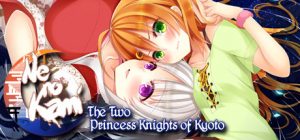
Yuri Visual Novel: Ne no Kami – The Two Princess Knights of Kyoto, Guest Review by Louis P

January 24th, 2018

Welcome to another Guest Review Wednesday here on Okazu! I am pleased as punch to welcome back our good friend, Okazu Superhero and Guest Reviewer Louis P. Take it away, Louis!

Ne no Kami – The Two Princess Knights of Kyoto, a visual novel by Kuro Irodoru Yomiji, starts of promisingly enough. Len Ese is a compelling and interesting protagonist, with the ability to sense the presence of living things. Before you can say ‘ordinary high school student’ she is dropped into a new life and a new home just outside of Kyoto. Reuniting with her childhood friend Shinonome Sarume she is whisked away to a secret village, the headquarters of Kunai a secret organization of sacred sword wielders who have promised to fight Ayakashi that threaten the human world. Len learns that Kunai wants her to help them fight these dangerous Youkai, she even gets a cool magic sword that only she can wield like her friend Shinonome who also works for Kunai. In fact everyone in the small village she used to visit growing up works for this secret monster fighting organisation.

Now if that last paragraph makes you think that Ne no Kami like some kind of fun supernatural version of Thunderbirds, it isn’t. In fact it is quite the trip to watch Ne no Kami systematically make its setting as pleasant to read as dry white toast. The writers were clearly fans of the urban fantasy visual novels that have long periods of exposition mixed with everyday life (Aoi Shiro) but they seem to have missed that what you then need to do is populate that everyday life with interesting characters and make that exposition meaningful to events we have already experienced early on in the story. No, instead Ne no Kami decides to front load its entire mythology right from the get go and when it is not doing that the characters’ daily lives feel truly banal. Quite an achievement when Len is moving into a new home, re-uniting with two childhood friends and learning about a secret youkai war but all these scenes are populated with characters that have such low energy it is hard to stay awake never mind care.

And that is a pity because…

Spoiler warning here but seriously you are not missing much and knowing this is probably the only reason to buy this visual novel. If you really do not want to know, skip to the second set of asterisks.

****


It turns out that the war the Ayakashi have been waging against humanity is not as simple as Kunai have been making out. Indeed it seems that Kunai is pretty much the illuminati and the war is not so much to save humanity but to expand their control over it. In the end Len, Shinonome and their remaining allies must find their own way to survive after being betrayed by the very people who taught them and us about the entire setting. This throws all that we learned in the first third of the story back into uncertainly for both the characters and the reader.

****

It is a nice twist even if the people that will betray Len are pretty obvious from the moment you meet them as well as those Ayakashi that will prove to be not blood thirsty monsters. However this twists power relies on how invested we are in the lie we are fed at the beginning which, as I said, was dull and boring and I did not care about. So while this sudden twist feels inspired it did not put the work in at the start to make us feel invested in the status quo. So I was far more relived to find out about all the deception and that one of the most annoying characters was evil enough to deserve what was coming to them.

‘But what about the Yuri?’ I hear you ask, now that is actually a bit more interesting although you have to pick it out of the gizzards of the poorly told story and the character designs that are ridiculously infantile. What is nice is that both Len and Shinonome have their own love interests. Uzume Sarume and Ruka Himemishi: both of whom are given serious significance in the story but are also lacking in nearly any kind of agency. It doesn’t help as well that Uzume is deliberately made up to be a shut in with a really creepy crush on Len that somehow blooms into romance while Ruka’s story is making you think that she is one kind of fetishised ill girl when she is in fact a fetishised traumatised girl and then one-upping how exploitatively traumatic they can make her back-story every two chapters.

Despite everything it does wrong I could imagine recommending Ne no Kami, five or seven years in the past. It is clearly trying and its heart is in the right place. I mean love between women is what saves people at the end and our heroes are two pairs of girlfriends but in this modern world with Kindred Spirits on the Roof, Butterfly Soup, Highway Blossoms and Ladykiller around there is just better stuff to spend your time and money on. If only this had been released ten years ago it could be something like Sapphism no Gensou. Yeah we read it despite all its glaring flaws but it was because there was so little else to read. Today however I have no such excuse.

Ratings:

Art – 3
Story – 5
Characters – 2 (I had to look up everyone’s name while writing this. That should tell you what you need to know)
Yuri – 8
Service – 8

Overall – 5

Erica here: I would like to thank Denpasoft for the review copy of Ne No Kami. It was much appreciated! And many thanks to Louis for another cogent review.


Attack on Titan Anthology Manga (English) Guest Review by Eric P.

January 10th, 2018
Happy first Guest Review Wednesday of 2018!  Thanks to Okazu Patrons, this is also the first paid Guest Review ever here, hopefully, the first of many. I cannot think of a better person to be our very first paid reviewer here than our longtime supporter and friend Eric P.! Please give him your attention and a few kind words and away we go!
 
You know a series is a huge popular hit when the manga remains bestselling to this day, when it inspires a big-budget (underrated) live-action movie adaptation, and when a devoted fanbase (im)patiently waits for the next anime season to adapt the next arc to the screen no matter how long the gap between. Another sign is when manga authors/artists get together and create a special anthology of original stories paying tribute to the series. But how often is it when western authors/artists do the same thing for the same purpose, and still under the original creator’s supervision? It does not get clearer than that in how successful Attack on Titan has been in achieving a cross-cultural impact.
 
The Attack on Titan Anthology is a collection of 12 personal takes by supposedly high-profile comics creators. I say “supposedly” because I confess I do not normally follow western comics and am unfamiliar with all the listed names, so I could really only judge this book by the content within once I open the cover. The results found are indeed diverse as well as widespread. 
 
Some titles are more lavishly illustrated than others, and some are more intriguing and poignant than others. All the dramatic stories are meant to take place in the manga’s universe. They may not be taken as “canon” per se, but their placement within the original continuity not only still feel like they make sense, but they also help expand on Hajime Isayama’s mythos. The first one, Under the Surface, provides a window to a world far more familiar to us right before the Titans begin their invasion. Another called Live and Let Die is about a Survey Corps member separated from her party outside the walls, before finding a group of other stranded Survey Corps members that chose to never return. Even though there is danger to be had dealing with the Titans, they ironically find more freedom outside the walls than they do within. One other standout is The Glorious Walled Cities, not a story but a field guide styled as blatant propaganda depicting the world within the walls as a paradise. The last entry, however, is disorganized and cuts off abruptly when the writer apparently ventured into confidential territory.
 
 
But the story relevant to Okazu would be Skies Above,written by Rhianna Pratchett and Ben Applegate, illustrated by Jorge Corona, colored by Jennifer Hickman, and lettered by Steve Wands. In a time before Eren, there was a female engineer named Lyla who also dreamed of breaching the world beyond the walls. This was when Erwin Smith was student-aged, long before the Survey Corps existed and when the Military Police was Law itself, and scientific bureaucracy prevented any and all technological innovation. Rene, a teacher acquainted with Erwin Smith’s father (both worked at the same school), on the other hand is content with the world they live in since they have everything they need. But Lyla recognizes everything as nothing but a cage to break free from, thus in secret she puts together a flying contraption to serve that purpose, seated for two. Rene, her confidante and lover, in the end resigns to Lyla’s wish as they make the attempt, and escape the Military Police’s clutches. Just from reading this, one could already assume this story about two people ahead of their time in an oppressive world does not have a happy ending. But depending on how one looks at it, especially with how beautifully drawn the final page is, one could still get a strange sense of alleviation that counters the usual Attack on Titan themes of cruelty and injustice.
 
But not all in this anthology is drama, it also balances itself out with parodies poking fun at the source material, some being far more amusing than others. In the original story, you know how the characters have a habit of consistently screaming out their dialogue? That gets spoofed here, and there was one other clever bit about how the title, Attack on Titan, actually does not make much sense when you think about it.
 
When this book came out last year, Kodansha had raised hype and excitement over it, yet in the end it seemed to garner a mixed reaction from its fanbase. Having read it just recently, I am surprised that it was not better received. Like with most anthologies, there are both hits and misses to be found, but it can really vary depending on the reader’s personal taste or expectation. Ask this reviewer, and there are a few stories I cared less than others, with maybe a couple I did not get at all, but there is too much more to like and appreciate. If you are an Attack on Titan fan, and are open to western interpretations—especially by artists that clearly did this out of passionate love for the original—you are bound to find at least a handful of titles to your liking, and even that still makes it worth the purchase for one’s collection.
 
Ratings: 
 
Overall-a rounded-out 8 (Solid without being completely perfect, once again due to personal tastes)
 
Erica here again: Thank you Eric for this look at something I would never have thought to take a look at. Which is exactly why I love Guest Reviews. Gail Simone, Faith Erin Hicks, Tomer Hanuka and Attack on Titan creator Hajime Isayama all have stories in this collection. Now I’ll keep an eye out for this. Thanks!


Akarui Kiokusoushitsu, Volume 1 (明るい記憶喪失) Guest Review by Bruce P

November 8th, 2017

 I’m headed for Massachusetts to eat and drink and talk queer manga at Harvard tomorrow, heavy-hearted with the fresh loss of my dear friend Bruce. I’d like you all to read this and lift a glass of something tasty to his memory.  Here is the final Guest Review by Bruce P.

So you bought a copy of Practical Problems in the Forbidden Art of Reanimation, only to find it has nothing to do with Sailor Moon Crystal – but you’re having fun with it anyway, following the step-by-step instructions. Your hand-stitched project is now lying shackled and inert on the slab; electrodes have been implanted; dynamos are screaming in anticipation; lightning is crackling in the midnight sky outside – when you reach step 37 and realize, shoot, you forgot to pick up a brain. Well, no biggie. You pack a light snack and head down to the local morgue.

It’s dark as you creep in, hacksaw in hand, and begin opening the frosty vaults. You work at peeling back the rubber sheets – they tend to stick – and look over the corpses, trying to identify just the right kind of brain to harvest for use in…Maxine. But can you really gauge the quality of what’s inside those craniums from their frozen faces alone? Fortunately, you’ve broken into the Yuri wing, and your years as a fan are your guide…


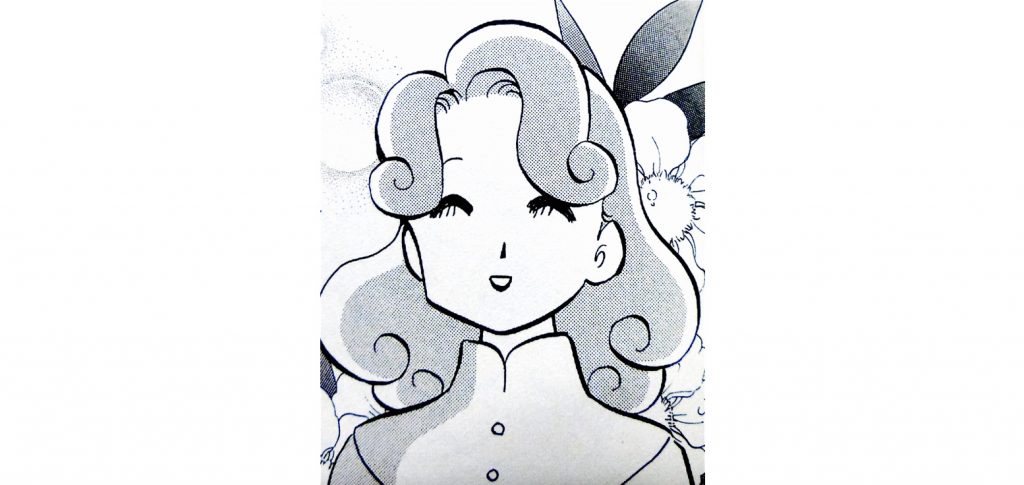
Vault #1. 1940’s hairstyle done up in Play-Doh. Obviously a blithe Takemoto Izumi character. Too whimsical. Next.


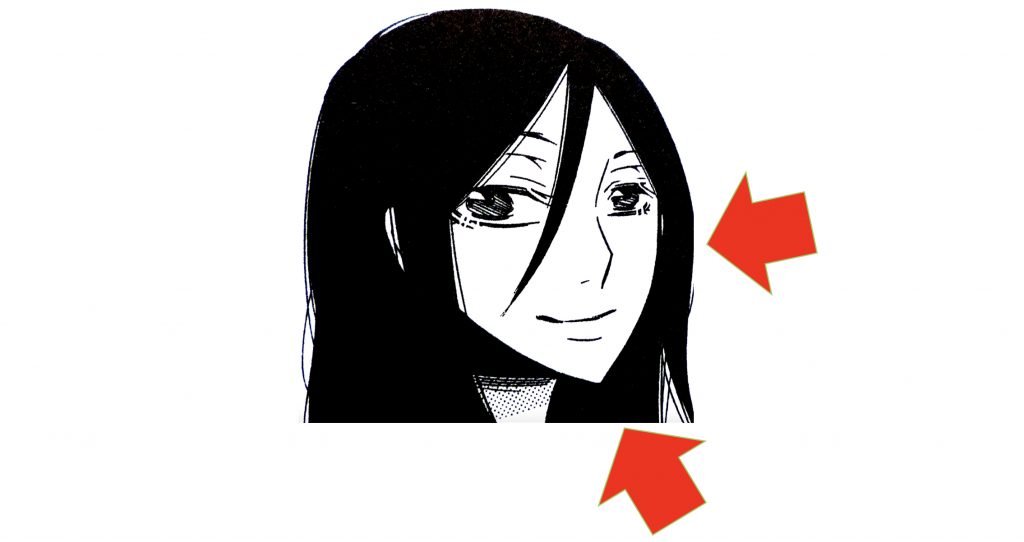
#2. That aquiline nose and cold-chisel chin – clearly from the Takamiya Jin family. Bitter chocolate, when you’re looking for Milk Duds. Next.


#3. Eyes like pitted olives in search of a Martini. Must be a Morishima Akiko character. Too Perky.


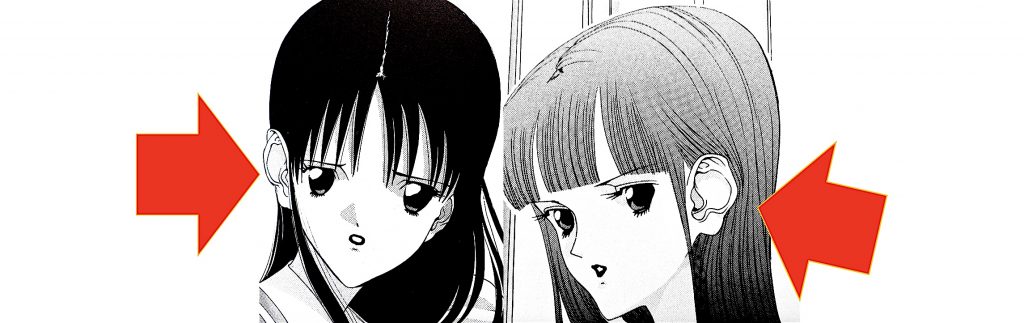
#4. A double, how romantic. But cauliflower ears from the boxing rings of Hell – Oku Hiroya’s spawn of course (remember Hen?). These two have been on ice a while. Too pendulous (oh, you do remember Hen).

You are about to despair, when the final vault reveals a truly gruesome sight:

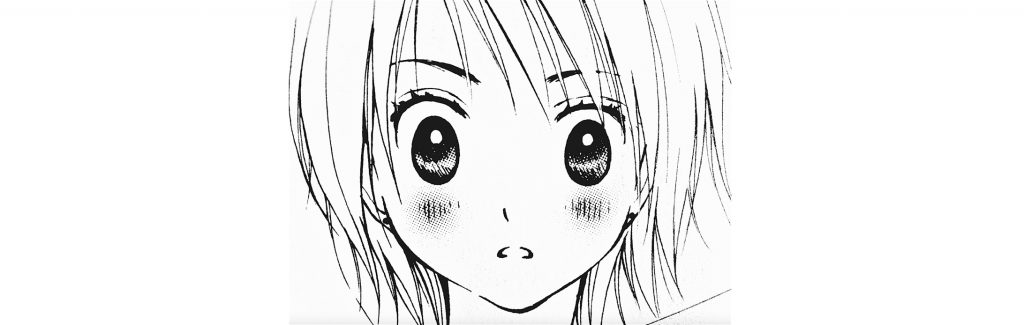
#5. Mouth gaping like a dirigible hangar – the unmistakable trademark of an Oku Tamamushi character. Overwrought, and potentially clinically insane. But on the plus side, this brain fits in a sandwich bag.

Excellent.

The preceding bit of seasonal froth highlights a curious fact: Oku Tamamushi has clearly made wide gaping mouths his personal artistic trademark. His work is instantly identifiable. This clever branding was a true flash of inspiration, the kind of thing you just don’t pick up in art school (not if it’s accredited). And he really gets to practice his yawning orifices in the 4-koma series Akarui Kiokusoushitsu, Volume 1  aka Cheerful Amnesia, (明るい記憶喪失). The title is honest and accurate. The cover character is in fact a violently cheerful Yuri amnesiac, and that is pretty much all there is to the story. It’s a long a haul to the end of the volume.

Arisa and Mari have been living together for some years. But as the story begins Arisa is lying comatose in the hospital, suffering from a severe case of plot device. When she awakens, she has no memory of Mari or their life together. Mouth wide open she wonders who this lovely, unfamiliar, unsmiling woman is sitting by the bed. When Mari informs her she’s her lover, Arisa’s little brain short-circuits. She blushes, shrieks, squirms, squees, wriggles, and generally provides evidence as to why Mari never once smiles through the rest of the Manga. What Arisa doesn’t do is close her mouth. Not now, not when they head home, not when she sees their big fluffy bed. Not much of ever, actually. Oku Tamamushi has a brand, and Arisa is intent on getting that contract for Volume 2.

From this point on Arisa has to get reacquainted with the intimacies that go with living as a couple. She doesn’t manage it well. She actually doesn’t manage it at all. She’s just so embarrassed and excited and squirmy to know that her lover is this lovely, unfamiliar, unsmiling woman (wait, wasn’t that page 1? Yes, and many, many pages beyond). It’s heavy going for Mari as they work their way from holding hands to soapy bath-times to the frilly underwear.  It’s heavy going for us all.

There’s one bright spot in all this. Mari heads out of the house for work in a sharp suit; Arisa follows her to find what office she works in. She is shocked to discover that Mari is in fact a welder. All she can do is stand with (guesses?) her mouth open. But really, there are far too few Yuri stories that feature skilled metalworkers, just my opinion. Obviously, even fewer good ones.

Arisa blunderingly (she really is a pill) outs Mari to her fellow workers. But the old guy in the shop is cool with it, to Mari’s relief, and the creepy young guy is just sad because he had a crush on her.

The essential Arisa is revealed in a flashback of how the two met. Mari is working the counter in a fast food place. Schoolgirl Arisa takes one look and is rooted to the spot in an agony of open-mouthed love. She returns to stare again day after day. Then one time Mari is not there, and Arisa, bewildered, simply sits faithfully waiting, pining away, hour after hour, heedless that the trains have stopped running. Mari shows up late and lugs the poor passed-out thing home. So, there it is, she’s Hachiko. If she was fuzzy it might be cute.

Four-komas are essentially newspaper comic strips, which are of course meant to be read on a one-strip-a-day basis. The majority of 4-komas are best approached in this fashion. This one would benefit from much greater intervals.

Ratings:

Art – 5.  Fairly routine 4-koma material.
Story – 4.  Without the amnesia, this could be a low-budget parody of Minamoto Hisanari’s Fu-Fu – the two women living together in each are even similar ‘types’: the free-spirited flake passionately in love with her taller, serious partner. But it does have the amnesia. And so much less.
Characters – 5.  A welder and an Akita. Unique, possibly, for a Yuri series, but not entirely healthy.
Yuri – 9.  A 10 would be %100 good Yuri. This is just %100 Yuri.
Service – 8.  Less in what is actually depicted, than in servicey situations, such as Mari arriving home with injured hands, requiring Arisa to wash her in the tub (blush, squee, squirm).

Overall – 5. This actually got a bump up to 5, less on merit, really, than as an encouragement for more Yuri stories with professional metalworkers. Or electricians. That just came to mind. Must be these screaming dynamos.

And if you think disinterred body parts electrified to walk the night are grotesque, consider that Akarui Kiokusoushitsu Volume 2 is now out.


In Memoriam, Okazu Superhero Bruce P

November 7th, 2017

Hi folks. I have no idea what to say here. This is the second time I’ve lost someone important to me, someone who I met because of Yuri. Okazu Superhero, Guest Reviewer and my very dear friend Bruce Pregger has passed away.

If you’re a long time reader, you’ve read many of his hilarious reviews and his event reports (I’m putting them all, and this post, into a new category, so they can be found simply) here on Okazu. He’s traveled with me to several continents and I’m going to miss him so much, I can’t even express myself.

Ah, crap. I hate this. 

I had a guest review of his all scheduled to run on Wednesday, it will still run, but dammit, Bruce, you were supposed to go with us to Tokyo in 2 weeks. Dammit.

Goodbye Bruce, you will be missed.


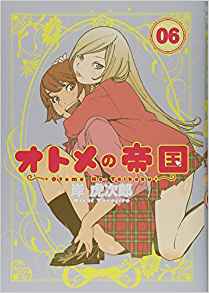
Otome no Teikoku Manga, Volume 6 (オトメの帝国 6) Guest Review by Mariko S.

August 30th, 2017
Welcome to Guest Review Wednesday here on Okazu! After that monster post on mental instability and lesbianism in Yuri, I’m fairly wiped out and lo and behold! Mariko S. write in to tell us all about the next volume of Kishi Torajirou-sensei’s epic of fanservice, Yuri and school girls. Welcome back, Mariko, the podium is yours!
 
Hello all, it’s been a long time since I rapped at ya’. Otome no Teikoku(オトメの帝国 6) has soldiered on in the meantime; it’s now on its twelfth published volume. However, the publisher has indicated that, contingent on the sales of the 12th tankoubon, they may end the series with the 13th. So if you are enjoying this series and want it to continue, please support it by buying the newest volume!

But for now, let’s rewind for review and discussion of Volume 6. The stories in this book represent another subtle evolution of the way that Kishi-sensei is presenting this world. Are there still servicey vignettes with plenty of skin and “sexy” shenanigans? Yes, a couple. What about the ubiquitous flashes of panty and peeks of bra? To paraphrase the Blues Brothers, “How often does that fanservice go by?”  “So often you won’t even notice.”

But something subtle is welling its way up into the storytelling. For the first time, the majority of the chapters are not about “Yuri” per se – that is, the tropes of one girl noticing and admiring another girl, physically or otherwise, and the results of that attention. The characters are developed enough to just interact as friends and people, and some of the best chapters aren’t even about the established couples. Let’s go over some of the highlights.

Halloween Watergun Fight

I know what you’re thinking, but you are wrong. This is not an excuse to show the girls in skimpy costumes or wet see-through shirts. Rather, Midori (the pint-sized manga club member) accosts Mayu (Kaoru’s kouhai plaything) on Halloween dressed as Rambo, hands her a watergun, and strikes the first blow. As the two rampage through the halls, the rest of the manga club try to get in on the action, also in Rambo gear, but get thwarted by student council rule-stickler Onoda. There’s really no service, just some funny jokes and a lot of fun with a unique premise and an unusual character pair-up.

MahiMahi Christmas

The spectacular oil-and-water mixture that is Yuu and MahiMahi continues here to great results. MahiMahi invites Yuu and Mari over to their house for Christmas. Of course, Yuu wants nothing to do with it, but Mari convinces her to give it a shot. On the day of, the old “we can’t bake a cake” cliche gets dragged out. Yuu sits out the baking shenanigans at first, and it’s really funny to watch her get madder and madder the more the others screw up, until finally her frustration boils over and she takes over the kitchen. Yuu proves her talent by producing a beautiful cake, and endures more harassment the rest of the night from MahiMahi, but it’s worth it in the end for the appreciation she receives from Mari.

The Yamada Sisters at New Years

It’s been hinted at before now, but this is the first time we see that the beauty Kaoru and the grumpy otaku Honoka are sisters. Kishi-sensei absolutely nails the subtle character beats here – they share a physical resemblance, especially in their heights, but its the spot-on sibling dynamic that really sells it. Older Kaoru is known for her poise and beauty, and is always being praised by her family. Thinking she’s unable to compete, Honoka retreated behind a wall of scowls and hair to the world of manga. But Kaoru really cares for her sister and sees her potential. Here she forces Honoka to dress up and do a shrine visit with her for New Year’s. Honoka complains the whole way, but is ultimately touched when Kaoru uses her wish to ask for Honoka’s dream of being a manga-ka to come true. And, of course, Kaoru gets in some absolutely pro-league flirting with the miko at the shrine.

The Sickbed

I love that the Ai and Chie pairing has been serious enough long enough to give us lived-in vignettes like this one. Yes, we haven’t seen them kiss or openly declare love for each other, which would be wonderful of course. But their story to this point has been such a fantastic example of “show, don’t tell,” as their relationship evolved and deepened in completely non-tropey ways. Here, Ai is sick, and Chie wants to visit and care for her. But instead of the cliché scene where the nurse makes rice porridge and applies cold compresses and whatnot, Chie is just there for Ai. They snuggle in bed, they read a magazine together, they chat. Of course, there has to be one nod to tradition – Chie gets sick too, in the end.

Chapter 0

Kishi-sensei must have realized in hindsight how poorly the first volume serves his characters, because this volume includes an interesting “prequel” chapter. It shows how all the second-years (Chie, Ayano, Miyoshi, Ai, Michiru, Airi, Honoka, and Onoda) met for the first time on the first day of school, and allows them to interact with their current, developed personalities instead of just as flat fetish objects. It also tries to provide a bit more context and backstory for the ludicrous reason Chie and Ai start off so antagonistically in that volume. In case you don’t remember, it was breasts. Unfortunately, the additional shading provided here? Also involves breasts. Two steps forward, one back sometimes.

What Else is Going On?
 
There’s the usual assortment of odds and sods with Onoda, Nao, Ayano and Miyoshi, Mahi-Mahi, and the Debate Club. We also get a bit of Honoka and Alicia, again with Alicia tirelessly trying to build some self-esteem in Honoka, to little avail.
 

The bulk of the Yuri lifting being done in this volume is by Yuu and Mari. They can be very over-the-top, as in the opening chapter where Yuu “punishes” Mari for a screwup by spanking her in a photo booth. But they can also be very understated, as with the glances and touches they use to convey their emotions in the other chapters. As I’ve said before, Yuu is definitely an immature brat, but Mari is no victim. She knows what Yuu is, for better or for worse, and loves that person. She takes her “punishments” when it’s fun for her to be subjugated, but she knows how to get Yuu to do what she wants as well, as when she makes it clear she wants Yuu to accept MahiMahi’s invite. I really like their dynamic, it’s different and fun.

The debate club is chatting about New Year’s, and how hard it is to reach anyone at midnight. The other three convince Nononon-senpai that whoever gets the first text through to her should get a sexy picture as a prize. It’s a dumb premise that just sets up the opportunity for us to watch Nononon embarrassedly try to figure out what to send. But it is pretty cute how she decides (briefly) to send something a little extra-sexy in case her crush Yumimi is first. Even if the setup itself isn’t believable, the execution of what would follow given the set up is spot-on and quite cute. And, of course, there’s the classic Kishi Torajirou twist where everyone else completely forgot to text as Nononon lies in bed fretting over it.
 

The Shizuka/Mio/Kaoru arc gets just a little push forward this time – Shizuka is reminiscing about her association with sunsets and kissing Kaoru. When Mio interrupts her reverie, she asks how Mio feels about sunsets, and then offers to kiss her (clearly hoping to replace her troublesome memories of Kaoru).

As I have often said, I happen to really like these characters and the weird, funny, and unexpected “slice of life” stuff that happens to them. Kishi-sensei’s art is beautiful, often stunningly so (one drawing of Kaoru in the shrine visit chapter is breathtaking). And there is so much lived-in, thought-out detail in the stories. I wish we got a lot more relationship development, and that the physicality was organic for the relationships and not accidental for the audience (in other words, fewer nip slips, more kisses). But at this point I think the series had pretty well defined what it will and will not be. I can easily overlook the bawdier, less-believable stuff for the goodness in between, despite its limitations. I hope some of you will too!

Ratings: 

Art – 9
Story – 6 
Characters – 8
Yuri – 6
Service – 7

Overall – 7

 
Erica here: Well, wow. What a fantastic review. Thank you so much for catching us back up on your reading!