Archive for the Guest Review Category


Miss Koizumi Loves Ramen Noodles Anime (English) Guest Review by Christian LeBlanc

April 25th, 2018

Welcome to another Guest Review Wednesday on Okazu! Today we have the pleasure of you another new Guest Reviewer, frequent Okazu commenter, and talented 3D comics conversionist, Christian LeBlanc I expect you will all give Christian a warm Okazu welcome! 

“I want ramen…ramen…ramen…I want ramen.”

These are the first words that open slice-of-life gourmet comedy Ms. Koizumi Loves Ramen Noodles  and quickly sum up the main character’s raison d’être. Koizumi-san (we never learn her full name) is a new transfer student at Yuu Ohsawa’s high school, and is henceforth the object of Yuu’s affections, despite never returning those feelings. In fact, Koizumi never expresses any emotion outside of eating ramen, where she is shown displaying extremes of determination and pleasure.

“My only family is ramen.”

Based on the manga Ramen Daisuki Koizumi-san (ラーメン大好き小泉さん) by Naru Narumi, each episode is made of several shorts, and the show focuses on two obsessions: Koizumi’s obsession with ramen, and Yuu’s obsession with Koizumi. Koizumi’s obsession with ramen results in her talking matter-of-factly at great lengths about different aspects of ramen, flavors, methods of preparation, restaurants etc. with whoever she’s with at the time. Even though Koizumi prefers to enjoy ramen alone, she often ends up eating with Yuu, or with one of Yuu’s best friends: Jun Takahashi (the anxious brainy one) or Misa Nakamura (the fashionable one). These interactions allow the viewer to hear the Wikipedia-like info-dumps of ramen knowledge that Koizumi shares.

“Koizumi’s only lover is ramen.”

Yuu’s obsession with Koizumi, however, is another matter, and one that will divide viewers. The tone of the show is light and comedic, so Yuu’s constant badgering and stalking of Koizumi is played for laughs. Based on a lot of reviews I’ve read and comment sections I’ve lurked in, many people are annoyed by Yuu, and not amused. As someone privileged to have not been on the receiving end of unwanted attention very often, I found the series amusing watching it one episode a week: drawing pictures of Koizumi in her notebook, laughing goofily at the thoughts of their spending time together, blushing while gazing at her, making up cute little songs about her while she’s getting groceries, all this endeared me towards Yuu.

Watching it again all at once for this review, Yuu’s behaviour is harder for me to laugh off. Yuu calls Koizumi cold for rejecting her, “stingy” for not wanting to go on a beach outing and let Yuu see her in a bathing suit, and is constantly shown lurking behind bushes and signs as she follows Koizumi around after being told she wants to be alone. She’s jealous that her friends have gotten Koizumi’s contact info before she has, and her eyes will sometimes go blank as the background warps and her voice distorts as she chants obsessively to herself about Koizumi. (It’s worth noting that my wife sympathized with Koizumi right from the start.)

“Why did you want to climb that mountain?” “Because there’s ramen there.”

Overlooking problematic behavior to enjoy media is rarely a choice for me – I either buy in and gloss over the negative, or, something is ruined because of what I’m not able to look past. For viewers able to stomach Yuu’s behaviour, there’s a fair bit of comedy on offer (Yuu’s voice actor, Ayane Sakura, impressively delivers plaintive shrieks, shattered ranting, and aggressive bellows of relief). There’s also lots of knowledge about ramen, beautiful background scenery, and a travelogue-like presentation of restaurants (most, if not all, of the restaurants visited in the show are based on real-life ramen restaurants). The background music is unobtrusive, but unmemorable (in contrast, the opening and closing theme songs are very catchy and upbeat). You will learn about ramen with extra fat added (with a bizarre visual metaphor of sakura leaves falling onto the water), pineapple ramen, international variations of ramen, euglena (a bug-like type of algae) in ramen, cold ramen, a ramen with a blue broth that turns pink with the addition of vinegar, cocoa ramen, and more.

I recommend a couple of episodes to give this series a try, starting with episode 3 “Third Bowl: Saimin / Flavor Concentration Booth / Instant Noodles” (Yuu is actually appreciated this episode by Koizumi, who she finds passed out on the street after she forgets that the restaurant she wanted to go to was closed that day). Episode 6 “Sixth Bowl: Morning Ramen / Hiyashi / The Museum” allows Koizumi some time alone in a nice quiet episode, that also has the funniest line in the series. The browns and yellows in the background scenery of an evening festival are also beautiful to look at. After these two, you’ll know if you’re up to watching episode 10 “Tenth Bowl: An Unfamiliar Dish / Spinning Ramen / Rise to the Challenge!!” which is undoubtedly the funniest episode (but also features Yuu at her most unhinged…there are observation journals, a disturbing bulletin board full of photos torn and pasted together, etc).

“What do I have to do to become ramen?”

As for Yuri, it’s undeniable, but still never stated in as many words. Every bit of Yuri in the show comes from Yuu’s one-sided crush on Koizumi: she’s portrayed with hearts in her eyes during the opening theme song, her friends tell her “You’ve always loved cute girls, Yuu” after noticing her crush, and she fantasizes about the two of them in wedding dresses cutting a cake together. This last fantasy comes from asking Koizumi to help her cut apart a giant gyoza, which she sees as their “first cooperative activity.” The visuals, as well as Yuu’s behavior in general, make it obvious that she’s interested in having a romantic relationship with Koizumi, but the language itself is in denial, just as when Yuu basically confesses her feelings to Koizumi in the 12th and final episode: “I’m just obsessed with Koizumi-san, the girl who’s obsessed with ramen! I-I’ve never felt anything like that before. Which is why I was hoping we could maybe become better friends.” It’s obvious that what’s unspoken is “And maybe something more,” but it IS still unspoken, and I wouldn’t blame anyone who feels disappointed by this.

The ending theme “Love Men Holic,” sung by Shiena Nishizawa, reflects this discrepancy. At first glance, the title suggests someone addicted to loving men; on closer inspection, the ‘men’ is actually the same ‘men’ as in ‘ramen,’ while the word ‘love’ resembles the ‘ra’ in ‘ramen’ in an awkward portmanteau.

Ratings:

Art – 8 The background scenery is gorgeous, and the restaurants make you feel like you’re there. The characters themselves are drawn quite well (although Koizumi’s red eyes make me worry about all the sodium she’s consuming in her ramen-only diet).
Story – 4 The story is just a frame on which to hang lots of knowledge about ramen, and one girl crushing on another.
Characters – 3 (see Story, with a point taken away for bad behavior)
Yuri – 3 (It’s one-sided, and it’s not healthy, and it takes a back seat to the ramen. I believe it’s meant to be the ‘heart’ of the show, but I don’t feel that it succeeds well in that role)
Ramen – 11
Service – 3 or 10. There’s an occasional male-gazey pan over one of the girls in their bathing suit, and Jun does tongue an egg for a split second. I have to offer a 10 even though I don’t understand it or feel it: as Koizumi and friends chow down on noodles, male observers are sometimes shown with shocked expressions, gulping nervously, and even blushing sometimes, which indicates they’re getting something out of this that I’m not. Comments I’ve read online take for granted that the dining scenes are obviously service-y, but again, I’m stymied. Euphoric sighs at the end of a bowl are the closest I get to understanding it.

Overall – 7

BONUS RECIPE!

Episode 2 features a visit to a restaurant based on Pa-Pa-Pa-Pa-Pine in Tokyo, where every item on the menu contains pineapple. After watching the episode I was insanely curious to try it, so I watched a few YouTube videos with the owner and parsed together my own home-made, easy-to-follow attempt at it. Please enjoy a bowl of this while you give the show a try. (My wife insists I make this for us once a week, and a few people I’ve shared this with online told me they really liked it)

Serves: 1 (just double the ingredients and use two packs of instant ramen noodles when cooking for two)

Note: this recipe is vegan, however, one person I shared it with reported success using kippers instead of tofu. You may also want to boil an egg to have with yours, as my wife does.

Boil 1 ½ cups of water.

While the water’s heating up, add:
¼ tsp pepper (but use 3/8 tsp if cooking for two)
1/8 tsp Sriracha sauce (use less or more depending on your preferences for heat)
1 Tbsp soy sauce
½ packet of beef flavouring from instant ramen
11 or 12 cubes of tofu

Shred about half a carrot while you’re waiting, too.

Once boiling, add a ½ cup of the pineapple juice from a can of crushed pineapple, as well as the ramen noodles. Let boil for about 2 minutes (or according to package directions), remove from heat, and throw in some spinach. (If you prefer bok choy over spinach, add that to the broth 1st thing, as it takes longer to cook)

Pour into a bowl with some nori (dried seaweed) strips, 2/3 cup crushed pineapple, sliced green onion, top with shredded carrot, and enjoy!

(Note: the real recipe uses Korean chili threads, but I haven’t been able to find this in my area)


Erica here: Seriously, euglena?!? Holy crap. Bruce loved ramen and and travelogue stories and Yuri and euglena, which was his “favorite single-cel organism” . Stupid Bruce going and dying, he would have loved this series.  Grr…..

Anyway, fabulous review and I take what I said on Twitter back back, this recipe actually sounds pretty good. Thanks so much for sharing!


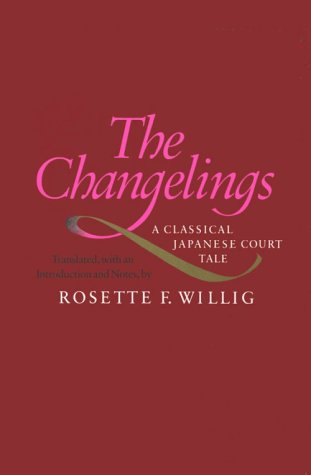
Japanese Classic Novel: The Changelings by Rosette Willig, Guest Review by Jason L.

April 18th, 2018

Welcome to Guest Review Wednesday!  Today we have another exciting review and another new Okazu Guest Reviewer, Jason L. As you may remember, I have been reading and reviewing the Torikaebaya manga series by Saitou Chiho. Tomorrow I will be reviewing the final volume and today we have a discussion of the source material, how wonderful is that? 
Before I had the mic to Jason, I want to mention that this book, while available in print, is absurdly expensive generally, so if you want to read it, I recommend you go to your local library and ask for an Interlibrary Loan of it from another library that has it. If you have never done ILL before, no worries, the Reader’s Services desk will help you, just nab the ISBNs, author, year, publisher from this link and they’ll have all the info they need to find you a copy to read. 

So please give your attention to Jason – and buckle in, it’s going to be a bumpy couple of days!

Upon my first viewing of Maria-sama ga Miteru season 4, I was intrigued by the play, Torikaebaya Monogatari, put on between the joint student councils at the school festival. So I did what I always do, and went in search of a copy of it in English. I discovered that it had only been translated once, originally in 1978 as Rosette Willig’s dissertation, and then released with some modifications in 1983 under the title of The Changelings: A Japanese Court Tale by Stanford University Press.  It took several years to find an affordable copy but I finally laid my hands on one in January and it has felt like I brought, if ever so small, a piece of Yumi’s world into my own life, something quite precious to me.

The Changelings tells the story of two half-siblings, the born-as-a-girl Chunagon who chooses to lead his childhood and young adult life as a man and the born-as-a-boy Naishi no Kami who leads her life as a woman. Other than their parents, no one is aware of their biological genders. Both are thought to be extraordinary in beauty and talent. Chunagon becomes an ever more prominent member at the Emperor’s court. Their father however, refuses the Emperor’s entreaties for Naishi no Kami to be introduced at court. He knows that the Emperor will insist on taking her as his wife thereby uncovering her biological sex. As their story unfolds, what has been a melancholy treatise on gender nonconformity to this point, goes somewhat off the rails and into quite upsetting territory. I was not expecting this given the comedic version done on Marimite.

One of Chunagon’s friends/rivals, Saisho, forces his way into both siblings’ lives with disastrous consequences. Chunagon has married Yon no Kimi with whom he shares a bond but no intimacy. Saisho enters their home and rapes Yon no Kimi ultimately resulting in a pregnancy that nearly destroys her marriage to Chunagon. Following this, Saisho rapes Chunagon, having discovered his secret. Chunagon becomes pregnant and Saisho forces Chunagon to hide in his rapist’s country home, to deliver their child in secret. With the beloved Chunagon now missing at court, his sister, Naishi no Kami, leaves in search of him. Upon being reunited, the two siblings decide to switch places so that their biological sex will match their social roles. This is kept hidden from Saisho, who is now ostracized  by society for his relationship with Yon no Kimi and by the new Chunagon (the former Naishi no Kami). Unfortunately the author spends what feels like endless scenes on what can only be described as whining by Saisho, for whom I struggled to have any empathy. And still the sexual violence does not end, but is furthered by other characters now that the leads’ roles have been switched.

So, clearly this is not the comedy that Marimite presents, but they were not alone in this interpretation of the Torikaebaya monogatari. The sexual violence by powerful males that drives the plot forward has often been played as erotic comedy in many productions of this work. There is, in fact, a routine parallel made to many of Shakespeare’s gender swapping comedies, as Willig notes in her commentary. But nothing could be further from the truth. Mistaking The Changelings for comedy says more about the people encountering, performing, and reviewing the work over the years than it says about the story itself or the pain the characters experience.

And yet as a tragedy, there could have been value in telling such harrowing experiences if done with a grander purpose in mind. However, the author chooses to reconcile these tragedies by marrying off all the characters who are now newly in gender conforming roles. This is done as if none of the violence really had any lasting consequences. Even the new Chunagon marries Saisho off to the younger sister of his second wife. Any historical validity to such an ending is insignificant to me as a modern reader wishing that there was some greater moral purpose for the story.

Making my disappointment in this ending worse, the first third of the story was delicate and empathetic in its handling of the characters’ gender identities. Initially, the author seemed sensitive to the emotional toll and the social stakes of the gender switch. Both Chunagon and Naishi no Kami frequently worried about being discovered and wished to either live in seclusion or leave the world completely, reminding me that the high rates of depression and suicide within the LGBTQI+ community is not new to our society, a powerful message from a 900 year old text. Complementing my initial impressions was Willig’s decision to use the characters’ preferred pronouns throughout, with the female-born trans-male Chunagon being referred to with masculine pronouns and the reverse for Naishi no Kami. In the original language, gendered pronouns are not used as they are in English and so it was Willig, in her translation, that honored the characters’ self-identities with her pronoun choices, a brave decision in the 1980s translation community.

So then I am left with complex feelings.  The book is an important tangible connection for me with Maria-sama ga Miteru, and yet, that too treated it as a comedy, which it most certainly is not. The prose itself is mediocre at best, the translation readable but not artistic, sort of like a middling YA novel. But all my initial confusion over whether it was a comedy or a tragedy, and the weak writing, would not have mattered if the story rose to the potential it displayed early on. Unfortunately, without any comeuppance to the three men who commit rape, or some unambiguous moral judgment rendered by the author, I simply cannot recommend this book. I am left uncertain as to its value for others. However, when I see it on my shelf, I still feel as though I have somehow materialized a piece of my favorite anime into existence in the real world. For me, that might be enough.

Ratings:

Writing: 4 (serviceable and mostly clear if uninspiring)
Story: 5 (beautiful poetry exchanged between characters, deeply moving emotional exploration of trans lives in the beginning, but unacceptable resolution and no final moral judgment)
Characters: 8 (We care about the main characters and hurt alongside them)
Service: 2 (there is little to no textual description of the sexual acts themselves, beware that most sexual encounters in the story are overt rapes)

Overall: 5 (if the conclusion had been morally stronger I would have gladly overlooked the poor prose quality)

Erica here: Wow. What a fantastic review, Jason. When I end up saying about 80% of the same things all over again tomorrow, I’ll make sure people know you said it first. ^_^ Thank you so very much for this review!


Yuri Event: Yuriten Osaka Report, Guest Review by Zoey B

April 8th, 2018

Today we have a Yuri Event Guest Review by a brand new Guest Reviewer, Zoey B! Zoey commented that she was in Osaka in time to catch the first round of the Yuriten Exhibition, which was open from March 30-April 8 (so it closed a few hours ago in Japan) and offered to tell us all about it. So let’s let her get on with it. Take it away, Zoey!

The event took place in the event space of the Namba Parks shopping mall – given the size of the shopping mall, the actual event area was smaller than expected. We got there soon after it started at 11, and were surprised to find that there were only a few people lined up outside to get in. 

Photo copyright Zoey B. 2018

The staff were controlling how many people were in the space, so you were able to enjoy looking at the exhibits at your own pace without feeling crowded. When you enter, you can see to the left the shop and check-out area, but you first head to the right through the exhibits.

Photo copyright Zoey B. 2018

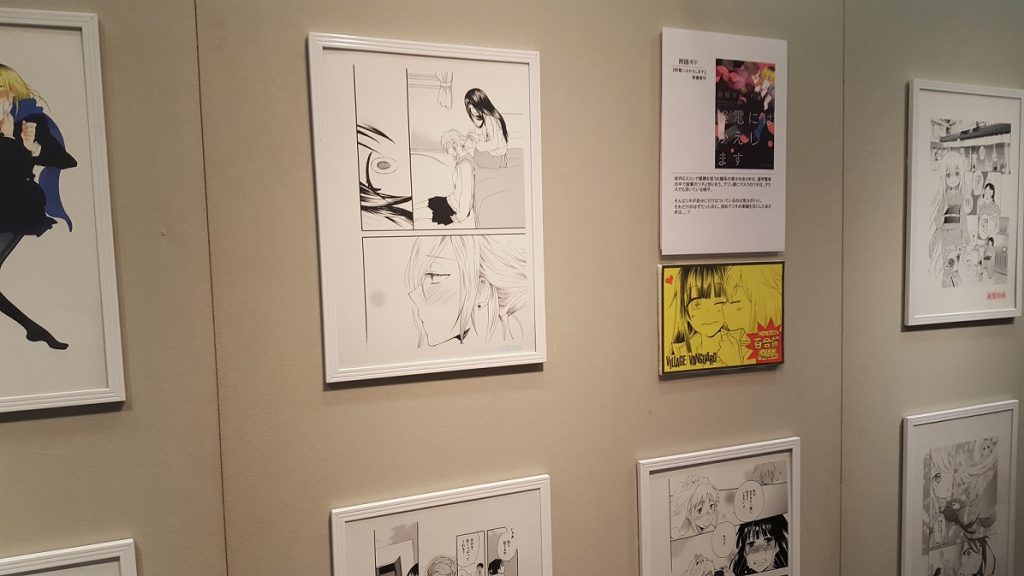
The exhibits were laid out on the walls, with each author’s work grouped together by series, or photographers work grouped together. There were a few illustrations and signed author messages that were made specifically for the event, which was nice to see – and you were able to freely take pictures (as we did). It reminded my wife of going through an art museum; with little plaques about each authors’ work, it was a good way to introduce people to new series they may not have tried yet.  


Photo copyright Zoey B. 2018

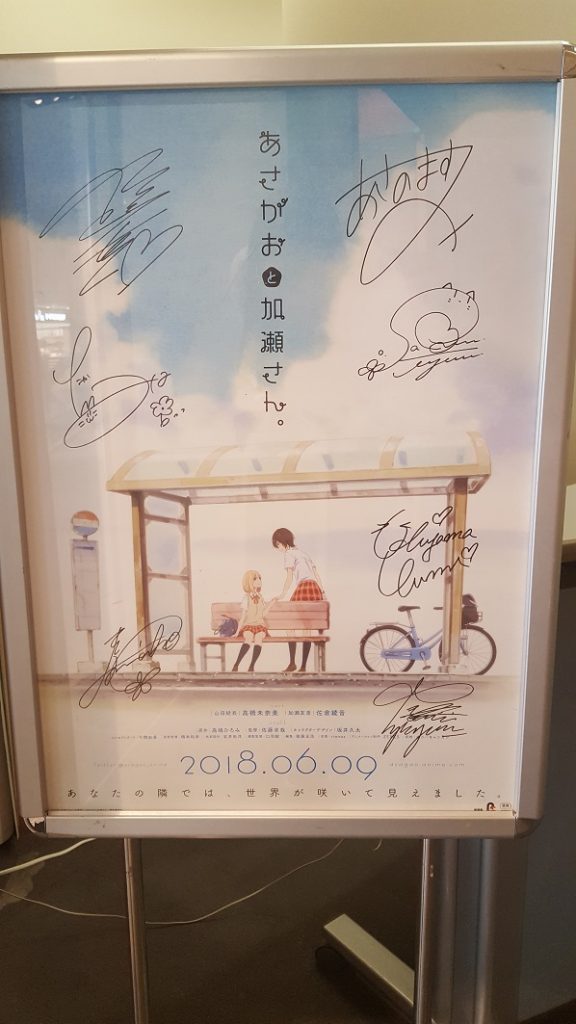
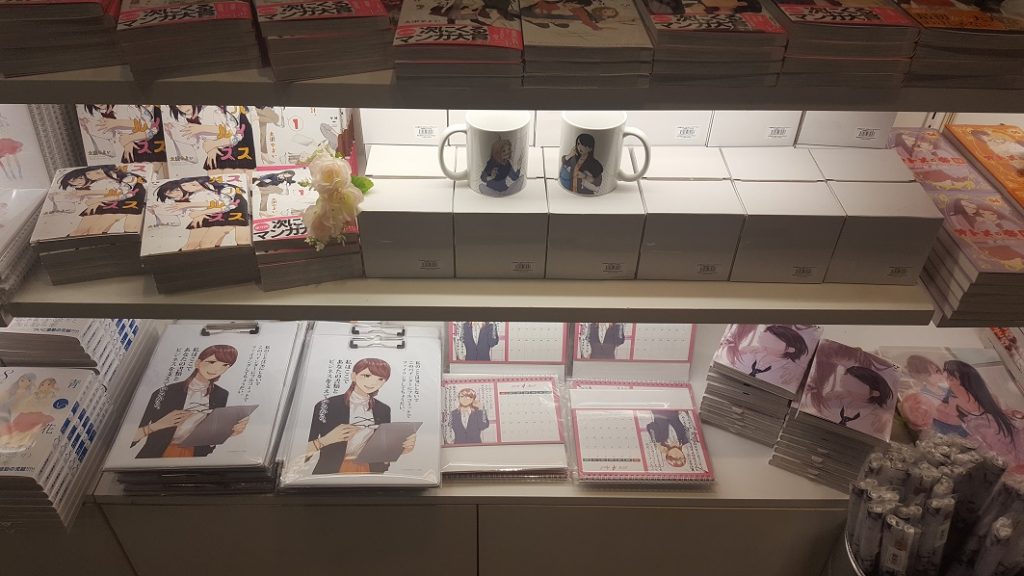
Once you had gone through the exhibit – which had a good amount of different artists and series, covering major series over the last decade from what we could tell – you were naturally led into the shop area. The merchandise was all separated by series – each would have copies of the books, as well as clear files, posters, or other specific merch made for the event. The merch seemed to be designed to fit the content of the series – eg 2DK, G-Pen was focused on office supplies, whereas Kase-san had a make-up mirror and tote bag that you could see the characters using. Galette and other magazines were also there, and there were some Yuriten-themed items as well – we got a double-sided clear file, with the illustration on one side and the photograph version on the other!From the shop area, you could either get into line for the check-out or go out directly – though it did feel like you were strongly encouraged to buy something. The whole time we were there, I don’t think that the line to check-out was less than 15-20 people at any point, so we hope it was doing well! Most of the items did seem to be marked-up for the event, however – clear files for Y500 – and not great quality for the specific items. The choice of merch per series was quite limited – only two or three items – but there was a lot of stock of the books and magazines actually being shown. 


Photo copyright Zoey B. 2018

The ratio of people attending was interesting (assuming genders for the purpose of this). There were a lot of male attendees, but there seemed to be more female attendees – including ourselves – which was nice. A lot of people were buying books rather than the other goods, and some people had entire baskets full of seemingly all the books you could get there! Impressive.

The feel of the event itself was not quite what we had been expecting – my wife said that she had expected it to be more of a celebration of Yuri, whereas it came across more as a pop-up shop with an art exhibit. It was definitely good! – how it was set up allowed you to really take your time, appreciate the displayed artwork and series, and leave you wanting to read each work. It definitely seemed to succeed as a way of generating interest in Yuri as a genre – just not as we’d imagined it. With the chance to take our time, it made the event more enjoyable.

As we were there for the opening day and time, we were expecting some presence of the actual authors or publishers, but there were only the Village Vanguard staff (the hosts for the Osaka Event). It does make sense, though, as the last two days of the scheduled event are planned to be the signing portion – for Osaka, the 7th and 8th April. You were allowed one book per person – having to have purchased vouchers from Village Vanguard for your chosen series in advance – each author scheduled for some time in the two days. We did not get to see this, but maybe next year! 

Photo copyright Zoey B. 2018

Overall, it was a very organized event, which my wife and I enjoyed going to very much. The displays were very nicely done, and we’re hoping that it grows bigger and better next year. Thank you for bringing it to our attention! 

Erica here: Thank you Zoey for the report and the photos. I’m even more excited about it now, because it seems so…pleasant. ^_^ I’m especially interested in seeing it displayed at Studio Lightbox in Aoyama. 


Kakegurui Anime (English) Guest Review by Mariko S.

March 28th, 2018

Welcome once more to Guest Review Wednesday on Okazu! Today I have the pleasure of welcoming back Guest Reviewer Mariko S with a most entertaining review. I won’t take up her time here, so handing the mic over to you, Mariko …

Jabami Yumeko loves gambling. No, you don’t get it. I mean, she REALLY loves gambling. … I’m still not saying this right, I think. Jabami Yumeko REALLY. *LOVES.* GAMBLING.

There, that about sums up Kakegurui.

Wait, come back! There must be a reason why I’m talking about this odd, wonderful, terrible, exciting, formulaic, gorgeously ugly series for Okazu, right?

Sometime last year, Netflix decided to start throwing some money at the anime subculture (a departure from their previous haphazard acquisition of “whatever crappy dubs some bulk rightsholding company batches together with other throwaway filler content”), and began licensing or directly funding a couple of series per season. Whether this is a good thing is a topic best left to others to debate, but so far it seems they are aiming for projects with at least a little edge to them (or, in the case of “Devilman Crybaby,” a Ginsu knife of rococo craziness) that explicitly target a more mature audience and benefit from the less-restrictive content rules at the streaming giant. The kind of thing that, back in the earlier days of anime fandom, would be exactly what people would imagine when they found out you liked “those crazy Japanese cartoons.” Something to note is that the series Netflix sponsors get released all at once when Netflix decides to put them out, not based on the typical “season” schedule, so it’s harder to keep track of what they’re releasing and when. Anyway, fire up those login creds and let’s get started.

I may have mentioned once or twice that I’m a bit burned out on “Story A.” Particularly “Story A” where a moe-faced sugar blob enters a fairyland private school populated by other archetypal moe-faced sugar blobs, meets one extra-special blobface, and nothing much happens until they kiss (or not). So I’m always on the hunt for a bluebird that looks like it has Yuri potential from an unexpected angle. Thanks to Netflix’ “unusual” production and release philosophy, I found out about “Kakegurui” (“Compulsive/Crazy Gambling”) in sudden fashion. But the right words were being bandied about for my interest: “bold, crazy, original, queer.” There were rumblings that, although the outline sounded like a setup for some standard harem-show, it went right angle to that in ways that sounded fun and empowering and definitely kinda Yuri in a good way.

So, enough setup. After a nutty cold open that establishes the situation of our Bland Male Self-Insert Protagonist, Ryota, the OP theme already starts to portend good things for us as Yuri fans. It was done by Sayo Yamamoto, who has directed artistically-beloved openings for many shows, including “Yuri! On Ice.” It’s dripping with style and sexiness, as our yet-to-be-met heroine literally feasts on or toys with the many girls in her orbit. Cut to her unveiling in the show proper – of course she is a New Transfer Student. She seems to be a vision of the typical Nadeshiko beauty, with long black hair and sharp bangs, and a polite, kind way of speaking. We’re introduced in whirlwind fashion to the workings of the school: pretty much everyone there comes from wealthy and powerful families, and, as such, high-stakes gambling is the pastime of choice and determines all of your social worth at the school. The (of course all-powerful) student council posts regular ranking updates of each student’s gambling worth, and if you are unlucky enough to fall in the bottom 100 you are known as a “class pet” and are treated as basically a slave. This classroom’s top dog, Saotome Mary, immediately sets up to lure in the fresh meat for a kill and gets Yumeko to agree to gamble. Over the course of their match, the true layers beneath Yumeko’s proper exterior are revealed. She expertly dissects Mary’s game and her attempt to cheat for the win, and as the tides of power shift more and more into Yumeko’s favor she becomes slightly unhinged, working herself into a frothing, screaming display of gambling lust. When she leaves Mary utterly bankrupt just before the rankings come out, and cheerfully notes that now that they have gambled together they are friends, we definitely understand that Yumeko Is Not Normal.

Just how special Yumeko is, and in what way is the fascinating subject of the rest of the series, which did thankfully get renewed for a second season. The show is set up in classic sports anime style, with Yumeko continuing on to face more challengers of an ever-increasing level of surreal skill from the Student Council in bizarre gambling contests for massive stakes beyond just money. Of course it all culminates in a showdown with the student council president for all the marbles – in this case, expulsion from the gambling paradise of the school.

Some of the interesting things going on here:

1. This show is so refreshingly not-moe. In fact, it can be downright ugly, as the participants sweat, spit, snot, contort, and grimace in joy and agony. All emotions are writ large upon their faces. And although the female character designs are attractive, there are very few instances where they are drawn in an explicitly sexualized way (the ending theme being a forgivable exception). Everyone keeps their clothes on and the camera stays at respectful angles. The fanservice here is all about the gambling.

2. Yumeko’s power derives not from her prodigiously supernatural gambling talents. Those are useful (her ability to discern elaborate cheats, to mathematically dominate games of chance, to strategize in circles around her opponents), but her real power comes from the purity of her desires. She doesn’t care about winning money – money is just a means for her to gamble more easily. She’s not out to deliberately fight the unjust systems of the school, to help the downtrodden or defeat the student council or anything so noble. She just wants the chance to gamble – not to beat her opponent, mind you, which she can easily do. What she wants is more existential – to set the tables so that in the end, the fate of the participants is up to true chance. This is the real reason she takes down cheaters – for sullying the sanctity of the gamble. Similarly, it’s not a masochistic exercise – she doesn’t do it as a daredevil activity, to teeter to the brink of devastation. But rather, in her mind, to enjoy the moment of connection with the opponent as each side has maneuvered as best it can in preparation for the pure chance of the decisive draw, roll, or spin.

3. It’s frankly hilarious how irrelevant Ryota is. I read another review that smartly pointed out that, in most similar shows, despite having no special abilities he would be “The One” for Reasons, and he would be collecting fawning girls along the way as he racked up victories to take down the big bad student council. Instead, this is Yumeko’s show. In fact, you barely hear from Ryota outside of his narration most of the time. A running joke is the ways that other characters will just step into frame in front of him as he’s trying to say something and completely change the subject. This is Yumeko’s world, and he’s just along for the ride. And again, Yumeko’s goal isn’t exactly “winning,” which makes for a more interesting ride in a formulaic show than if that were the only stakes.

Which brings me to the question that of course you are asking, “What about the Yuri?”

First off, this isn’t a show with a lot of interest in romantic relationships. I saw elsewhere Yumeko described as “risk-sexual,” which is pretty apt. That said, while she doesn’t show any physical interest in Ryota or any of the male gambling opponents that she faces, it’s a different story for the girls. In the throes of her gambling ecstasies, Yumeko gets *very* up close and personal with her female opponents. As the gambling intensifies, she often plays a kind of Mephistopheles with them, surrounding and seducing and tempting her opponent into the path she wants them to take; it’s alluring, and you could read it as purely in service of her gamble or as something with more layers than that.  Afterward, she is quick to want to keep her conquests in her orbit as friends (or maybe more, especially in the case of Mary). But the biggest Yuri magnet is the student council president, whom the vice president is obviously in love with, Beautification Committee head and all-around lunatic Midari stabbed an eye out for, and Yumeko herself is clearly infatuated with. For now we must hope that the teases, innuendo-laced lines of dialogue, extremely Yuri opening theme, and reams upon reams of Yumeko x Mary fanart add up to something more concrete next season!

Kakeguruimashou!

Ratings:

Art – 10 I love, love, loved the style
Story – 6 Serviceable enough to get you to the good stuff
Characters – 9 I loved how weird and non-cute the characters were allowed to be. The sadly typical “girl who is like half the size of everyone else and acts and dresses like a child but is somehow in highschool” character knocks a point off for me.
Yuri – 3 I wanted to put this higher, but so far it’s all just innuendo, suggestion, and gambling-related seduction.
Service – 10 It has multiple (tastefully shot) gambling-related spontaneous female orgasms. If you’re *really* into gambling, this one might go to 11.

Overall – 8

Note: From a technical perspective, on the plus side most things are high quality: the subtitles are attractive and easy to read, sub and dub are available in multiple languages, and you even get the songs translated. However, for sub purists the scripts make some regressive translation mistakes, such as omitting honorifics and changing the names people are called. This leads to situations like this one in the third episode, where they translate some dialogue as: “Hey, Yumeko. Good morning!” “Oh, how disappointing. You and I are friends now, aren’t we? You may call me Yumeko.” C’mon, Netflix. Let’s at least get into the 2000’s on this.

Erica here: Fantastic review! I’m motivated to create a Netflix account now, and if I thought for a second I’d make the time to watch this, I might actually do that. ^_^ Thank you Mariko, for this most excellent review.


Yuri Visual Novel: Ne no Kami – The Two Princess Knights of Kyoto, Guest Review by Louis P

January 24th, 2018

Welcome to another Guest Review Wednesday here on Okazu! I am pleased as punch to welcome back our good friend, Okazu Superhero and Guest Reviewer Louis P. Take it away, Louis!

Ne no Kami – The Two Princess Knights of Kyoto, a visual novel by Kuro Irodoru Yomiji, starts of promisingly enough. Len Ese is a compelling and interesting protagonist, with the ability to sense the presence of living things. Before you can say ‘ordinary high school student’ she is dropped into a new life and a new home just outside of Kyoto. Reuniting with her childhood friend Shinonome Sarume she is whisked away to a secret village, the headquarters of Kunai a secret organization of sacred sword wielders who have promised to fight Ayakashi that threaten the human world. Len learns that Kunai wants her to help them fight these dangerous Youkai, she even gets a cool magic sword that only she can wield like her friend Shinonome who also works for Kunai. In fact everyone in the small village she used to visit growing up works for this secret monster fighting organisation.

Now if that last paragraph makes you think that Ne no Kami like some kind of fun supernatural version of Thunderbirds, it isn’t. In fact it is quite the trip to watch Ne no Kami systematically make its setting as pleasant to read as dry white toast. The writers were clearly fans of the urban fantasy visual novels that have long periods of exposition mixed with everyday life (Aoi Shiro) but they seem to have missed that what you then need to do is populate that everyday life with interesting characters and make that exposition meaningful to events we have already experienced early on in the story. No, instead Ne no Kami decides to front load its entire mythology right from the get go and when it is not doing that the characters’ daily lives feel truly banal. Quite an achievement when Len is moving into a new home, re-uniting with two childhood friends and learning about a secret youkai war but all these scenes are populated with characters that have such low energy it is hard to stay awake never mind care.

And that is a pity because…

Spoiler warning here but seriously you are not missing much and knowing this is probably the only reason to buy this visual novel. If you really do not want to know, skip to the second set of asterisks.

****


It turns out that the war the Ayakashi have been waging against humanity is not as simple as Kunai have been making out. Indeed it seems that Kunai is pretty much the illuminati and the war is not so much to save humanity but to expand their control over it. In the end Len, Shinonome and their remaining allies must find their own way to survive after being betrayed by the very people who taught them and us about the entire setting. This throws all that we learned in the first third of the story back into uncertainly for both the characters and the reader.

****

It is a nice twist even if the people that will betray Len are pretty obvious from the moment you meet them as well as those Ayakashi that will prove to be not blood thirsty monsters. However this twists power relies on how invested we are in the lie we are fed at the beginning which, as I said, was dull and boring and I did not care about. So while this sudden twist feels inspired it did not put the work in at the start to make us feel invested in the status quo. So I was far more relived to find out about all the deception and that one of the most annoying characters was evil enough to deserve what was coming to them.

‘But what about the Yuri?’ I hear you ask, now that is actually a bit more interesting although you have to pick it out of the gizzards of the poorly told story and the character designs that are ridiculously infantile. What is nice is that both Len and Shinonome have their own love interests. Uzume Sarume and Ruka Himemishi: both of whom are given serious significance in the story but are also lacking in nearly any kind of agency. It doesn’t help as well that Uzume is deliberately made up to be a shut in with a really creepy crush on Len that somehow blooms into romance while Ruka’s story is making you think that she is one kind of fetishised ill girl when she is in fact a fetishised traumatised girl and then one-upping how exploitatively traumatic they can make her back-story every two chapters.

Despite everything it does wrong I could imagine recommending Ne no Kami, five or seven years in the past. It is clearly trying and its heart is in the right place. I mean love between women is what saves people at the end and our heroes are two pairs of girlfriends but in this modern world with Kindred Spirits on the Roof, Butterfly Soup, Highway Blossoms and Ladykiller around there is just better stuff to spend your time and money on. If only this had been released ten years ago it could be something like Sapphism no Gensou. Yeah we read it despite all its glaring flaws but it was because there was so little else to read. Today however I have no such excuse.

Ratings:

Art – 3
Story – 5
Characters – 2 (I had to look up everyone’s name while writing this. That should tell you what you need to know)
Yuri – 8
Service – 8

Overall – 5

Erica here: I would like to thank Denpasoft for the review copy of Ne No Kami. It was much appreciated! And many thanks to Louis for another cogent review.