Archive for the Yuri Manga Category


Yuri Manga: Anata no Scandaru (あなたとスキャンダル)

February 13th, 2004

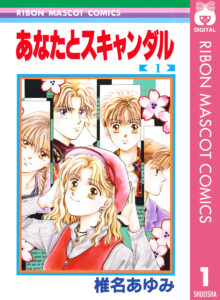
Anata no Scandaru (あなたとスキャンダル) by Shiina Ayumi, from 1994-5, is not a happy Yuri manga.

Tomoka, a rising star who plays piano, has spent every waking second of her 15 years of life looking for her Prince. One day, while being molested by a pervert on the train, her ideal Prince rescues her! Not surprisingly, she falls head over heels for him, despite the fact that she has no idea whatsoever what his name is, where he lives, etc….

A chance meeting with an old acquaintance from childhood brings her into proximity with her Prince – Yuuki Serika, who turns out to be the popular lead singer for a up-and-coming band. To Tomokoa’s shock, she’s asked to join the band as keyboardist. Tomoka agrees, since this gives her the chance to be close to Yuuki. Unfortunately for her, Yuuki expresses a clear dislike for girls.

As Tomoka presses her suit she learns why Yuuki feels this way – because Yuuki is actually a woman! Because of her boyish figure and deep voice, she can pass as a man, (and does, to escape an arranged marriage.) After Tomoka gets over the shock of the revelation, she decides that she doesn’t care and that she’s going to pursue Serika anyway.

Unfortunately for our readers, the mangaka didn’t have the courage of her convictions. In the final volume of 5, Serika sits down with Tomoka for a serious talk. Serika insists that Tomoka doesn’t *really* love her at all…she obviously really loves the old childhood friend she’s barely spoken to during the entire series. It’s an incredibly unrealistic and sudden ending, and even at the time, readers were annoyed slightly by it.

Nonetheless, as a comedy of errors with a gender-bendy twist, it was cute, fluffy fun. No awards will be won here with either the art of the story, but like so many gender-bending stories, it has some nice moments.


Yuri Manga: Futte Mo Harrete Mo

February 12th, 2004

Miserable Classics of Shoujoai
Part 2

Futte Mo Harrete Mo (Rain or Shine) – Fujimura Mari, 1993

Yet another Margaret “Yuri” manga. I had a copy of this series, but was so annoyed at the ending that I sold it. Now I don’t remember the protagonist’s names. I guess I’ll just have to get another copy of it, for the ol’ collection. One day.

This 5-volume series starts off *so* hot, that it’s a wonder the pages don’t curl from the heat. Two girls, inexplicably attracted to one another, can’t stop themselves from wanting to be in each other’s presence. There is a hair-brushing scene in the first few pages which had me panting. Unfortunately, from that point on, the story goes downhill. Terrified of their reactions to the other, both girls desperately seek to distance themselves from each other, each ultimately ending up with a boyfriend, and vowing to be good friends. What a waste.

It isn’t a happy story, but to be fair, the concept of a “happy ending” at *all* in Japanese literature of any kind is a very, very modern concept. It’s not just Yaoi and Yuri that end with melancholy longing and unfulfilled sexual tension – in fact, it’s perhaps the single strongest theme, historically, in Japanese writing.

When considered in that context, FmHm is much less of a disappointing read. It is about ephemeral youth and overwhelming feelings. If Romeo and Juliet had been a Japanese narrative, the protagonists, instead of running off together (happy ending) or killing themselves (tragic ending), would have parted with tears and gone back to their families, then married the partners their parents chose for them (Japanese ending.) 


Yuri Manga: Jukkai Me no Jukkai

February 11th, 2004

Miserable Classics of Yuri
Prologue and Part 1

Way back in the early 1970s, when Yamagishi Ryouko and Ikeda Riyoko were drawing up the first Yuri manga, the model for same-sex relationships was not a happy one. Like early Yaoi, early Yuri assumed an unhappy, unfulfilled or tragic ending for all lesbian relationships. (The same thing was happening here in western literature as well, so clearly it was an artistic edict that went well beyond individual culture.) The bottom line was – there was no happy Yuri. And really, only a very few mangaka had the guts to depict any kind of lesbian character or relationship at all, so lesbians were happy enough to get what they could find. This situation lasted well into the 1990s, and frankly, IMHO, didn’t really even *begin* to change until Sailor Moon broke the trend. Mostly what you had was a choice of one or more of the following: suicide; tearful parting and memories of something that might have been; or marriage to some guy, because that’s what you do.

Nowadays, we look back on these stories with disappointment and, in some cases, distaste, but remember, these were the first tentative steps in a process that is only *now* breaking free of its historical fetters. (And I’m not talking Yuri Shimai here – the real progress I’ve seen in Yuri comes from lesbian artists like Takashima Rica and Yamaji Ebine.)

This week, I’m going to review a few of the decade-old Yuri manga that you may not have heard of. Despite their unsatisfying endings, these have some very good qualities.I’m not going to bother rating any of these, though. ^_^

Jukkai Me no Jukkai – Akisato Wakuni, 1992

Jukkai Me no Jukkai is a short story that is part of a single-volume manga collection called Odamari!.

Jukkai is a strangely uncomfortable story of a girl, Sayako, who falls in love with her brother’s fiance’. Sayako meets her at school and, through an incredibly unrealistic mishap during a school play, their lips touch. From this point on, Sayako can’t get this mysterious girl out of her mind. When her brother announces that he’s getting married to one of her schoolmates, Sayako has no idea that he means the same girl’s she’s already kissed. Their situation is made more complex by the fact that Sayako is older than her brother’s bride-to-be…something that bothers her quite a bit. When she’s introduced to Rio, Sayako is shocked and appalled at herself, her brother, and at the girl, Rio.

Rio is only marrying Sayako’s brother to escape a life of loneliness…she’s unwanted by family, and at 16 has already has several affairs with older men. She doesn’t really love Sayako’s brother, but she does think he’s nice – and he’s a great way to escape from her unhappy life. As it progresses, their relationship seems dysfunctional, and Rio comes off as manipulative, but neither Rio nor Sayako seem to be fighting the attraction between them too hard. The brother remains clueless throughout.

Ultimately, Rio marries Sayako’s brother, but she and Sayako become lovers, carrying on when the brother isn’t home. It’s not a “happy” ending, but at least it isn’t suicide.


Yuri Anime and Manga: Battle Athletes/ Battle Atheletes Victory

February 9th, 2004

A little while ago I managed a few minutes in that magical land of used Japanese manga, Book-Off, and managed to find the entire run of the Battle Athletes Daiundokai manga, which is very, very, VERY out of print. (I occasionally get requests on how to find the manga – read the line before this one about where I got my copy. That’s basically all the advice I can offer you on finding it.) I immediately went home and read them with great interest – now I want to tell you all about it. ^_^

More people are probably familiar with the OVA and the television series, distributed under the titles Battle Athletes and Battle Athletes Victory, than the manga. The television series is based on the manga more closely than the OVA, so it’s basically the same story as the manga, with Ichino given a stronger role to play, both in the story as a whole and in Akari’s life. The manga is more about Kris and Akari and less about the back stories for all the other characters…. But there are few things that *all* of these have in common

Mylandah is psychotic in every series. I like that. I find psychosis to be an extremely attractive quality in a strong female character – the fewer morals, the more I like them. In the manga, like the anime, her psychosis stems from a once-healthy obsession turned ugly – her feelings *for* Lahrri changed into competition *with* Lahrri. In the TV series, they end up acting like a married couple, to the confusion and consternation of the other girls – their conversations approach near-silent communication. It’s a cute, subtle touch, in what is otherwise a really dumb story arc. In the manga, just as in the TV series, Mylandah is forced to realize that what she really feels about Lahrri is *not* hate, but love. In the Epilogue of the manga, we see them cuddling in a thatched roof hut on a beach somewhere, completely alone. So that ends that story – and it’s a really sweet picture. :-)

Anna’s story is also in the manga – in fact, it is the same story as both the OVA and the television series, which makes Anna a much more bizarre character than either of the two animated versions. Jessie, Ayla, and the others all exist in the manga, but their stories are reduced to mere traces, which didn’t make me cry, really. What the manga really focuses on is Kris and Akari.

The relationship between Kris and Akari, in almost every version is made explicit, but I like the manga best. Sure, they kiss in the anime, and sure, even naive little Anna can see what’s between them, and sure, Kris comments to Ichino that they are rivals for Akari (even if Ichino is in denial). But, in the manga, the entire end of the Cosmo Beauty competition is between the two of them and the final race is Chris versus Akari. A personal conflict comes between them and threatens their friendship on the eve of the final race. It’s very tense, emotional and well done.

Ultimately they do race and, after the race is over, in front of all the spectators and, presumably, the entire world watching on TV, they kiss. I mean they *kiss*. It’s pretty fabulous. :-) I wish there were more anime and manga with such kisses.

The manga has so many of the good things about the anime and almost none of the really bad things – no cow, no aliens, no resurrected Tomoe Midori, none of that. The Principal of University Satellite is still a pervert, but that seems to be about as bad as it gets. The manga also loses Akari’s crybaby tendencies, and her inability to learn from her experiences…a very good thing, IMHO. And the Yuri is 100% real, no substitutes accepted. So, honestly, if you like the anime, then it’s really worth it to get the manga for the *real* story…and that kiss. ;-)

Ratings:

Yuri – Anime (7) Manga – (9)

Art – 6, it’s nothing special in either manga or anime.

Characters – Manga (8) Anime (6)

Story – 7

Overall -Manga (8) Anime (7)


Yuri Manga: Rica ‘tte Kanji!?

February 5th, 2004

How stupid am I? I’m here, trying to tell you all about Yuri anime and manga and I *completely* forgot to talk about this most Yuri of Yuri manga!

As you may have realized by now, I’m always on the lookout for characters that break out of the conventional molds of shoujo manga. And to be honest, right now I think that there are exactly *two* Yuri artists out there who do so successfully. I’ve already reviewed Free Soul and Indigo Blue by Yamaji Ebine – today I want to talk about a wonderful, very unconventional Yuri manga – Rica ‘tte Kanji!? by Rica Takashima.

Let me state this right up front – I translated this comic, and I’m good friends with the author. That having been said, I think that this is one of the very few “pure” Yuri  manga available – and the *only* one available in English at this time. (By pure Yuri , I mean that this is a lesbian narrative, written by a lesbian, for an audience of women.) Indeed, it’s *because* I felt that way that I wanted to bring this story to the English-speaking audience.

Rica ‘tte Kanji!? (the title has no meaning, by the way – it’s like saying, “Like, Rica!?”) is the story of a young woman who moves to Tokyo to attend a Women’s College to study early child development. Rica is idealistic and funny, but not completely starry-eyed or naive. In fact, she’s probably the single most realistic character I’ve ever read in any manga. In an early scene, she frets over what to wear for her first time at a gay bar, ultimately deciding on her regular clothes…but she makes sure she has clean underwear on. ^_^

Rica meets quite a few nice people in the Nichoume (Tokyo’s Gay and lesbian District,) including a cool and interesting art student, Miho. Rica and Miho’s relationship progresses in Rica without high drama, angst, self-doubt, obsession over sexuality or roles. It’s a refreshing and adult look at two women who know who they are and don’t question their own sexuality. For this reason alone, Rica is entirely unique.

The emphasis in Rica is on character and realistic, but humorous, situations. We watch Miho nurse Rica through a cold, Rica makes dinner for a crampy and miserable Miho (one of my favorite scenes, as Miho bitches about the monthly joy of being a woman), they fantasize about each other, and in the end, they are just so damn cute, you can’t stop smiling. There is some conflict, but don’t expect suicidal angst here – these two women are long past high school drama.

The art in Rica is nothing like the conventional shoujo style – it has alot more to do with pop art, and contemporary modern painting, than shoujo manga. When the mangaka *does* use conventional imagery or themes, she tends to use it self-mockingly and point it out for us, so we can have a good laugh along with her. (Rica is portrayed fantasizing about her first time in the Nichoume with a background pattern of lilies – an author’s note points out the flowers and comments “The usual flower imagery.” ) It’s touches like this that make Rica so delightful and approachable – we are allowed to laugh at the characters, and ourselves, through the artist’s work.

The biggest downside to Rica is that, at the end, I wanted more. I hated to leave Rica and Miho behind, so I hope to convince the mangaka to do more for us. Hopefully we’ll be seeing a sequel in the next year or two. ^_^

Ratings:

Yuri – 10

Art – 9 (I *like* pop art!) Story – 9. Characters – 10. Overall – 9.5

Now here’s the advertisement:
To get *your* copy of Rica ‘tte Kanji!?, Look for the English-language manga at the
Yuricon Shop
.

I mean this quite literally -this is the Yuriest manga you can get in English. Get yours today!