Archive for the Yuri Manga Category


Yuri Manga: Kimi no Tame Nara Shineru (姫のためなら死ねる)

July 20th, 2011

When you think of Heian period literature, two names come instantly to mind, Murasaki Shikibu, creator of the Tale of Genji and Sei Shonagon, writer of the Pillow Book.

What may not come to mind is the image of Shonagon as a 27-year old NEET, blogger, Twitterer and…well, perv.

That is, it may not come to mind, until after you’ve finished reading Kimi no Tame Nara Shineru (姫のためなら死ねる). After that, you’re just about guaranteed to think of her that way. ^_^

This book is a series of exceptionally silly 4-koma gags set in the Chuugushiki, the residence of 13-year old Empress Teishi. A mutual friend, sick of Shonagon’s shut-in, slacking ways, suggests she apply for the position of Teishi-sama’s lady-in-waiting. Teishi is moved by Shonagon’s handwriting and Shonagon, in turn, falls head over heels for the Empress.

Nothing happens in this volume, really. Yuri is limited to heavily overplayed service, in which nearly every woman is nearly in some Yuri-ish position with nearly every other, but it’s all gags, no substance. Nonetheless, Shonagon is pervy about Teishi-sama, and Teishi-sama seems to return the feeling, in her own, immature way.

Of course Murasaki Shikibu is a character, as is her charge, the Second Empress Shoushi.

Honestly, I should probably have hated this book. It’s got all the annoying qualities of 4-koma gag comics. But, I didn’t. The story turns historical luminaries into jokes, and relates behaviors of the past to unlikely, but accurate analogies of the present with historically inaccurate, but nevertheless amusing, conviction. Shonagon as a blogger rings pretty true to me, anyway.

I’m reminded by my wife of a passage by Sei Shonagon, about the annoyance she felt when the snow slipped from the roofs of the buildings and covered the paths, making it difficult to walk. The Shonagon of this book is not that woman, but I think I might prefer this silly Shonagon to the real one. ^_^

Ratings:

Art – 6
Story – 8
Characters – 8
Yuri – 4
Service – 4, for the gags about Murasaki’s breasts and all the almost-Yuri

Overall – 8

Remember how I always say that no research is necessary to form an opinion of a manga? Well, in this case, I’m wrong. I actually had to do a fair bit of research. ^_^



Yuri Manga: Renai Manga ( レンアイマンガ )

July 15th, 2011

Sometimes when you pick up a book, what you want is to slip into a comfortable story and just…relax. Renai Manga (レンアイマンガ ) is that story. This manga is the equivalent of a pair of comfortable slippers.
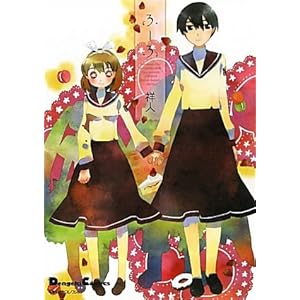
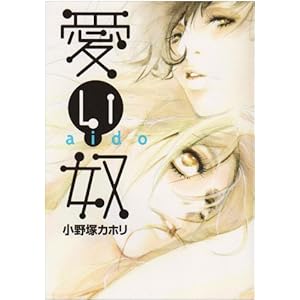
New manga editor Haruka has just been assigned to her favorite manga artist ever, Kuroi Ritsu. Kuroi-sensei’s manga, “With You” motivated her to turn her life around. When she finally meets shut-in, mopey, entirely unfashionable Kuroi-sensei, Haruka is in for a bit of a shock.

The shock only lasts a very little while and Haruka finds herself taking care of Kuroi-sensei, until she’s faced with a second shock….when “With You” was in production, the current managing editor of the magazine was Kuroi-sensei’s editor…and, Haruka can’t help but wonder if Kuroi-sensei still has feelings for her former editor.

Of course, we can see that they’d make a great team, if only they could breach the gap between them…and they do when it comes to light that Kuroi-sensei’s good luck charm and favorite fan letter was written by none other than Haruka! Shocking, I know. ^_^

In the end they get together and are all adorable together and we really wish we’d get to see the story from this point forward, but we don’t, as it draws to an adorable, totally comfortable, totally predictable end.

Ratings:

Art – 8
Story – 8
Characters – 8
Yuri – 8
Service – 2 Kuroi-sensei needs a better bra

Overall – A warm, fuzzy, comfortable 8


Yuri Manga: Fu-Fu Dengeki 4-koma Collection (ふーふ―電撃4コマコレクション)

July 12th, 2011

This is not the Fu-Fu you’ve been waiting for. This is not Minamoto Hisanori’s Fu-Fu. This is not a serious story about language and rights and perception wrapped in 6 layers of adorable-ness.

This Fu-Fu is the Fu-Fu that, in a series of 4-koma strips, flirts with saying something serious, but never quite does. This is Fu-Fu Dengeki 4-koma Collection (ふーふ―電撃4コマコレクション).

In this Fu-Fu, Furika and Fuyuta are the player names of two characters that met in an MMORPG. They became friends, and eventually were married in the game world. In that world, Furika is a cute bunny girl and Fuyuta is a handsome bird man. In real life, it turns out, they are both high school girls in the same grade at school.

The manga begins with some very affectionate displays of affection between them in public and their disbelieving classmates’ reactions. After an extended kiss, they’re asked, “Are you two lesbians?” Their response is, almost predictably, “No, of course not.” They then clarify that in the game, they are married, so this is obviously totally normal.

There is some space spent on classmate reactions. Predictably the boy representative is less concerned, although somewhat confused by the gap between their behavior and their words. A female classmate, Okada, is outright disgusted, which prompts the boy to say that it doesn’t bother him…he’s not sure how he’d react if it were two guys. Which then brings up a mis-timed reaction from a third classmate, male, about gay guys, implying that he himself might be gay…something that is quickly swept aside in denial.

And that’s about where it all stays in Fu-Fu.  Furika and Fuyuta are in love, married in the game, physically affectionate in person, but in no way are they lesbians.

This manga is a 4-koma, and the formula, while less obsessed with wacky humor than, say, Hyakko, or  Ichiroh!, is still meant to have a bwah~wah~wah~~~~ feel about it.

The second half of the book takes a slightly more serious turn, as Fuyuta (as we’ll continue calling her,) begins to get an inkling that her feelings for Furika are more than just in the game world. There are some awkward bits when she tries to push their relationship to deeper levels of intimacy, but fails, and even more when Furika won’t let her go when she starts to realize her feelings may indeed be “lesbian.” The book ends at a most uncomfortable moment, when Fuyuta lies to Furika about having a boyfriend, so this playing at being married must stop.

I’m not entirely sure what I feel about this book. It’s not serious enough to take seriously, it’s not silly enough to dismiss. Some real issues are touched upon, but not meaningfully, and the humor isn’t quite funny enough to carry the book.

Ratings:

Art – 6
Story – Starts at an amusing 7 and ends at a somewhat frustrating 7
Characters – I waffle on this, they are so inconsistent. Let’s call them 6
Yuri – Also inconsistent, 6
Service – 2

Overall – 6

It very much feels as if this started with an idea and suddenly had to develop a plot when it continued longer than planned. If a second volume is released, we may see a new direction entirely, as Fuyuta and Furika work through the gap between perception and reality. Of course, I hope they come to the gayest conclusion possible. ^_^


Yuri Manga: Kila Kila (キラキラ)

July 10th, 2011

Kila Kila (キラキラ) by Takemiya Jin, is a collection of one short serial, “Akogare no Itoshii Hito,” and a one-shot with the title name from Comic Yuri Hime.

The titular story is unrealistic and utterly adorable. Sayaka is obsessed with magazine idol Ria. She can just “sense” Ria’s aura she’s sure so, when one day a girl walks by and she senses Ria, she pursues the girl.

Sayaka’s 6th sense isn’t far off – the girl turns out to be Ria’s twin sister, Mari. Mari is not a model, but is an introverted, cynical girl with some understandable issues in regards to her famous sister.

Cynical as she is, Mari understands that Sayaka is befriending her to get closer to her sister and, as a result, when Ria learns of Sayaka’s existence, she expects to lose her new friend. What neither Mari, nor Sayaka expected was for Sayaka to find Mari’s own sparkle so alluring that she decides Mari is more important than Ria ever was.

The bulk of the book is taken up with a tale of a love triangle between sophisticated older sister Tsukiko, Nana who has a crush on her and her childhood friend Youko, Tsukiko’s blunt younger sister.

Youko and Nana argue over Tsukiko’s intentions and, even when Youko is proven correct about her playgirl older sister, she and Nana can’t repair the damage to their friendship, when Youko admits that she’s had feelings for Nana all along.

Years pass and Nana, with a new friend, Satomi, are out one day when she sees Youko….with what instantly appears to be a girlfriend. Nana is shocked, then appalled at her reaction of jealousy and suddenly, she realizes her feelings for Youko. She confronts Youko to learn if that is indeed her girfriend, and if Youko is happy. It is, Youko confirms, and she is. They part and Nana is left to realize that she might very well have thrown away something wonderful, but Satomi, in the most charmingly goofy way, picks up the pieces. The end comes with Nana realizing that she should not ignore Satomi’s feelings the way she ignored Youko’s  and they head off to live what we can hope will be happily ever after.

The final chapter revisits “Kila Kila” and allows Sayaka to reject Ria in front of Mari and to soundly kiss Mari so she knows these feelings are not one-sided.

As always, I enjoy Takemiya Jin’s work. I’m never going to try and convince you it’s beautiful and, if anything, I like it better when the characters are evil and scheming, rather than wide eyed and adorable. But still, it’s feel-good reading for me.

Ratings:

Art – 6
Story – 7
Characters – 8
Yuri – 9
Loser FanGirl –  6

Overall – 8

Takemiya-sensei’s work has a ring of verisimilitude when it comes to relationships between girls that series like A Channel or Yuru Yuri completely fail to capture. As a result, I can read something as utterly unrealistic as “Kila Kila” and still see the real-ness of the characters’ feelings where I watch a school girl life series like Yuri Yuri and see nothing at all I can relate to. ^_^


Yuri Manga: Aido (愛い奴)

July 4th, 2011

Aido (愛い奴) by Onazuka Kahori, follows the life and loves of Ureha, a young woman who had some years earlier had an affair with another woman, but is now seeing a young man who is quite serious about Ureha – he’s even proposed, but she has yet to answer him. She’s sure she loves him, but something is holding her back. And then she meets Saori, a woman who lights Ureha’s passion in a way that Ichiru, her boyfriend, never has.

When Okazu Superhero Katherine H. sent me Aido,  she suggested that it very much seemed to her a more modern version of Moonlight Flowers and I can totally see that. Both are about finding one’s true self and rejecting expected roles, so one can become the person one truly wants to be. Unfortunately, where Moonlight Flowers does this with elegance, Aido wallows in vulgarity.

Ureha, as a high school senior had already had a passionate love affair with another girl, and had set it aside as one does with childish things. Ichiru is clearly in love with her, but he starts off dissatisfied at Ureha’s lack of commitment and spends a great deal of the story acting suspicious, mean and churlish. He eventually falls into the time-honored pattern of “if I can’t get what I want, I’ll just take it.” A classic scoiopathy. Here’s a relationship tip – if you go on and on about how you’re *sure* the other person’s going to leave you – they will.

I don’t want to say I object to Ureha and Saori’s relationship, but I can’t say I see a lot of positives in it. Saori’s first act is to humiliate Ureha and that pretty much is their dynamic throughout. It makes it hard for me to like Ureha when she’s put herself in the position of choosing one jerk or another. Unlike Sahoko in Moonlight Flowers, she’s not escaping one demeaning relationship for a relationship between equals – she’s escaping a perfectly acceptable relationship for a demeaning one. Where Kaoru in Moonlight Flowers is cultured, elegant, successful, Saori is a name in the gay bar scene; big fish, small, desperate pond.

The difference between the classic Yuri of Moonlight Flowers and Aido is also reflected in the art. Flowers is, as I said, elegant, classic, clean, where Aido is messy and hard to follow.

Ultimately, Ureha’s choice could seem like a great middle ground to many, but in the end I was unable to find any real enthusiasm for Ureha raising a child whom at a young age, already seemed pouty, cynical and selfish, just like her mother.

There are some positive messages to be gleaned from Aido, though. The main clear and present message that is directed at all straight women is that they really had better never have lesbian sex, because it is just so much more amazing than anything they will ever have with a guy. ^_^

Ratings:

Art – 4
Story – 5
Characters – 4
Yuri – 9
Service – 4, unless you’re into scat, then 9

Overall – 5

Where I found Moonlight Flowers romantic, elegant and beautiful, I found Aido‘s treatment of the same theme to be merely crude.