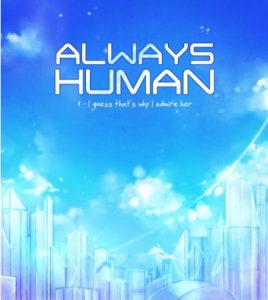
Revolutionary Girl Utena 20th Anniversary Manga: After the Revolution (少女革命ウテナ20年記念日新作)

August 13th, 2017

“I…I have to go.”
“Go where?”
“To look for Lady Utena. When she and I meet once again…that is when this will begin.
The world…awaits the Power of Dios…
And that power begins with us…!”

20 years have passed since the Revolutionary Girl Utena series began.

In “After the Revolution,” a new original chapter of Revolutionary Girl Utena 20th Anniversary Manga, (少女革命ウテナ20年記念日新作) from Saitou Chiho in Flowers magazine, 20 years have, indeed, passed.

If you recall, in both anime and manga, Tenjou Utena disappeared from Ohtori and with her, people’s memory of everything that had happened. Only Himemiya Anthy could remember her. And, in both versions, the end of the series came when Anthy – and the remainder of the magic at Ohtori – left to look for Utena, with complete confidence that she would find her.

20 years have passed.

We begin with Touga and Saionji. They are bidding against each other on a Picasso painting. They are rich, powerful men in this world, just as they were in Ohtori. But you and I remember how easily they were manipulated there. They do not. They haven’t changed. 20 years has not lessened Touga’s confidence or Saionji’s displeasure at coming in second.

Touga receives a letter – “Those concerned with the Revolution of the World should return to Ohtori.” And, of course Saionji has also received that letter. They enter the school with flashlights as thieves in the night. Two rich, sophisticated leaders of men, creeping around a closed school. What did we just say about “easily manipulated?”

20 years have passed. They remember nothing. Until the tower is struck by lightning and they share a dream of a girl in a coffin. They dream of a castle in the sky and dueling. They wake to find that they both had that dream, but have no idea what it means.

When Touga finds a picture of Anthy and Akio, he asks aloud who is this? And a voice says, “Me and my sister.” Akio, in his final battle uniform appears. “But,” Touga says, “you’re dead!” Akio confirms that he is indeed dead. And nonetheless wants to gain the power of Dios.

They break into the chairman’s room and find a picture of a naked Anthy. Akio provokes a fight, Saionji finds it in himself to remember his friendship with his rival and protects Touga. Touga and Akio duel….Remember again the phrase “easily manipulated.” Keep remembering it, because neither Touga nor Saiojni have. Touga slays the ghost and they see another picture, of two young women, laying together clothed, but intimately entwined.

And they start to remember. The power to revolutionize the world, the young woman who wanted to be a Prince and their friendship.

This chapter was perfect. This story cannot possibly begin with Utena and Anthy. It will, I hope, end with them. But it could not possibly have begun with them. (I submit almostallmyownfanfic. as a corroborating witness. )

We’ll be getting a second chapter in the winter, and, if my guess is good, it will follow Juri and Miki as they remember. I hope so, at any rate.  But it still won’t follow Anthy and Utena. Not yet…maybe not ever. Their absence is the story.

Ratings:

Art – 9 I *have* mentioned that Saitou-sensei’s art is amazing.
Story – 9 Exactly what it needed to be
Characters 8 – No one will blame me that I still don’t give a shit about Touga and Saionji, right?
Yuri – 8 Did you not look at that picture and see what I saw?
Service – 3 Naked Anthy still a thing.

Overall – 9

The second thing I hope for from this story is a glimpse of Anthy and Utena 20 years later. I’m willing to wait as long as it takes. Thank you Saitou-sensei for this fantastic chapter and that gorgeous cover.


Yuri Network News – (百合ネットワークニュース) – August 12, 2017

August 12th, 2017

Yuri Manga

From Birz Comics, Planet Closet (惑星クローゼット) by Tsubana is a “Yuri-ish” sci-fi story involving two girls from alternate dimensions, giant monsters and a threat to humanity. Huh. Sounds pretty good. 

Takemiya Jim-sensei noted that a preview chapter from Fujyourina Atashi-tachi (不条理なあたし達) is available on on Hakusensha’s  Rakuen La Paradis Volume 24 (楽園 Le Paradis)  web site.

Takemiya-sensei has joined a number of other popular Yuri manga artists in Yuricon: Jimoto Hougenhen (地元方言編) which is available for your Kindle in Japan or in the US! Great name, too. ^_^

Via Mey on Autostraddle, the Hi-Fi Fight Club by Carly Usdin looks super fun!


Yuri Anime

ANN reports that Viz is streaming a clip of the dub of Sailor Moon Crystal‘s 3rd season.

Crunchyroll has added Haibane Remei,and Michiko & Hatchin (which is not Yuri, but was a damn good female lead anime) to their catalog!

ANN reports that the second of two films for the franchise, Magical Girl Lyrical Nanoha Detonation has been announced.


Yuri Essay 

I was asked to write a short piece on why we call the genre “Yuri” as opposed to the publisher-generated “Girls Love.” (Long story short, “Yuri” keeps the connection between the genre and lesbian culture.) Read Why We Call It Yuri on Anime Feminist.


Other News

Are you looking for women in comics to hire, follow, or support? Are you a woman in comics looking to promote your work? Take a look at the #visiblewomen hashtag begin by Kelly Sue DeConnick on Twitter. Priscilla Frank wrote a great piece on Huffington Post about the hashtag – and why it’s stupid that the comics industry is still using tired excuses for not “being able to find” women to hire in The Comic Book Industry Officially Has No Excuse Not To Hire Women.

The folks at Asia Rising have a very interesting article about the five out Japanese LGBTQ assembly members, who are working together to raise LGBTQ awareness and push forward equality under the law in Japan.

Disney Junior channel has added an interracial lesbian couple to the show Doc MacStuffins. The episode is about family emergency preparedness.

Looking for good summer reading? OZY has 5 Lesbian Literary Novels you shouldn’t miss! Ignore the Beavis & Butthead intro and just nab and borrow the titles from your library. ^_^;


Know some cool Yuri News you want people to know about? Become a Yuri Network Correspondent by sending me any Yuri-related news you find.Emails go to anilesbocon01 at hotmail dot com. Not to the comments here, please, or they might be forgotten or missed. There’s a reason for this madness. This way I know you are a real human, not Anonymous (which I do not encourage – stand by your words with your name!) and I can send you a YNN correspondent’s badge.

Thanks to all of you – you make this a great Yuri Network!


LGBTQ Comic: Legend of Korra: Turf Wars, Part One

August 11th, 2017

 Legend of Korra: Turf Wars is a continuation of the Legend of Korra animated series, co-created by Michael Dante DiMartino and Bryan Konietzko, illustrated by Irene Koh, published by Dark Horse Comics. Picking up immediately after the end of the cartoon, the story begins with Korra and Asami in the spirit world. Their vacation comes to an abrupt end when they encounter a hostile spirit, but, it turns out that their presence is needed in the human world. 

In their absence, there have been several major issues that have developed in and around Republic City. Refugees from the wars at the end of the cartoon remain unhoused and the mayor is uninterested in helping them beyond the minimum amount of support. he can provide while he focuses on reelection. Unsurprisingly, morale is low and tensions are high. A real estate developer with ties to organized crime is attempting to exploit the land around the new spirit portal, with plans to turn the spirit realm into a destination vacation. The spirits are not at all pleased with the idea. Every single sentence in this paragraph should make you roll your eyes and sigh with frustration at the timeliness of the narrative, (excepting, perhaps, the bit about the spirits and I’m not sure that isn’t true either.) As I pointed out today on Twitter, have we learned nothing from decades of Scooby-Doo reruns? Real estate developers are always the bad guys. Meanwhile Bolin and Mako have become police officers and work with Bei Fong to maintain the always-tenuous peace in Republic City as organized crime is once again growing in power.

The set-up here is multilayered and complicated, as it always was in the cartoon. Neither Avatar: The Last Airbender nor Legend Of Korra were simple tales of good and evil. Every plot and subplot had nuance. People had complicated reasons for their actions, their motivations were human and obtuse at times and the only truly “evil” characters are ideologues who benefited from the discord sowed by their rhetoric and the people that were controlled by it. (Another sigh seems appropriate at this point.)

And above and beyond all this completely realistic human conflict of resources, energy, ideology, needs and desires, Korra and Asami are working on fitting the unit that is “them,” as a couple, into everything. 

Their first task is coming out to Korra’s family, which goes well, but when her father suggests they be cautious about letting people know about their relationship, Korra predictably takes that very personally. Tension rises between Korra and her parents and Korra and Asami. Resolution cannot come in this first volume, but I expect it will be forthcoming.

It is Kya who provides context for us all, explaining that the Water Tribe tends to keep personal business very private, while the Fire Tribe had been open to same-sex couples until Sozin had outlawed it. The Earth Tribe, we learn, moves slowly and has not yet come around to accepting same-sex relationships. The Air Tribe alone has no issues at all with human sexuality is its many forms. Kya also speaks of a girlfriend, something that is nice to have surfaced. It provides Korra and Asami a person to speak candidly with…something that will no doubt be critical in the narrative. I hope so, at any rate.

The conversation with Kya is also key because it sets the table for what will have to be any number of outings in the course of the story, both private and public  – as it is in real life. Those of us who come out don’t just do it once.  The presumption of heterosexuality is pervasive and so we’re often required to out ourselves to complete strangers just to make a simple point. It’s not hard to see how Asami will be targeted to get to the Avatar, how the Avatar’s relationship will be used against her and how all the characters we know and some we do not yet know, will be reacting to this in some way.

Korra and Aasmi’s relationship is front and center by the end of the volume, when Korra, worried that Asami is hurt, kisses her in front of a crowd of people, including Bolin and Mako. Mako’s reaction is realistically complex for completely understandable reasons.

Characters are written consistently with the way they were presented with the cartoon- – not surprising as one of the co-creators is doing the writing. If anything, because of the limited page count, they are very much the essence of themselves. Pacing is quick. This volume feels like a very brisk 2 episodes of the cartoon, with slower moments implied, rather than lingered upon. Upon a second read, I’m impressed with how much ground they covered in 80 pages. There were a lot of conversations that had to be distilled down and still be handled with layers of meaning intact.

Ratings:

Art – 8
Story – 9
Characters – 9
Service – 0
Yuri – 10

Overall – A very solid 9

My wife asked me if this book was everything I’ve ever wanted. After some thought I said, no, it isn’t, but it is everything that this book needs to be which, in a lot of ways is much better. There’s no age or grade rating on the book cover, but it displays the Nickelodeon logo prominently and is listed as Age Range 9-12, Grade Level 4-7 on Amazon. Which makes Turf Wars the tween LGBTQ book we all needed when we were kids. A nice older gay couple and a trans character or 3, maybe a non-binary character and it’ll start approaching perfect. ^_^ 

The creative team is very aware of their role in offering up solid queer representation for young people, as they say in this Entertainment Weekly interview with Koh and DiMartino. Koh describes herself as a “bisexual Asian martial artist” and she’s bringing both ethnic and sexual/gender diversity to the characters, as she told Comic Book Resources in May. Based on my first readthroughs, I trust them to do a good job. 

I think this comic will be good for comics in general, as it is #1 in all its Amazon categories at the moment. Like Lesbian Experience With Loneliness, (still #1 in gay manga!) sales are going to walk the walk and talk the talk that diversity is not something to be scared of in the comics world, no matter how loud the naysayers are. (And really, they aren’t loud, they are just used to having the mic.)

My very very sincere thanks to Okazu Superhero Eric P for sponsoring today’s review! This was awesome for me to come home to after Yurithon, and has already become part of my “don’t miss” Yuri presentation for 2017!

I’ve already given this book a second read and probably will pick it up for a third when Book 2 is released in the beginning of 2018!


Why We Call It “Yuri” on Anime Feminist

August 10th, 2017

In the 20 years I’ve been watching, reading, writing and speaking about stories of lesbians and lesbian relationships in anime and manga, a lot of things have changed. In the 1990s, western fans were coining phrases like “shoujo-ai” and “shounen-ai” to enforce what they saw as differences between pure” romance between girls and adult lesbian sex. The distinction was arbitrary, and more in line with western morals than Japanese standards. Those words have since been all but abandoned for being more related to pedophilia than woman or men in same-sex relationships. Likewise Juné, Yaoi, 801 have all come and gone and come back again to describe pretty boys in sexual and romantic relationships For the most part we’ve landed on “Boys Love” as the definitive (for now) genre term. 

Yesterday on Anime Feminist I discuss why we call our genre Yuri and not, say, the (seemingly obvious) analogous phrase “Girls Love.”  Even more importantly, I recall the roots of the term in lesbian culture, roots I and other lesbian creators and fans feel are critical to keeping the genre about us, telling our stories, as opposed to letting the stories be dictated by those who haven’t experienced them. 

***

Enjoy research and writing about Yuri? Subscribe to Okazu with Patreon!
Subcribe with Patreon

***

Take a look at Why We Call It Yuri on Anime Feminist – and thanks to the AF team for being so awesome and giving me space to tell my story! 


LGBTQ Manga: Shimanami Tasogare, Volume 1 (しまなみ誰そ彼 1)

August 8th, 2017

A few months ago, YNN Correspondent Brennan B suggested I read a series that follows a gay high school student as he comes to terms with himself and his sexuality. That sounded good to me, so here I am reviewing Volume 1 of Shimanami Tasogare (しまなみ誰そ彼 1) by Kamatani Yuuki. (You may, perhaps, recognize the author’s name as the creator of Nabari no Ou, which had it’s moment of fame in 2008-9.

Tasogare Shimanami begins with Tasuku, a stressed out high school student being bullied by his classmates who call him “Homo,” contemplating suicide. When he sees a woman apparently leap off an even higher ledge, he finds himself dragged into the lives surrounding the “consultation room,” a kind of cafe for outcasts. Compelled by “Dareka-san,” the woman no one really knows, Tasuku finds himself helping with a local non-profit group for the summer.

Tasuku isn’t gay, he insists at school, but when he meets Haruko who casually mentions she’s a lesbian and refers to her “wife,” Tasuku’s chest literally  bursts with pent-up emotions and the pressure of the closet he’s created for himself. And, as he helps Haruko break up a decrepit shack in order to build a shelter for cats, he tears into his own fears and desires and finally admits to himself and others that, he is, after all, gay.

Aside from the mystery of Dareka-san,  the story is a pretty straightforward coming out narrative, but one that is crucial for gay Japanese youth, No foreign setting here, nothing exotic, or unusual…this story is about an average Japanese high school student coming to terms with being gay in a society that has no place for gayness. 

Of course, I approve that his mentor in this is an out, adult woman, comfortable with herself and her life, but that isn’t the whole story there, either. He wife isn’t nearly as comfortable as she and is very angry that she has been outed to some guy she doesn’t know. When Tasuku tells her that he too is gay, she is only partially mollified. 

Also importantly, this book explains that there are online LGBTQ forums that are not focused around sexual encounters…Haruko explains that she met up with the other folks in the NPO on a board for LGBTQ community activism and volunteering. That alone makes the book a real treasure in my opinion. I understand that some folks miss the old gay bar culture, as centers of LGBTQ community life, but give me a good old online forum any day. ^_^

Ratings: 

Art – 8
Story – 9
Characters- 8 I look forward to understanding them all better
LGBTQ – 10
Service – 0

Overall – 9

This was a great read, with both young and adult characters of varying ages and sexes to identify with.

Volume 2 is also available and I look forward to it very much. The series apparently had a booth at the 2015 Tokyo Rainbow Pride festival, where they were able to consult with many folks about LGBTQ life in Japan for verisimilitude. That gives me a lot of hope for the series.

Thanks Brennan for the suggestion and Hannah for the second opinion. Great catch!