Yuri Network News (百合ネットワークニュース) – July 4, 2015

July 4th, 2015

Yuri MangaYNN_Lissa

A lot of rebooting, reworking and re-releasing is going on in the Yuri manga world right now. With the dissolution of Hirari and Tsubomi magazines, Ichijinsha has picked up a number of older titles for Kindle-only releases. This means that they are not available to buyers based outside Japan, but it’s darn interesting to see them bring so many old series back as digital releases.


Here’s a small selection of older Yuri titles I’m seeing up for JP Kindle release:

Mitsukini Hajime’s Musou Honey (妄想HONEY)

Hakamada Mera’s Yozora no Ouji to Asayake no Hime (夜空の王子と朝焼けの姫)

Yoshitomi Akihito’s Futari to Futari (ふたりとふたり)

Himawari Souya’s Sakura Buntsuu (さくら文通)

Sakamoto Mono’s Pie wo Agemasho, Anata ni Pie wo ne   (パイをあげましょ、あなたにパイをね)

Kindaichi Renjurou’s fascinating Josei collection by a male author, Mermaid Line (マーメイドライン)


In addition to loads of Kindle releases, Ichijinsha is releasing new editions of several older titles:

Rokuroichi’s  Kuchibiru ni Saketa Orange New Edition (くちびるに透けたオレンジ 新装版)

Fujieda Miyabi’s Iono-sama Fanatics Special Edition Volume 1 (with new original Drama CD) and Special Edition Volume 2 (with new original Drama CD.) Also available on Kindle.

I love that so much Yuri is available digitally and frustrated as heck that I can’t just buy it that way.


***

Support Yuri News and Reviews –  Subscribe to Okazu withSubcribe with Patreon

***


Ichijinsha is continuing to release new Yuri Hime Comics manga, as well:

Nekota’s Tomiko no Kimochi (トミコの気持ち)

An anthology about which I know nothing, called Kimashi (キマシ)

Kuzushiro’s spin-off from Inugami-san to Nekoyama-san, Ryuuzaki-san to Torao-san, Yuri Hime Short Story Collection. (龍崎さんと虎生さん ~百合姫短編集~)

Saburouta’s 4th volume of Citrus, with an option for a special edition that includes a Drama CD.

And the September volume of Comic Yuri Hime (コミック百合姫 2015年 09 月号), which will ship mid-July.


Yuri Game

The folks over at St. Michael’s School for Girls, are at Anime Expo right now(!) and have a  Sono Hanbira short story collection, Shiroyuri Memorial, planned (白百合のメモリアル).


LGBTQ Event

Planning on attending San Diego Comic-Con 2015? Prism Comics and Northwest Press have teamed up to bring you this year’s Gay Agenda. ^_^


Share any  interesting Yuri News you’ve heard with us and become a Yuri Network Correspondent.  Emails go to anilesbocon01 at hotmail dot com. Please do not post news to the comments here, or they might be forgotten or missed. There’s a reason for this madness. This way I know you are a real human, not Anonymous (which I do not encourage – stand by your words with your name!) and I can send you a YNN correspondent’s badge.

Thanks to all of you – you make this a great Yuri Network!


Yuri Anime: Dear Brother, Set 3, Disk 1

July 3rd, 2015

DearBrother3-275x390It’s so fascinating, isn’t it, when something that was life-crushing 40 years ago is pretty normal now.

There is a movie, Stella Dallas. It is about a poor mother who has a child out of wedlock. She raises the child while working, but when a rich sophisticate falls in love with her daughter, the mother all but disowns her, driving her daughter into her fiancee’s arms and keeping herself out of the picture. She sees the wedding through the church windows from outside, in the rain, because of course. In 1937, this movie was a tearjerker. In 1990, when it was remade as Stella, it kind of didn’t really make any sense. Single, unwed mothers were no longer a life-ruining thing or something to be ashamed of.

In 1975, divorces were just starting to become common. I remember when, for the first time, I was in a class where more students had divorced parents than not. It was just about then that the stigma of a divorce was starting to fade.

Now, in 2015, it has no stigma at all. Like, say, being gay, having divorced parents will not completely trash most young lives. It’s not to say that the actual action of coming out or going through a divorce is not difficult, but…

So watching Mariko in the beginning of Dear Brother, Set 3, Disk 1, crying her heart out over – and worse, suffering bullying because of – her parents divorce is a Stella moment. It doesn’t have the impact it would have in the 1970s…it wouldn’t even all that much in the early 1990s when the anime was made. Times change.

***

Like today’s Review? –  Subscribe to Okazu withSubcribe with Patreon

***

As Miya-sama will learn, as Kaoru-no-kimi proposes the dissolution of the sorority. Watching Miya-sama’s delusions being eroded, while she sits in denial, was fascinating.

The school drama is far more interesting than poor Mariko’s personal drama, until we learn that Mariko and Aya had once been friendly rivals and in the end, save each other just enough to face another day.

And finally, we come to the most amazing, heartbreaking scene, as Fukiko asks Rei flat out if she hates her and Saint Juste breaks down completely over her feelings of love and hate for her half-sister.

This volume is a rough ride. I think I ended every episode by saying, “Wow, this is a depressing series.” But for all that, it’s one of the most deep, complex and in many ways human, dramas I’ve ever watched. The characters by now are all so fully fleshed out that you can see them as humans, rather than ciphers. These were the days before one-issue/joke per character was the rule. Everyone has flaws, everyone has strengths.

My personal favorite scene is when Nanako notices that drama-signifying doves have all left and no one else notices that there were ever any doves at all.

Ratings:

Art – 8
Story – 9
Characters – 9
Yuri – 2
Service – 4 Naked Rei.

Overall – 9

To the end, Miya-sama remains selfish and mean. And in our hearts we can never even imagine her as anything but.


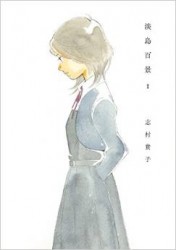
Yuri Manga: Awajima Hyakkei (淡島百景)

July 2nd, 2015

I know this is going to sound a little strange, but I never really know what I’ll get with a new Shimura Takako series. I mean, yes, she has blown me out of the water with Aoi Hana/Sweet Blue Flowers, but she’s also left me cold in any number of other series. In fact, her work most resembles Melissa Scott‘s science-fiction to me. I love the characters, but find the almost-passionless storytelling hard to warm up to. I just wish I could feel her in her work.

In Awajima Hyakkei, Shimura takes on a topic of much interest to Yuri fans all over the world – the student body of a famous all-female musical revue school that is definitely not that other famous all-female musical revue troupe that might automatically come to mind.

Each chapter focuses on two of the people at the school, the relationship between then, the circumstances of their friendships or rivalries and what the connections in the school mean to them afterwards. This volume is not in any way tidy. The whole thing is non-linear and is easier to read if you stop looking for “the story” and start just letting the character profiles work on their own. Eventually they tie back to the beginning and eventually we start to feel the threads of fate that bind everyone in the school.

***

Like today’s Review? –  Subscribe to Okazu withSubcribe with Patreon

***

There is a little bit of Yuri, in a story about first love. It is the kind of classic old 20th century retrospective, where the love the character feels is recognized mostly as she looks back as an adult.

Some of the best parts of the volume are those vignettes set in the past. My favorite chapter was towards the end when a new student uncovers the family history of one of her teachers and learns that she’s a third-generation star.

Ratings:

Art – 8
Story – Variable, averaging 7
Characters – 7
Yuri – 3
Service – 1 on principle

Overall – 7, but I think it will improve with a re-read.

As the title says, this series is “One Hundred Views” of a respected establishment, rather than a single tale. And, like a famous landmark seen for the first time, it will get better with a second viewing.


Re-Kan! Anime (English) Guest Review by Alice D

July 1st, 2015

75b2c08e6d279f5975a7ae77168da2881428009461_fullWelcome to Guest Review Wednesday! Today we have a brand new Guest Reviewer, Okazu Hero Alice D! I just love Guest Reviewers, it always gives me a thrill to be able to offer up a perspective that is not my own here on Okazu. ^_^ Take it away, Alice!

Though billed as a horror comedy Re-Kan! abandons the horror aspect almost immediately, for the audience anyway. The show starts with Amami, our main character with the titular “re-kan” (sixth sense) that lets her interact with ghosts, heading out for her first day of school in a seemingly normal fashion. At a crosswalk she suddenly starts hopping across and collapses in the middle of it where Inoue takes her by the hand and half-drags her to the other side of the street. Amami apologizes and explains that it was just a little boy spirit playing a prank. Inoue is confused at first but, predictably, freaks out when she catches a glimpse of it in a street mirror, and thus our two leads meet.

At school we learn that Inoue is terrified of ghosts, has a passive-agressive tsundere personality, and is very much a “grandma’s girl” to the point where her grandmother is, for lack of a better term, haunting her. We also meet Amami and Inoue’s friends consisting of Esumi, a former gangster, Uehara, Esumi’s childhood friend and occult blogger, Ogawa, who loves zombies, and Yamada, who… we’ll get to in a moment. It’s this group of friends that provides the comedy portion of the show through their interactions with each other and the ghosts that show up around Amami. There is also a rather perverted cat who very much wants to see panties, as Amami can apparently talk to cats as well (the link between ghosts and cats I am unclear on) this cat bothers her quite a lot.

As for Yamada, I still have no idea what purpose he serves. He’s the “genki girl” stereotype in boy form: loud, obnoxious, prone to breaking up moments that might otherwise serve to provide development with the Amami/Inoue relationship, and gets punched/kicked/has things thrown at him because of how annoying he is by one of other characters, usually Esumi and/or Uehara (which is suppose to be funny but is more of a relief because he finally shuts up at that point). At least with pervert cat and his quest to see girls’ panties A) he doesn’t show up as often, B) none of the characters really notice that he’s there, mostly due to C) it’s the various ghosts that stop him (which provides some characterization through their protectiveness of Amami and her friends and can be worth a laugh). The show would probably be better off without either Yamada or pervert cat though given a choice between the two I’d take the cat.

The story progresses in usual slice-of-life fashion though with the “twist” of ghosts being part of daily life for Amami who goes out of her way to provide offerings and assistance to them. There is a beach episode, of course, in which Yamada’s older, just as annoying, and slightly creepy older brother makes an appearance, and a cultural festival episode where they meet Amami’s father, who is every bit as scared of ghosts as Inoue is. This leads Esumi to point out the old saying about girls falling for people who resemble their fathers, Inoue reacts to this in standard tsundere fashion while Amami seems oddly happy about it. After this, at least once and episode, Esumi and/or Uehara go fishing for reactions from Inoue by insinuating that Inoue likes Amami a bit more than she lets on.

The best parts though, by far, come when the comedy is left behind, usually when Amami and Inoue have screen time alone. Fortunately they are fairly abundant. It’s in these moments that Inoue can show some genuine human emotion removed from the tsundere stereotype that she is locked into while the other characters are around. Most notably in the penultimate episode Inoue shows up to (nearly literally) kick Amami out of her depression by dragging her around town where they run into various people whom Amami had helped out using her sixth sense, culminating in a tearful almost love confession, but not quite (“I want to be friends with you forever”).

The final episode is a return to a “normal” life where the group goes to an amusement park, accompanied for some reason by Yamada’s brother, and have a sleep-over at Amami’s (the boys have to sleep in the yard). It ends almost as expected with the relationship between Amami and Inoue being an ambiguous ‘they have more-than-just-friends feelings for each other but won’t actually come out and say it’ sort of thing. However, the show closes on Amami and Inoue waking to the realization that they had spent the entire night holding hands and becoming very embarrassed over it. And on the roof of Amami’s house the pervert cat wakes up due to the fuss they’re making, stretches and says “Yuri? Oh yes.” before walking off screen. That parting line is certainly debatable though, it could be an indirect admission from the staff that that is the direction Amami and Inoue’s relationship is headed in or, cynically, since pervert cat could be considered an audience stand-in, it’s not to be taken seriously and is just wishful thinking. Given that the rest of the show has the other characters (except Yamada) providing good-natured ribbings to Amami and Inoue regarding their feelings for one another, I’m inclined to believe the former is the case.

Ratings:

Art – 5: middle of the road
Characters – Varies: Amami and Inoue would be around a 7, the supporting cast a 5, and Yamada a 1.
Service – 3.5: Surprisingly little for having a cat who’s only goal in life is to flip skirts and see panties, though their skirts could stand to be a hand-span longer.
Story – 6.5: (most episodes) 8: (episodes 3, 8, 11, and 12)
Yuri – 5: Most of the cast is aware of Amami and Inoue’s feelings for each other and won’t hesitate to point it out.
Overall- 6.5ish: Nothing to write home about, but definitely worth a watch if you have the time.

Erica here: I probably would never have even heard of this had it not been for you. I always appreciate the extra eyes and ears of the Yuri Network. ^_^ Thank you! 


Yuri Manga: Strawberry Shake (ストロベリーシェイク)

June 28th, 2015

downloadIt was the beginning of 2004. The magazine was called Yuri Shimai. The comic was an actual comedy, with physical gags blown way out of proportion. There was an idiot and a doofus and they fell in love, but didn’t realize it. The comedy was manzai-style, with blood and tears and extreme over-reactions to silly jokes. It was Hayashiya Shizuru’s professional Yuri debut. She’d been drawing doujinshi in that same style for years, and made her pro debut previously, but for those of us who were or would become fans, Strawberry Shake Sweet was the first time she was a pro “Yuri” artist.

Yuri Shimai was cancelled and in 2005,  Yuri Hime picked up the series. In 2006, a collected Volume 1 was released, followed by Volume 2 in 2009. Hayashiya-sensei left Yuri Hime and has gone on to do great things with Shuiesha. And so it is with both delight and trepidation that I review Shueisha’s re-release of this series as a one-volume collection, Strawberry Shake (ストロベリーシェイク).

The story follows Tachibana Julia a young “Talent” in Japanese TV. (Which is to say she does everything and anything, from starring in TV dramas, to advertisements, to quiz shows.) She’s asked to mentor a newcomer to the agency, Asakawa Ran, but instead, falls in love with Ran.

Ran isn’t the brightest bulb in the box, and Julia isn’t much better. Between the two of them and very much despite the objections of their manager, they’ll have to figure it all out on their own.

***

Like today’s Review? –  Subscribe to Okazu withSubcribe with Patreon

***

Strawberry Shake is very much played for the laughs. Touching or romantic moments are frequently marked by massive nosebleeds. If you’re not used to Hayashiya-sensei’s style, or classic manzai, the amount of violence might surprise you. The other thing that might surprise you is the ending. As I said when I reviewed Volume 2, “I absolutely refuse to spoil the rest of the chapter, except to say that you will probably be outraged and/or disappointed by the end.”

So, here we are over a decade after the comic was originally begun and a lot of things have changed. Yuri is a genre of it’s own. Hayashiya-sensei is a star among Yuri artists. And same-sex marriage is a thing that is discussed in the news, in the courts. Even in Japan, where Shibuya is the only part of the country that allows same-sex marriage, the conversation has begun.

What does that mean for a comic like Strawberry Shake? It means that some of the jokes just don’t hold up that well. Saeki Ryouko, Julia and Ran’s manager, in 2004 was a comedic figure. In 2015, she seems just like a closeted homophobe. Sorry Saeki-san, but you protest *way* too much. ^_^ Comedy is harder than tragedy. In Strawberry Shake, the comedy is vaudevillian, and so, a relic of the past, rather than a joke we’re all laughing at now.

The essential love story is still cute and maddening and adorable and sweet. ZLAY is still absolutely fucked up hilarious. The climax of the manga is still fantastic. And the new extra chapter? “I absolutely refuse to spoil the rest of the chapter, except to say that you will probably be outraged and/or disappointed by the end.” ^_^;

Should you get it? Yes. This is an important book for Yuri fans. Will you like it? Maybe. ^_^

Ratings:

Art – 9 It’s striking to see just how much better her art is now than it was in 2004. This volume has been touched up, but look at the first and final chapters to see a difference.
Story – 7 It has worn a little around the edges over time.
Characters – 8
Yuri – 8
Service – 2

Overall – 8

Again I will quote myself from 2009: “As funny as this manga is, I’m forced to conclude that this story is not *quite* as perfect for Hayashiya-sensei as Hayate x Blade. The action component just catapults that series to perfection.

But hey – this is a groundbreaking series. A Yuri series for Yuri magazine by a woman who has been drawing Yuri comedy for a long, long time. A must-have for any fan of Yuri.”