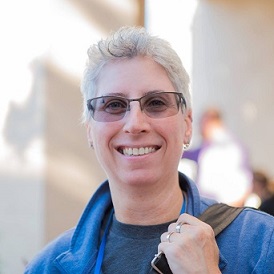
“Chika” from Golondrina by est em at TCAF
This year Toronto Comic Arts Festival (TCAF) was held on May 10 and 11 at the Toronto Reference Library and surrounding locations. As with last year, I bought good books, met amazing people and generally had a blast.
I arrived Friday and hooked up with my roommates for the weekend, Brigid Alverson of Mangablog and Robot 6 and Johanna Draper-Carlson from Good Comics Worth Reading. The weekend activities started for me with a reception at the Japan Foundation, where Japanese manga guests Moyocco Anno, creator of Sakuran and Happy Mania!, who was premiering her book Insufficient Direction, about her life with her husband, Neon Genesis Evangelion director Anno Hideaki; BL artist est em, creator of Golondrina, and the manga team who go by the name Himekawa Akira who are working on the My Little Pony ~ Friendship is Magic manga and are best known here for their Legend of Zelda manga adaptations, all introduced themselves to the audience, then we mixed and chatted. It was a pleasure to meet est em-sensei and also see Himekawa Akira-sensei again. ^_^
This was followed by a dinner of epic proportions, with Brigid, Johanna and myself joining fellow comics/manga journalists and reviewers, Deb Aoki of MangaComicsManga, Heidi MacDonald of The Beat, Robin Brenner from No Flying, No Tights and School Library Journal writer Eva Violin.
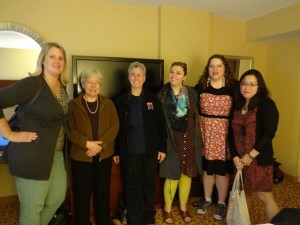
On Saturday, I moderated a relatively earlyish panel Art Theft! with Rachel Dukes and Katie Shanahan on how their art went from viral to stolen, what they did about it and what they might do differently knowing what they know now. It was well-attended for the venue and the panelists were great. At the end, we all agreed that we had learned something.
I hit the floor briefly between various panels and did dinner with friends, including manga blogger Sean Gaffney and a few other panels. The “Queering Comics” panel this year was *way* more balanced than last year, including at least one trans artist. I was a very little bit disappointed by the whiteness of the “Writing Comics for Women” panel, but that was remedied at the very excellent and nicely diverse “Women in Genre Comics” panel on Sunday. In fact, this last had me bolting for the floor again and buying up a bunch of the books I’ll mention in a sec.
I finished TCAF proper by moderating est em‘s Guest Panel, with translator Jocelyne Allen, followed by dinner with Sean, Johanna and Brigid, which was a terrific way to end the event!
The people are great, the panels are great, the venues are great, the food is great, Toronto is great, but the star of the show are the comics, and I thought you might want to know what I picked up while I was there. ^_^
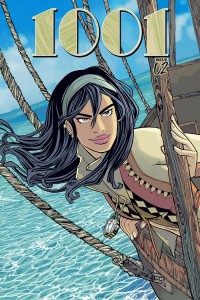 The first thing I snatched up were the first two issues of Sanya Anwar‘s zOMG gorgeous, throat-grabbingly compelling 1001. This is a re-thinking of the famous A Thousand and One Arabian Nights, with a more active Scheherazade. Issues 1 and 2 are up online and Sanya has said Volume 3 will be up in about a month. Her art is stunning, the story really grips you hard and shakes you up a bit and I cannot wait to read the next chapter!
Sanya also participated in the “Women in Genre Comics” panel. One of the questions specifically asked about re-telling old myths and stories to create them in our own image. I’m excited to see what Sanya has planned for Scheherezade.
 I’ve *finally* had a chance to read The Lumberjanes, Issue 1, courtesy of Brigid, and I have every intention of nabbing up Issue 2 in which a relationship begins to happen in between following bearwomen into the woods and fighting wolves. And other things. This is an action-packed, gosh-I wish-it-were-longer type story that I gift to my inner 11 year old.
Issue 1 starts right in the middle of an adventure and the tension doesn’t really let up, so readers are left chasing the story right from the get-go, which I completely approve of. No slow build to a thing happening here.
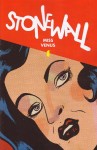
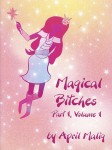 Sasha Steinberg and April Malig were next to each other, so while I was chatting with them, I picked up the first of Sasha’s Stonewall series, and the first issue of April’s Magical Bitches series. This is a sarcastic send-up of the magical girl genre and the first issue is a prelude to what I hope will be a great story.
I asked Sasha about Stonewall and he said he’s working on a multi-part series detailing the weekend when the Stonewall bar became the turning point for American sexual and gender minorities. Each issue will follow a different character. Issue one starts off with Miss Venus, a teenage drag queen. The art for this issue is very mid-century American romance comics…the color choices, in particular, are stellar. Sasha discusses his influences in the back of the comic, from content to art and even has footnotes on the historical facts. Totally swoon-making. ^_^ His first two arcs, Miss Venus and Mark are available for purchase on his shop.
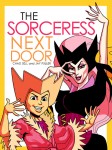
The Sorceresses Next Door by Chad Sells and Jay Fuller got me all choked up. Read it here and see why.
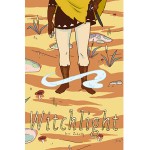 Reading Jessi Zabarsky’s Witchlight, I remembered why pamphlet comics drive me bat shit crazy. JUST as the story gets good, it ends and you have to wait for the next chapter!!
A teaser for Liz Prince’s Tomboy made me wish it was September already. Anyone who grew up as a tomboy will remember these situations. It’s not all bad…but it wasn’t all good, either.
 I bought an artbook so beautiful I literally said to the artist, “Take my money. Immediately.” Breathtaking work by Shilin Huang based on her original comic Carciphona. There were some Yuri images, but really, it would not matter, the work hit my sweet spot for art. Check out the first page of Carciphona and see what I mean.
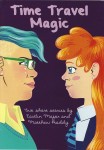 Matthew Hoddy and Caitlin Major, who work as team Space Pyrates, had a fun little two-story collection called Time Travel Magic. Both protagonists were terrific female characters and one story has a little Yuri.
The next purchase I made comes with a somewhat strange story:
Some years ago, I was at the MoCCA event in New York City and an acquaintance mentioned that her friends had put together a collection I might like. The book was called Jardin des Lunettes. I wrote about the anthology in 2009, because I did indeed like it.
 5 years later, I am standing in another country in front of the same circle and we all have a “Really!?!” moment as I realize I am holding the sequel to that anthology, by the circle now known as Love Love Hill.
The new anthology is called Love Lens and again, Kim Hoang has created a lovely Yuri story for the collection. Do get this if you have any interest in original Yuri and want to support Western comics creators! The Yuri story really is awfully sweet. ^_^
 The same circle were also selling a BL sports anthology called Fujo Sports. I read it last night and it was cute,; all the stories except one were kind of the same story…but it still was an entertaining read. ^_^
There was one Yuri story in the collection, as well. And, honestly, the cover was worth the price. ^_^
 The last pamphlet comic I want to mention comes from the pages of Sparkler Monthly, the English language Shoujo/Josei manga magazine put out by ex-Tokyopop folks and great ladies Lillian Diaz-Przybyl and Lianne Sentar. They are doing *amazing* work, getting original English-language and translated short stories, manga-inspired comics, manga and voice dramas. One of their short series is recently published Yuri story Before You Go (which you can preview here and you can buy on the Sparkler shop – thanks wandering dreamer for the heads up!) I picked up an extra copy to give away in a future contest, as well. ^_^
This story is a pretty straightforward “Story A” girl meets girls story, but it’s always lovely to have a sweet Yuri story in among all the angsty BL. ^_^
The last two books I have to mention, I have not finished yet, but they are both oh so good.
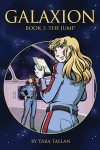 Tara Tallan‘s Galaxion, which is a story that got its start in 1983 when Tara was in 7th grade and is now on it’s 4th iteration or so as a fully drawn and written space epic graphic novel series that passes the Bechdel Test and the Friedman addendum with flying colors.
Women are leaders and fully formed and people have conversations with other people the way they do and then a plot happens! And there’s space ships and people relationships and politics and a plot. I’m really enjoying the book so far.
My last purchase of the show I have not yet had a chance to read, but I was so impressed by one of the creators at the “Women in Genre Comics” panel, I wanted to get it. Namesake by Isabelle Melançon and Megan Lavey-Heaton. I’m at the end of a long post, so I’ll steal the synopsis from the comic’s website: “Namesake is the story of Emma Crewe, a woman who discovers she can visit other worlds. She finds out that these are places she already knows – fantasy and fairy lands made famous through the spoken word, literature and cinema. Her power as a Namesake forces her to act as a protagonist in these familiar stories as she figures out how to get home.” Another strong female protagonist, another compelling story.
So, here’s my takeaway…again…from TCAF. When you are looking for amazing female characters, warriors, adventurers, time-travelers, sorcerers, scouts, captains and leaders, look at the amazing work of the women and men who are making comics not necessarily carried at your local comic shop or bookstore. Check out the YA sections, look for good comics for kids, get to local comic shows (not comic collecting or collectables; the small local comics shows that are popping up everywhere, MECAF, MoCCA, Stumptown, and more. Don’t know where to start? Heidi MacDonald does “coming up this weekend” round ups on The Comics Beat and so does Tom Spurgeon at Comics Reporter.)
And…if you can manage it, make it to TCAF, where the world comes to sell terrific comics to people who want to read them.

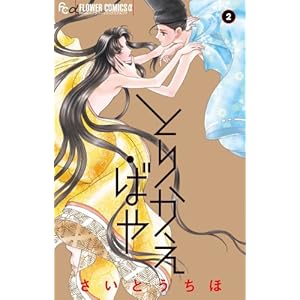 In my review of Volume 1 of this gorgeous manga version of the classic Heian story, Torikaebaya (とりかえ・ばや), I discussed the story’s history. Today, we’ll talk about the protagonists of the story.
 What a week for Yuri fans!