Disclaimer: As many of you know, ALC Publishing has been collaborating with JManga to provide localization for some of their manga. Therefore, it would be the height of absurdity for me to tell you that this is an unbiased review. I am human, and there will be bias. Duh. However, I am not approaching this review in the sense of “We’re great, everyone else sucks”, because aside from it not being true, that too would be absurd. So, I’ll do my best to be consistent, coherent and to make my biases as transparent as possible, so you know where I’m coming from.
In addition, I am not spending a single moment pointing out typos, “misspellings” (if that can indeed even be considered to be a thing in a transliteration) or choices in translation that would not be the choices I myself would make. Those are the kinds of things people do when they have no creative energy themselves and instead prefer to feel important about something by poking pedantic holes in a thing. For the sake of today’s discussion, let’s assume that every volume probably has a typo or two (and in a few days I will tell you *why.* It’s a completely different topic.) I will comment on lettering and font only to discuss issues with the legibility of a page and anything that impacts the reading experience in a way that takes one out of the moment. I’ll grade them A-F, Where A+ is outstanding and F is Fail, because I think numbers aren’t really applicable here.
Lastly, in the interest of complete transparency, I received a number of credits from JManga to supplement my subscription, not so that I would do this review, (in fact, they have no idea I’ve written it yet,) but because they are very nice people. Nonetheless, I pay for my own subscription plan out of my own pocket.
Having said all that, let’s begin. I will not discuss the registration process. It’s as straightforward as can be and there is nothing unusual or complex about it, if you have ever registered for anything, anywhere online.
Subscription
Negatives: I have previously mentioned that I am uncomfortable with the “subscription” model of JManga. In a nutshell, the “subscription” one buys is not a subscription. On Crunchyroll, one pays a monthly fee for all-you-can-watch access. That is a subscription. On JManga, one pays a monthly fee and receives that much in credits, their site currency, which one then cashes in for titles. This is akin to going to an arcade, putting $10.00 in the machine and getting $10 worth of tokens, which you can then only spend in that arcade. The subscription itself provides no value. The value of those tokens is the entertainment you can buy with them.
Positives: JManga has recently run a number of very interesting sales and promotions, and is constantly running additional sales on the price of the volumes of manga. So, during one of the recent promotions, they doubled the amount of credits you initially received with your $10 or $25. If you were to pay $10, you received 2000 credits and much of the manga was discounted to 499 credits. So, for that $10, you could “purchase” up to 4 manga. Basic math tells you that that is a great deal.
A big positive is that a subscription to JManga is not a commitment to JManga. According to their FAQ, you can downgrade your subscription at any time and still retain access to anything you have previously purchased. So you can buy your manga on sale, then downgrade back to free, until you have a few more bucks in the bank. I honestly like this. It makes the “subscription” model more tolerable than a commitment to a monthly purchase that I may or may not want to make. I buy my manga in bulk. With the variability of manga series’ lengths, and the lack of consistent timing on new material (by which I mean “new material I want”) being added to the site, there’s no guarantee that I’d spend that $10 every month….and while credits are rolled over from one month to the next, there is a sincerely held concern that there might be a time limit for rolled over credits or, let’s be real here, the longevity of Jmanga itself.
I will review the series I read on Story, Overall Presentation and Overall Translation, and at the end, discuss the viewing experience on two different tech systems, a laptop and a tablet.
I purchased a number of titles, both Yuri and non-Yuri, to get an overall feel of the quality of translation. A number of people have commented on the not-entirely-fluent feel of several series, but I find that more often than not, translations were perfectly fine. There’s a panel, or a page, here and there, were English grammar isn’t perfectly tight, but, like typos, there’s a reason for that, and I’ll cover it under a different essay.
 First up, Ekiben Hitoritabi: I picked this manga first, because I had never read it, had no expectations and no a priori opinion.
Story: Both incredibly interesting…and sort of dull at the same time. ^_^ Food, train, view, food, train, view. I like all three and there is no doubt that if I had read this in Japanese, I would have missed most of the story. So it was really nice, but the density of detail was overwhelming at times.
Overall Presentation: Not all that good, actually. I frequently had to expand the page size to see side comments and notes. I don’t know for sure, but it appears that this was scanned in at a low DPI, which meant I frequently needed to zoom. I’ll get back to the zoom later in the tech section. There was a serious issue with the retouch. Digitally “whiting out” text is quite easy, because you just set the brush to the color of the background and whiteout the previous text. This manga has thick gray lines behind the text, where it looked as if someone actually used whiteout and scanned it in, but it’s probably more likely that the color of the brush was just off from the background color.
Overall Translation: Generally quite good. If there were places that didn’t seem perfect, my brain has washed them away and I’m left remembering a pleasant journey with two pleasant people.
Score: B
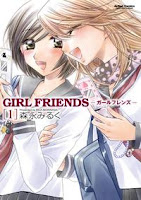 From there, I went to the Yuri page and downloaded all the Yuri they had. Obviously, these were of interest to me.
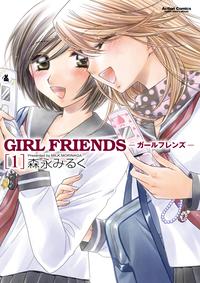
YNN Correspondent Chriz P, who is from the UK, has been keeping me abreast on what UK fans can access and not. According to Chriz, GIRL FRIENDS is now accessible in the UK. (I’m particularly vocal when the UK is left out – I have many friends there and of course they read English, so there is just no excuse for them to be embargoed.)
Story: I’ll keep it short here. Sweet, tortured, a little sexy, sometimes service-y, GIRL FRIENDS tells the story about two girls who fall in love.
Overall Presentation: Excellent. I don’t recall ever having to expand the picture to read the notes, except for once and the note was genuinely tiny. No weird whiteout marks (I was concerned that I’d run into that again, but I have not.) The lettering was easy to read overall.
Overall Translation: A little stiff in places, but acceptable. There’s a very unfortunate glitch in the language on the first page, and from time to time, there’s a spot that’s just not smooth or natural, but I wasn’t pulling my hair out or anything.
Score: B+
 Third up, Love My Life. I had some serious trepidation about reading this, because I feared that the translator didn’t love it as we do and that might be reflected in the translation.
Story: Two girls in love, one learns her parents were gay/lesbian. She meets her late mother’s lover, her father’s current lover, deals with friends, school, her own love life and lives happily ever after.
Overall presentation: Solid. There were a few quirks/mistakes, but nothing made me cringe and die or anything. This one needed a little post-lettering editing. I loved the fonts they chose for this book.
Overall Translation: Same as above. There were a few moments when I thought, “that was awkward,” but I started reading it out loud and, y’know, it really wasn’t. What was awkward was just seeing it on the page. From time to time there was a genuinely awkward set of lines, see above about post-lettering editing.
Score: B+
 Madame Joker was the greatest choice on JManga ever. I cannot express to you how wonderfully quirky this book was!
Story: Widow Ranko is a woman who lives by no one else’s expectations. She has two children, and a lover, and and in her spare time, she solves murder mysteries. From Jour magazine, (and clearly I need more Jour in my life!) the art style is old school, and the story has a pretty classic feel about it too. Sort of Victorian SCA meets “Murder, She Wrote.” No Yuri in this, that I know of, but I know some Yuri has run in Jour recently.
Overall Presentation: Pretty great. But to be fair, I’m utterly besotted by the art style and may be missing whopping big problems.
Overall Translation: The language is stilted and odd and I sincerely think that that’s partially that slight awkwardness of the translation and partially the fact that the two kids were raised by the Victorian SCA and so their Keigo is odd.
Score: A THIS was worth my $10, right there.
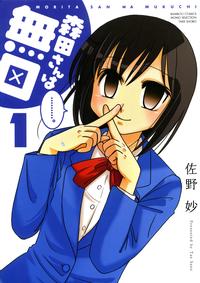
 I had enjoyed Morita-san ha Mukuchi well enough when I read it in Japanese. I wasn’t expecting to be blown away. I was blown away.
Story: Morita Mayu doesn’t say much, but that doesn’t mean she’s not all in there. Mayu is popular and friendly, she’s just quieter than most people.
Overall Presentation: Perfectly fine. Better than fine, really, because of all the series these were the sharpest looking pages I read. Lettering was really nice.
Overall Translation: I randomly opened a chapter here and three pages in I snorted as I laughed out loud. Done deal. This was funnier in English than in Japanese, because I was missing less and the language was clear of awkward phrasing.
Score: A
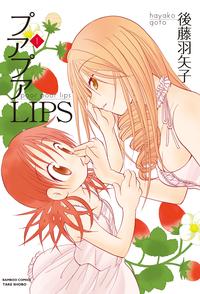
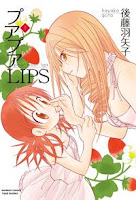 Finally, I reached for Poor Poor Lips. Not to be critical, but to make sure it worked, since that was our first translation for JManga.
Story: Nako is very, very, very poor. She gets a job in a gem shop, but finds out the shop owner is a lesbian. Ren says Nako’s not her type, but….
Overall presentation: Oddly of all my choices this was the one I had the hardest time reading. I was not in love with the lettering, but once I switched to tablet over laptop, it was peachy.
Overall translation: I’m so proud of how this came out. Nothing awkward, great smooth language. Erin does spectacular work.
Score: Well, A, duh, I did say this would be a biased review. ^_^
I have one serious complaint: ALC specifically requested to have credits on the work, and those were not included. I’m a tad vexed about that, but it’s true sitewide. People who do work should be properly credited. I feel this way about all work, in every industry. Every single person who worked on Photoshop gets their name in the product – every translator, editor and letterer should have their name on JManga.
Update April 2012: Translator and editor are now credited. I still think everyone, retouch and letterer and anyone, who worked on it should be credited.
Notebook vs Tablet
For the purposes of this review, I am using a Dell Inspiron, 15″ screen with 1366 x 768 resolution (now that I notice that…what a weird resolution…), running Windows 7 and a Samsung Galaxy 10.1″ tablet with 1280 x 800 resolution, running Android 4.0 Icecream Sandwich. Obviously, with Windows 7 and Android, there was no issue at all about the Flash reader. (Another jab at the late Mr. Jobs who allowed his personal vendetta to get in the way of, oh, letting people watch and read stuff.)
I started the process on my desktop, but found the screen – wide as it is – to be more of a burden than a blessing. With the two-page spread, the panels were just slightly too small to read comfortably with my computer on my lap (which is where I keep it most of the time.) Using the zoom was fine for a single spread, but when I “turned the page” the zoom would unset and I was back to having to zoom again. I avoided “Guided View” so I have no idea what it might have done.
Table of Contents was a bit vexing. Shortcuts to the chapters worked variably well.Sometimes it was easier just to start from the beginning.
The Language control is a nice little feature. Click the Globe and the Japanese script replaces the English script. Ideally one day there’ll be more options, too.
Then I moved to my tablet. Wow. This was absolutely the best way to read JManga, IMHO. I was able to switch to a single-page view with a click (all the commands live on the bottom right hand corner – they disappear when you don’t use them for a bit, just move your mouse/finger around the general area and the controls pop up.
On some of the series, the full page view was a tad wonky at first – the page would be half off the screen, or too high up. Once I pulled it into place, the next page would do the same. Suddenly, for no reason, the system grokked what I wanted of it, and the whole thing worked nicely. Next time, same weirdness, but I only had to reposition a page once. Third time, it was fine.
On the tablet, the pages were perfectly sized in the single page view. I quite often read manga with the spine bent back (it’s my manga, I can mangle it as I see fit) so this one page at a time was fine. A quick turn of the screen allowed me to enjoy a two-page spread. The text was clear (clearer in some series than others, depending on the fonts chosen, and no one was choosing for middle-aged eyes, if you take my meaning.) I only needed to zoom once, because a side comment was very small. This is acceptable – I have quite often pulled out the magnifying glass to read an aside in a print manga in Japanese.
Turning the pages on the tablet was not emotionally satisfying – poking the page, then waiting for the new page to load wasn’t as elegant as I’d hoped. I prefer the swiping motion, but the tap to turn was functional, so I’m not complaining.
On the whole, I’ll stick with reading my JManga on the tablet. As soon as they come up with an Android app to allow me access to my library when there’s no Wi-fi, I’ll be happy with the deal.
Negatives: Poking my screen makes me pokey; no technical credits on the stories; clunky ToC; variable fonts/quality.
Positives: Perfect for the tablet; simple controls, easy to figure out; wacky great stuff to read that we’d never encounter elsewhere.
Notebook: B
Tablet: A
Conclusion
Since JManga launched a mere 7 months ago, they’ve come a long way. They clearly listen to their market and they have really showed some stretch in content, format and presentation.
Of course there’s things that can be improved, but I have complete confidence that JManga is on the right track to being a powerful digital manga bookstore.

 Happy Guest Review Day! I know I have not yet reviewed the third box set of Revolutionary Girl Utena, much less the movie, but I will. I’ve just been a tad busy. In the meantime, here is a special Guest Review from Okazu Superhero Eric P. on, specifically, the dub of the Revolutionary Girl Utena The Movie, since as you know, I do not watch dubs.