Yuri Manga: Aido (愛い奴)

July 4th, 2011

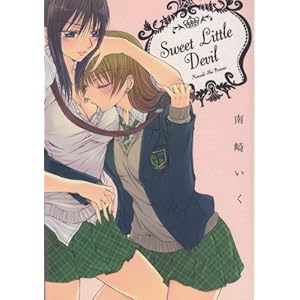
Aido (愛い奴) by Onazuka Kahori, follows the life and loves of Ureha, a young woman who had some years earlier had an affair with another woman, but is now seeing a young man who is quite serious about Ureha – he’s even proposed, but she has yet to answer him. She’s sure she loves him, but something is holding her back. And then she meets Saori, a woman who lights Ureha’s passion in a way that Ichiru, her boyfriend, never has.

When Okazu Superhero Katherine H. sent me Aido,  she suggested that it very much seemed to her a more modern version of Moonlight Flowers and I can totally see that. Both are about finding one’s true self and rejecting expected roles, so one can become the person one truly wants to be. Unfortunately, where Moonlight Flowers does this with elegance, Aido wallows in vulgarity.

Ureha, as a high school senior had already had a passionate love affair with another girl, and had set it aside as one does with childish things. Ichiru is clearly in love with her, but he starts off dissatisfied at Ureha’s lack of commitment and spends a great deal of the story acting suspicious, mean and churlish. He eventually falls into the time-honored pattern of “if I can’t get what I want, I’ll just take it.” A classic scoiopathy. Here’s a relationship tip – if you go on and on about how you’re *sure* the other person’s going to leave you – they will.

I don’t want to say I object to Ureha and Saori’s relationship, but I can’t say I see a lot of positives in it. Saori’s first act is to humiliate Ureha and that pretty much is their dynamic throughout. It makes it hard for me to like Ureha when she’s put herself in the position of choosing one jerk or another. Unlike Sahoko in Moonlight Flowers, she’s not escaping one demeaning relationship for a relationship between equals – she’s escaping a perfectly acceptable relationship for a demeaning one. Where Kaoru in Moonlight Flowers is cultured, elegant, successful, Saori is a name in the gay bar scene; big fish, small, desperate pond.

The difference between the classic Yuri of Moonlight Flowers and Aido is also reflected in the art. Flowers is, as I said, elegant, classic, clean, where Aido is messy and hard to follow.

Ultimately, Ureha’s choice could seem like a great middle ground to many, but in the end I was unable to find any real enthusiasm for Ureha raising a child whom at a young age, already seemed pouty, cynical and selfish, just like her mother.

There are some positive messages to be gleaned from Aido, though. The main clear and present message that is directed at all straight women is that they really had better never have lesbian sex, because it is just so much more amazing than anything they will ever have with a guy. ^_^

Ratings:

Art – 4
Story – 5
Characters – 4
Yuri – 9
Service – 4, unless you’re into scat, then 9

Overall – 5

Where I found Moonlight Flowers romantic, elegant and beautiful, I found Aido‘s treatment of the same theme to be merely crude.


Mahou Shoujo Madoka ☆ Magika Anime (魔法少女まどか☆マギカ)

July 3rd, 2011

Any wish bound by logic can be twisted….

A few months ago, I wrote a preliminary discussion of Puella Magi Madoka Magica (魔法少女まどか☆マギカ) and I noted that, at the time, almost no one seemed to understand my point. ^_^ I’m going to try again, this time without being clever about it.

The reason for magical girls is very simple. Teenagers desperately want to be grown-ups – to have people rely on them and to be mature and reliable. Unfortunately for most teenagers, they have neither the critical decision-making skills nor the life experience to make mature decisions. Young adults often mistake the trappings of adulthood (drinking, driving, sex) for real maturity (the strength to say “no,” for instance.) Magical girls are needed, Kyuubey understands, because magical middle-aged women would look at him and say, “You know, I have no reason to believe that you’re telling me all or even part of the truth. It’s in your best interests to keep this cycle going by your own admission, so why on earth would I take your advice?”

Kyuubey, like all good Lucifers, speaks mostly truth, and in some cases, the exact truth. Innocents are too innocent to parse the one from the other, or what the significance of that truth really is to them.

Any wish bound by logic can be twisted….

Well, duh, then…right? The answer is obvious.

So, Madoka Magica was very interesting to me. I very much loved the art used in the witch’s realities, and very much didn’t like the design of the people. If this series had character designs as beautifully done as the witches art and the buildings, most of the fans who loved it wouldn’t have given it the time of day, but, oh how gorgeous it might have been!

The ending was…what was the ending? Was it the expected ambiguity or was it writers that don’t know how to write a or are uncomfortable with a happy ending? Was it, in fact, a happy ending?

Here’s what I think – I think “end of the world” scenarios, like “Good” and “Evil,” are too much for human brains to really grasp. We assign funky art to represent Evil, because it’s easier than really establishing a new normality. We make terrible things the purview of Evil, because we can’t grasp that the selfishness of self-preservation is really what creates terrible things that other people have to live with.

Any wish bound by logic can be twisted….

The answer to that is, obviously, that one has to make a wish not bound by logic. Madoka did that.

In the world of Mahou Shoujo Madoka Magica, it is established that this Good/Evil, Hope/Despair dichotomy runs the universe. Girls sacrifice themselves to stop this cycle, but only end up repeating it over and over. Until one girl wishes to stop the cycle before it ever begins. And you know…her wish comes true. But, it doesn’t stop the fact that the tension between Hope and Despair still powers the universe. So…did it work? Is Madoka a God, or is she still fairly limited in her ability to think outside the box?

What would you have wished? I know what I would have wished, but I’m not going to tell you. Wishes should be made in secret and not in front of Incubators. ^_^

And Yuri. Yes, Homura is clearly in love with her ideal of Madoka. An ideal, I can’t help but point out, who fails to live up to her expectations eternally. And yet she goes back again and again. Sounds like a lesbian to me. Madoka loves Homura like the Virgin Mary is supposed to love you.  An utterly unsatisfying situation to me, but I was never the target audience for this anime. The target audience for this anime are boys who think magical girls are a good idea.

Ratings:

Art – 5/9 for character designs and “witches” worlds respectively
Story – 8 It’s not standing ovation-worthy, but it’s good for a conversation
Characters – 7 pretty much types, rather than fully-fleshed out personalities, but in 12 episodes of angst, there’s not that much time to bother
Yuri – 5
Service – This series is, by default, created for otaku. For the amount of time we stare at the girl’s legs – the zettai ryouki, specifically – 10

Overall – 8

I had initially wanted to watch the final episodes on Walpurgisnacht (April 30,)  but life kept me from doing so. I’m almost glad I didn’t because, for an utter destruction of everything, this was a little disappointing, honestly.


Breaking News: Yuru Yuri to Simulcast on Crunchyroll

July 2nd, 2011

Anime Expo continues with more Yuri-friendly news, as YNN Correspondent Bruce McF points out, with Crunchyroll’s announcement that namori’s slice-of-life with some slight Yuri flavoring series, Yuru Yuri,  has been added to their simulcast line-up.

Bruce suggests one and a half Hip, Hip, Hoo…rays. ^_^


Yuri Network News – July 2, 2011

July 2nd, 2011

Yuri Anime

On Nozomi RightStuf said those words we longed to hear…folks who pre-order the three Revolutionary Girl Utena box sets get a Rose Seal ring. (As long as supplies last.) Third set is not yet up for pre-order on their site, but I have no doubt it will be when they return from Anime Expo.

Aniplex USA has announced the license of Puella Magi Madoka Magica.

In case you ever wondered, here’s a Japanese poll ranking fave Yuri anime series. No surprised gasps at the winner, IMHO.

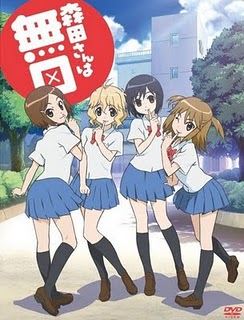
Morita-san ha Mukuchi TV trailer has been posted on the manga publisher’s website.

On Hooded Utilitarian, I wrote an open letter to Rob Tapert and Sam Raimi about what they should and shouldn’t do with their live-action Noir adaptation.

***

Other Yuri News

Amazon.com employes cosplayed Yotsuba “character” Danbo, the cardboard robot, in Seattle’s LGBT Pride Parade. We definitely need more gay robots. (I know Danbo isn’t really a robot! We still need more gay robots.)

The most recent Hatsune Miku commercial is so geeky that it’s sure to be absolutely inexplicable to most viewers. On the other hand, it has leeks, so it belongs to us.

***

Snatches of Yuri

YNN Correspondent Sean G says we should keep our eyes out for Maid Shokun. “Tokyopop has released its first (and sadly only) volume of Maid Shokun, a manga by the prolific authors Satou Nanki and Kizuki Akira (authors of Ebisu-san to Hotei-san). It ran for 4 volumes in Comic Gum, and is a slice-of-life manga about a maid cafe in Akihibara and the difficulty it has finding its voice.

Among the cast is Hachiya, the tall, handsome prince-type girl who wears a bartender outfit rather than a maid costume; and Airi, the cute and popular maid who is dealing with an aggressive stalker. Even if it’s an incomplete series, fans of yuri will want to grab the volume for these two, who have a quite realistic and well done storyline within, which is far more than I ever expected from a series about cute maids.

I don’t believe Tokyopop ever shipped the books to stores or to Amazon, so the only way to get them may be through a local comic shop that deals with Diamond Distributors, who shipped the volume last week.”

***

That’s a wrap for this week.

Become a Yuri Network Correspondent by sending me any Yuri-related news you find. Emails go to anilesbocon01 at hotmail dot com. Not to the comments here, please, or they might be forgotten or missed. There’s a reason for this madness. This way I know you are a real human, not Anonymous (which I do not encourage – stand by your words with your name!) and I can send you a YNN correspondent’s badge.

Thanks to all of you – you make this a great Yuri Network!


A Certain Scientific Railgun Manga (English)

July 1st, 2011

A Certain Scientific Railgun 1There are two kinds of romance novel. One is the kind that everyone thinks of when they read the words “romance novel,” which is to say, romance novels targeted at adult women. These are often generically called “Harlequin novels” after the famous publisher of the genre. The other kind of romance novel are for men. They are packaged as action-adventure books, but are always as much about the hero and the beautiful woman getting together as any Harlequin. We call these “Clive Cussler novels.”

You can tell the difference between romance written for men and for women by the way they use language. A woman’s romance might describe a scene, “His bronze skin glinted in the evening sun as he closed his brawny arms around her slim waist and full hips.” Whereas Clive Cussler would describe the scene this way, “His bronze skin glinted in the evening sun as he closed his brawny arms around her slim waist and full hips.”

Many of the manga I read are for older teens, young adults. They aren’t *quite* children and they aren’t quite adult, really. I find myself reading these manga, noticing how often random bits of service are wedged into scenes that make basically no sense at all. In effect, all these manga sound like this to me:

“Hey Carol, I wanted to get those sales reports to you by End of Business day, but spent the afternoon thinking what Kim would like like in a bikini instead.”

“Oh, hey, Bob, thanks, I’m going to need those reports for a presentation I’m making in front of the marketing team. I was working on it, but spent the afternoon wondering what David looked like in the shower.”

Which brings me, at last, to A Certain Scientific Railgun. In the first scene, which begins with narrative expositions, so the audience not familiar with the world from To Aru Majutsu no Index, the mother ship franchise for this series, can know enough to get by. This is enhanced slightly by  more exposition by the teacher who is saying stuff that presumably the students in her class all know.

We are then introduced to Misaka Mikoto, one of the objectively most powerful people in the book’s world. In the shower. I’m not saying it’s pandering, I’m saying it’s *distracting*.

In any case, we quickly meet Mikoto, her admiring, pervtastic kouhai Shirai Kuroko, Kuroko’s fellow member of Judgement Uiharu Kazari and her friend Saten Ruiko. These four girls are the series’ greatest strength. They like each other, they respect each other. Kuroko and Mikoto could easily treat Saten and Uiharu, who have neither power nor money, as dirt…but they do not. They are kind – not pitying kind, genuinely kind. Mikoto and Kuroko are…nice.

The story is weaker than that in the anime, but easy enough to follow and if you don’t much care that Index is not in English, so we are indeed coming in in the middle of the story, then it should be no particular hurdle.

Yuri is thin, one-sided and a bit tired, but Kuroko’s antics cover what is probably a genuine desire for Mikoto.

As this is a Seven Seas book, all the technicals are quite good. Once again a very authentic reading experience.

Look, take your brain out of your head and watch the girls fight the bad guys. It’s fun.

Ratings:

Art – 6
Story – 7
Characters – 8
Yuri – 4
Service – 3

Overall – 7

I think this series is a decent manga, but it made a terrific anime. I’m not sure what I would make of this manga had I not seen the anime, but the one that that indubitably worked in both is the friendship of the four girls.

Many thanks to brand-new  Okazu Hero Steven M for sponsoring today’s review!