Shoujo Kakumei Utena After The Revolution Manga (少女革命ウテナ After The Revolution)

July 25th, 2018

When Tenjou Utena disappeared from Ohtori Academy, life for the students moved on.

Or, did it?

In Shoujo Kakumei Utena After The Revolution  (少女革命ウテナ After The Revolution) twenty years have passed. Touga and Saionji have become competitive art dealers. But a simple card telling them that “those who seek the power to revolutionalize the world, should return to Ohtori” inspires them to come back and discover that what they had forgotten on the dueling ground.

Juri has spent 20 years as a competitive fencer so she will be a worthy prince to the princess she’s chosen to protect, her Shiori. A competition is crashed by Ruka, who promptly attempts to steal Shiori from her. He must be defeated on the dueling ground in order for Juri to find herself.

Miki has become a concert pianist, but he is facing a crushing artistic block since Kozue fell into a coma, after her husband beat her. Miki and Kozue find themselves on the dueling ground facing each other and attempt to rebuild their relationship from scratch.

In each case Utena appears as both a child harbinger of crisis and as Dios falling from the castle, signalling resolution. But it’s not until Kozue and Miki create a staircase of music, that Utena can ascend to find Anthy – still crucified – and free her at last so they can be together.

The end of the manga sees them all freed, (again,) but in doing so, it gave each of them a completely new history, a backstory that differed from either of the previous manga versions or the two animated versions. To make this manga make sense, we have to ignore the title – this is not really “after the revolution at all.” Sure, they’ve aged, but they haven’t grown. It takes one last duel to push them forward.

Ratings: 

Art – 9 I *have* mentioned that Saitou-sensei’s art is amazing.
Story – 8 One point off for not giving Utena and Anthy the time and page count lavished on the student council
Characters – 8
Yuri – 5 
Service – 3 Naked Anthy still a thing.

Overall – 9

These are not the choices I would have made for a 20th anniversary story, but I respect that these were the choices made by the original team. I just wish we had been able to see both Utena and Anthy 20 years later, as well.


Yuri Manga: Watashi no Yuri ha Oshigoto Desu! Volume 3 (私の百合はお仕事です! )

July 23rd, 2018

In Watashi no Yuri ha Oshigoto Desu! Volume 3 (私の百合はお仕事です! ), by Miman, we turn our eyes away from protagonist Hime and her “schwestern” at the Yuri concept cafe of Der Liebe Gakuen. (It appears I never reviewed Volume 2, so let me assure you that Hime and her “onee-sama” resolve their issues. Now that I think about it, I remember why I didn’t review the volume. It was beyond my ability to suspend disbelief when Hime was capable of remembering that she had seriously hurt a classmate by rejecting her a few years ago and be beating herself up about it for years, but unable to recognize that that former-best friend and classmate was her onee-sama. Please.

By Volume 3, Yano and Hime seems to have patched up their issues, but another problem is brewing among the cafe staff. Sumika, bookish third-year at the cafe, gal off-hours, can see that Hime’s best friend Kanako has a problem – she’s dangerously obsessed with Hime. Hime, focused on winning the title of “Blume” during the annual cafe popularity contest, has not noticed, but Sumika has. And Sumika is worried that Kanako’s jealousy may destroy more than one relationship.

We learn what the source of Kanako’s loyalty to Hime is, but it doesn’t really excuse her jealousy. And, we learn that Sumika may well have been the third party in a similar situation in the past. I quite like Sumika – she seems pretty insightful and interesting and look forward to her opening up and, possibly, dragging Kanako out of the darkness that threatens to possess her. 

I like that the characters aren’t always what they seem here, and that they have richer internal stories than what we’re seeing. I don’t much like either Hime or Kanako, but Sumika, who is a gal and reads a lot and can see and understand what’s going on around her, interests me mightily. Whether she and Kanako become “schwestern” remains to be seen, but I’m all in for the journey.

I’m so torn about the idea of a Yuri concept cafe. On the one hand, it’s brilliant, on the other hand, I know I would die of a dozen forms of death while trying to not blow a kidney out my back from laughing at how excruciating it is, should I actually have to sit at one. On the third hand, I had a fun time at the Hozuki no Reitestsu cafe, so maybe I can behave. Fingers crossed that the next Yuriten event tries it. ^_^ 

A notable addition in this volume is the specific naming of a cafe regular, who is very clearly a woman. Who Shimamoto-sama is and why she gets a panel to herself, we may never know, but I would love to find out! ^_^ Given that other customers are typically no more than a blob or a generic person, to have such a specific panel becomes a mystery.


Ratings:

Art – 7
Story – 7
Characters – 8 
Service- Ugggghhhh, how do I rate this? Not really, but kind of, since the whole concept is sort of service? 4, fine It’s a 4.
Yuri – Kanako’s creeping on Hime, Hime and Misaki play it up for the crowd, Sumika…? Uggggh. 5

Overall – 8

I really like this series, any actual Yuri aside, just for the concept. That there may be, in Sumika’s history, some actual Yuri. (Am I rooting for Sumika to be one of us? Yes, yes I am.) And Kanako being a bit of a weirdo makes her far more interesting than just being the perfect best friend she appears. It looks like Hime is not the only one with a carefully cultivated false persona.


LGBTQ Live-Action: Call Me By Your Name and Love, Simon (English)

July 22nd, 2018

If you’ve been a reader of Okazu for any length of time, you’ll know that pretty much the only time I ever watch movies is when I’m on a plane. ^_^ And, as I have spent quite a lot of time on planes recently, I have some thoughts about two gay movies that were released recently, Call Me By Your Name and Love, Simon. Both have received critical acclaim and criticism and, having watched both, I wanted to take a stab at addressing the positive and negative issues I found with both narratives, in the context of  them being a gay movie in 2018. 

First of all, on the very positive side, neither of these movies would have been likely to be made before now. The conflicts are non-existent, external homophobia is all but completely stripped from the narratives. More importantly, look back at that first line – I watched both of these on a plane. In 2018, United Airlines felt perfectly comfortable making these movies available on their flights. For someone who remembers the controversy when an airline let the 1997 movie In and Out on their entertainment system, (a movie with one kiss at the very end) this was a very palpable reminder that things have changed. 

Call Me By Your Name takes place in a somewhat timeless 1980s, as Elio, the talented son of two talented professors summers in Italy with his family. When grad student Oliver stays with them to work on his research and assist Elio’s father, Oliver and Elio fall in love. I had a very hard time empathizing with Elio or liking Oliver. Elio’s infatuation with Oliver is believable enough, but his casual neglect of a local girl he is dating made it very hard to care about him.  The presumption has to be that Oliver and Elio must keep their relationship private, although Elio’s parents are shown repeatedly to be open-minded. When Elio finally admits what he’s feeling, they are completely supportive. The local girl also lets Elio off the hook, which frees him to wallow in his own emotions.

The entire move felt too aloof from itself for me to engender any emotion in me. Even the titular scene simply made no sense to me. No context is provided for why calling each other by their own name might be seen as especially intimate. Additionally, Oliver looks to be in his late 20s and I’m always concerned about stories that portray adults who ‘fall in love” with adolescents. Elio isn’t especially mature. Throughout the movie, he’s an awkward adolescent. I find it hard to sympathize with any adult who looks at a half-baked awkward kid and does not think, “Nope.” On a much more banal note, in scene after scene we are assured that Oliver and Elio’s father are doing “research” but I was unable to identify any particular subject they were researching. Could have been science or mathematics or literature or art or archeology. That was a tad vexxing. Pick one.

The very last few scenes, after Elio and Oliver part, finally, finally gave me some genuine emotion. Elio’s family wrapping around him, allowing him to feel and experience this love and loss were the best part of the movie. 

In the end, I felt that I had witnessed someone’s intensely personal experiences, but that I felt almost nothing about them.

Love, Simon presented a completely different raft of problems. Simon is a closeted teen in an affluent and diverse town. When an anonymous classmate comes out on a school BBS, Simon reaches out, also anonymously. He and “Blue” develop a friendship online, while Simon tries to figure out who his confidant is. Due to a lapse of judgement, Simon’s secret is found out by a manipulative and desperate classmate, who blackmails Simon into setting him up with a friend. To do this, Simon is required to keep his friend from asking his other friend out and to do this, he sets his best friend up with the guy, all so he can sell his female friend’s happiness for his own protection. 

Ultimately the whole thing comes apart, and his friends are rightfully angry at Simon for using them as pawns. But they and the school rally around Simon and Blue and, ultimately there is a happy ending for them. 

There were so many things wrong with this sweet gay romance I wanted to scream. As each of them was addressed in the narrative, I felt a little better, but the main problem was never touched on.

-WHY?-

Simon has an openly liberal, white, affluent family; he lives in a liberal, affluent diverse town. His friends would clearly not reject him, his family would very obviously be 100% behind him. It’s 2018. There’s no stigma. No homophobia. He is protected in every way from any negative consequences of coming out. There is literally not one good reason presented as to why Simon, a presumably nice person, would literally spend weeks manipulating and lying to friends rather than just look at his blackmailer and say “publish and be damned.” The only possible lesson we can take from this is that Simon is….a weak jerk. He’s not a good guy. He’s not a nice person. Simon is a person who, when faced with crisis will literally destroy other people’s lives to protect himself.  And yet, we are supposed to root for him in his romance and forgive him his trespasses against the people who trusted him. Um…

In his review of Love, Simon, Daniel D’Addario asks if we need a gay teen romance. Backlash was hard, as people ran to the defense of the movie – of course, we need gay romances and happy endings! But, I have to ask, do we need them to follow the convention of externalized/internalized homophobia even when no such pressure exists? Why does Simon do what he does? Where does his internalized homophobia come from and why is it enough of a motivator for him to actively attempt to manipulate (and sell! He is selling his female friend to a manipulating jerk!) his friends? 

Love, Simon is a nice romance, if you ignore that Simon is not at all a nice person. It’s practically Shakesperian in scope and plot, and about as satisfying.

There is a lot of room to explore human failings in gay romance. And, I think it’s a very good thing that we have two such stories available to us this year, but neither addresses the nature of those failings except in the most facile way. 

We definitely need gay teen romance, but I’m not sure we need to have them with the lingering vestiges of homophobia that we, as adults, felt, when teens. Kids nowadays are capable of growing up without them. As with science fiction, I believe the role of feel-good-romance movies can (and, arguably, ought to) be showing us a better world; one that exists when these  things are past and we no longer even remember what it was like. 

Both of these movies had good moments, but both really needed to be removed from their makers’ assumption that characters live in fear, self-loathing and self-doubt, for them to make any sense.

Ratings:

Call Me By Your Name:
Cinematography – 8
Acting- 7
Story – 6
Characters – 6 Predictably, I like the local girl best and was glad to see her out of that mess
LGBTQ – 10

Overall – 6

Love, Simon:
Cinematography – 7 Very MTV
Acting – 8
Story – 7
Characters – 8 
LGBTQ – 10

Overall – 7 It would have been an 8, except for that litttttle problem of Simon selling a female friend to a blackmailer for no fucking good reason.

I’m going to make a point of watching Blue is the Warmest Color before the end of summer. While I’m being fundamentally dissatisfied with flawed LGBTQ movies, I might as well go for a trifecta. ^_^ I’ll be back next week with a great summer LGBTQ read to ease our hearts. ^_^


Yuri Network News – (百合ネットワークニュース) – July 21, 2018

July 21st, 2018

First of all, thank you Louis for bravely handling not one, but two, YNN reports while I was gone. It was a pleasure to know that while I visited the Bayeaux Tapestry and ate the most amazing crepes I have ever had, you were only miles away, laboring over my blog. ^_^

We’ll have a ton of news to catch up on this week and next as I’ll be running down some of the announcements from Anime Expo last weekend and San Diego Comic-Con, which is happening as you read this report! 

LGBTQ News

Our top story is the announcement by Seven Seas at Anime Expo that they have licensed Kamatani Yuhki’s Shimanami Tasogare. But…you all knew that, since they were kind enough to break the news before AX as a climactic end to my Pride month of manga recommendations on Twitter. Thank you to them from the bottom of my heart, it really made so very, very happy. Check out the ANN report for details and be sure to get this when it’s released…it’s really good. Volume 3 was, I was told, meant to be the final volume in Japan, but this week will see the release of Volume 4, so no complaints there.

Rebecca Sugar has gone on record saying that the Crystal Gems, who are meant to be seen as non-binary, express their creator’s gender identity, as well in this article on io9. The Steven Universe Panel at SDCC is tonight, so look for teasers tonight. 

Comicsverse reports on the Crunchyroll-hosted very first LGBTQ+ in Anime Panel at Anime Expo and it went very well or melted the very definitions of reality as we agree upon them, depending on who you ask.  I’m sorry I missed it, but I consider it another major milestone for LGBTQ representation in anime/manga journalism. 

Entertainment Weekly has has released visuals from Noelle Stevenson’s upcoming She-Ra cartoon series! More than a few folks noted that She-Ra shorts and skirt combo give them an Utena vibe, although I thought of a tennis outfit myself. With openly an queer showrunner we at least can hope for the She-Ra we all deserve.

And, just to make sure that as many childhoods are ruined as possible, the CW has announced that Batwoman is getting a TV series and she’s going to be a Jewish lesbian.  ^_^

Last night we got more excellent news, as Gengoroh Tagame-sensei’s manga My Brother’s Husband won an Eisner Award at Comic-Con, and so did Taneka Stotts for the Elements: Fire anthology. Read her rousing acceptance speech on behalf of the queer creators of color who worked on that book. (And, Rumiko Takahashi *finally* was inducted into the Eisner Hall of Fame.)

For Okazu readers, we’re stepping into the nerd world we’ve been working for for our whole lives. The future of girls’ entertainment is queer, it’s female. it’s black, it’s diverse. Revel in it, friends, rejoice and sing paeans, then let’s get back to work, there’s a lot to do, yet. ^_^

Yuri Manga 

Kodansha also had amazing news for us at Anime Expo, with the announcement of Miman’s Watashi no Yuri ha Oshigoto Desu! license. Kodansha picking Yuri is my Job! (article at Comics Worth Reading) up is good news on several fronts which I’ll discuss in a little greater detail for this week’s podcast. ^_^ 

ANN reports that Seven Seas also announced the spinoff manga for Miss Kobayashi’s Dragon Maid

ANN also has the news that Saburouta’s Citrus is ending in August


Yuri Anime

ANN reports on Section 23s’ Maiden Japan imprint announcement that they’ve picked up Maria-sama ga Miteru after Nozomi/RightStuf’s license lapsed and it will be migrated to the new HIDIVE streaming platform before being released on Blu-ray. 

Viz Media announced the dub casts for the Sailor Moon movies, which have a few lovely Uranus / Neptune moments.  ^_^ Check out the dubbed clip of the Sailor Moon S movie as the Outers fight the ice dancers. Bonus points to anyone who can tell me why I consider this the best clip in all of Sailor Moon-dom. Feel free to guess in the comments. 

Anime Feminist‘s Vrai Kaiser reviews Happy Sugar Life, Episode 1, and predictably, doesn’t like it. I cast no aspersions on Vrai here, I would not like it, either, which is why Vrai’s a braver soul for watching it than me. But hey, it exists as a thing streaming on Amazon Prime Video, if it’s a thing you might like. ^_^ And if you do like, it, you’ll be happy to learn that Yen Press has licensed the manga (which, I want to be clear, has never been and will not be reviewed here on Okazu for all of the reasons Vrai mentions.)

SakugaBlog has a lovely article about the trials and tribulations involved in making the Asagao to Kase-san anime OVA, with a focus on the choice to animate emotional states, rather than inserting sweeping vistas or other typical artistic choices for animation. 


Other News

Realistically, I am probably the only one who cares about this, but ANN reports that Ikki Tousen is getting a spin-off manga. Gods know we hardly ever get stories with pantyshots and exploding clothes anymore, so phew.

Mainichi News reports that a support group in Nakano Ward intend to offer free housing to impoverished LGBT people in Tokyo.

Become a YNN Correspondent by reporting any Yuri-related news to anilesbocon01 at hotmail dot com with your name and an email I can reply to! Check out our YNN Podcast on Patreon for a little more thought around today’s news.

Thanks to all of you – you make this a great Yuri Network!


Yuri Manga: Nettaigyo ha Yuki ni Kogareru, Volume 2 (熱帯魚は雪に焦がれる )

July 19th, 2018

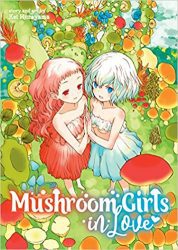
We were introduced to Konatsu, a transplant to a seaside town, as she met Koyuki at the local aquarium and, between facts about sealife, we watch as the two of them become closer in Volume 1. In Volume 2 of Nettaigyo ha Yuki ni Kogareru (熱帯魚は雪に焦がれる ), Koyuki ‘s natural reticence is forcing them apart, and Konatsu has no idea why.

Konatsu’s dad has returned and he’s a goof. He and Koyuki ‘s dad are clearly determined to make them both die from embarrassment, but it really seems like Koyuki needs no help in that regard. There’s nothing keeping her from being closer to Konatsu, except whatever is inside her. (I’m encountering this phenomenon more these days. In the absence of any real LGBTQ identity in Yuri – and, therefore, no real societal pressure to not be together, as no one really has any of those conversations – creators are hard pressed to come up with a reason why we can’t just be together. A theme I will return to later this week.)

The summer festival comes and Koyuki and Konatsu are separated by the tide of humanity. Konatsu is about to give up when Koyuki finds her. As the fireworks explode overhead, Konatsu asks why Koyuki won’t just call out for her? Will Koyuki step up and say a thing? Tune in to Volume 3 to find out, when it’s available!

Ratings: 

Art – 8
Story – 7
Characters – 8
Service – 1 on principle only, there really isn’t any
Yuri – 7

Overall – 8

I expect this series to do nothing notable, but it’s still a nice little romance.